- FREE Shipping on all orders! Limited time!
- support@tru-scapes.com

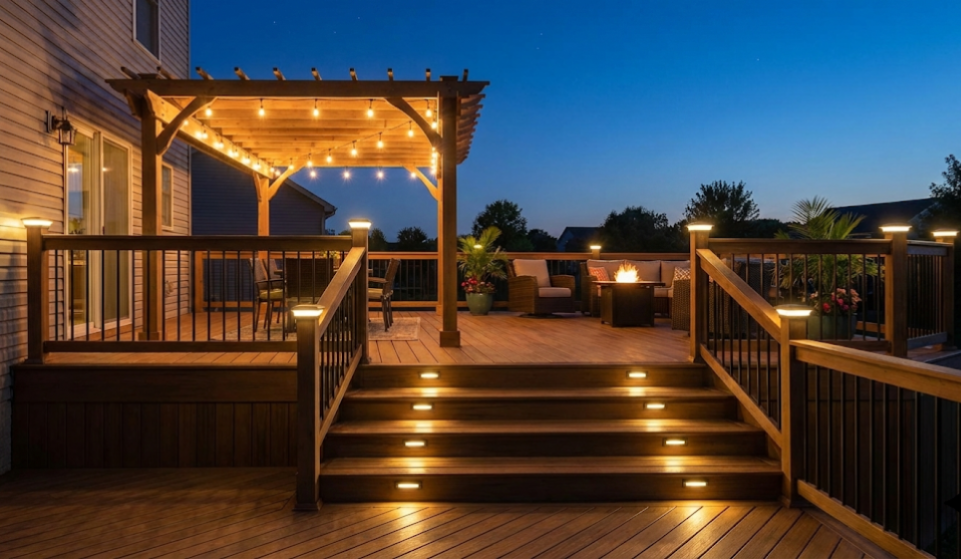
A deck can pass every structural check and still fail inspection because of a light. Many Pennsylvania homeowners focus on footings, ledger boards, and railings, then treat lighting as a finishing touch. That approach can lead to rework, extra inspection fees, and stairs that are unsafe after sunset.
This guide explains how Pennsylvania deck building codes apply to outdoor deck lighting. You’ll learn which lighting the code requires, which fixtures make sense for each part of your deck, how low-voltage and line-voltage systems compare, and how to plan a project that passes inspection the first time.
Pennsylvania uses a statewide building code called the Uniform Construction Code (UCC). It’s administered by the Pennsylvania Department of Labor & Industry and enforced locally by municipalities or third-party inspection agencies.
In October 2025, the state’s Independent Regulatory Review Commission approved a rulemaking that moved the Pennsylvania UCC to the 2021 International Codes, as amended, with an expected effective date of January 1, 2026. For residential decks, that means the 2021 International Residential Code (IRC) now sets the baseline. If you signed a design or construction contract before the new code took effect, your permit may still be issued under the older code, as long as you apply within six months of the effective date or a shorter period set by local ordinance.
The IRC covers both the deck structure and its electrical work. Its electrical chapters are drawn from the National Electrical Code (NEC), published by the National Fire Protection Association. So when you add deck lighting fixtures, you’re dealing with two sets of rules at once: building safety and electrical safety.
Most Pennsylvania municipalities either run their own code department or hire a third-party agency. A few, including Philadelphia, operate under their own administrative structure. Always confirm requirements with your local code official before you buy materials, because permit thresholds and inspection steps can differ from one township to the next.
These are the lighting-related requirements and best practices that come up most often during deck inspections in Pennsylvania.
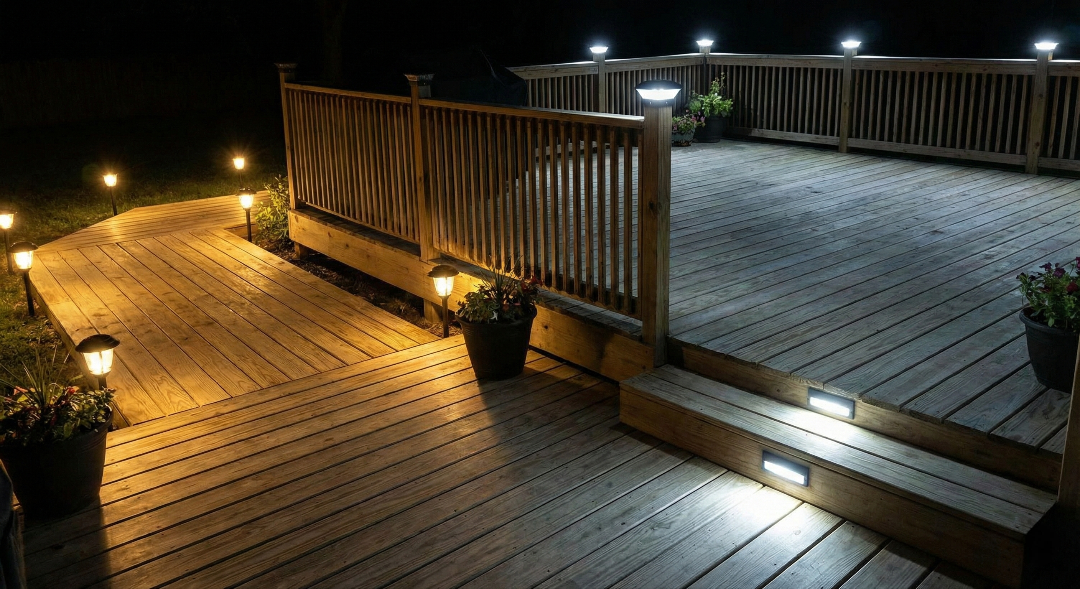
Code compliance and good design aren’t competing goals. The right outdoor deck lighting does both. Here’s how common fixture types compare.
| Fixture Type | Best Location | Main Benefit | Code Considerations |
|---|---|---|---|
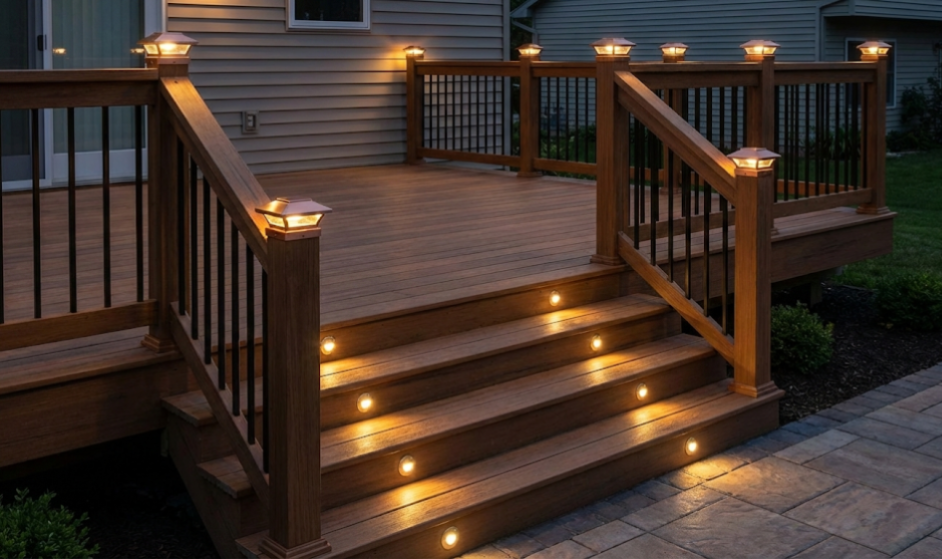
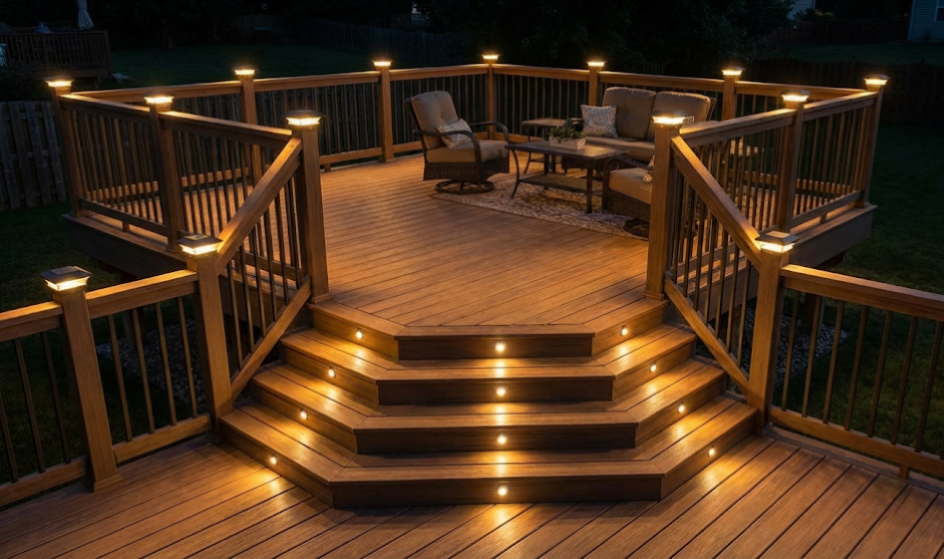
| Deck step lighting | Stair treads or risers | Shows each step edge clearly | Supplements, but may not replace, the required landing light |
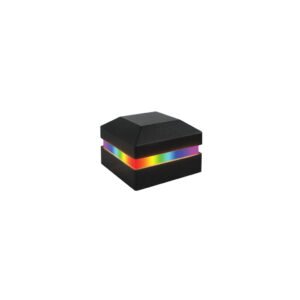
| Deck post cap lights | Railing posts | Defines the deck perimeter | Wiring through posts must not compromise post strength |
| Deck railing lights | Under top rail | Soft, glare-free walkway light | Fixtures and connections must be wet-location rated |
| Recessed deck lighting | Deck boards, fascia, risers | Clean, flush look | Holes in framing must follow IRC boring limits |
| Under deck lighting | Beneath elevated decks | Makes the lower patio usable | Exposed wiring needs protection from physical damage |
| Deck lighting kits | Any of the above | Simple, matched components | Kit must be listed as a complete system |
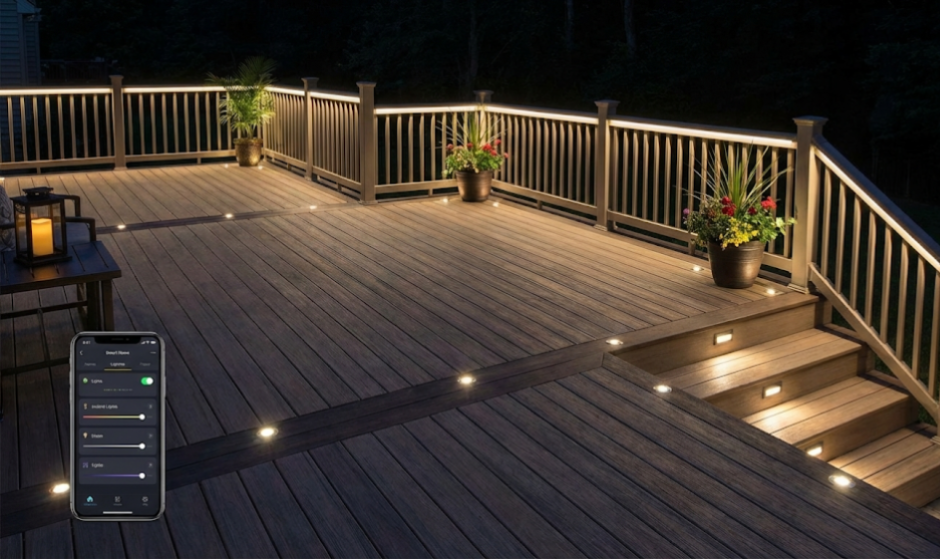
Most residential deck lighting today runs on low voltage, typically 12 volts, supplied by a transformer that plugs into a GFCI outlet. Line-voltage (120-volt) fixtures are hardwired into the home’s electrical system.
Line-voltage fixtures are brighter and better for floodlights or wall sconces at doors. They almost always need an electrical permit and inspection, and they should be installed by a hire a licensed electrician.
If you want simple ambient lighting on railings, posts, and steps, choose a listed low-voltage system. If you need strong security lighting or wall-mounted fixtures near entry doors, choose line voltage and hire an electrician.
Follow these steps to avoid surprises during inspection.
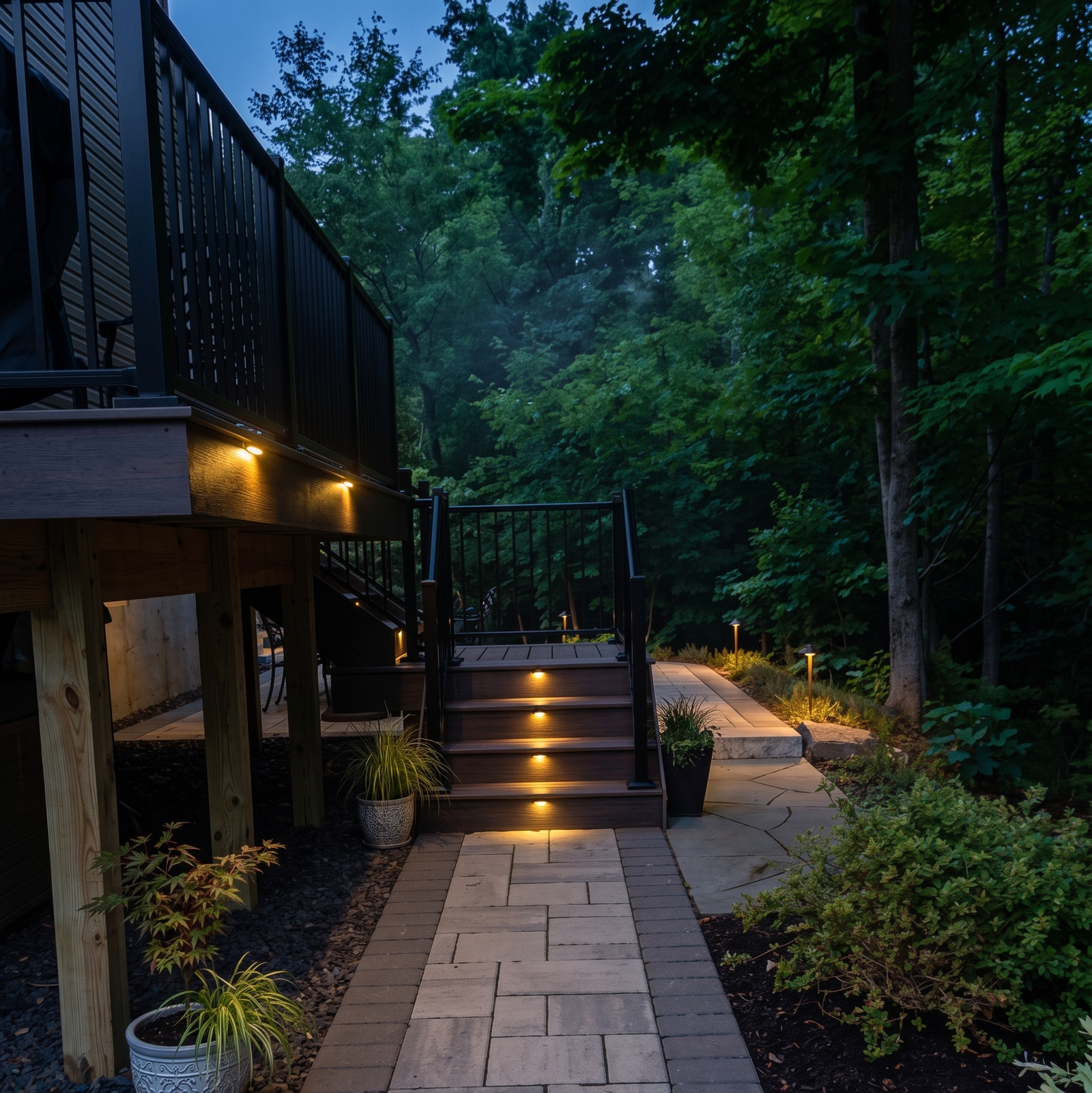
A homeowner in Bucks County plans a raised composite deck with a six-step staircase down to the yard. Their first plan includes deck post cap lights and railing lights, all on a low-voltage kit plugged into an existing outdoor outlet.
During the permit review, the code official points out two issues. The staircase has no light at the top landing, and the existing outlet isn’t GFCI protected. The homeowner adds a wall-mounted landing fixture controlled from inside the house, upgrades the outlet to a GFCI receptacle with an in-use cover, and adds recessed deck lighting in the stair risers for better visibility.
The revised plan passes inspection on the first attempt. Fixing it on paper cost far less than tearing out finished work would have.
A: Yes, in specific places. Exterior stairs need a light source at the top landing, and decks accessible from inside the home generally need a GFCI-protected receptacle.
A: The Pennsylvania UCC adopted the 2021 International Residential Code, effective January 1, 2026. Projects with contracts signed earlier may qualify for the previous code if permits are filed in time.
A: It depends on your municipality. Plug-in low-voltage systems are often treated differently from hardwired lighting, so confirm with your local code official.
A: Solar lights can add ambient light, but inspectors may not accept them as the required stair landing light. Ask before relying on them.
A: Look for fixtures listed for wet locations by a recognized testing lab. A “weather-resistant” label alone doesn’t confirm wet-location suitability.
A: Homeowners can often install plug-in low-voltage deck lighting kits. Hardwired line-voltage work generally requires a permit, and following a complete guide to installing deck lighting is strongly recommended if you choose the DIY route.
A: Mount it to joists or beams where wiring is protected from damage, and keep fixtures clear of pools and spas unless code clearances are met.
A: No code requires a light on every step, but lighting each tread or riser improves visibility and reduces trip risk.
Pennsylvania deck building codes treat lighting as a safety feature, not just decoration. With the move to the 2021 IRC, the core rules are clear: light your exterior stairs, protect outdoor outlets with GFCI, choose wet-location fixtures, and keep your framing intact when you run wiring.
The smartest approach is to design your lighting alongside your deck, not after it. That saves money, avoids failed inspections, and gives you a deck that’s safe and inviting every evening.
Ready to build a deck that looks great and passes inspection? Contact our team of Pennsylvania deck lighting experts for a code-compliant deck and lighting plan built for your Pennsylvania property.
KEY TAKEAWAYS A deck can pass every structural check and still fail inspection because of a light. Many Pennsylvania homeowners
Key Takeaways Every deck lighting project hits the same fork early on: run your fixtures at 12 volts through a