- FREE Shipping on all orders! Limited time!
- support@tru-scapes.com

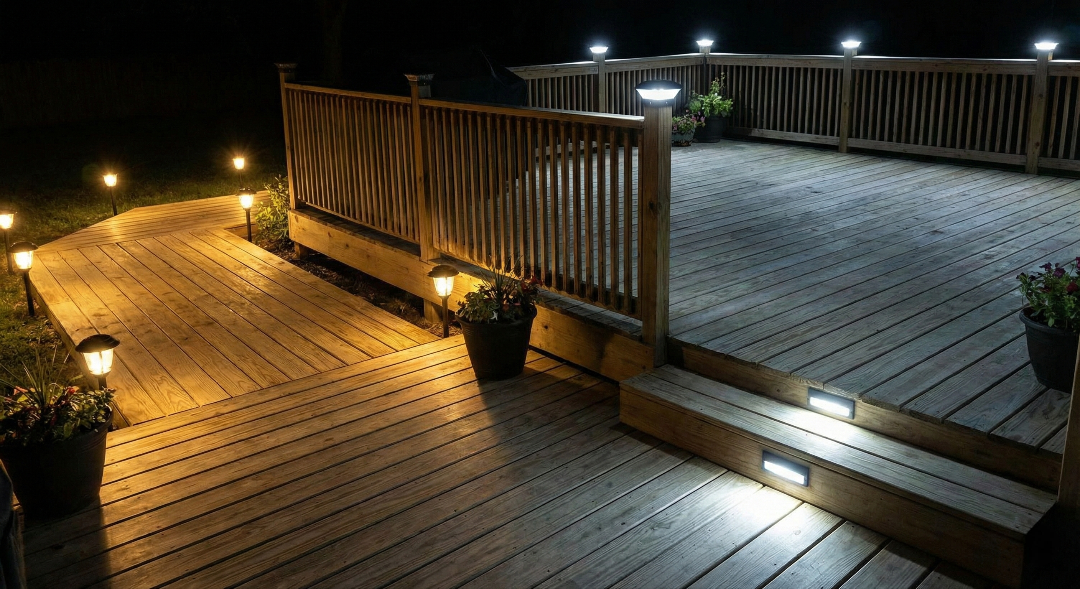
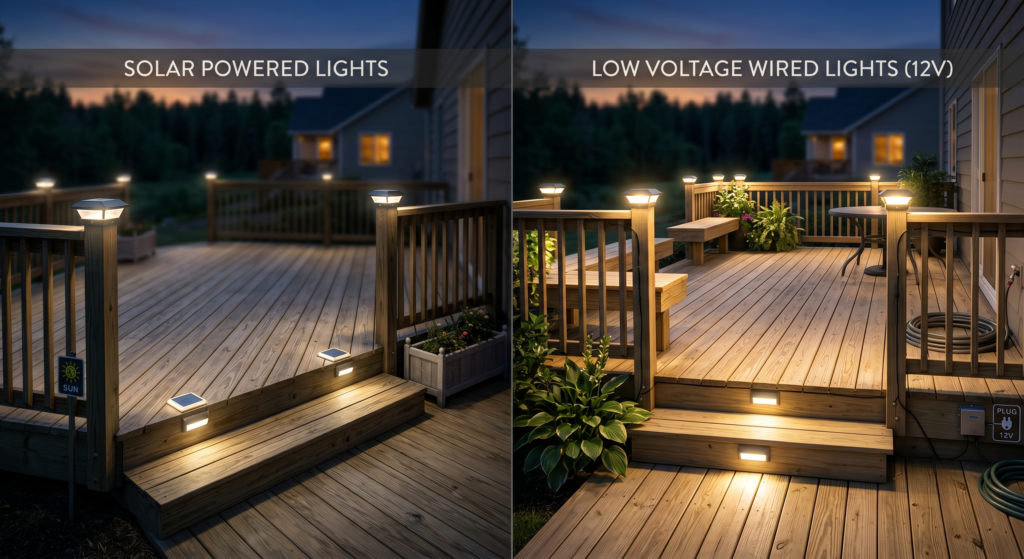
Deck lighting does two jobs at once. It keeps people from missing a step after dark, and it turns a plain platform into a space you actually want to use at night. Most shoppers frame the decision as LED vs solar deck lights, but here is the catch: nearly every modern solar fixture already uses an LED bulb.
The real choice is between two power systems. One is hardwired low-voltage LED lighting that runs off a transformer. The other is self-contained solar lighting that charges from the sun during the day.
This guide breaks down brightness, reliability, cost, installation, and upkeep. By the end, you will know which option fits your deck, your climate, and the way you use your outdoor space.
A low-voltage system starts with a transformer that plugs into an outdoor outlet. It steps standard household current down to a safe low voltage, usually 12 volts. Low-voltage cable then runs to each fixture on the deck.
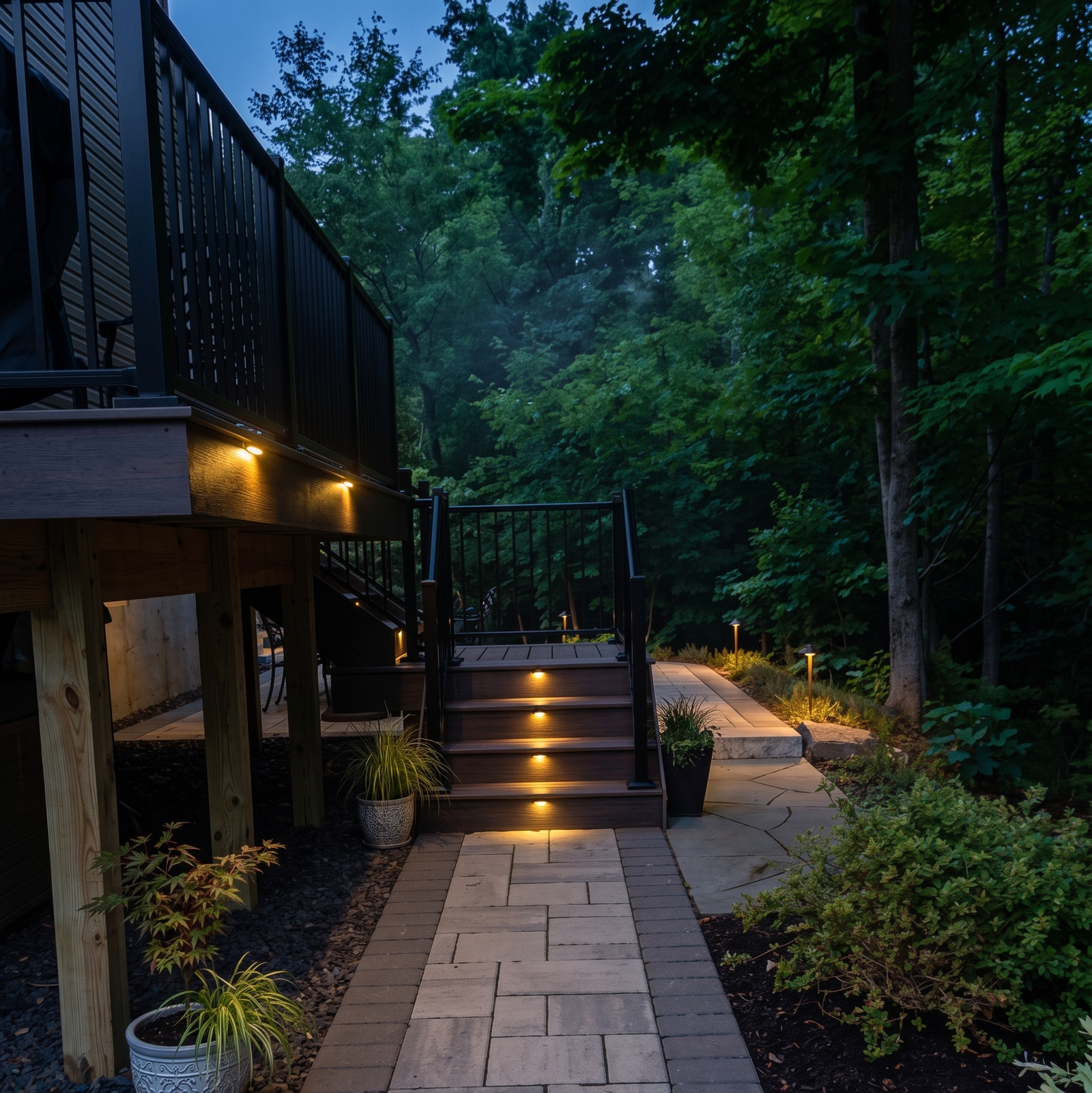
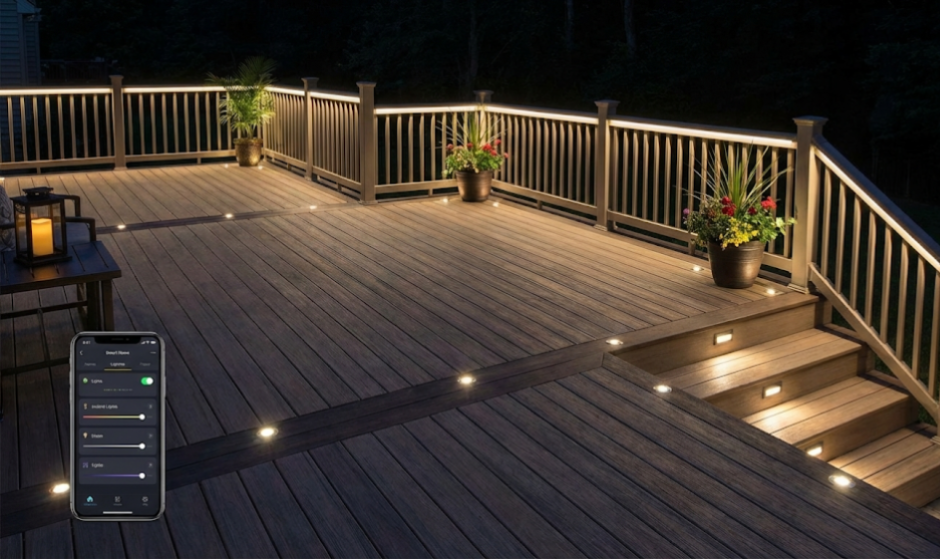
Because every light draws from the same steady power supply, each fixture shines at the same brightness every night. These systems support the full range of deck lighting fixtures, including recessed deck lighting set into boards, deck step lighting on risers, under deck lighting for lower patios, deck railing lights, and post cap lights. Most transformers include a timer, a dusk sensor, or smart controls.
Each solar fixture is a complete system on its own. A small panel on top charges a rechargeable battery during the day. A light sensor switches the LED on at dusk, and it runs until the battery runs low.
That design makes installation simple. The tradeoff is that the light only performs as well as the charge it collected that day. Cloudy weather, shade from trees or the house, and short winter days all reduce runtime and brightness. Solar options are most common as deck post cap lights, small step lights, and clip-on railing lights.
| Factor | Low-Voltage LED (Wired) | Solar LED |
|---|---|---|
| Power source | Transformer plugged into an outdoor outlet | Built-in panel and rechargeable battery |
| Brightness | Bright and consistent | Softer, varies with daily charge |
| Reliability | Works every night in any season | Drops in shade, clouds, and winter |
| Upfront cost | Higher (fixtures, transformer, cable, possible labor) | Lower, sold individually or in packs |
| Long-term cost | Small electricity use, long fixture life | Battery and fixture replacements over time |
| Installation | Planning and wiring required | Mount and go, no wiring |
| Controls | Timers, dusk sensors, smart apps, zones | Automatic dusk-to-dawn only, in most cases |
| Best for | Steps, stairs, entertaining spaces, new builds | Accents, sunny decks, renters, quick upgrades |
Pros:
Cons:
Pros:
Cons:
The right answer depends on your site and your habits. Use these scenarios as a guide:
Safety lighting on stairs should never depend on whether it was sunny that day.
A hypothetical homeowner in suburban Pennsylvania with a raised deck on the north side of the house. Two mature oak trees shade it for most of the afternoon. They bought a pack of solar deck post cap lights and found that by mid-evening the lights were barely glowing. In December, several stayed dark entirely.
They switched the stairs and main walkway to a low-voltage system with riser-mounted step lights and deck railing lights on a timer. The solar post caps moved to a garden border that gets full sun. The result was reliable light where people walk and low-cost accent light where the sun cooperates. This kind of hybrid lighting approach is a common outcome when homeowners test both options.
Do:
Don’t:
Solar wins on day-one price. Wired systems cost more upfront because of the transformer, cable, and possible labor. Over several years, the gap narrows. Solar fixtures often need new batteries or full replacement, while quality low-voltage fixtures are built to run for many seasons with little upkeep.
When weighing LED vs solar deck lights on value, look past the sticker price. Ask how long each option will perform well, and what it will cost to keep it working. Programs like ENERGY STAR and the U.S. Department of Energy both highlight LED efficiency and long life as major advantages over older lighting technology.
A: Wired low-voltage LED lights are brighter and more reliable. Solar lights are cheaper and easier to install, but they depend on daily sunlight.
A: They work, but with shorter runtimes and dimmer output because winter days are short and the sun sits lower in the sky. Shaded decks see the biggest drop.
A: It depends on how much charge they collected that day. After a full sunny day, many run for several hours, while cloudy days cut that time noticeably.
A: Yes, many deck lighting kits are designed for DIY installation. If you need a new outdoor outlet or have a large system, hire a licensed electrician.
A: Wired deck step lighting is the most dependable option for stairs. Consistent light on every step reduces the risk of trips and falls.
A: No. LED fixtures draw very little power, so running a full deck system on a timer adds only a small amount to most electric bills.
A: Yes. A common approach uses wired lights for stairs and walkways and solar lights for decorative accents in sunny spots. Learn more about this hybrid lighting approach.
A: Look for a rating suited to direct rain and outdoor exposure, and check that the manufacturer lists the fixture for wet locations. Fixtures set into deck boards need higher protection than those under a covered railing. Check our guide on weatherproofing standards for details.
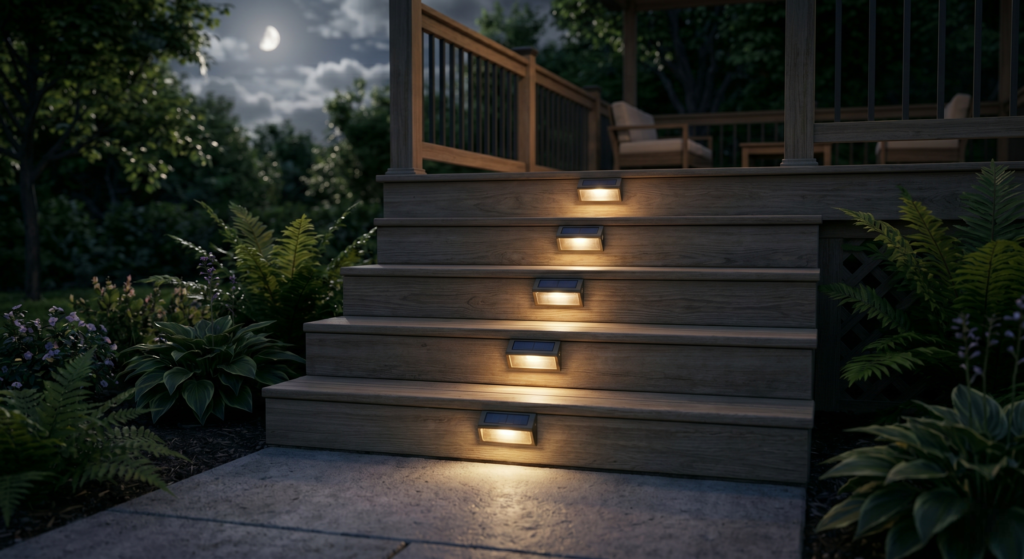
Choosing between LED vs solar deck lights comes down to how much you rely on your deck after dark. Low-voltage LED lighting gives you steady, controllable light that works in every season. Solar lighting gives you a fast, affordable way to add accents where the sun is strong.
For most decks, the smartest plan is wired light where safety matters and solar where style matters. Start with your stairs, map your sun exposure, and build out from there.
Ready to light your deck the right way? Explore deck lighting kits and fixtures or talk to a deck lighting specialist to plan a system that fits your space.
KEY TAKEAWAYS A deck can pass every structural check and still fail inspection because of a light. Many Pennsylvania homeowners
Key Takeaways Every deck lighting project hits the same fork early on: run your fixtures at 12 volts through a