- FREE Shipping on all orders! Limited time!
- support@tru-scapes.com

Every deck lighting project hits the same fork early on: run your fixtures at 12 volts through a transformer, or wire them straight into your home’s 120-volt household current. That single choice shapes your budget, your safety, who installs the system, and how easily you can change it later.
This guide breaks down low voltage vs line voltage deck lighting in plain terms. You will learn how each system works, what it costs to install and maintain, which deck lighting fixtures pair best with each, and how to decide in a few clear steps. By the end, you will know which option fits your deck, your budget, and your plans for the space.
The core difference is the electrical current reaching the fixture. Everything else, from wiring methods to fixture size, follows from that.
A low voltage system plugs into a standard outdoor GFCI outlet or is hardwired to a transformer. The transformer steps your home’s 120-volt current down to 12 volts (sometimes 24 volts) before it travels through low voltage cable to each fixture.
Because the current is so much lower, the wiring is thinner, lighter, and easier to route through railings, posts, and stair risers. Most modern low voltage outdoor deck lighting uses LEDs, which draw little power and run cool.
Line voltage fixtures connect directly to your home’s 120-volt electrical system. There is no transformer. Wiring runs from your electrical panel through outdoor-rated cable or conduit to junction boxes at each fixture.
This setup can deliver more raw brightness per fixture, which is why it is common for floodlights and security lighting. It also means every connection carries household-level current, so installation rules are much stricter.
| Factor | Low Voltage (12V) | Line Voltage (120V) |
|---|---|---|
| Operating voltage | 12 to 24 volts via transformer | 120 volts direct from the panel |
| Shock risk | Very low | Significant if damaged or miswired |
| Who installs | Homeowner or lighting pro | Licensed electrician in most areas |
| Wiring and burial | Thin cable, shallow burial allowed | Heavier cable, deeper burial or conduit |
| Fixture size | Small, discreet, deck-friendly | Larger, needs junction boxes |
| Upfront cost | Lower overall in most projects | Higher due to labor, permits, materials |
| Flexibility | Easy to add, move, or adjust fixtures | Changes usually require an electrician |
Different deck lighting fixtures have different jobs, and the right voltage often depends on the job.
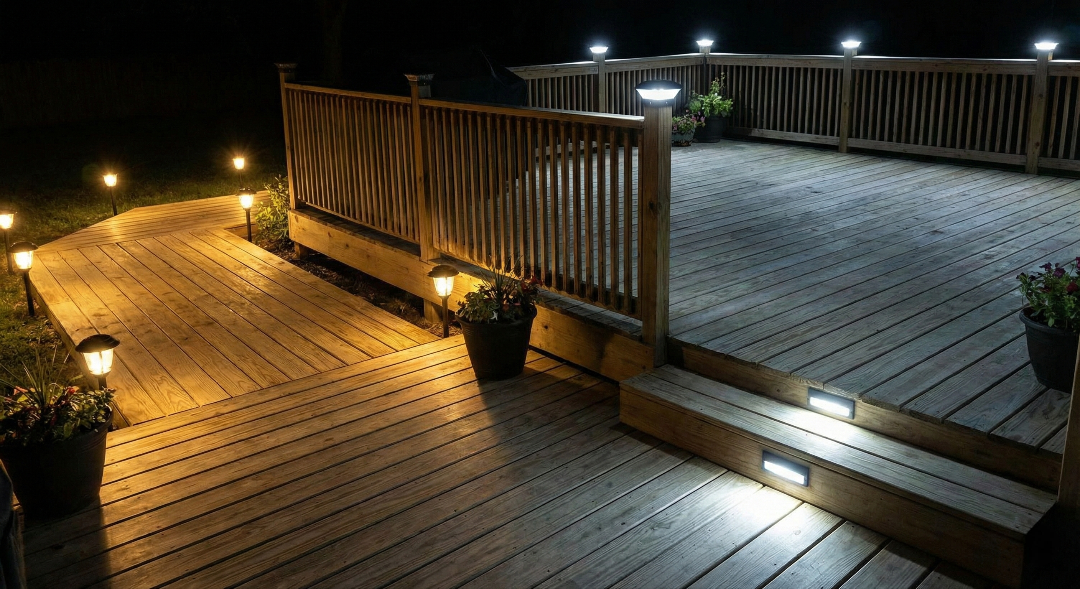
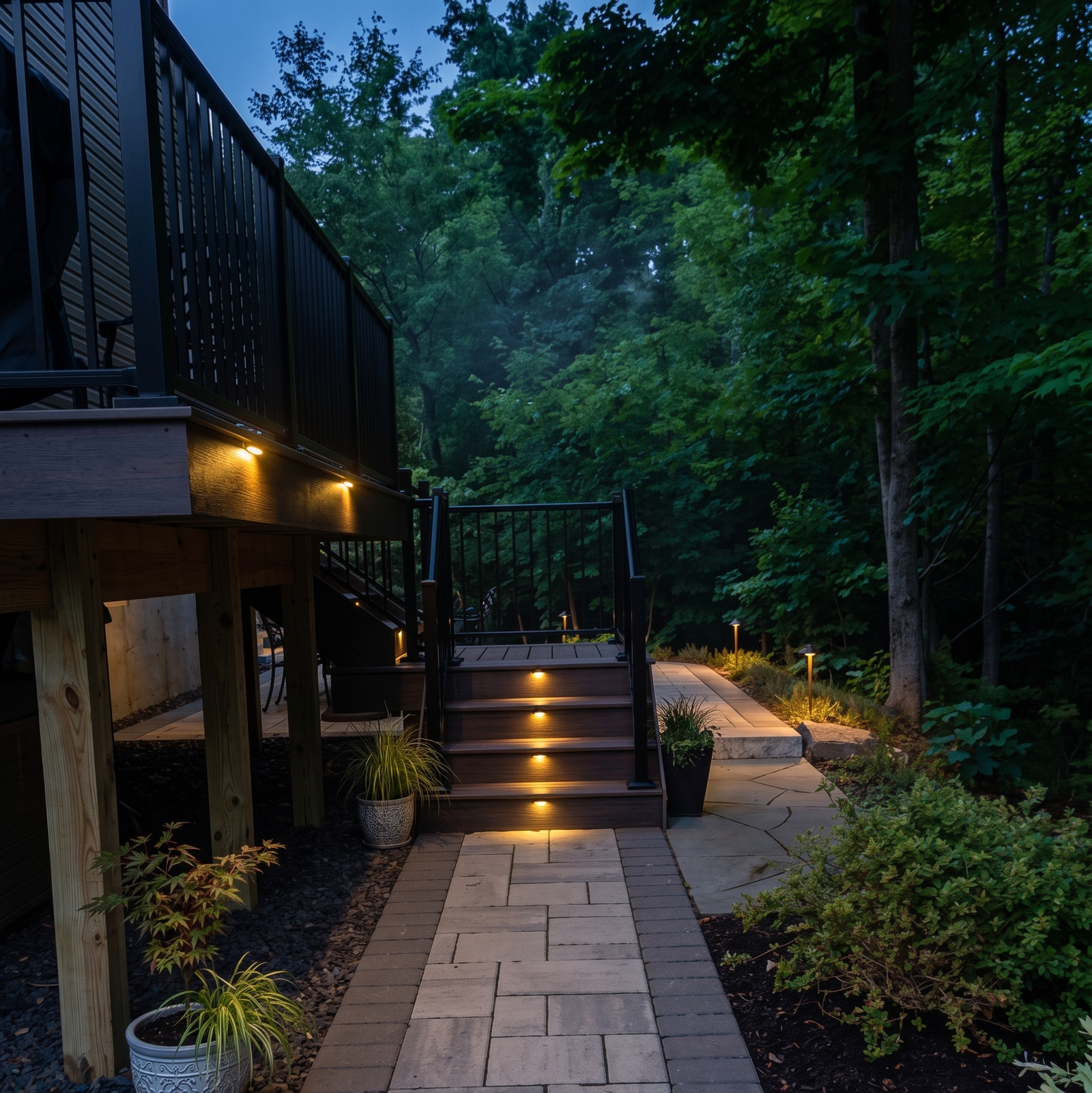
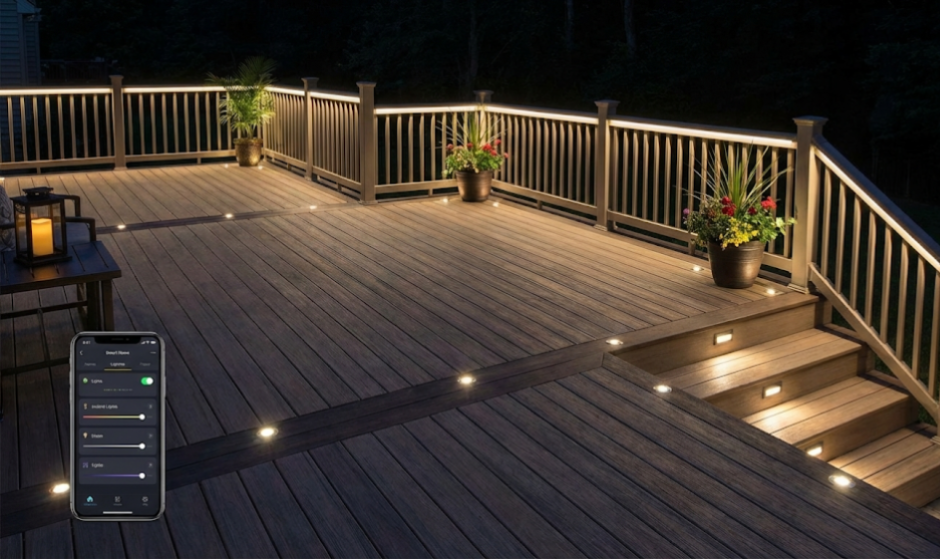
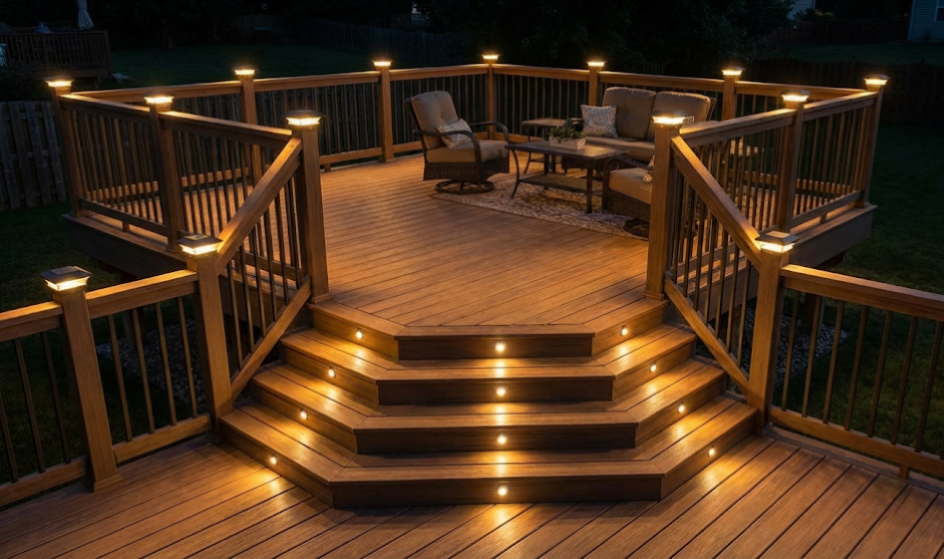
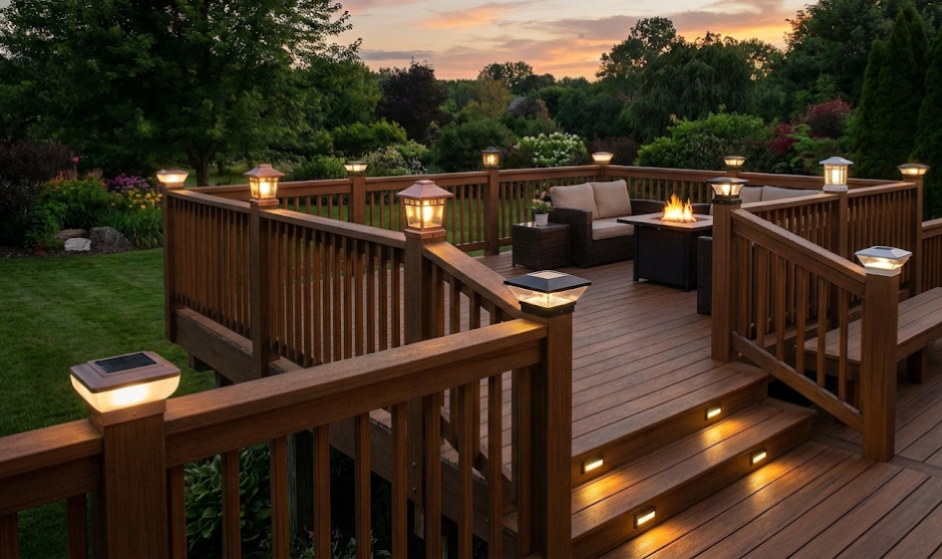
Dedicated deck step lighting and riser lights are the clearest case for low voltage. They need to be small, flush, and safe near feet and hands. Recessed deck lighting set into stair treads or deck boards also depends on the compact housings that low voltage allows.
Deck railing lights and stylish deck post cap lights also favor low voltage. Thin cable can run inside posts and under rail caps without visible conduit, which keeps the finished deck clean.
Under deck lighting is more flexible. If you are lighting a covered patio beneath an elevated deck and want bright, room-like illumination, line voltage downlights can work well. If you want soft ambient glow, low voltage strip lights or puck lights do the job with less wiring.
Here is a simple rule of thumb:
A homeowner in a suburban area has a two-level composite deck with a six-step staircase and twelve railing posts. Their first quote, from an electrician, proposed line voltage post lights on each post. It required trenching, a new circuit, a permit, and bulky fixtures that clashed with the slim railing design.
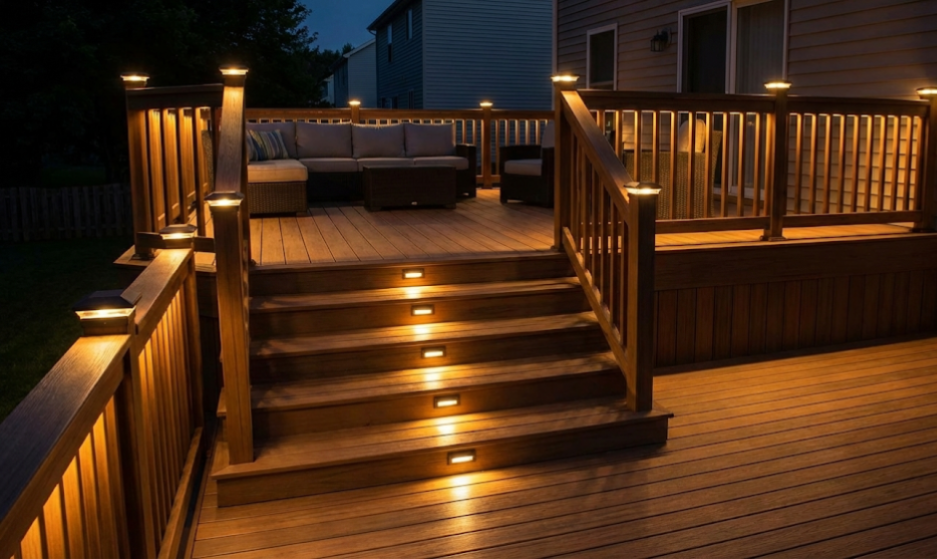
They switched to a low voltage plan instead. The new design used deck post cap lights on every post, recessed deck step lighting on each riser, and a single transformer with a photocell and timer mounted near an existing outdoor GFCI outlet. A lighting installer completed the work in a fraction of the time, and the fixtures disappeared into the deck by day.
The only line voltage element kept in the plan was an existing motion floodlight on the house, which already covered the yard for security. That hybrid approach gave them both safety and style without rewiring the deck.
Electrical rules for outdoor lighting in the United States are largely based on the National Electrical Code (NEC), published by the National Fire Protection Association (NFPA). The NEC includes specific provisions for low voltage lighting systems and sets requirements for GFCI protection and burial depth on outdoor circuits. Local jurisdictions adopt and sometimes modify these rules, so always confirm with your local building department.
Look for fixtures listed by Underwriters Laboratories (UL) or another recognized testing lab, and confirm they are rated for wet or damp locations. The Electrical Safety Foundation International (ESFi) also offers homeowner guidance on outdoor electrical safety, including the importance of GFCI protection.
For efficiency, the U.S. Department of Energy’s lighting efficiency data notes that LED lighting uses significantly less energy and lasts much longer than incandescent bulbs. That makes LEDs a strong fit for either system, but especially for low voltage setups where efficient fixtures let one transformer power more lights.
A: For most residential decks, low voltage is better. It is safer, easier to install, and works with the small fixtures that suit stairs, posts, and railings.
A: Yes, many homeowners install low voltage systems themselves. The transformer plugs into a GFCI outdoor outlet, and the cable carries low enough voltage to be handled safely.
A: In most areas, yes. Line voltage work typically requires a licensed electrician and may require a permit and inspection.
A: Yes, for most deck uses. Modern LED fixtures provide plenty of light for steps, rails, and seating areas, though large-area security lighting may need line voltage floods.
A: Voltage drop is the loss of power over long cable runs, which can make distant fixtures dimmer. Proper wire gauge and a hub-style layout help prevent it.
A: Quality LED deck lighting fixtures often last many years under normal use. Lifespan depends on the fixture, its weather rating, and how well the connections are sealed.
A: Yes. Many homes use low voltage fixtures on the deck itself and line voltage floodlights on the house for security coverage.
A: Look for a wet-location rating, a UL or ETL listing, and sealed housings. An IP rating can also indicate how well the fixture resists water and dust.
Choosing between low voltage vs line voltage deck lighting is really a choice about how you want to use your deck. Low voltage gives you safety, discreet fixtures, lower installation cost, and the freedom to add or adjust lights over time. Line voltage earns its place where you need bright, high-output coverage, usually mounted on the house rather than built into the deck.
For stair treads, railings, posts, and the soft glow that makes a deck feel finished, low voltage is the smarter fit for most homeowners. Ready to light up your outdoor space the right way? Explore our premium low voltage deck lighting collection or contact our team for help planning a layout that fits your deck.
KEY TAKEAWAYS A deck can pass every structural check and still fail inspection because of a light. Many Pennsylvania homeowners
Key Takeaways Every deck lighting project hits the same fork early on: run your fixtures at 12 volts through a