- FREE Shipping on all orders! Limited time!
- support@tru-scapes.com


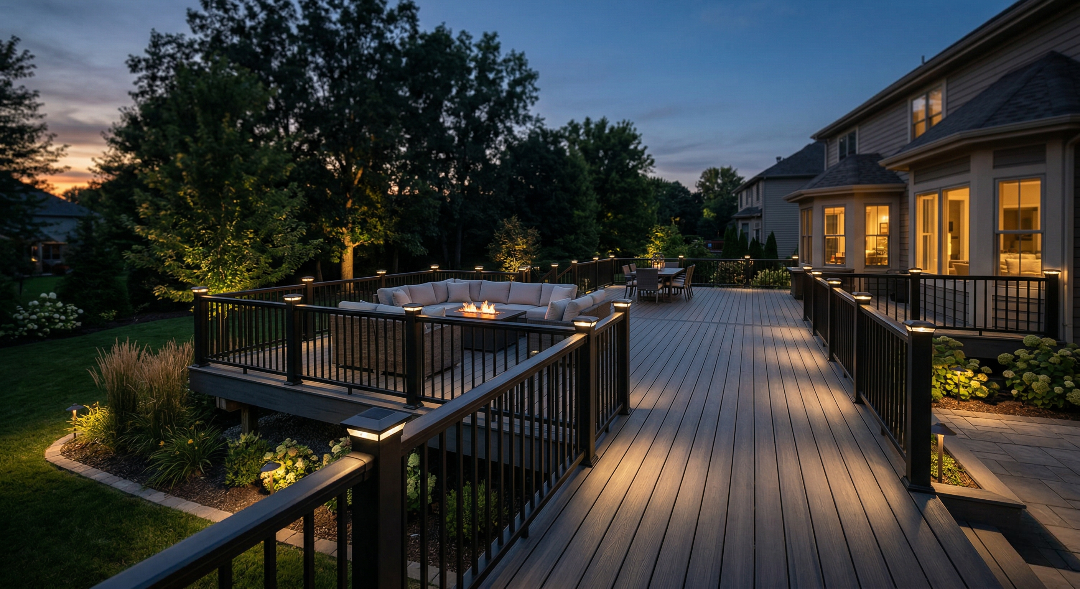
A deck that goes dark at sunset is only half a deck. Once the light fades, stairs become a trip hazard, the grill becomes guesswork, and the space you paid good money for sits unused until morning.
If you’ve been typing “deck lighting installation near me” into Google, you’re probably ready to fix that. This guide walks you through the fixture types worth considering, how low-voltage systems work, what separates a top-rated Pennsylvania contractor from an average one, and the exact steps to hire with confidence. By the end, you’ll know what to ask, what to avoid, and what a good outdoor deck lighting plan should look like.
Good deck lighting does three jobs at once: it keeps people safe, it extends the hours you can use your deck, and it adds visual appeal that buyers notice if you ever sell.
Safety is the big one. Stairs, level changes, and deck edges are where most nighttime slips happen. Organizations like the North American Deck and Railing Association (NADRA) consistently stress that deck safety goes beyond structure, and lighting on steps and transitions is part of that picture.
Efficiency matters too. The U.S. Department of Energy notes that LED lighting uses far less energy and lasts much longer than traditional incandescent bulbs. That’s why nearly every modern deck lighting system is built around LEDs.
Not every fixture fits every deck. The right mix depends on your layout, your materials, and how you use the space after dark.
| Fixture Type | Best For | Install Complexity | Light Effect |
|---|---|---|---|
| Deck step lighting | Stairs and level changes | Moderate (riser drilling) | Low, focused safety light |
| Deck railing lights | Perimeter definition | Moderate | Soft downward wash on deck boards |
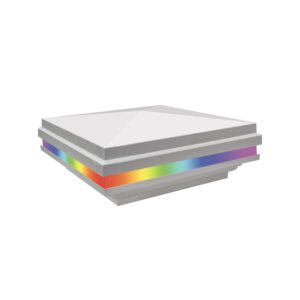
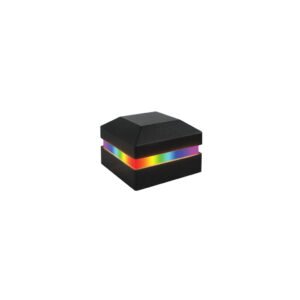
| Deck post cap lights | Corners and posts | Low to moderate | Ambient glow, decorative |
| Recessed deck lighting | Flush deck surfaces | Higher (precise drilling) | Subtle upward or marker light |
| Under deck lighting | Second-story decks, patios below | Moderate to high | Lights the space beneath the deck |
Most residential deck lighting runs on a 12-volt system powered by a transformer that plugs into a GFCI-protected outdoor outlet. Line-voltage (120V) systems exist but require heavier wiring, more permitting, and a licensed electrician for every run.
If you want flexibility to add fixtures later, choose low voltage. If you need high-output lighting for a large commercial-scale space, line voltage may make sense, but that’s rare for homeowners. The National Electrical Code (published by NFPA) covers low-voltage lighting systems under Article 411, and a qualified installer should know those requirements.
Deck lighting kits from big-box stores are tempting. Here’s an honest look at both options.
Pros:
Cons:
Pros:
Cons:
If your deck is a single level with fewer than a handful of fixtures, a quality kit might be enough. If you have stairs, multiple levels, or a composite deck you don’t want to damage, hire a pro.
Online reviews are a starting point, not the finish line. Use this process to narrow your options.
Contractors who pass all seven steps are the ones worth calling back.
DarkSky International recommends shielded, downward-facing fixtures and warmer color temperatures to reduce glare and light pollution. That advice also happens to make decks look better.
Your deck’s design should drive your lighting choices. A few common scenarios:
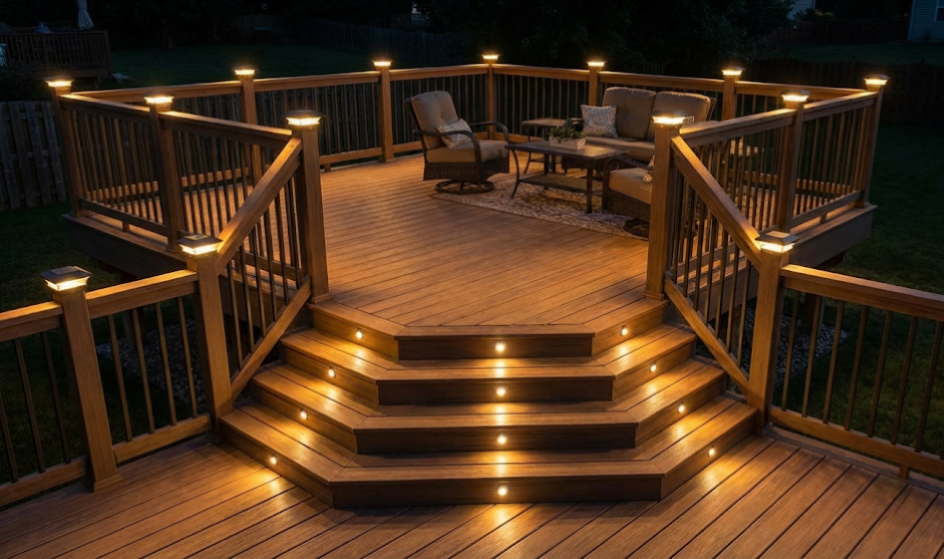
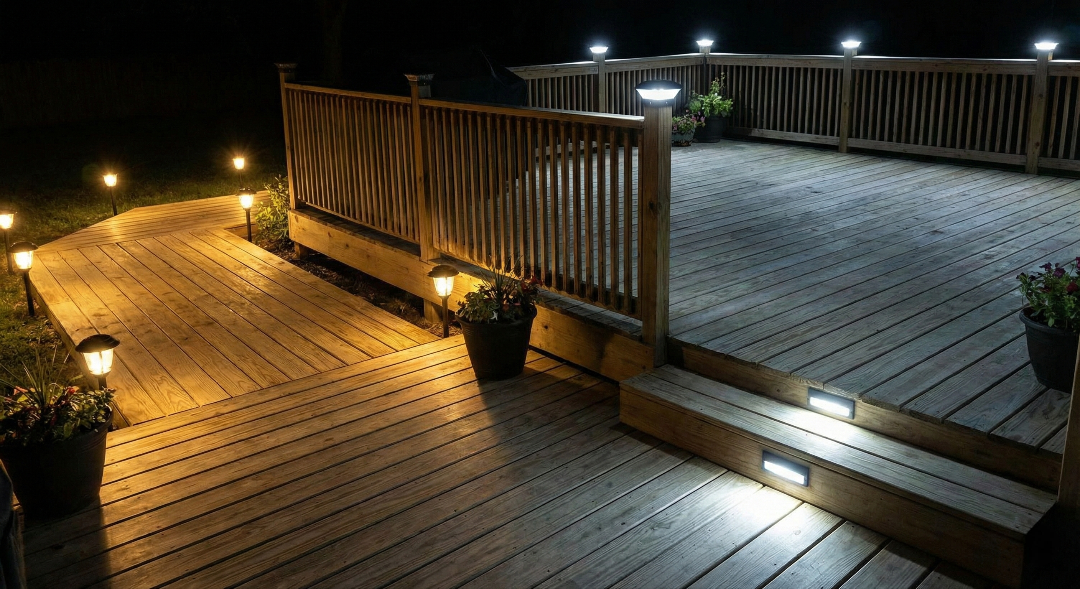
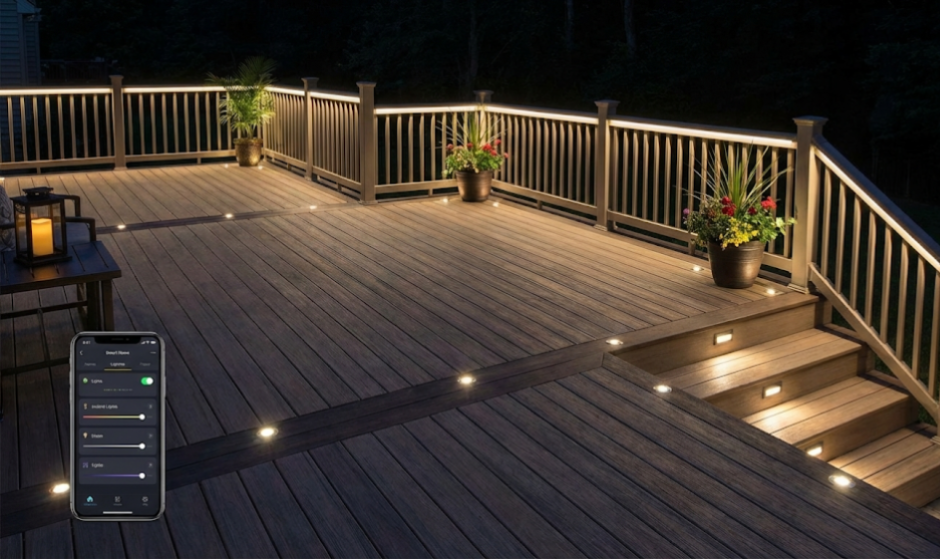
Most decks benefit from a combination. A typical layout might pair deck step lighting on every riser with railing lights along the perimeter and post caps at the stair entry.
Pennsylvania decks deal with snow, ice, de-icing salt, and repeated freeze and thaw cycles. Those conditions punish cheap fixtures.
Look for waterproof deck lights with a high ingress protection (IP) rating, such as IP65 or higher, and sealed connections. Wire nuts wrapped in electrical tape won’t survive a PA winter. Gel-filled or waterproof connectors will.
A homeowner in Bucks County had a two-level composite deck with eight stair risers and about 60 feet of railing. The family stopped using the deck after dark because the stairs felt unsafe, and a cheap solar kit had faded within one season.
A local contractor proposed a 12-volt LED system: step lights on every riser, under-rail lights along the perimeter, and post cap lights at the top and bottom of the stairs. The transformer was sized with room for future landscape lighting and set on a photocell timer.
The result was a deck that became usable well into the evening, with no visible wiring and no glare toward the neighbors. The key decision wasn’t the fixtures. It was the written plan that accounted for every run before any drilling started.
A: Search locally, then verify each contractor’s PA Attorney General registration, insurance, and nighttime project photos. Shortlist those who provide a written lighting plan.
A: Yes. Low-voltage systems run at 12 volts, which greatly reduces shock risk compared to standard household voltage, as long as the transformer is plugged into a GFCI-protected outlet.
A: Yes. Most deck lighting fixtures, including step, railing, and post cap lights, can be retrofitted onto existing decks without major demolition.
A: Warm white, around 2700K to 3000K, creates a comfortable, inviting look and reduces glare compared to cooler, bluer light.
A: Solar lights work for light decoration but often struggle with brightness and battery life, especially during shorter Pennsylvania winter days. Hardwired low-voltage systems are more reliable.
A: Most residential projects take one to two days, depending on deck size, fixture count, and whether the deck is wood or composite.
A: Requirements vary by municipality. Low-voltage systems plugged into an existing outlet often need no permit, but new outdoor circuits usually do, so check with your local code office.
A: It can if done incorrectly. Ask your installer how they handle composite boards and check your decking manufacturer’s guidelines first.
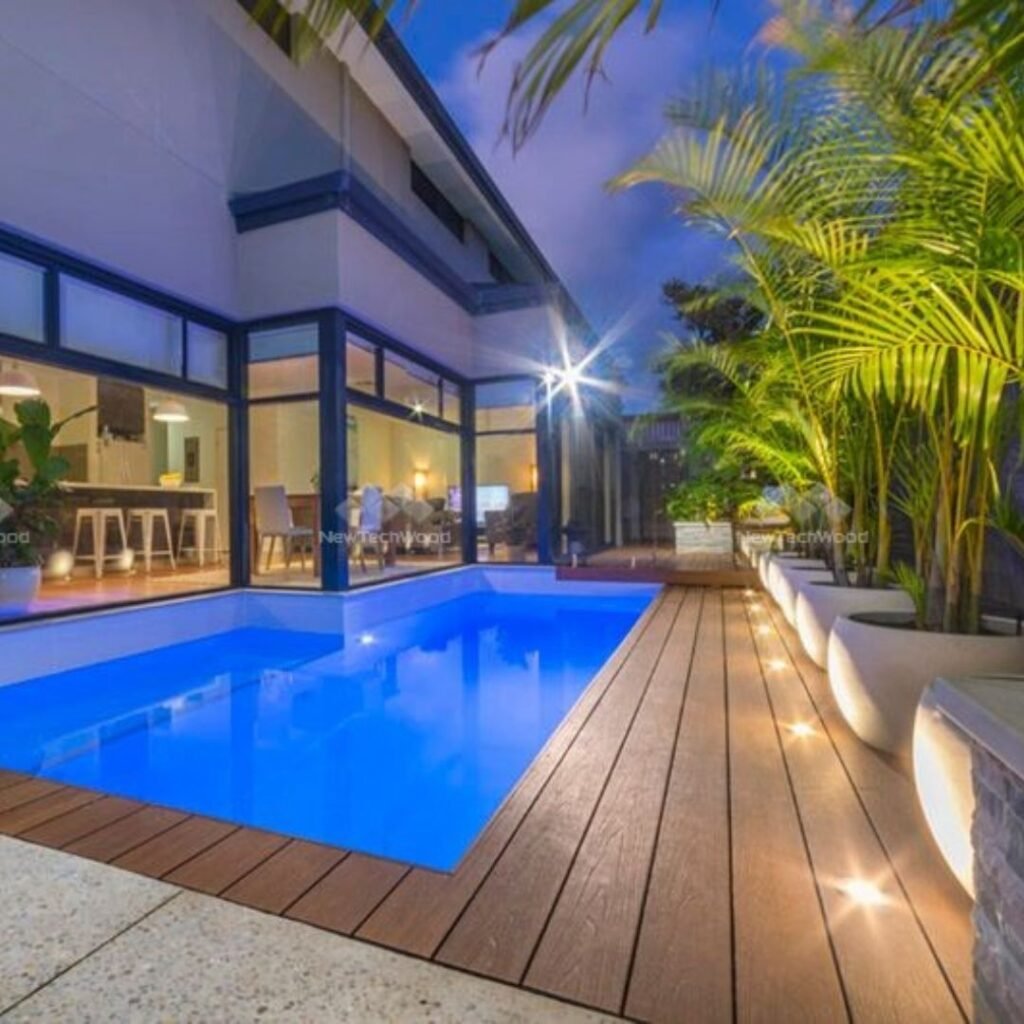
Great deck lighting is equal parts safety, comfort, and curb appeal. The right system uses low-voltage LEDs, puts light where people walk first, and holds up to Pennsylvania winters with sealed, waterproof fixtures.
When you search for deck lighting installation near me, don’t stop at star ratings. Verify registration, ask for nighttime photos, and insist on a written lighting plan. Those steps separate top-rated PA contractors from everyone else.
Ready to light up your deck the right way? Contact us today for a free on-site lighting consultation and a written plan built around your deck.
Key Takeaways A deck that goes dark at sunset is only half a deck. Once the light fades, stairs become
KEY TAKEAWAYS A deck can pass every structural check and still fail inspection because of a light. Many Pennsylvania homeowners