- FREE Shipping on all orders! Limited time!
- support@tru-scapes.com

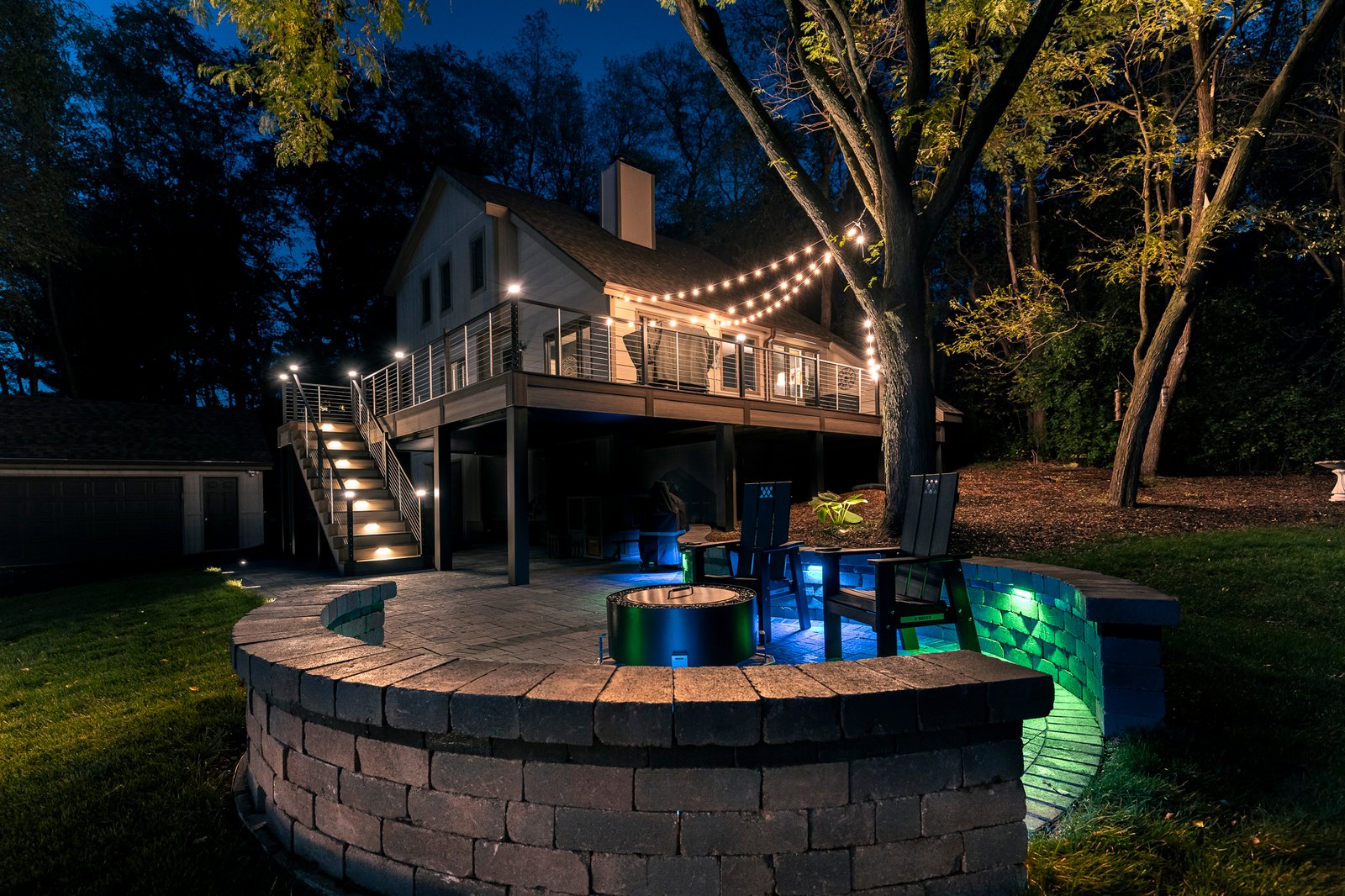
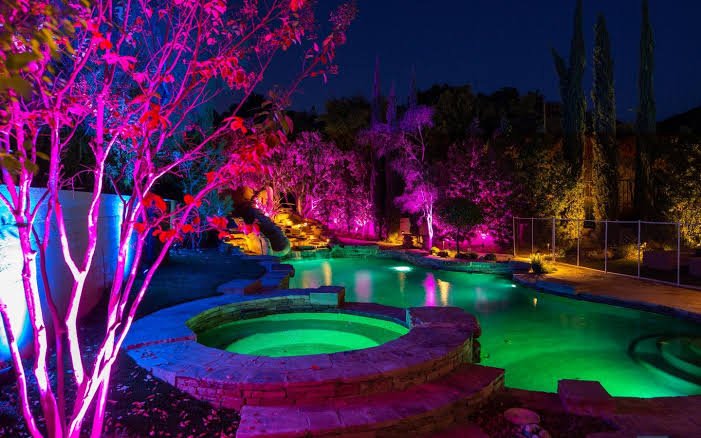
If you’ve ever stepped outside after sunset and struggled to navigate your own deck, you’re not alone. A deck too dark to use comfortably is one of the most common — and most fixable — problems in outdoor living. Poor deck lighting doesn’t just limit your enjoyment; it creates real safety hazards on stairs, around seating areas, and near the edges of elevated platforms. Understanding the full scope of those risks is worth a look at our deck lighting safety tips before you start any project.
This article walks you through the reasons decks end up underlit, the lighting principles that actually work, and the specific products that solve each problem. By the end, you’ll know exactly how to brighten a deck — whether you’re doing a quick upgrade or a full lighting redesign.
Most homeowners don’t plan deck lighting until after the deck is built — which means it often gets bolted on as an afterthought rather than integrated thoughtfully. A few common culprits:
Single-source lighting. A single overhead lantern or a string of bulbs creates one bright zone and leaves everything else in shadow. Without how to layer lighting on your deck as a guiding principle, the human eye struggles to adjust between bright and dark zones.
No step or stair lighting. Stairs are the highest-risk area on any deck, and they’re also the most commonly skipped when it comes to lighting. A single missed step in the dark can result in a serious fall.
Missing low-level lighting. Deck surfaces, planters, and furniture legs are often invisible at night because all the light comes from above. Low-profile deck lights — particularly puck lights and dot lights — solve this by casting light downward and outward at eye-level.
Fixtures not rated for outdoor use. Some homeowners install indoor fixtures outdoors. These degrade quickly in humidity and temperature swings, leading to dim or flickering output over time. Knowing what to look for when choosing weatherproof deck lights saves you from this problem entirely.
No control over brightness or zones. Without dimming or zone control, a deck is either fully lit or completely dark. That rigidity makes it hard to match the lighting to the occasion.
Lighting designers — and industry organizations like the Illuminating Engineering Society (IES) — consistently recommend a three-layer approach for any outdoor living space:
Most dark decks are missing at least one of these layers entirely. For a deeper dive into how these layers work together in practice, our guide on building a layered lighting plan walks through each one in detail.
Follow these steps in order. Each builds on the last, and stopping at any stage will still result in a meaningfully brighter space.
Step 1: Walk the deck at night and identify dark zones. Before buying anything, spend five minutes outside after sunset with a notepad. Mark where you feel uncertain about footing, where furniture disappears into shadow, and where entrances are hard to find. These are your priority areas.
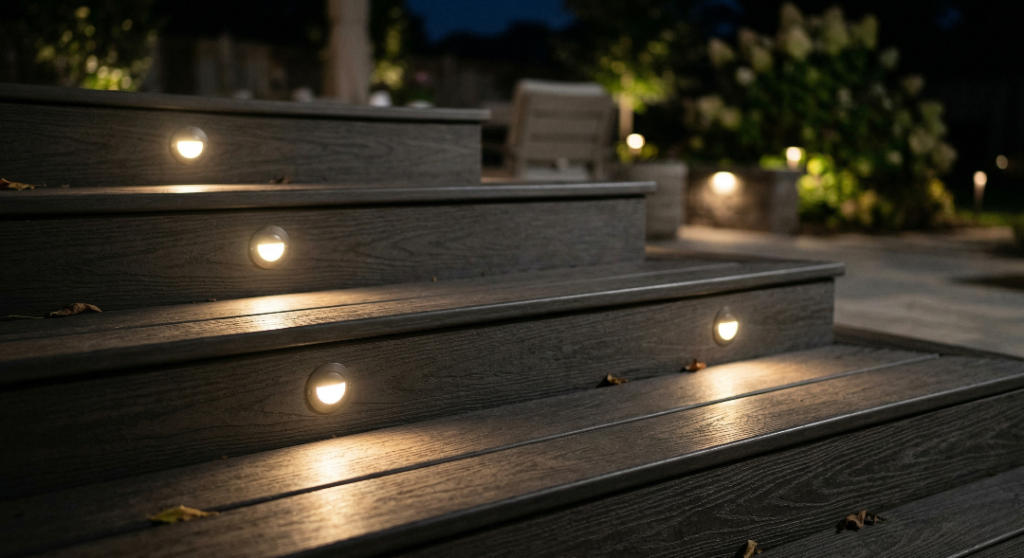
Step 2: Address stairs first. Stairs should always be your first lighting target. Install stair lights for decks or low-profile dot lights on the risers or stringers to make every tread clearly visible. This is the single change with the highest safety ROI.
Step 3: Add post cap lights at entry points and corners. Post cap lights define the edges of your deck and mark transitions between spaces. They also add ambient light at a height that works well for both safety and aesthetics. Read more about the benefits of post cap lights if you’re still deciding whether they’re right for your setup.
Step 4: Fill in surface and accent lighting. Once stairs and posts are handled, add dot lights, puck lights, or in-deck lights to brighten the field between fixtures. This is where accent and task lighting intersect.
Step 5: Connect everything to a smart transformer. A WiFi-enabled transformer lets you schedule lights to come on at sunset, create dimming profiles for different occasions, and control zones independently. This is the step that transforms a collection of fixtures into an integrated system. Our low-voltage transformer guide covers everything you need to know before making that choice.
| Fixture Type | Best For | Typical Placement | Brightness Level | Color Options |
| Dot Lights | Accents, stair risers, railings | Deck surface, fascia | Low–Medium | Yes (color-changing) |
| Post Cap Lights | Ambient perimeter light | Top of railing posts | Medium | Limited |
| Puck / Slim Lights | Task and accent fill | Under railings, soffits | Medium | Sometimes |
| String Lights | Casual ambiance | Overhead, pergolas | Low | Warm white common |
| Wall Sconces | Entry and zone lighting | Vertical surfaces | Medium–High | No |
The U.S. Department of Energy consistently highlights LED technology as one of the most energy-efficient lighting options available for residential use. Here’s how that plays out specifically for deck applications:
Pros:
Cons:
Do:
Don’t:
If you need safety lighting for stairs and transitions, choose low-profile dot lights or slim puck lights mounted at riser height. These provide directional downward light exactly where foot traffic occurs. The North American Deck and Railing Association (NADRA) recommends lighting all stair transitions as a baseline safety standard for any residential deck.
If you need ambient perimeter lighting, post cap lights are the better choice. They sit at the top of railing posts, casting light both outward and downward to define the space and illuminate the surrounding area.
If you want the flexibility to switch between relaxed and festive moods, color-changing LED fixtures paired with a WiFi transformer let you dial in warm white for dining and shift to color for entertaining — all from your phone.
If your deck is large and has multiple zones (dining area, lounge area, stairs), a transformer with multi-zone output lets you control each area independently rather than running everything at the same level all the time.
A homeowner in the Pacific Northwest had a 400-square-foot second-story deck that was effectively unusable after 8 p.m. in the summer. The existing setup: one ceiling-mounted lantern at the door and two plug-in string lights draped over the railing.
After assessing the space, they added dot lights to each of the 12 stair risers, post cap lights on the six corner and gate posts, slim puck lights under the railing cap on the open sides, and connected everything to a WiFi transformer. The result was a fully usable outdoor space from dusk until midnight — and the stair lighting specifically gave older family members the confidence to navigate the steps safely.
Total fixture count: 12 dot lights, 6 post cap lights, 8 puck lights, 1 transformer. Time to install: approximately one full weekend.
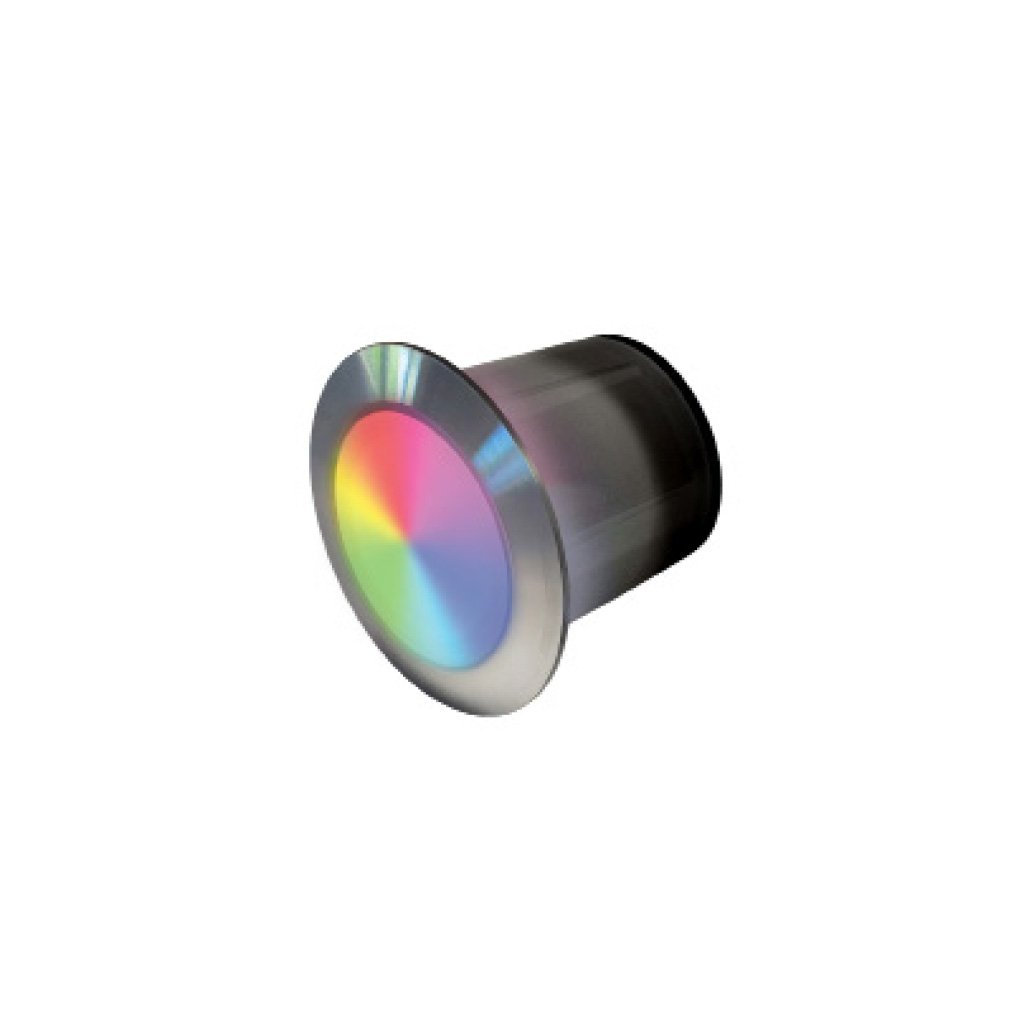
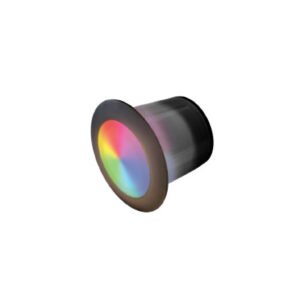
Tru-Scapes 2.5″ Modern Color Changing Dot Light This sleek, modern-profile dot light delivers full RGB color-changing capability in a 2.5″ form factor that installs flush into deck fascia, stair risers, or railing bases. It’s an ideal choice when you want to shift from warm white task lighting to vibrant color for entertaining — without swapping fixtures. The low-profile housing blends cleanly into modern composite and hardwood deck aesthetics.
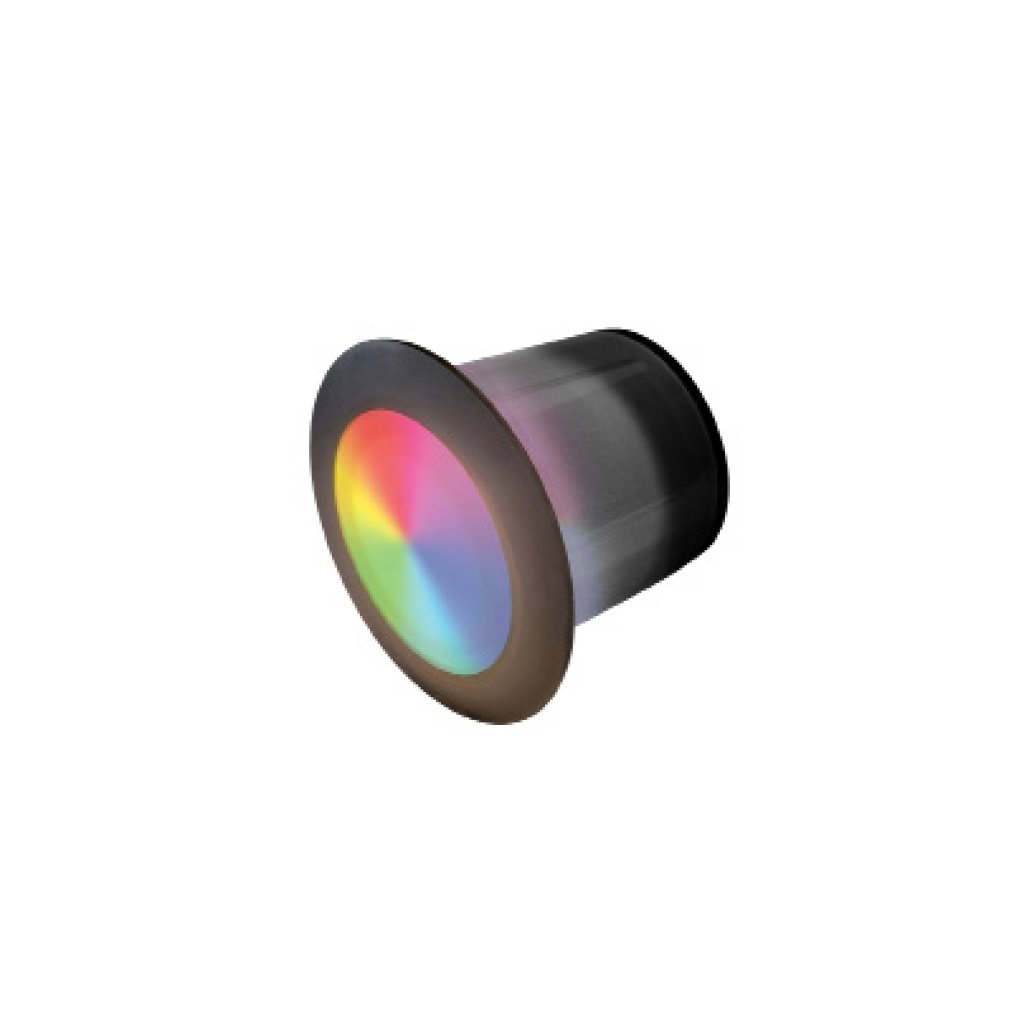
Tru-Scapes 2.5″ Traditional Color Changing Dot Light For decks with a classic or craftsman aesthetic, this traditional-style dot light offers the same color-changing LED performance with a more timeless housing design. It installs in the same locations as the modern version — stair risers, fascia boards, and deck frames — and is particularly well-suited to cedar, redwood, and painted wood decks where a bronze or period-appropriate finish reads as intentional rather than retrofitted.
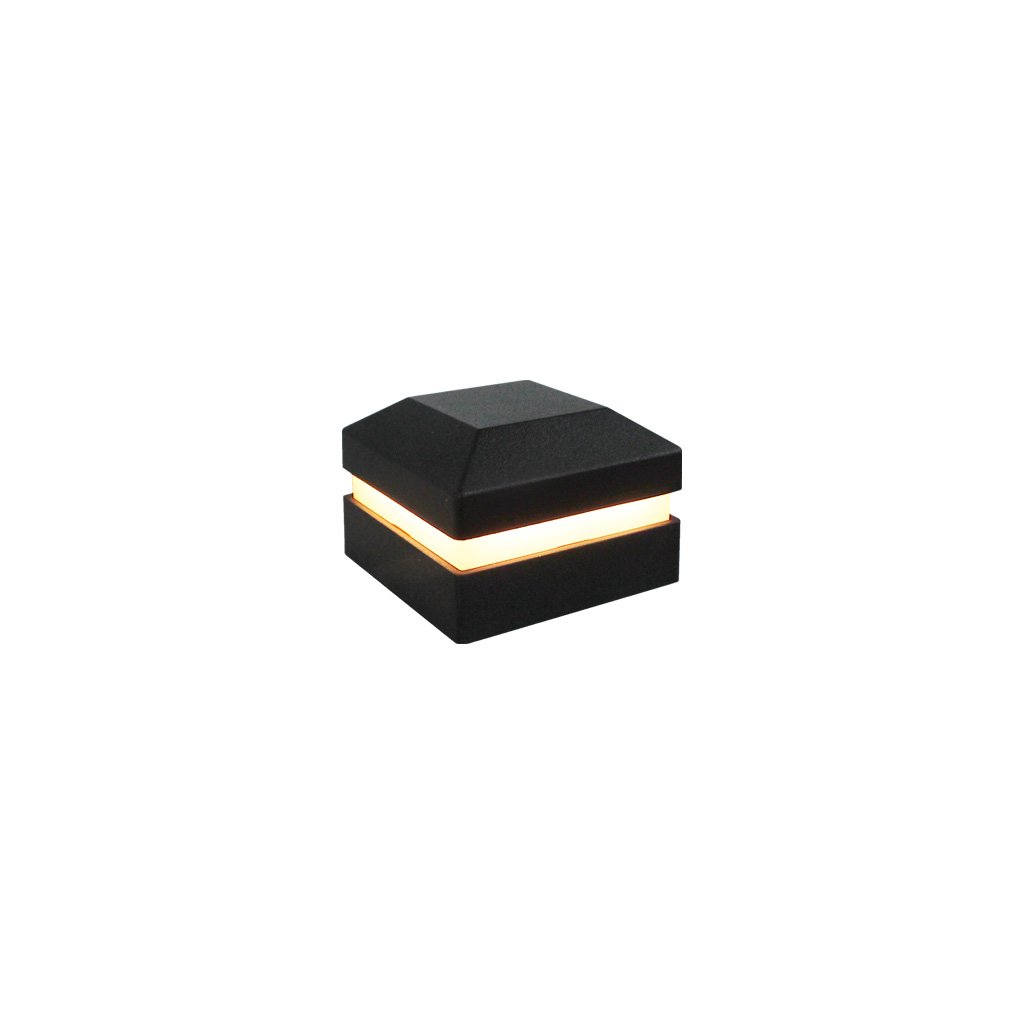
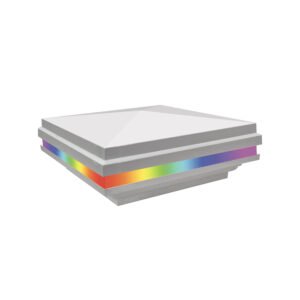
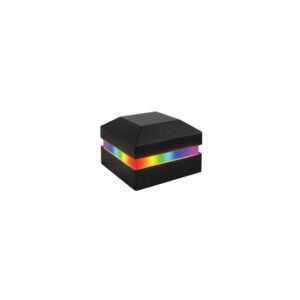
Tru-Scapes 2.5″ Aluminum LED Deck Fence Post Cap Light Post cap lights are among the most effective tools for brightening a deck’s perimeter, and this aluminum fixture is built to handle the outdoor environment without corroding or fading. It mounts directly to the top of standard deck posts and casts ambient light downward and outward — illuminating the railing zone, the area just beyond the deck edge, and any pathways or planters nearby. Six of these on a mid-sized deck’s corner and gate posts provide enough ambient fill to make the entire surface navigable.

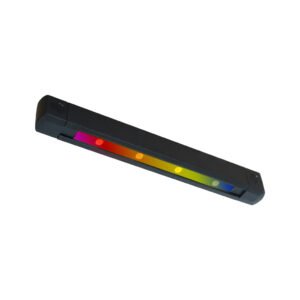
Tru-Scapes 2.5″ LED Slim Puck Light When you need to fill in the surface between larger fixtures, the slim puck light is the workhorse of a layered deck lighting plan. Its ultra-low profile makes it ideal for under-railing installation, soffit mounting, or placement in tight spots where a bulkier fixture won’t fit. The focused downward beam is well-suited for task areas — outdoor dining tables, grilling zones, and the area directly in front of a door threshold.
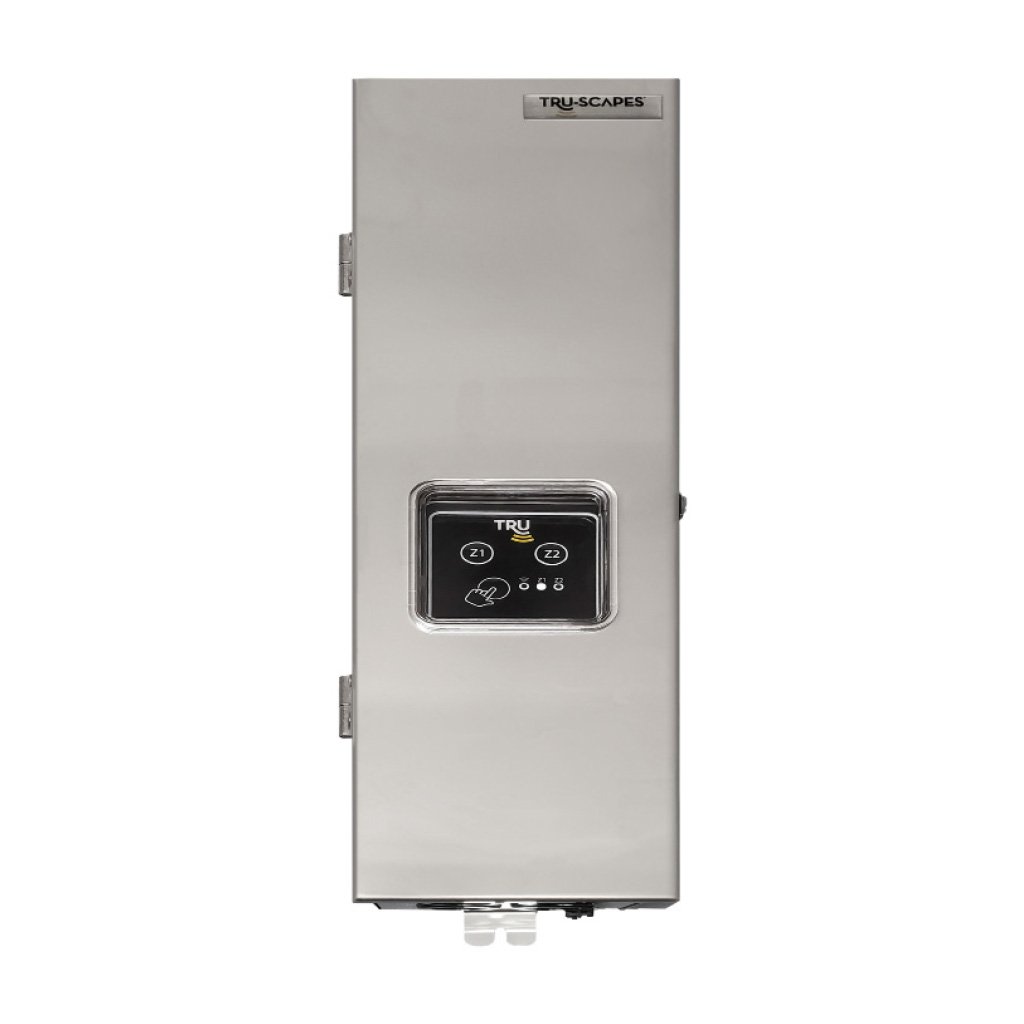
Tru-Scapes 400W WiFi Transformer A lighting system is only as good as its control. This 400-watt WiFi transformer supports scheduling, dimming, and zone management from a smartphone app, making it possible to set lights to activate at sunset automatically, dim down after a certain hour, or run different brightness levels in different areas of the deck simultaneously. At 400 watts of capacity, it handles substantial fixture loads — enough for a full deck lighting project without the need for a second transformer on most residential installations.
Why does my deck feel so dark even with lights installed? Most likely, you have a single-layer lighting setup — one or two fixtures doing all the work. When there are large unlit gaps between fixtures, your eyes perceive the whole space as dark rather than registering the lit zones. Adding low-level accent and task lighting between your existing fixtures typically solves this immediately.
What is the best deck lighting for safety? Stair lighting is the highest-priority safety upgrade on any deck. Dot lights or slim puck lights mounted at riser level on every step ensure that foot placement is visible at all times, reducing trip-and-fall risk significantly.
Are low-voltage deck lights safe for DIY installation? In most jurisdictions, low-voltage (12V) landscape and deck lighting systems can be installed without a licensed electrician. However, you should always verify local electrical codes before beginning, and any work that involves connecting to your home’s main electrical panel should be handled by a licensed professional. Our low-voltage deck lighting installation tips are a good starting point for planning a DIY project safely.
How many lumens do I need to light a deck? As a general guideline, aim for 50–100 lumens per square foot for comfortable ambient deck lighting. Stair lighting requires less — individual step lights at 15–30 lumens per fixture are typically sufficient for safe visibility.
What color temperature is best for deck lighting? Warm white (2700K–3000K) is the most widely recommended color temperature for residential deck lighting. It creates a comfortable, inviting atmosphere that works well for both dining and lounging. Color-changing fixtures give you the option to shift the temperature or add color for specific occasions. For a detailed breakdown, see our guide on mastering color temperature for outdoor lighting.
Can I add lighting to an existing deck without tearing up boards? Yes. Many deck lighting solutions — including post cap lights, under-railing puck lights, and fascia-mounted dot lights — can be installed on the exterior surfaces of an existing deck without disturbing the deck surface. Cable management usually runs along the underside of the frame or through conduit attached to the structure.
How do WiFi transformers work with deck lighting? A WiFi transformer connects to your home’s wireless network and allows you to control connected fixtures through a smartphone app. Functions typically include on/off scheduling, dimming, zone separation, and in some cases color control for compatible LED fixtures. No hub or additional hardware is usually required.
How long do LED deck lights last? Quality LED deck fixtures are rated for 50,000 hours or more of use under normal conditions. At four hours of use per night, that translates to over 34 years of lifespan before the LED reaches end-of-life output levels.
Low-Voltage Lighting: A lighting system that operates at 12 volts rather than standard line voltage (120V). Low-voltage systems are safer to handle, more energy-efficient, and widely used in landscape and deck lighting installations.
Color Temperature: A measurement (in Kelvin) that describes the warmth or coolness of a light source’s output. Lower Kelvin values (2700K–3000K) produce warm, amber-tinted light; higher values (5000K+) produce a cool, blue-tinted daylight effect.
IP Rating (Ingress Protection): A standardized scale that indicates how well an electrical fixture resists dust and water. For outdoor deck use, fixtures with an IP65 rating or higher are recommended, as they are protected against water jets from any direction.
Transformer (Landscape/Deck): An electrical device that converts standard line voltage (120V) to low voltage (typically 12V) to safely power outdoor LED fixtures. Smart or WiFi-enabled transformers add scheduling and dimming capabilities to the system.
A deck too dark to use comfortably after sunset is almost always a solvable problem — and the solution rarely requires a full renovation. By addressing stairs first, building a layered lighting plan, and connecting everything to a smart control system, most homeowners can transform their outdoor space in a single weekend.
The products featured in this article — from the Tru-Scapes 2.5″ Modern Color Changing Dot Light for stair and accent applications to the Tru-Scapes 400W WiFi Transformer for complete system control — are designed to work together as an integrated system rather than a patchwork of mismatched fixtures.
Start with your stairs. Add post cap lights at the perimeter. Fill in the surface with puck lights and dot lights. Connect it all to a WiFi transformer that handles the scheduling for you. That’s the complete roadmap to a deck you’ll actually want to spend time on after the sun goes down.
Color-changing outdoor lights have a reputation problem. Done poorly, they turn a beautiful backyard into something that looks like a
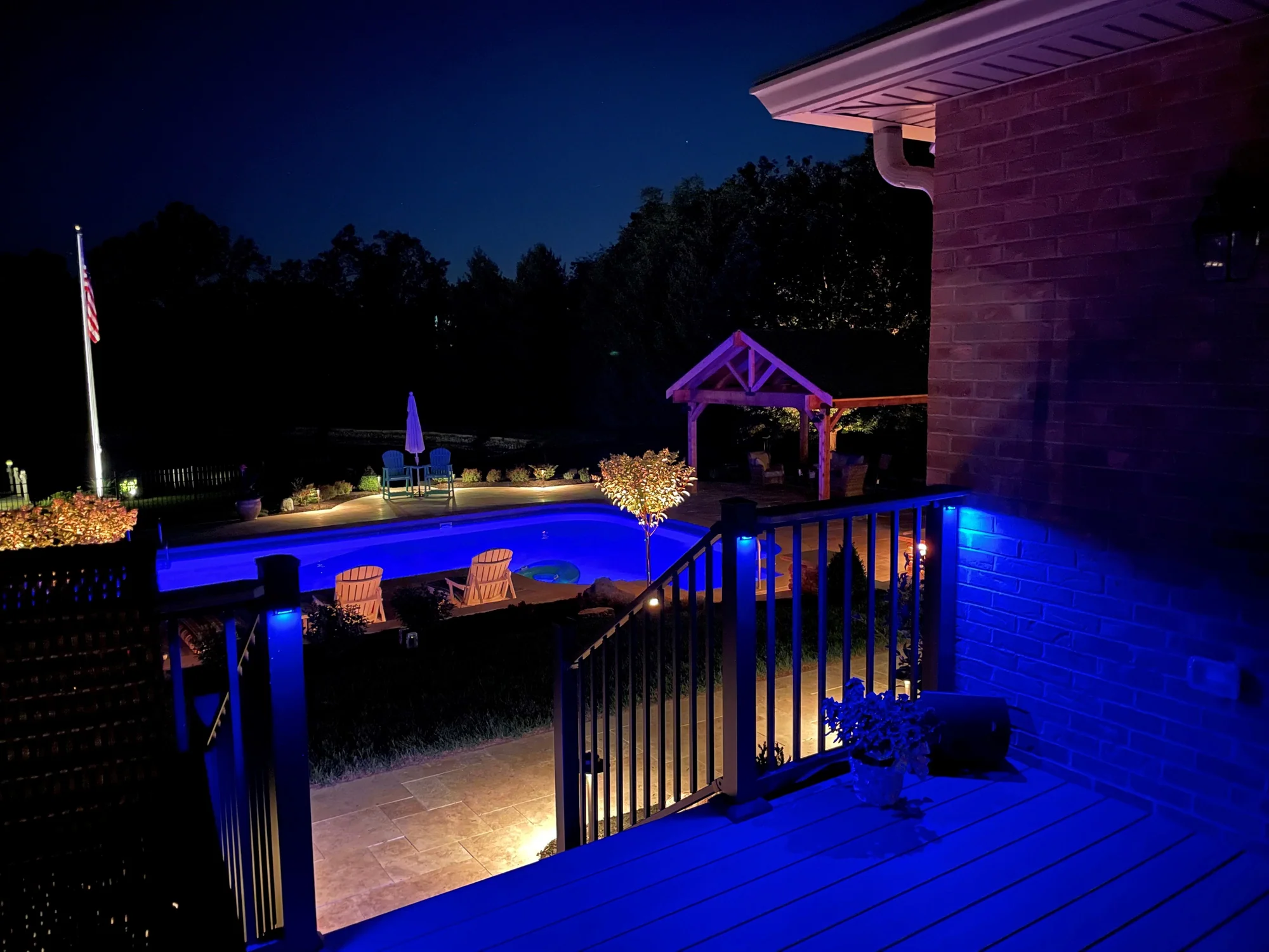
Outdoor spaces have quietly become the heart of the American home, and color-changing deck lights are leading the shift from