- FREE Shipping on all orders! Limited time!
- support@tru-scapes.com


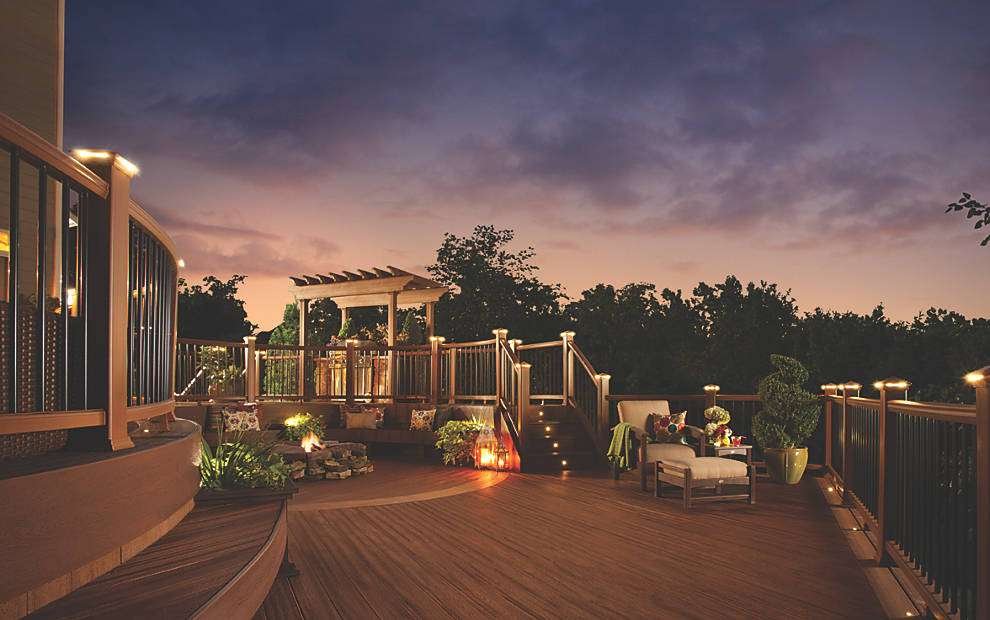
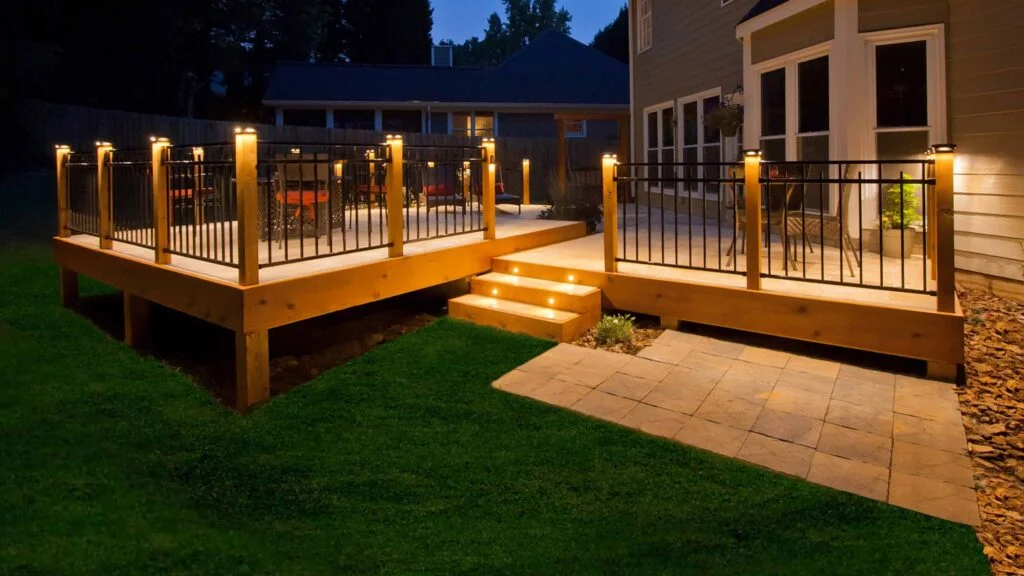
For years, deck lighting meant a few solar path lights or a string of warm-white bulbs strung along a railing. Functional? Barely. Memorable? Not at all. The deck lighting trends of 2026 have moved far beyond that baseline.
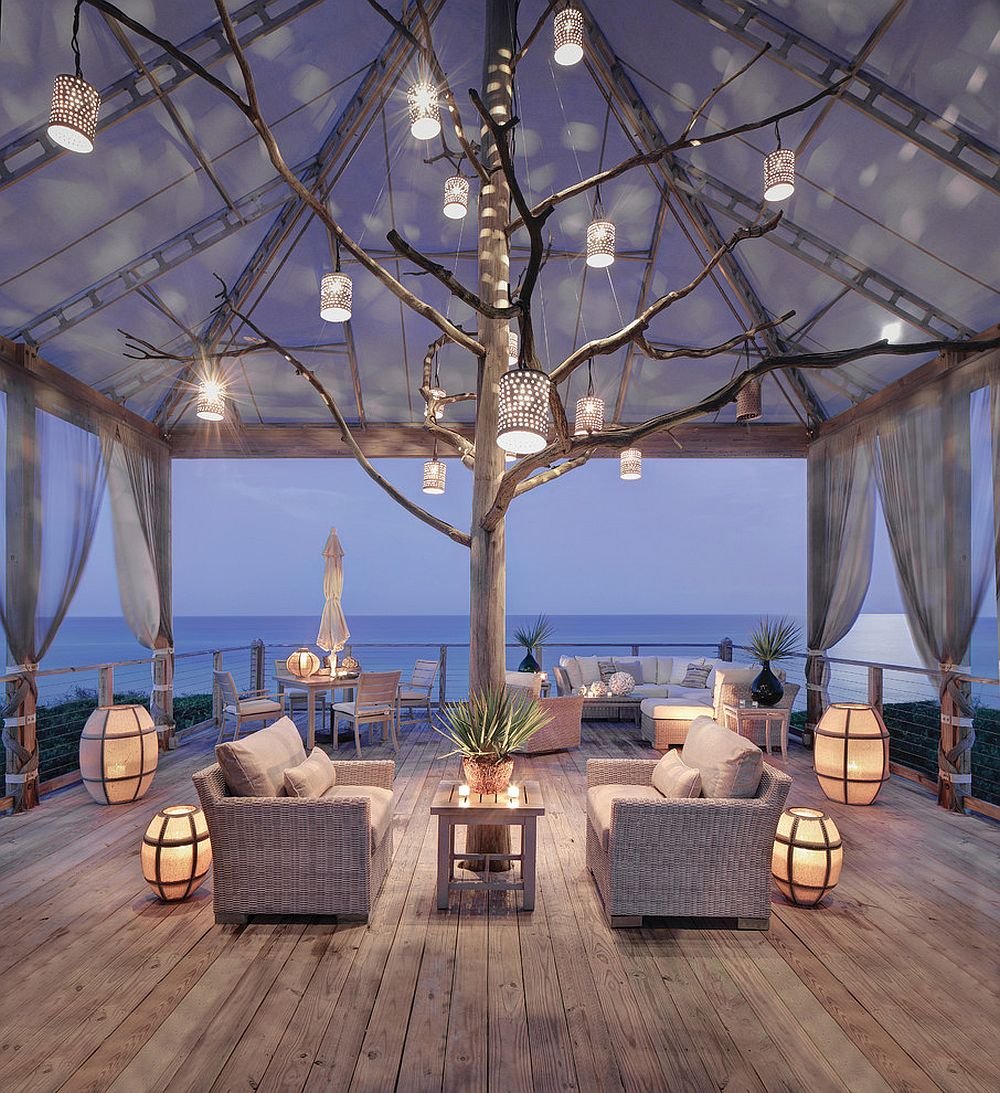
Today’s homeowners want outdoor spaces that feel like genuine extensions of the home — spaces designed for entertaining, unwinding, and showing off a little. Color-changing deck lights are the single biggest driver of this shift, and they’re now accessible, durable, and surprisingly easy to install. Whether you’re building a new deck or upgrading an existing one, understanding these trends will help you make smarter lighting decisions that last.
In this article, you’ll learn what’s driving smart deck lighting in 2026, how to choose between cap lights, riser lights, and wedge lights, and which products are worth your attention.
RGB LED technology is no longer a novelty limited to gaming setups and concert stages. Advances in LED chip design and weatherproofing have brought full-spectrum color-changing capability into durable, low-voltage outdoor fixtures. Industry sources such as the Illuminating Engineering Society (IES) have noted steady growth in residential outdoor LED adoption, particularly in deck and landscape applications.
The result: color-changing fixtures that consume a fraction of the power of older halogen or incandescent options while delivering far more design flexibility. The U.S. Department of Energy confirms that LED lighting uses significantly less energy than incandescent alternatives, making the switch to LED deck lighting a smart long-term investment.
The sustained growth in outdoor living investment hasn’t slowed. Homeowners are treating decks, patios, and pergolas as genuine rooms — places with atmosphere, function, and style. Lighting is now understood as a critical design layer, not an afterthought. The American Lighting Association (ALA) has consistently reported that outdoor lighting is among the top-requested features in residential remodels.
App-controlled lighting has become mainstream. Homeowners expect to adjust their deck lighting from a smartphone — changing color, dimming output, or syncing lights to a scene with a few taps. This has accelerated demand for smart deck lighting systems that work without complex wiring rewrites.
Understanding the three major categories of deck lighting helps you build a layered deck lighting system rather than piecing together mismatched fixtures.
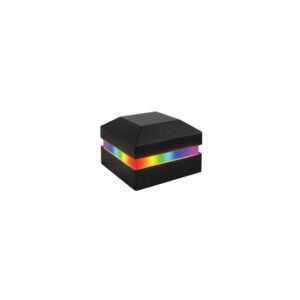
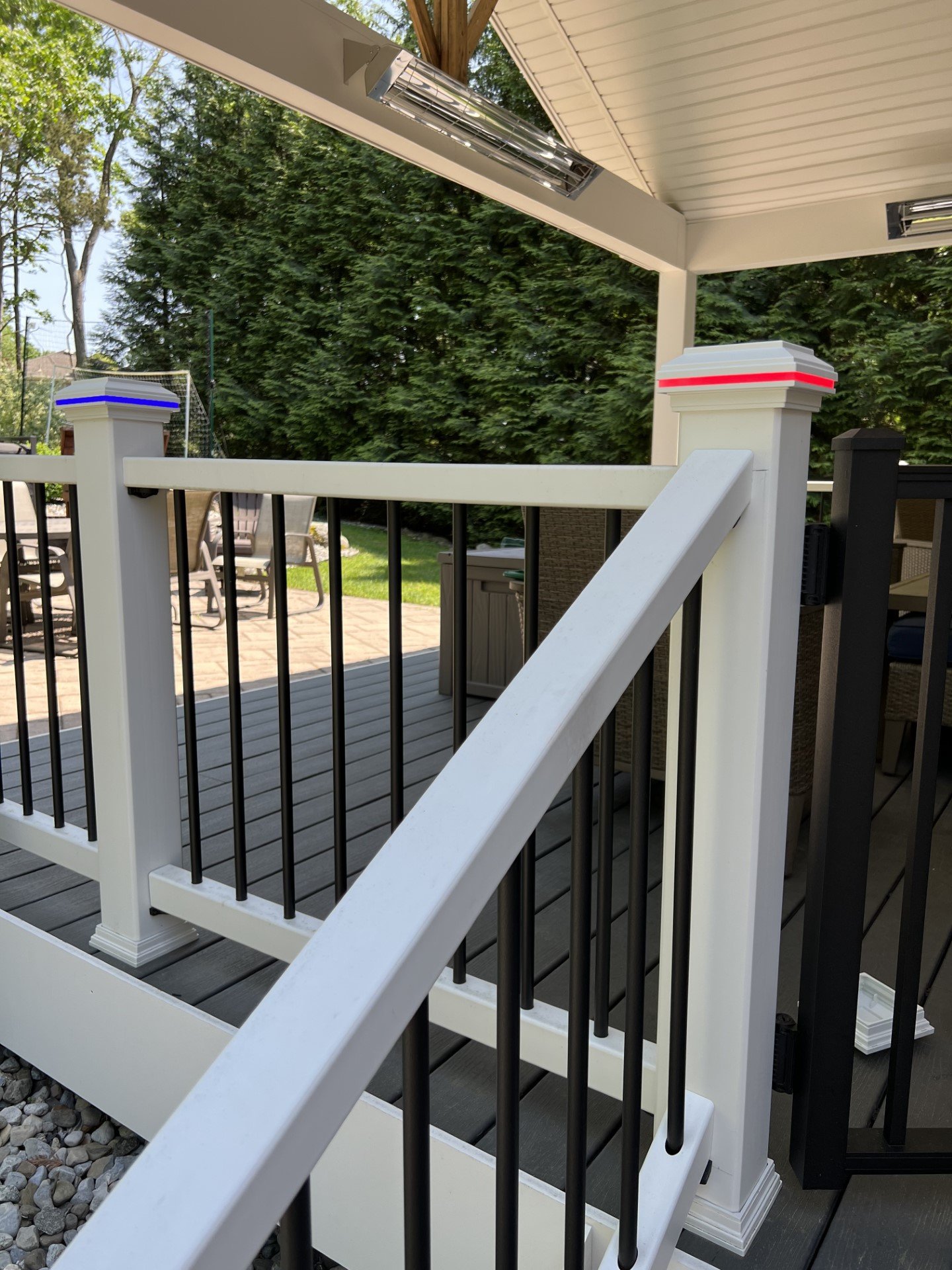
Post cap lights sit atop deck railing posts, providing downward ambient light and a finished look to exposed post tops. In 2026, color-changing post cap lights are the dominant style. They replace static white or warm-amber caps with full RGB capability, letting you match your lighting to holidays, seasons, or moods. Not sure which style is right for your railing system? Our guide to choosing post cap lights for your deck walks through every option in detail.
If you have aluminum posts or want a modern, architectural look, an aluminum post cap light offers superior durability and a clean profile.
If your deck uses vinyl railing systems, a vinyl-compatible color-changing post cap integrates seamlessly without adapters or visible hardware.
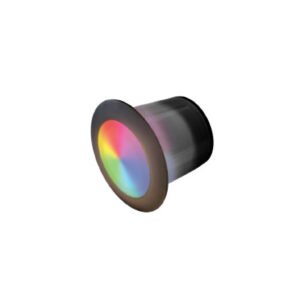
Riser lights mount flush into the vertical face of deck steps. They serve a dual purpose: safety (illuminating each tread so no one misjudges a step) and style (creating a layered, architectural glow across stair runs). Color-changing riser lights take this further, letting you run vivid seasonal colors or subtle warm gradients up and down your staircase. For a deeper look at safe stair illumination, see our full resource on deck stair lighting for safety.
If your steps are narrow or space-constrained, a 3-inch riser light provides ample illumination without dominating the face board. If your steps are wide or you want a bolder visual statement, a 6-inch riser light covers more surface and delivers stronger color output.
Wedge lights are low-profile fixtures that angle light outward and downward along deck boards, under railings, or along structural edges. They’re perfect for filling in the shadow zones that post cap and riser lights miss. In 2026, wedge-style color-changing fixtures are increasingly popular for accent lighting along fascia boards and below seating platforms.
Color-changing LED deck lights use RGB (Red, Green, Blue) or RGBW (Red, Green, Blue, White) diode clusters. By varying the intensity of each color channel, the controller can produce millions of color combinations. Most modern systems use one of three control methods:
| Control Method | Pros | Best For |
| RF Remote | Simple, no app needed, reliable range | DIY installs, single-zone setups |
| Bluetooth App | Easy setup, good range, scene presets | Small to mid-size decks |
| Wi-Fi / Smart Hub | Full smart home integration, scheduling | Large decks, tech-forward homes |
Nearly all color-changing deck light systems are low-voltage (12V or 24V DC), making them safe to install as a DIY project in most jurisdictions. Always check local electrical codes before installation.
Pros:
Cons:
Do:
Don’t:
The Henderson family in suburban Ohio had a 400-square-foot cedar deck built in the early 2010s. The original lighting was a single overhead fixture and a few solar path stakes — barely functional, and visually uninspiring. In the spring of 2025, they decided to overhaul the deck’s lighting before hosting a graduation party.
Their approach: color-changing post cap lights on all eight railing posts, riser lights on the 14-step staircase, and wedge lights along the fascia board beneath the main deck surface.
The result was dramatic. The graduation party featured the school’s colors across the entire deck via Bluetooth app scene selection — a single tap. For everyday use, the family runs a warm white-amber scene that mimics candlelight. For the Fourth of July, they switch to red, white, and blue mode in under 30 seconds.
The project required no licensed electrician because the entire system ran on a 12V low-voltage transformer. Total installation time: one weekend. Total new wiring experience required: none. If you’re tackling a similar project, our beginner-friendly installation guide covers everything you need to know before you start.
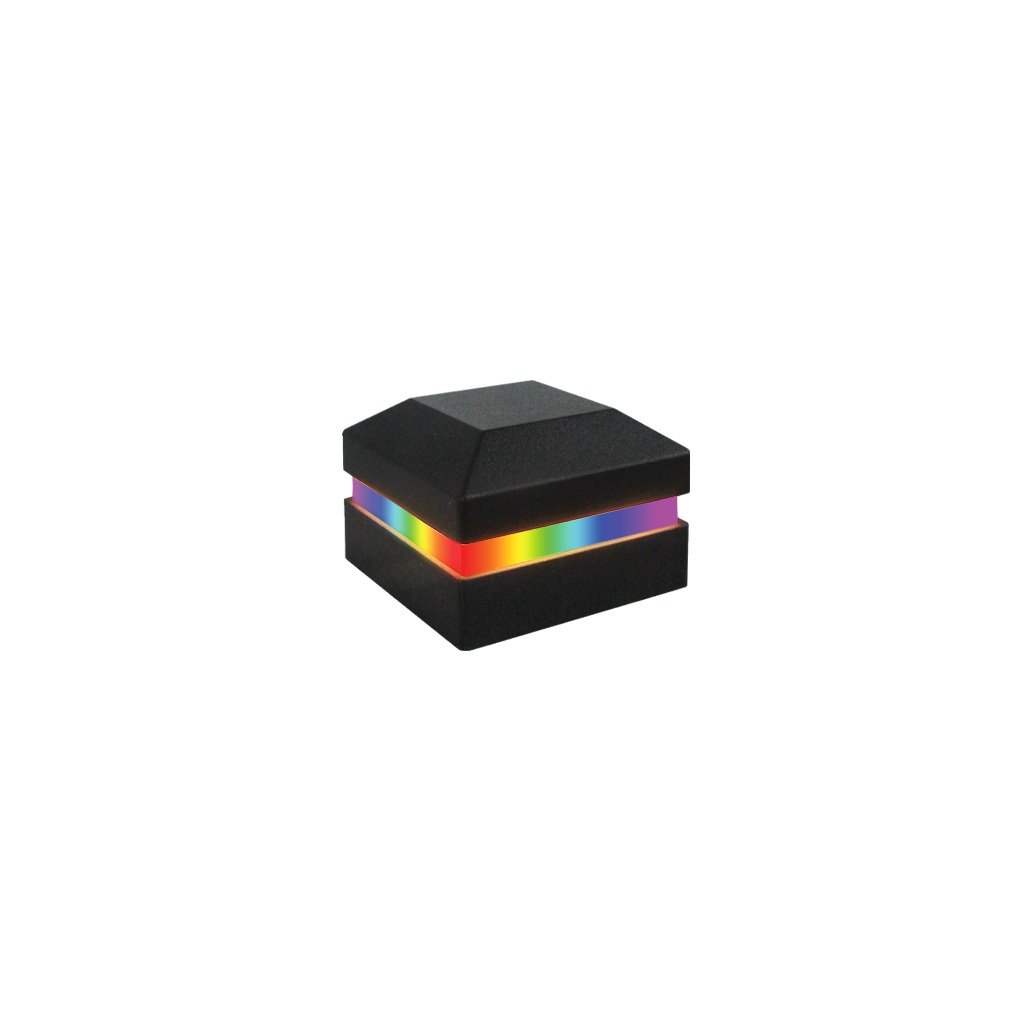
Tru-Scapes 2.5″ Aluminum Color Changing LED Deck Post Light
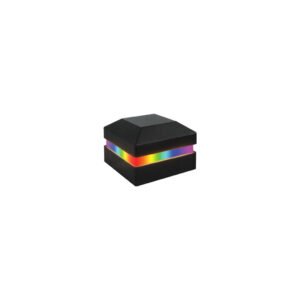
Designed for aluminum and metal deck posts, this 2.5″ post cap light delivers full RGB color-changing output in a slim, durable aluminum housing. It’s built to withstand outdoor weather conditions and integrates with standard low-voltage color-changing control systems — making it a natural choice for modern or industrial-style deck designs.

Tru-Scapes 4″ Vinyl Color Changing LED Deck Post Light
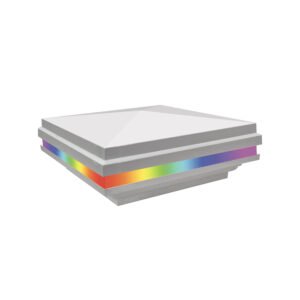
Built to fit standard 4″ vinyl fence and deck posts, this color-changing post cap light blends seamlessly with white or colored vinyl railing systems. The clean profile sits flush atop the post, and its full-spectrum LED output lets homeowners run any color scene without swapping fixtures. A go-to choice for homeowners with vinyl deck systems who want smart deck lighting capability.
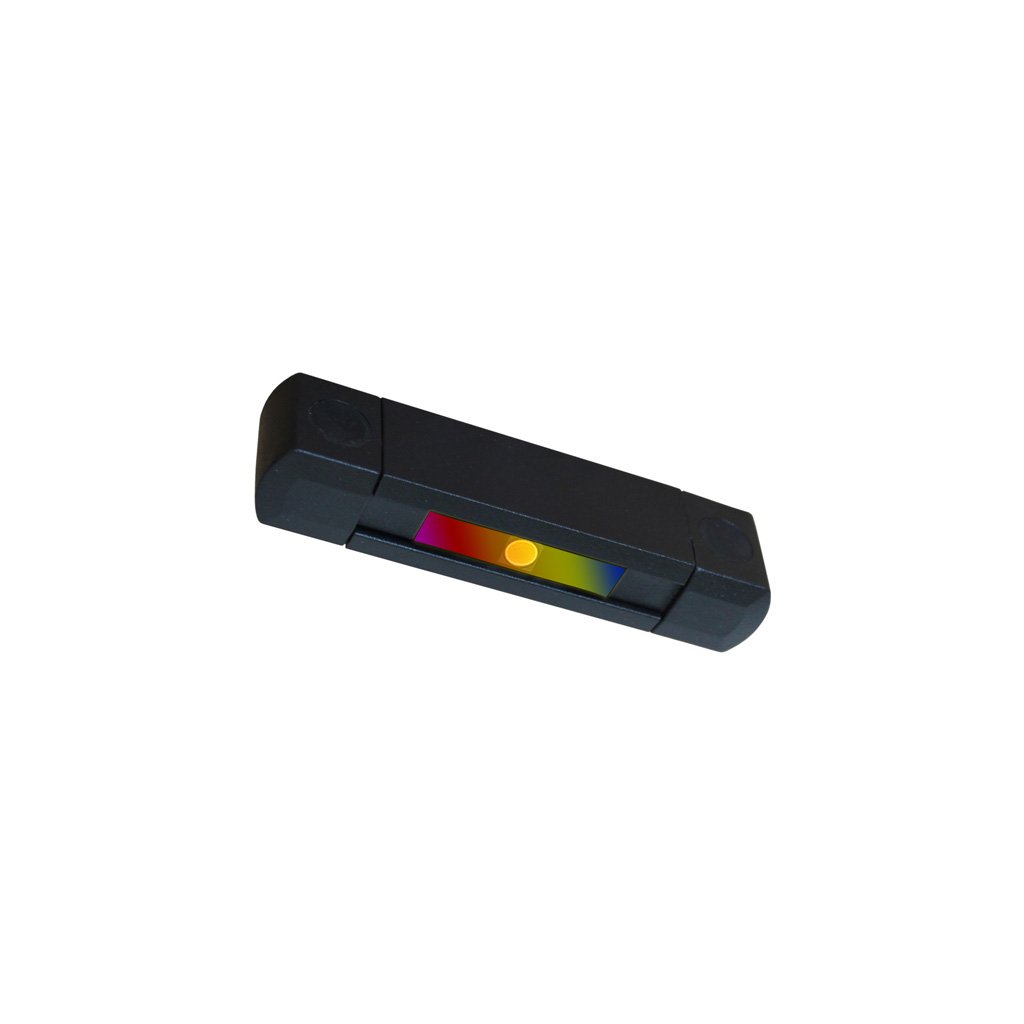
Tru-Scapes 3″ Color Changing LED Deck Step Riser Light
The 3″ riser light mounts directly into the face board of deck steps, providing both safety illumination and color-changing ambiance. Its compact footprint makes it ideal for narrower step risers or situations where a low-profile fixture is needed. Each light syncs with the broader color-changing system so your staircase and post lights run the same scene simultaneously.
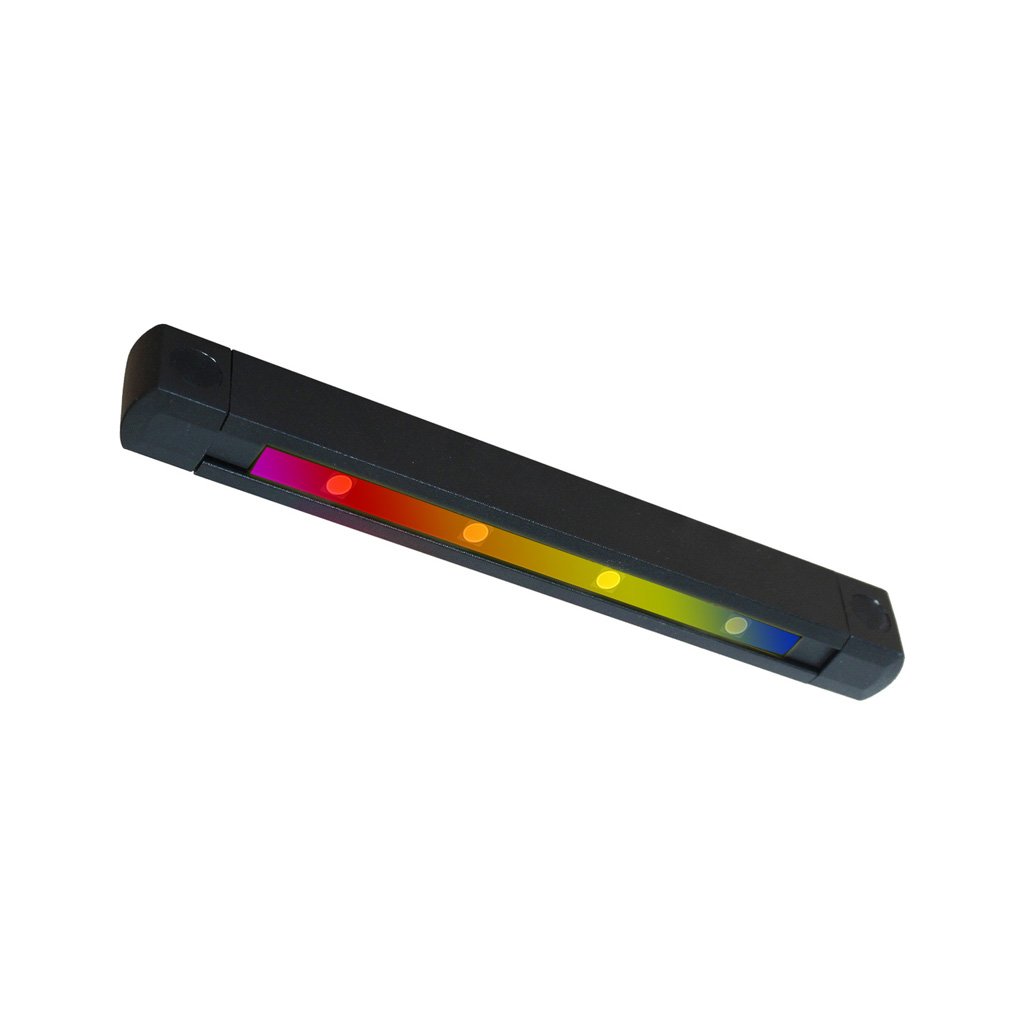
Tru-Scapes 6″ Color Changing LED Deck Step Riser Light
For wider steps or higher-visibility applications, the 6″ riser light covers more surface area and delivers stronger color output across each tread. The larger form factor makes it a particularly strong visual anchor in multi-step deck staircases, and it coordinates with the full Tru-Scapes color-changing ecosystem for synchronized scenes across every zone of your deck.
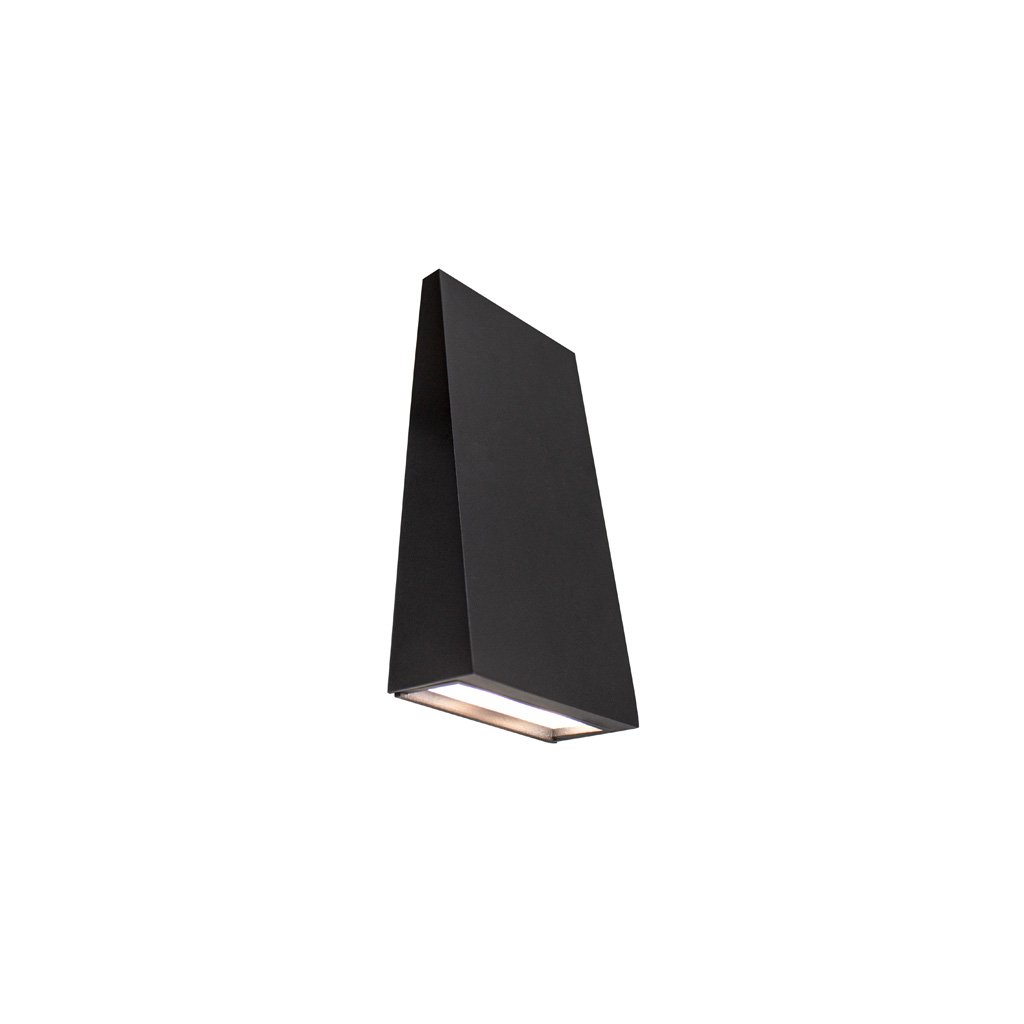
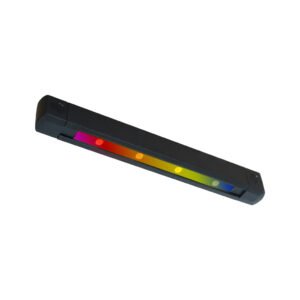
The Tru-Scapes Wedge Light is a low-profile accent fixture designed to cast directional color-changing light along deck boards, fascia edges, and under-railing zones. It fills in the shadow zones that post caps and riser lights can’t reach, completing a fully layered deck lighting scheme. Its angled output creates a wash of color along flat surfaces, adding depth and dimension that makes the whole deck feel cohesive after dark.
Q: What are the biggest deck lighting trends in 2026?
Color-changing LED fixtures — particularly post cap lights, step riser lights, and wedge lights — are the defining trend. Smart control via Bluetooth or app is now standard in the category.
Q: Are color-changing deck lights hard to install?
Most systems use low-voltage (12V or 24V) wiring that doesn’t require a licensed electrician in most areas. If you’re comfortable with basic outdoor wiring, our low-voltage deck lighting installation tips can walk you through a DIY installation over a weekend.
Q: How do I control color-changing deck lights?
Options include RF remotes, Bluetooth smartphone apps, and Wi-Fi smart home hubs. The controller must be compatible with your specific fixture line for proper color sync.
Q: Can I use color-changing deck lights year-round?
Yes — quality weatherproof deck lights are built for all-weather use. Look for fixtures with an IP65 or higher ingress protection rating for reliable performance in rain, snow, and heat.
Q: How many lumens do I need for deck step lights?
Step safety lighting generally benefits from 20–50 lumens per fixture at minimum. Color-changing fixtures running full-color modes typically produce lower lumens than white-only operation, so place them on every step rather than every other step. See our guide to deck stair lighting for safety for more detail.
Q: Do color-changing deck lights consume a lot of power?
No. LED color-changing deck lights are highly energy-efficient. A typical low-voltage deck lighting system with 10–15 fixtures may draw only 30–60 watts total, far less than traditional incandescent systems. The U.S. Department of Energy provides helpful data on LED energy savings for homeowners.
Q: What’s the difference between RGB and RGBW deck lights?
RGB fixtures produce color by mixing red, green, and blue channels. RGBW adds a dedicated white LED, which produces cleaner, more natural whites. For most deck applications, RGB is sufficient; RGBW is preferred when warm white everyday lighting is equally important.
Q: Can I mix post cap lights, riser lights, and wedge lights in one system?
Yes, as long as all fixtures use the same control protocol and transformer system. Tru-Scapes products are designed to work together as a coordinated color-changing ecosystem. Our guide to sizing your outdoor lighting transformer can help you plan the right setup.
Q: Are smart deck lighting systems compatible with Alexa or Google Home?
Many Wi-Fi-enabled systems are, but not all. Check the specific product’s smart home compatibility before purchase if integration with a voice assistant is important to you.
Q: What’s the best color for everyday deck ambiance?
Warm white or soft amber — typically around 2700K–3000K equivalent — is the most popular everyday setting. It mimics candlelight, flatters skin tones, and creates a relaxed, welcoming atmosphere.
RGB LED: A light-emitting diode cluster using red, green, and blue channels that can be independently controlled to produce a wide spectrum of colors and white light blends.
Low-Voltage Lighting: An outdoor lighting system that operates on 12V or 24V DC power via a transformer, rather than standard 120V household current. Low-voltage systems are safer to install and handle than line-voltage systems.
IP Rating (Ingress Protection): A standardized two-digit code indicating a fixture’s resistance to solids and liquids. For outdoor deck lighting, IP65 (dust-tight and protected against water jets) is the minimum recommended rating.
Color Temperature: A measure of a light source’s warmth or coolness expressed in Kelvin (K). Lower values (2700K–3000K) produce warm white light; higher values (5000K+) produce cool or daylight-toned light. Color-changing fixtures let users shift across this spectrum dynamically.
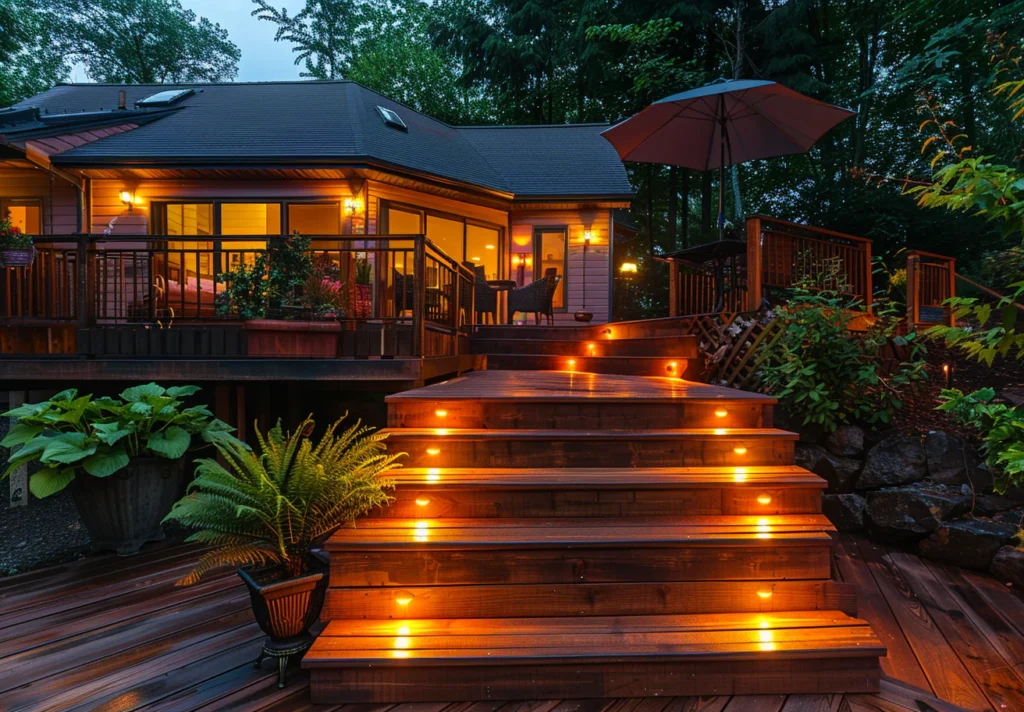
Deck lighting trends in 2026 have converged on one clear direction: color-changing, low-voltage LED systems that are smart, flexible, and genuinely beautiful. The combination of color-changing post cap lights, step riser lights, and wedge accent lights gives homeowners the tools to build a fully layered deck lighting system that works hard for safety and harder for style.
The technology is mature, the installation is DIY-friendly, and the results — whether you’re running warm white for a quiet Tuesday night or full holiday colors for a gathering — are genuinely striking.
If you’re ready to upgrade, start with your posts and steps. The Tru-Scapes 4″ Vinyl Color Changing LED Deck Post Light and the Tru-Scapes 6″ Color Changing LED Deck Step Riser Light are strong starting points that anchor any complete system. Add wedge lights to fill in the gaps, and you’ll have a deck that looks professionally designed — because it is.
Key Takeaways A deck that goes dark at sunset loses half its value. In Pennsylvania, that problem gets worse, because
Key Takeaways A deck that goes dark at 7 p.m. in October is a deck you only use half the