- FREE Shipping on all orders! Limited time!
- support@tru-scapes.com

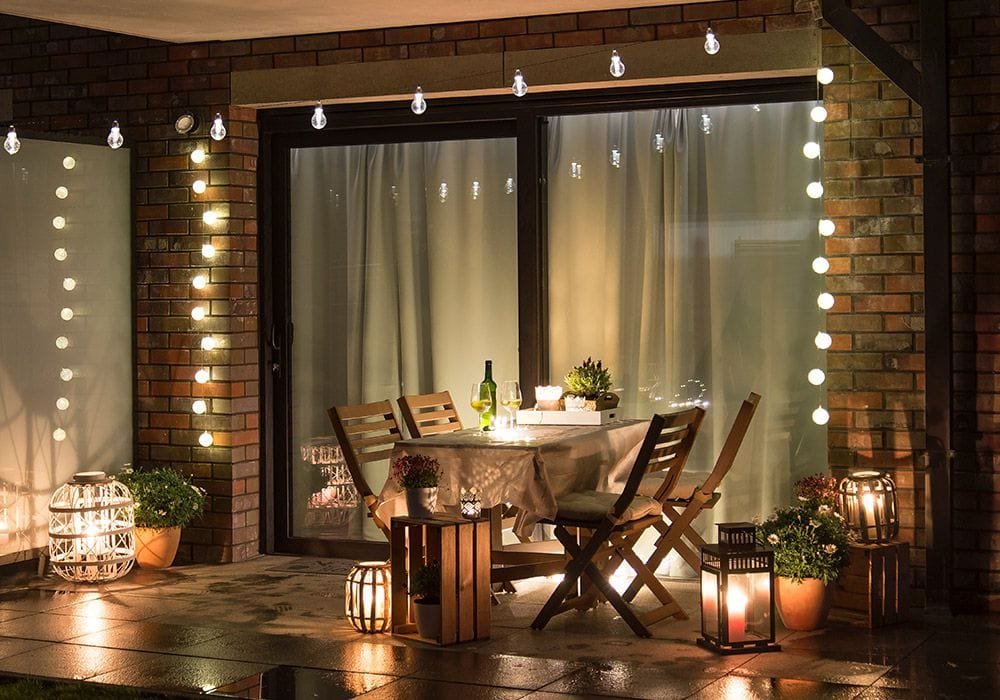
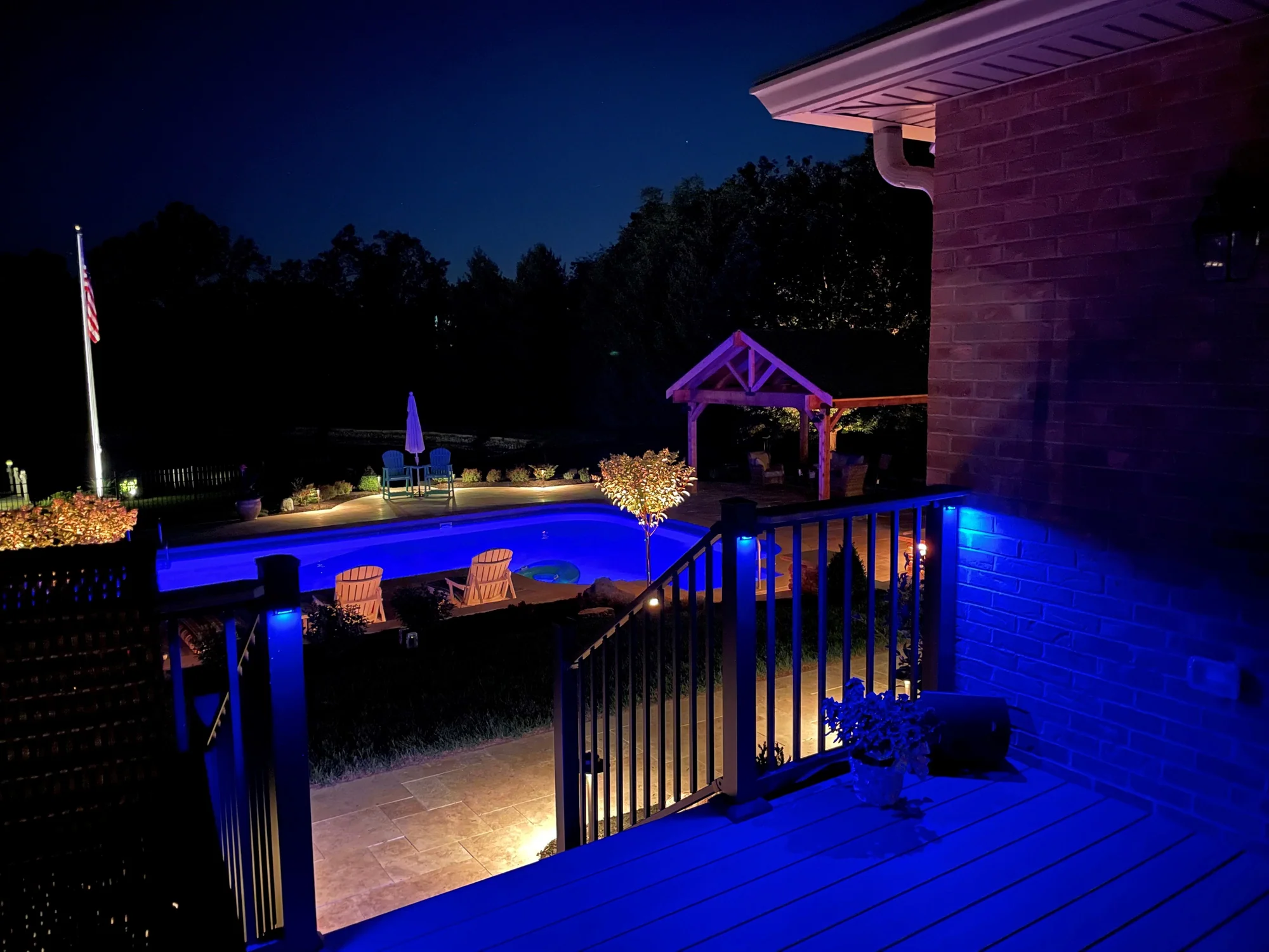
A house looks completely different at 9 p.m. than it does at noon, and most homeowners never take control of that second version. Daylight flattens everything under one light source. Night lets you decide what gets seen, what recedes, and what glows. That is the real power behind outdoor lighting fixtures for home exteriors, and it is why a modest ranch with thoughtful lighting often photographs better than a large home with two floodlights bolted over the garage.
Tru-Scapes builds fixtures for exactly this purpose. Instead of general-purpose lamps repurposed for outdoor use, the Tru-Scapes approach starts with the surfaces homeowners actually want to light: deck posts, railings, stair treads, soffits, columns, and entry walls. The result is home exterior lighting that reads as part of the architecture rather than an accessory stuck onto it.
This guide covers what changes when fixtures are chosen well, how to plan an exterior fixture upgrade in order, and which fixture types solve which problems.
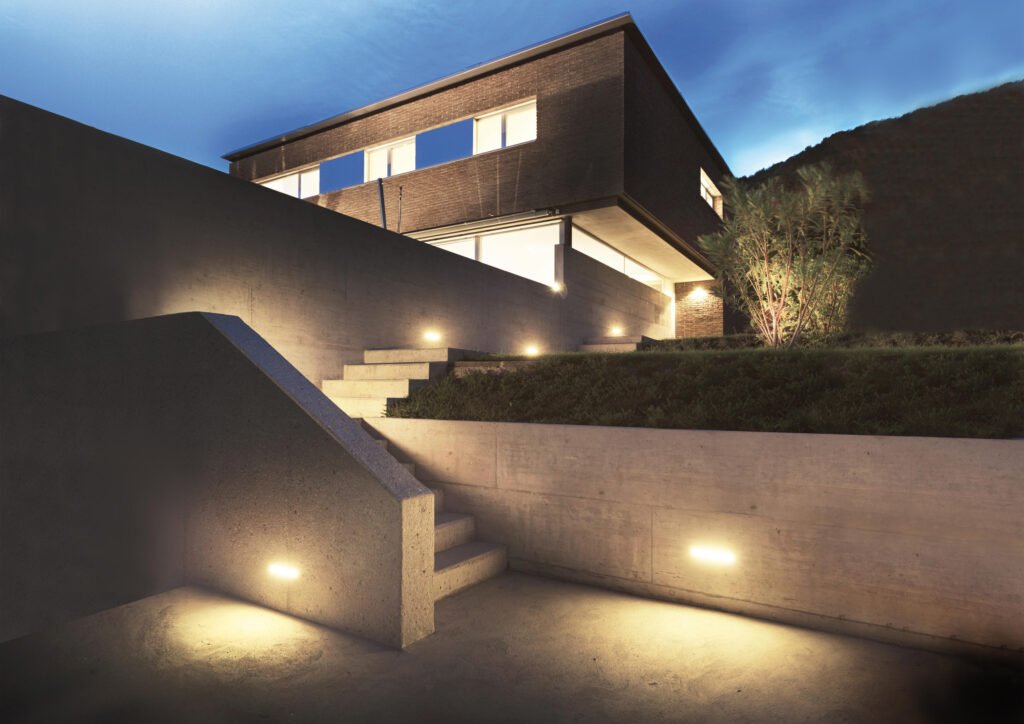
Lighting alters four things people notice immediately, even if they cannot name them.
Industry guidance from the Illuminating Engineering Society consistently emphasizes controlled brightness and glare reduction over raw output, and that principle explains why small, well-aimed fixtures usually outperform large floodlights for outdoor home aesthetics.
Professional results come from stacking three layers rather than relying on one.
Soft, general illumination that lets people move safely. Recessed soffit lights and low-output post caps handle this best because the light source stays hidden.
Focused light where something happens: steps, grill areas, door locks, gate latches. Wall sconces near entries and stair-adjacent fixtures cover this.
Deliberate emphasis on a column, a specimen tree, a stone chimney, or a railing line. This layer is what makes a property look designed instead of merely lit.
If your deck already has adequate step lighting but still feels dim and shapeless, you are missing the ambient layer, and adding recessed soffit fixtures under the covered portion will fix it faster than adding more step lights.
| Fixture Type | Primary Job | Best Placement | Light Direction | Visual Effect |
|---|---|---|---|---|
| Composite post cap light | Define railing lines and deck perimeter | Deck and railing post tops | Downward and outward | Draws the outline of the outdoor living space |
| Wall sconce | Mark entries and vertical surfaces | Beside doors, on columns, on posts | Up, down, or both | Adds architectural rhythm and scale |
| Recessed ceiling or soffit light | Wash surfaces from above | Porch ceilings, covered decks, overhangs | Straight down | Grounds the structure, hides the source |
| Low profile sconce | Discreet task and path light | Low on posts, walls, stair sides | Downward wash | Lights the walking surface without glare |
Each type solves a different problem, which is why mixing them produces better results than buying four of the same fixture.
Color changing fixtures give a deck two personalities, one for everyday evenings and one for gatherings. Fixed warm white gives absolute consistency. Both are valid, and the decision depends on how the space is used.
| Pros of Color Changing Fixtures | Trade-offs to Consider |
|---|---|
| One installation serves both quiet nights and celebrations | Requires a compatible controller and planning |
| Warm white mode remains available as the everyday default | More setup involved during commissioning |
| Adds seasonal and holiday flexibility without extra fixtures | Overuse of saturated color can cheapen a clean design |
| Higher perceived value for entertaining spaces | Best results still come from restrained, warm settings |
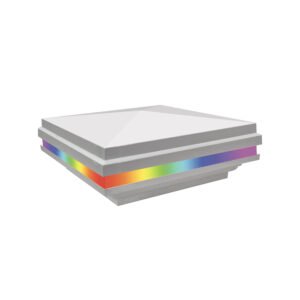
If your deck is mainly a quiet evening space, fixed warm white keeps things simple. If you host regularly or want holiday flexibility without hanging temporary strings, the Tru-Scapes® 4.5″ Composite Color Changing LED Deck Post Light (Fits TREX Transcend Posts) covers both modes from a single installed fixture.
| Do | Don’t |
|---|---|
| Hide the source and show the effect | Aim fixtures where people will look straight into them |
| Keep one consistent color temperature outdoors | Mix cool white and warm white on the same elevation |
| Light the walking surface, not the walker’s eyes | Rely on a single bright floodlight for the whole yard |
| Space post lights evenly along a railing run | Cluster fixtures on one side and leave gaps elsewhere |
| Choose fixtures rated for permanent outdoor exposure | Use temporary or indoor-rated products outside |
| Aim downward wherever safety lighting is needed | Point uplights toward neighboring windows |
Dark Sky International advocates shielded, downward-directed fixtures to limit light trespass, which aligns closely with how deck and soffit lighting should be specified in residential neighborhoods.
A two-story colonial in suburban Pennsylvania had a rebuilt composite deck, a covered rear porch, and a front entry that vanished after sunset. The homeowners had already tried a brighter bulb in the existing porch fixture, which produced glare on the front walk and did nothing for the deck.
The fix was layered rather than brighter. Along the deck railing, Tru-Scapes® 4.5″ Composite Color Changing LED Deck Post Light (Fits TREX Transcend Posts) units were installed on every other post to trace the perimeter in warm white. Under the covered porch, Tru-Scapes® Recessed Ceiling / Soffit Light fixtures provided even ambient wash with no visible source.
At the entry, a pair of Tru-Scapes® Single Lamp Sconce fixtures replaced the single overhead unit, giving the door symmetry and scale. Along the stair side walls, Tru-Scapes® Low Profile Post / Wall Mount Sconce units handled tread lighting without glare.
The total fixture count rose, the perceived brightness stayed comfortable, and the house finally read as one connected exterior at night instead of three disconnected zones.
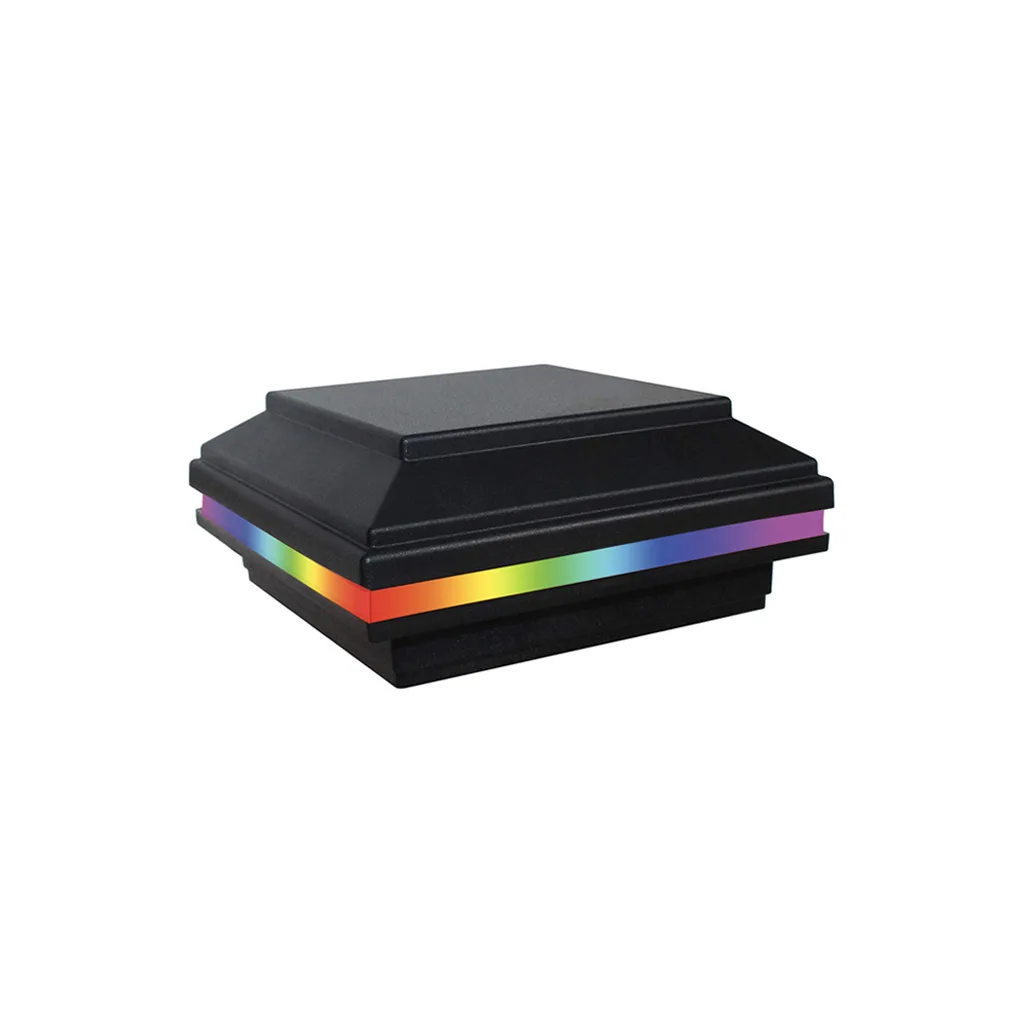
This post cap light traces the outline of a deck so the space keeps its shape after dark, which is the single fastest way to change how a rear elevation reads. The composite construction is built to match and weather alongside composite railing systems, and the color changing capability lets one installed fixture serve both everyday warm white and event lighting.
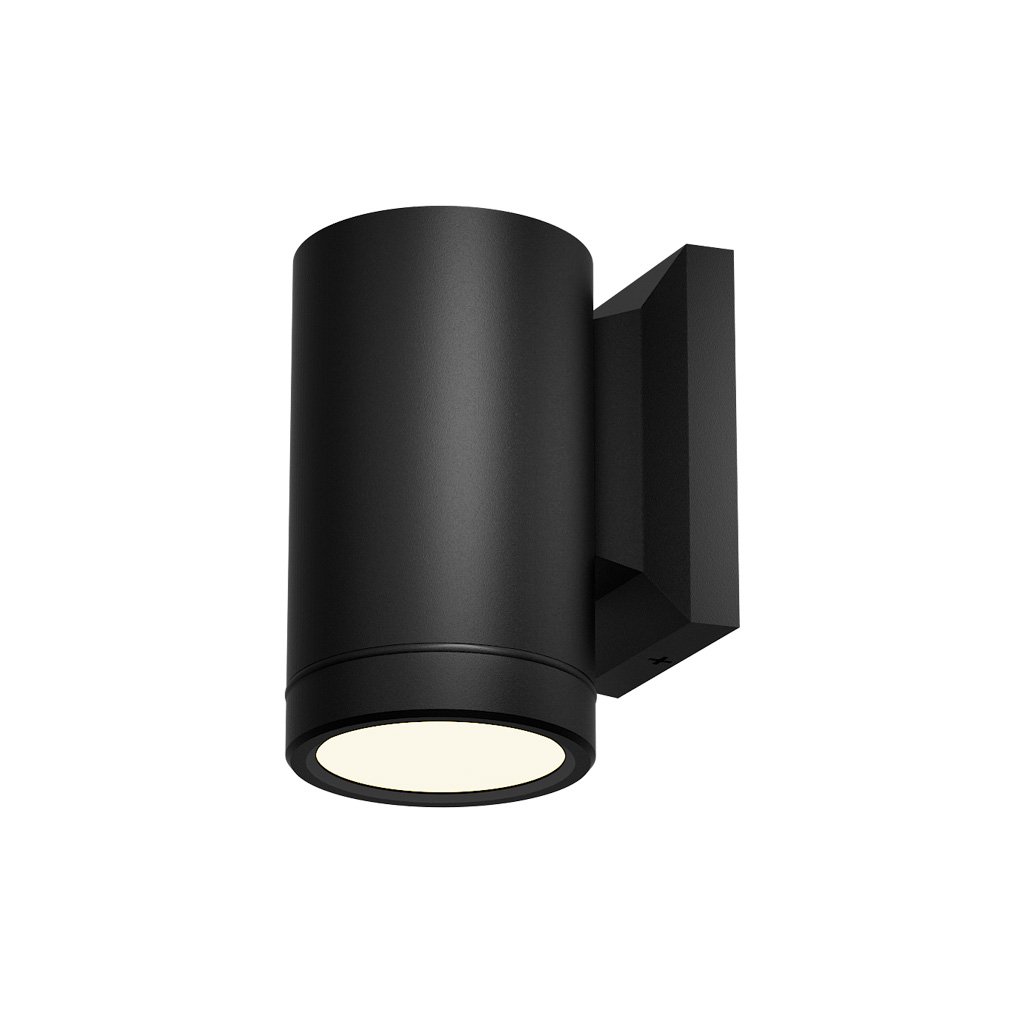
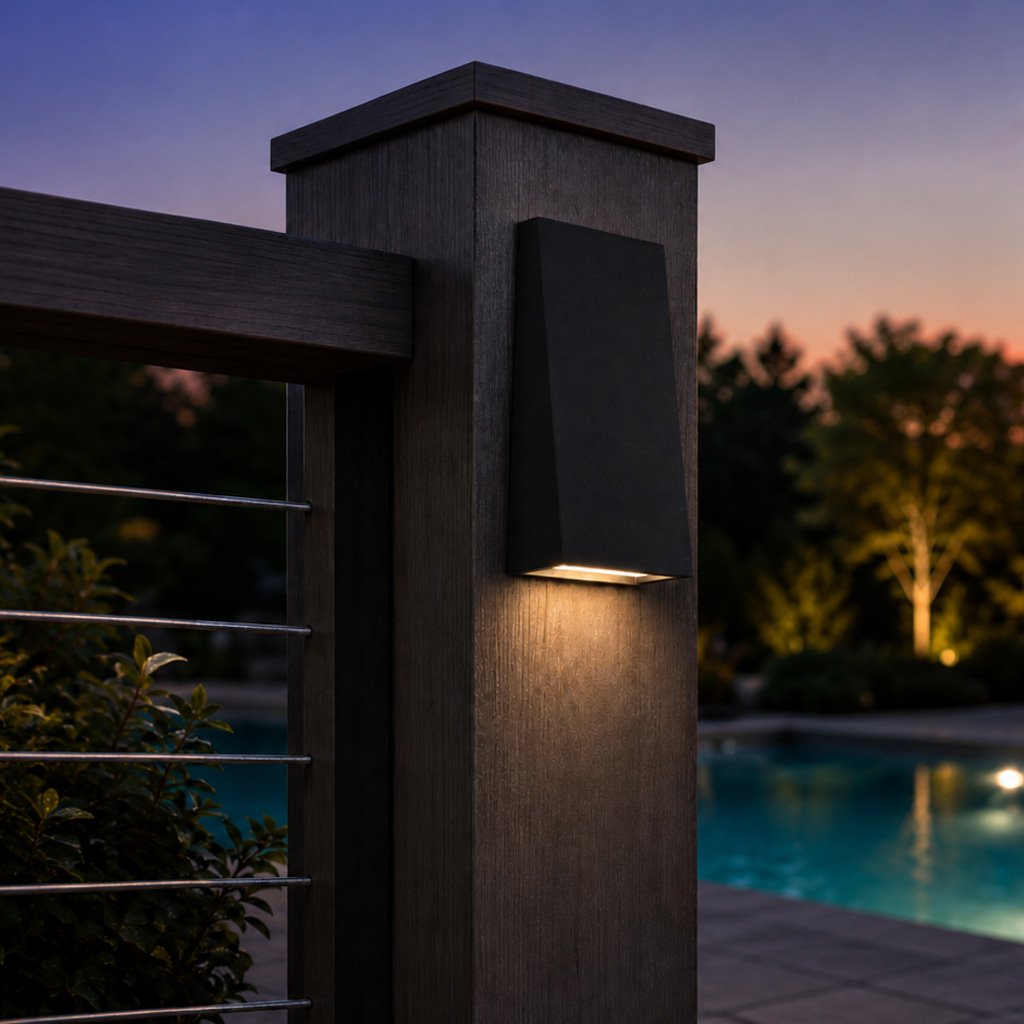
A sconce mounted at the right height gives a doorway proportion and makes an entry feel intentional rather than utilitarian. This fixture delivers controlled output on vertical surfaces, so the wall itself becomes part of the lighting design instead of a dark backdrop.
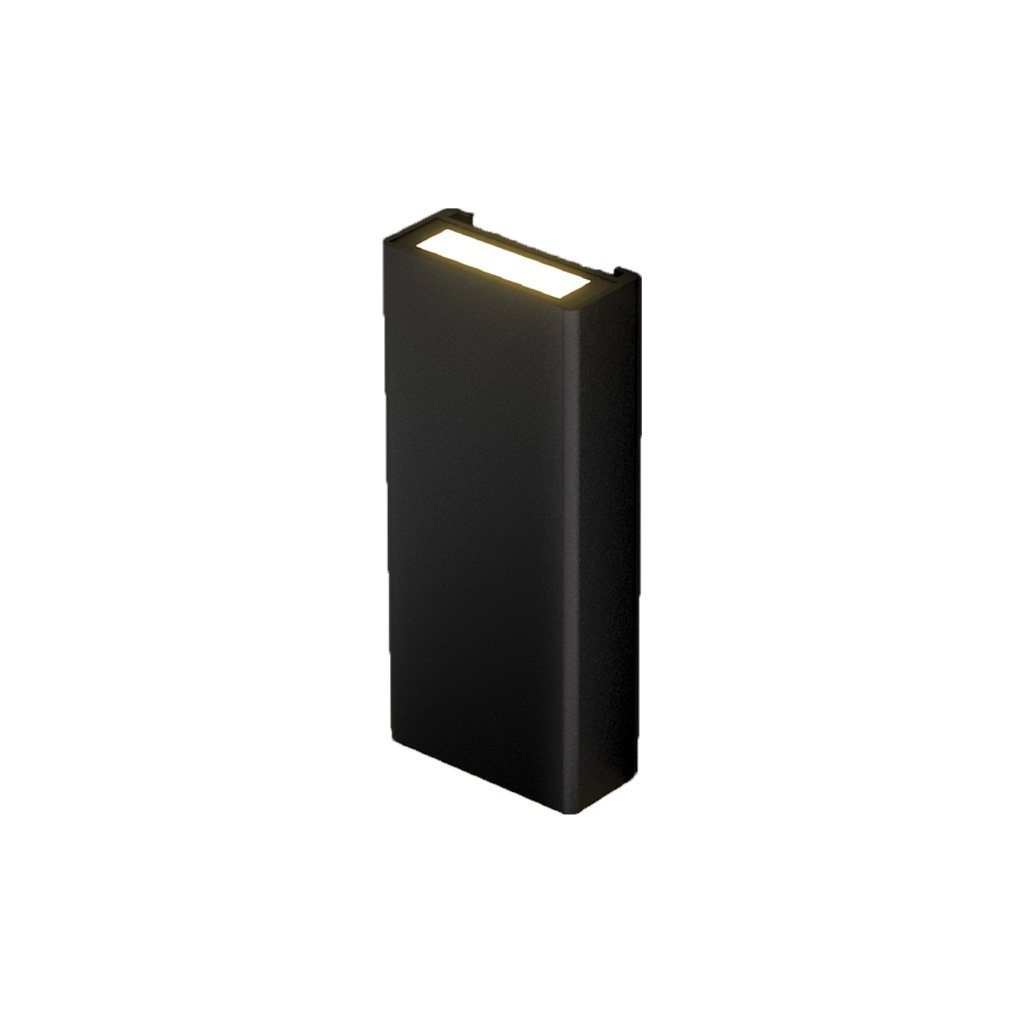
When you need light on the walking surface but nothing visible at eye level, this low profile fixture is the right tool. It mounts to posts or walls and pushes light downward in a clean wash, which makes it well suited to stairs, landings, and tight deck perimeters.
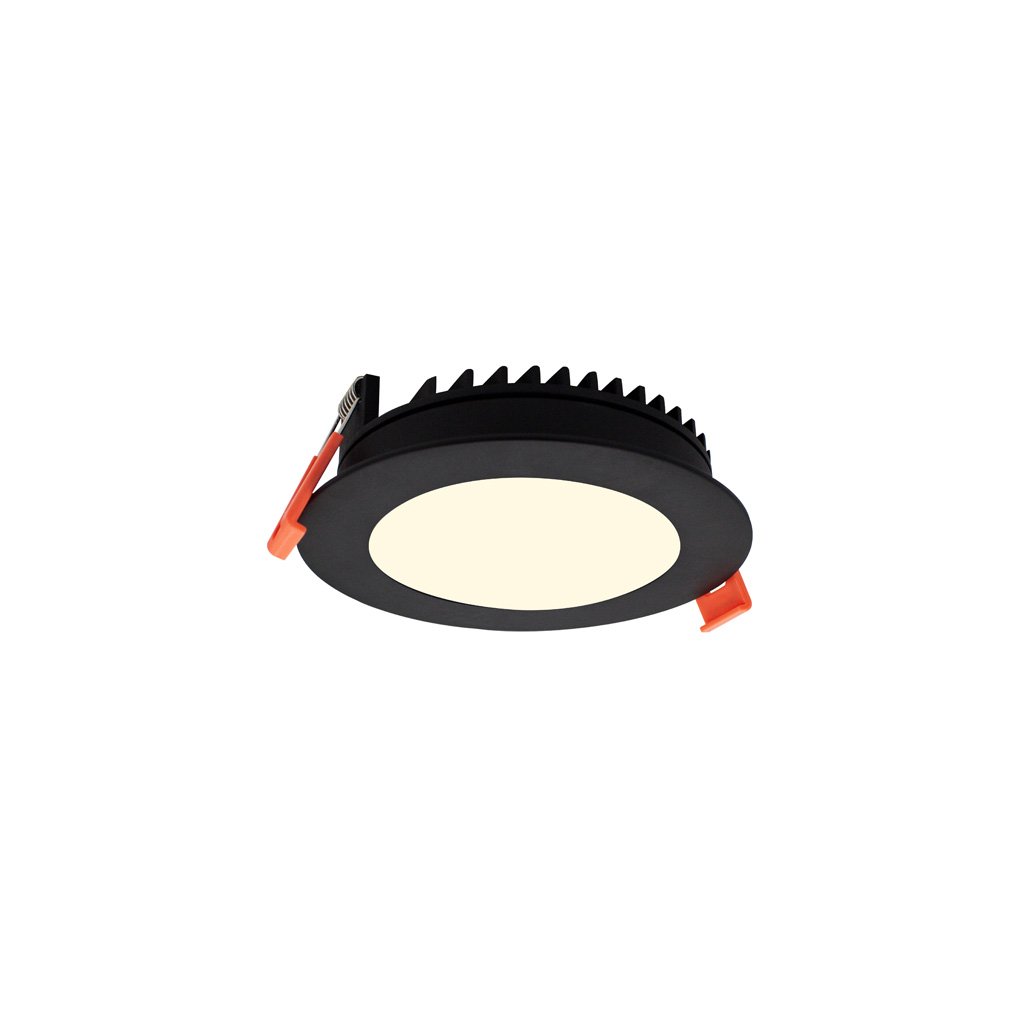
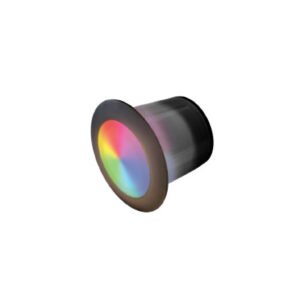
Recessed soffit lighting solves the ambient layer better than any surface-mounted alternative because the source stays completely hidden. Installed in porch ceilings and overhangs, these fixtures wash the floor and furniture evenly, creating the grounded, finished look that separates a designed exterior from a lit one.
A: Fewer than most people assume, placed more deliberately. A typical deck perimeter looks best with post lights on alternating posts rather than every post, paired with one ambient source under any covered area.
A: Warm white in the 2700K to 3000K range is the safer choice for residential exteriors because it flatters natural materials. Cool white tends to make wood, stone, and composite look gray and clinical.
A: Yes, by using shielded, downward-aimed fixtures. The Tru-Scapes® Low Profile Post / Wall Mount Sconce is designed for exactly this, delivering light onto the surface below without throwing it sideways into neighboring windows.
A: For decks, patios, and paths, yes. Low voltage LED systems produce more than enough usable light for these applications, and the U.S. Department of Energy has documented the efficiency and lifespan advantages of LED sources over legacy lighting.
A: Adding brightness instead of adding layers. One high-output floodlight creates harsh contrast and deep shadows, while three modest fixtures at different heights create depth.
A: No, and this matters. Post cap fixtures are sized to specific post dimensions, so confirm compatibility before ordering. Fixtures built for composite post systems give a flush, factory-finished appearance that generic caps cannot match.
A: Start with whatever people use most after dark, usually the rear deck or the front entry. If safety is the concern, lead with stair and step lighting. If curb appeal lighting is the goal, lead with the entry and facade.
A: Choose fixtures engineered for permanent outdoor exposure, keep wire connections weather-sealed and accessible, and clean lenses seasonally. Quality housings and sealed optics matter far more than initial appearance.
The difference between exterior lighting that still looks right in year five and lighting that looks tired by year two comes down to how the fixtures were engineered in the first place. Tru-Scapes designs specifically for deck, railing, and structure-mounted applications, which means the fixtures fit the surfaces they were meant for instead of being adapted to them.
That specificity is why homeowners who choose Tru-Scapes end up with cleaner results. A post cap like the Tru-Scapes® 4.5″ Composite Color Changing LED Deck Post Light (Fits TREX Transcend Posts) is dimensioned for composite post systems, so it sits flush and reads as part of the railing rather than a fixture placed on top of it. The recessed soffit and low profile sconce lines follow the same logic, hiding the source and controlling where light lands.
Tru-Scapes builds for permanent outdoor exposure, with sealed housings and LED sources selected for consistent color over time. That consistency is what keeps a lighting design coherent as fixtures age. The practical outcome is straightforward: an exterior that looks deliberate at night, holds up through real weather, and does not require rethinking a few seasons later.
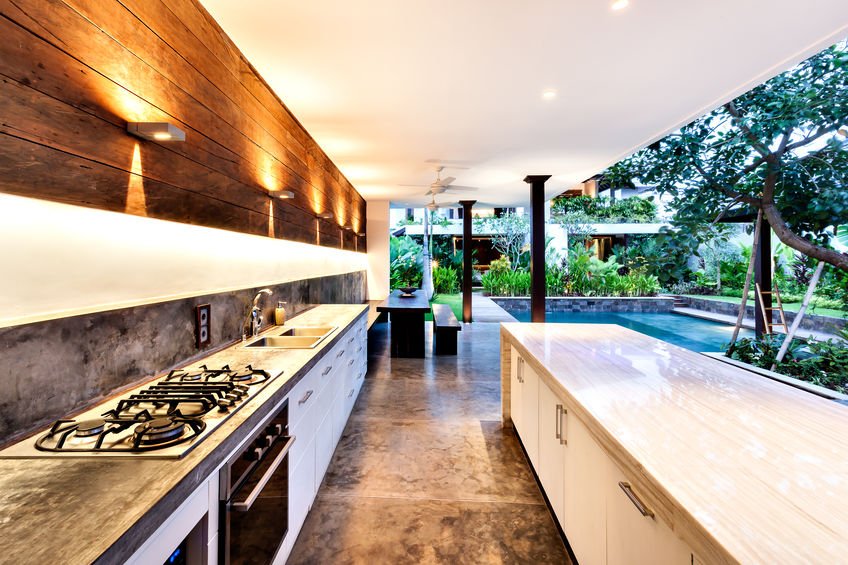
The right outdoor lighting fixtures for home exteriors do not simply push back darkness. They decide what your house looks like for half of every day. Layered placement, consistent warm color, hidden sources, and fixtures matched to their mounting surfaces are the four decisions that separate a professional result from a bright one.
Start with the area you use most, plan locations before products, and build in layers rather than wattage. If your deck perimeter is the piece that disappears at night, the Tru-Scapes® 4.5″ Composite Color Changing LED Deck Post Light (Fits TREX Transcend Posts) is the most direct place to begin, and the Tru-Scapes® Recessed Ceiling / Soffit Light will finish the covered areas with clean, even ambient light. Build it once, build it right, and the transformation holds.
The gap between a yard that looks styled at night and one that looks lit by accident almost never comes
Most homeowners judge landscape lighting by how it looks the night it gets installed. That is the worst possible moment