- FREE Shipping on all orders! Limited time!
- support@tru-scapes.com

The gap between a yard that looks styled at night and one that looks lit by accident almost never comes down to how many lights are installed. It comes down to what those lights are made of and how they aim their beam. High-quality landscape lighting fixtures shape light instead of spraying it, and they keep doing that after five winters of freeze and thaw. Homeowners who choose Tru-Scapes tend to notice the difference in the second year, when the finishes still look right and the beams still land where they were aimed.
Most people start their nighttime landscape lighting project with the wrong question. They ask how bright a fixture is. The better questions are where the light goes, how well the housing survives weather, and whether every fixture on the property agrees on a color.
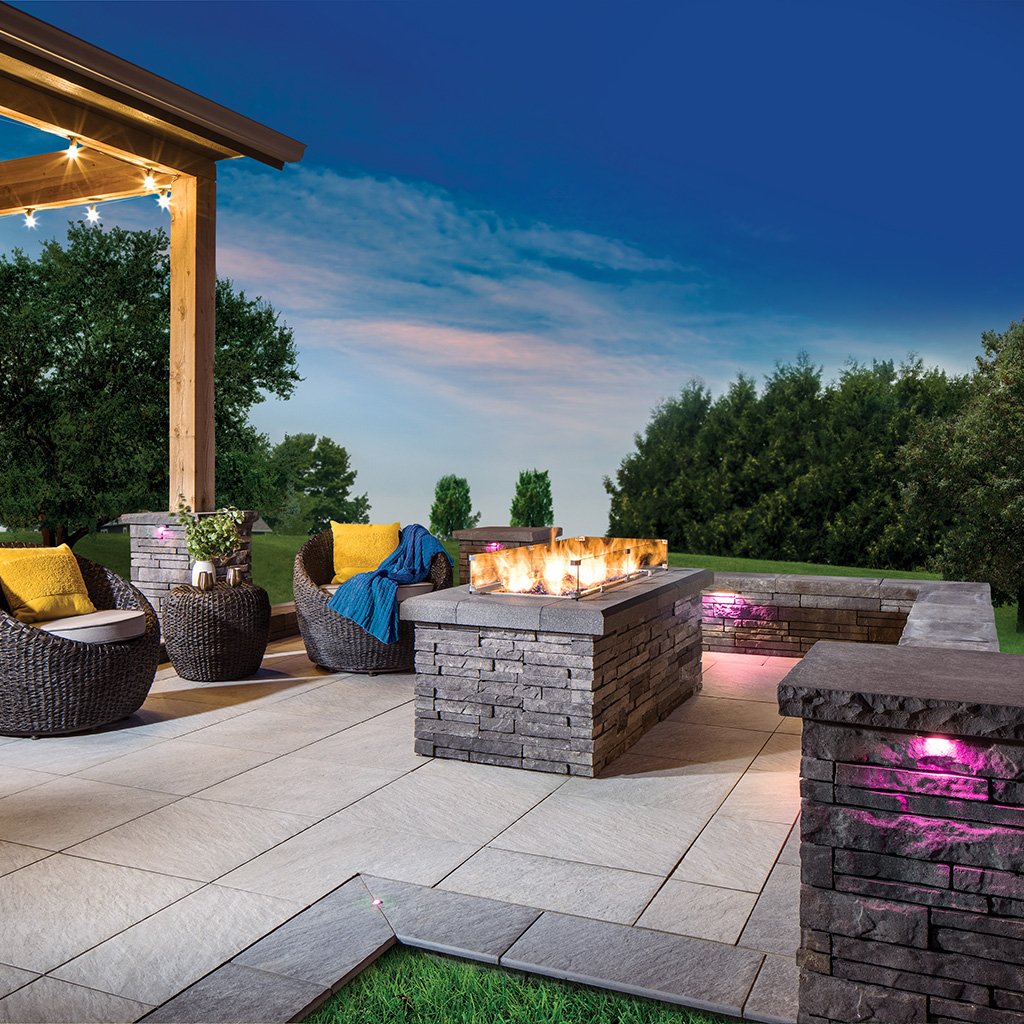
Daylight hides almost everything. A budget path light and a precision-machined one can look nearly identical at noon. Once the sun drops, the differences are immediate.
Beam control is the first tell. Quality optics push light down onto the walking surface where it belongs. Low-grade fixtures leak light sideways into your eyes, which shrinks your pupils and makes the rest of the yard read as darker than it actually is. More lumens do not fix glare. Better shielding does.
Color consistency is the second. LED chips are sorted into bins by color accuracy. Manufacturers who skip tight binning ship fixtures that drift, so one light on your walkway looks warm amber and the next looks slightly green. The Illuminating Engineering Society (IES) publishes guidance on color quality metrics for exactly this reason.
Corrosion resistance is the third, and it takes a season or two to appear. Painted aluminum chips, then oxidizes, then swells at the seams and lets moisture into the driver. Solid brass and copper patina instead of failing.
| Housing Material | Weather Behavior | Typical Service Life | Best Use Case |
|---|---|---|---|
| Solid brass | Develops protective patina, no rust | Very long, decades in most climates | Permanent installs, coastal and freeze-thaw regions |
| Copper | Patinas to green, self-protecting | Very long | Visible accent and pendant fixtures |
| Marine-grade composite | UV stable, will not corrode | Long | Ground-level and high-splash areas |
| Powder-coated aluminum | Good until the coating is breached | Moderate | Sheltered locations only |
| Painted thin-gauge metal | Chips, then corrodes at seams | Short | Temporary or seasonal use |
If your property sees road salt, coastal air, or hard freeze cycles, choose brass or marine-grade composite and stop there. If your fixtures live entirely under a covered porch, coated aluminum can be reasonable.
Professionals almost never light a yard with one type of fixture. They build the scene in layers, and each layer does a job the others cannot. By following a layered lighting design, you ensure depth and functionality.
A Tru-Scapes Traditional Pendant Light hung under a pergola or covered porch drops a defined pool of warm light onto a table. This is the layer most homeowners skip, and it is the one that makes an outdoor room feel finished.
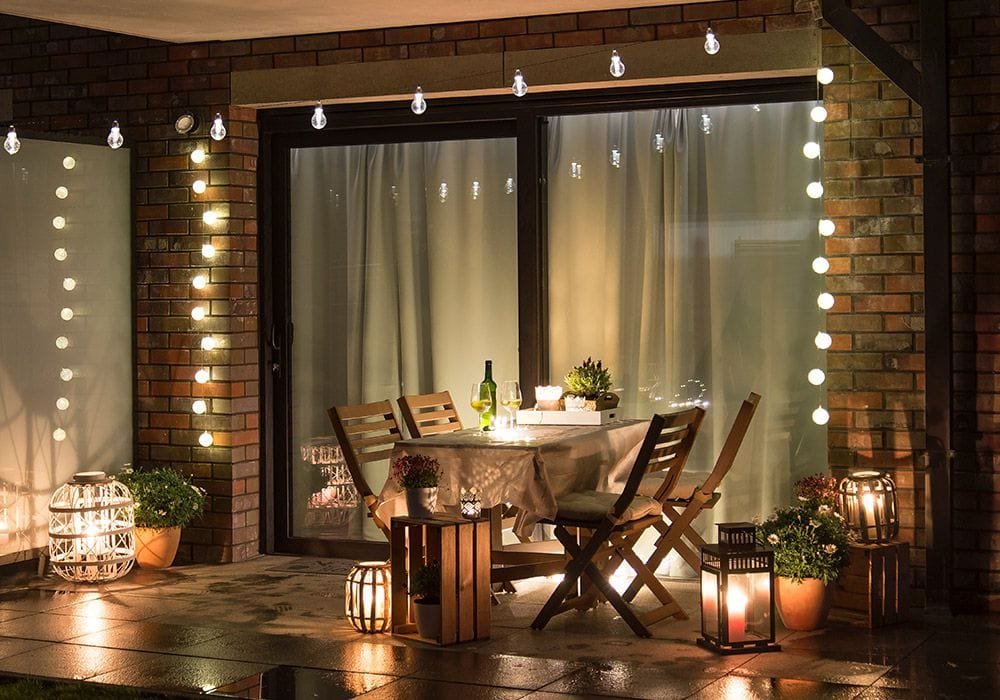
Strung across a patio, pergola, or railing run, Tru-Scapes Hanging Bistro Lights deliver the soft overhead ambiance that turns a deck into a gathering space. Sealed sockets and rated cabling address the water intrusion that ends most string lighting installations early. The warm output stays consistent across the full run.
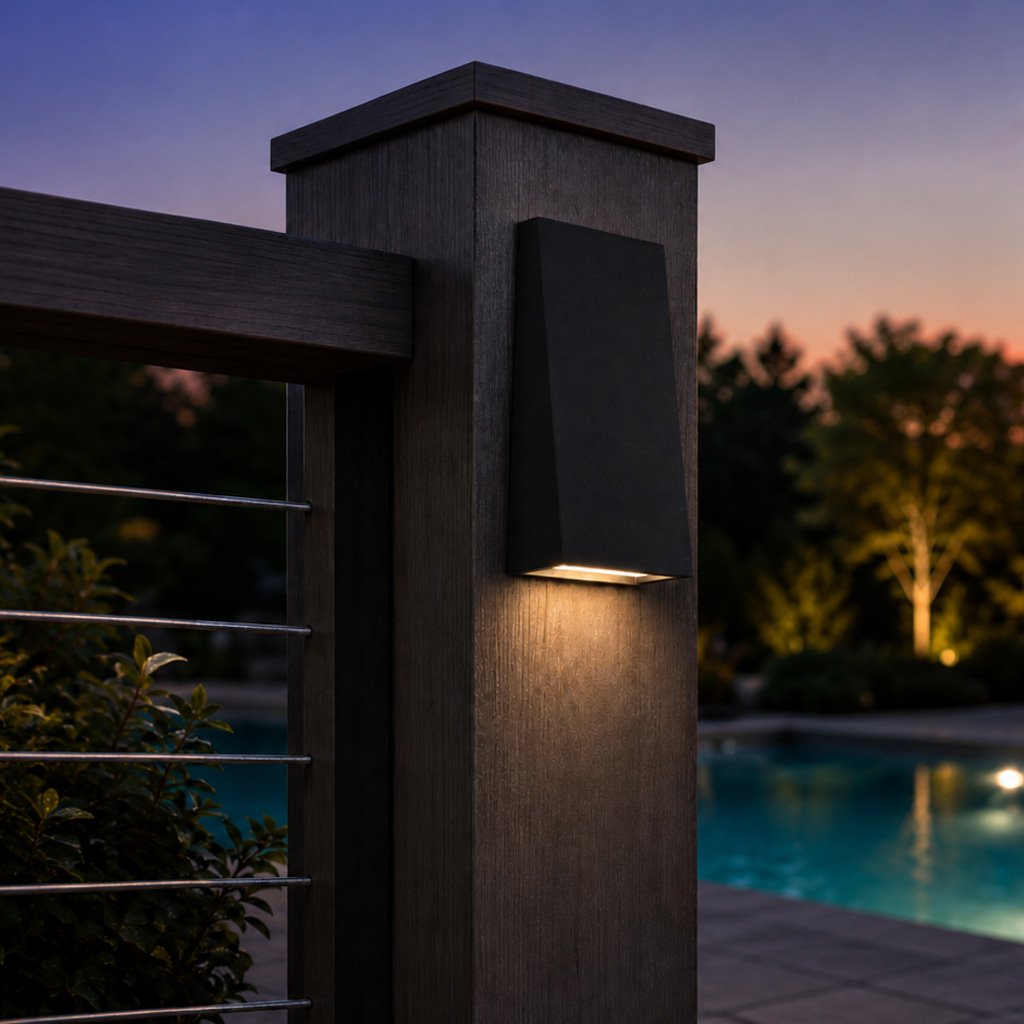
The Tru-Scapes® Modern Sconce mounts flat to posts, columns, and walls and pushes light down the surface rather than out at eye level. If you need brightness near a doorway without a glare bomb in the sightline, this is the fixture.
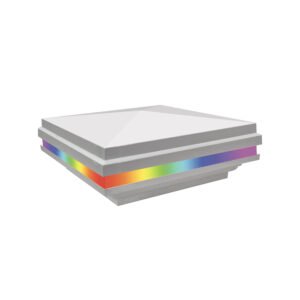
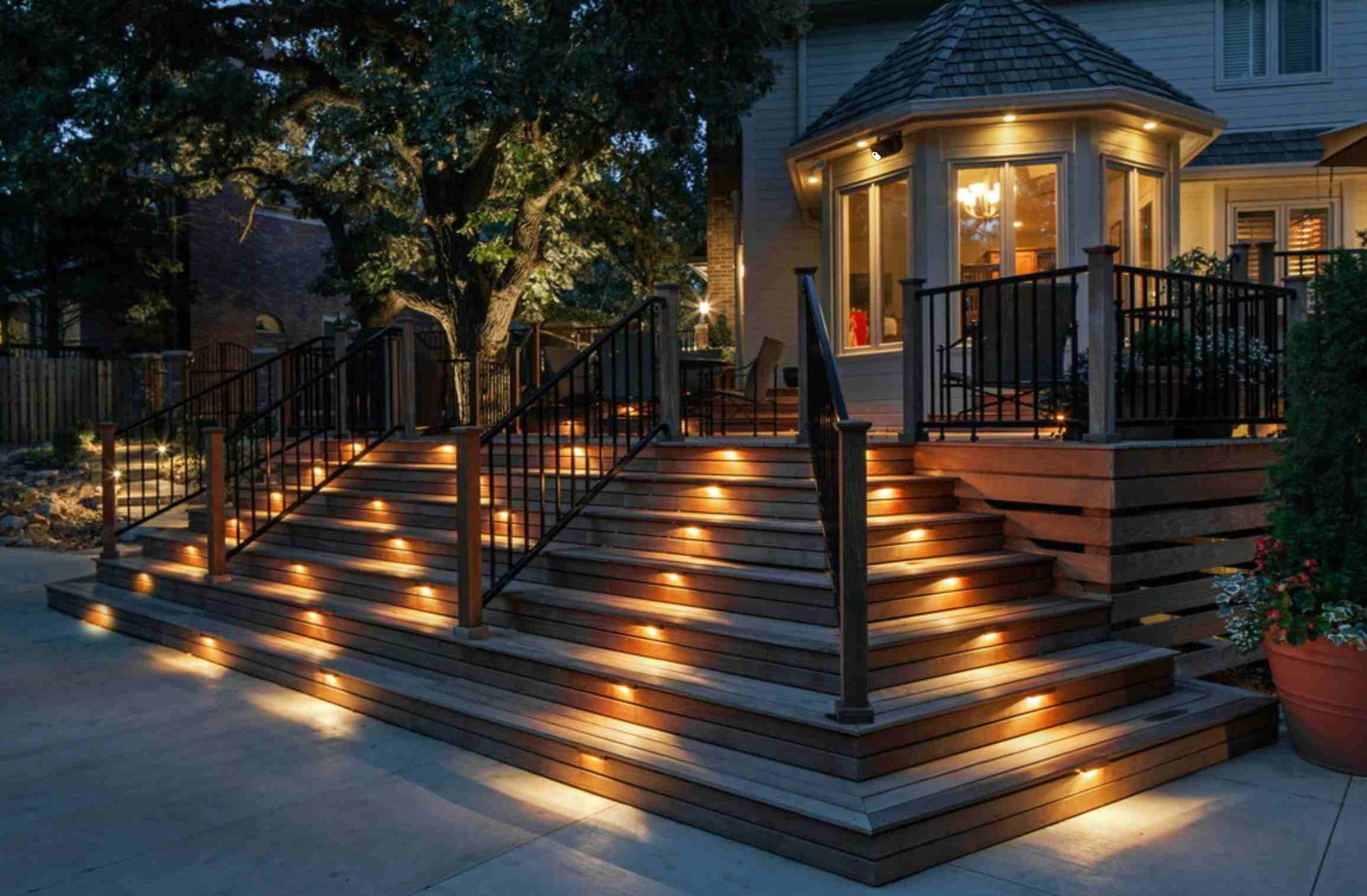
The Wedge Light sits flush and lights the tread below it. If your deck has more than two steps, treat this as a safety requirement rather than a design choice.
| Pros | Cons |
|---|---|
| Sealed housings survive freeze, thaw, and salt air | Higher upfront material quality means fewer impulse buys |
| Tight LED binning keeps color consistent across the property | Requires planning the full layout before you start |
| Precision optics cut glare and improve perceived brightness | Retrofitting into an existing low-grade system takes rework |
| Serviceable drivers and replaceable lamps extend system life | Professional-grade wiring is worth doing correctly the first time |
| Finishes age into a patina instead of chipping | Fewer novelty styles than mass-market lines |
| Do | Don’t |
|---|---|
| Keep every fixture in the same warm color range | Mix cool white and warm white in one sightline |
| Shield every source so you see the light, not the bulb | Aim fixtures upward into windows or neighbor sightlines |
| Space path lights for overlapping pools | Line them up like an airport runway |
| Size your transformer with headroom for future zones | Load a transformer to its exact rated capacity |
| Aim and adjust after dark, on site | Set the final aim during the daytime install |
DarkSky International’s guidelines on shielding and light trespass are worth reading before you finalize aiming angles.
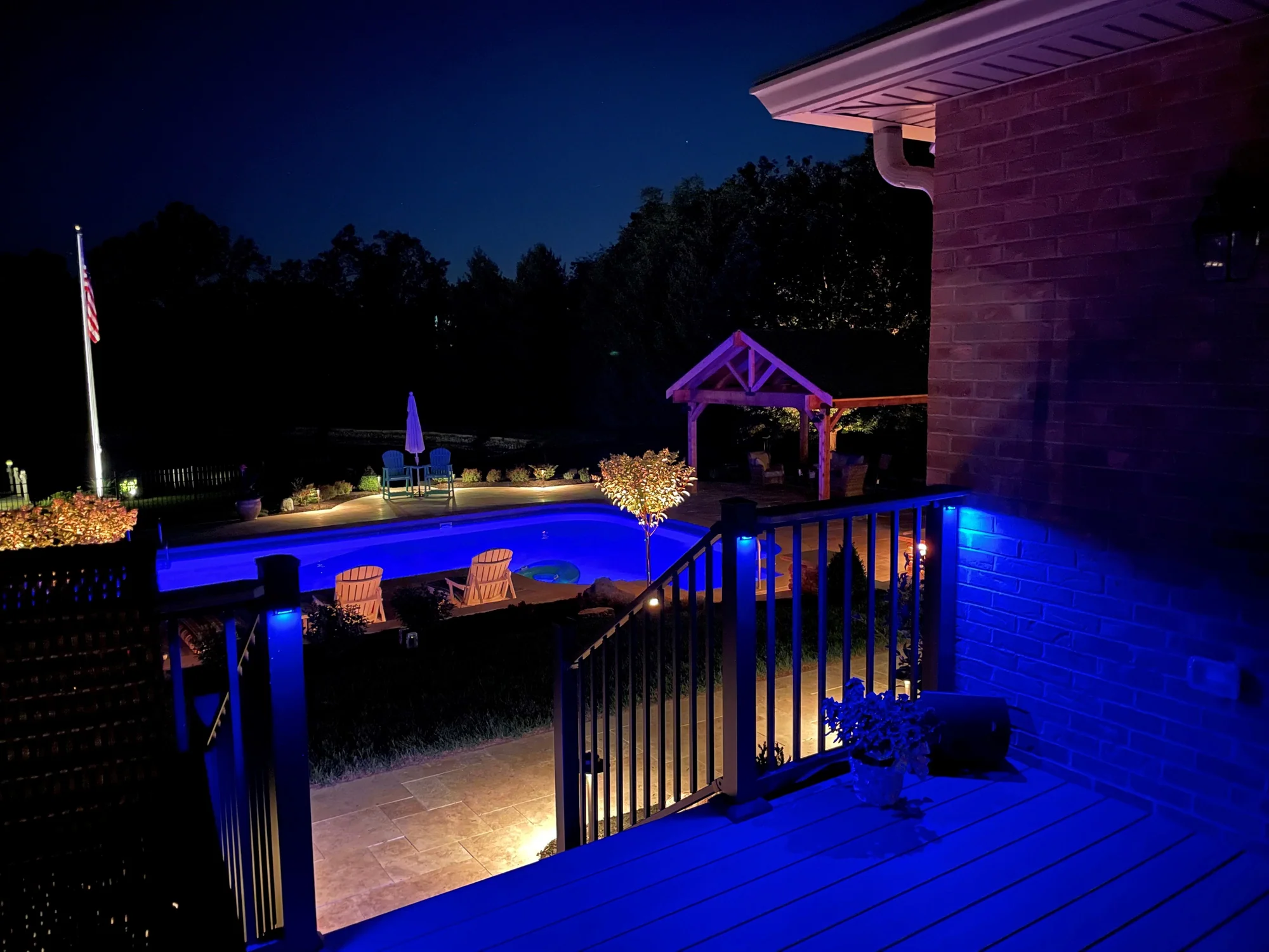
A homeowner in a freeze-thaw climate had a rear deck lit with six inexpensive post-cap fixtures. Two had stopped working, three had faded to a bluish cast, and the stairs down to the yard were essentially unlit. Guests were using phone flashlights on the steps.
The rebuild used three fixture types instead of one. Wedge Lights went into each stair riser for foot-level safety. Modern Sconces replaced the post caps, redirecting light down the railing instead of out at seated eye level. A run of Hanging Bistro Lights went overhead across the seating area.
The total fixture count went up by four. The perceived brightness went up considerably more, because the glare was gone and the light was finally landing on surfaces people actually use. The homeowner’s stated goal had been to make the deck usable after 8 p.m. The outcome was a space they started using as their default evening room.

Built for covered porches, pergolas, and pavilion ceilings where a defined pool of warm light anchors a seating or dining area. The sealed housing and weather-rated construction hold up in exposed overhead positions where moisture collects. Its shielded design keeps the source out of your sightline while you sit under it.

Strung across a patio, pergola, or railing run, these deliver the soft overhead ambiance that turns a deck into a gathering space. Sealed sockets and rated cabling address the water intrusion that ends most string lighting installations early. The warm output stays consistent across the full run.
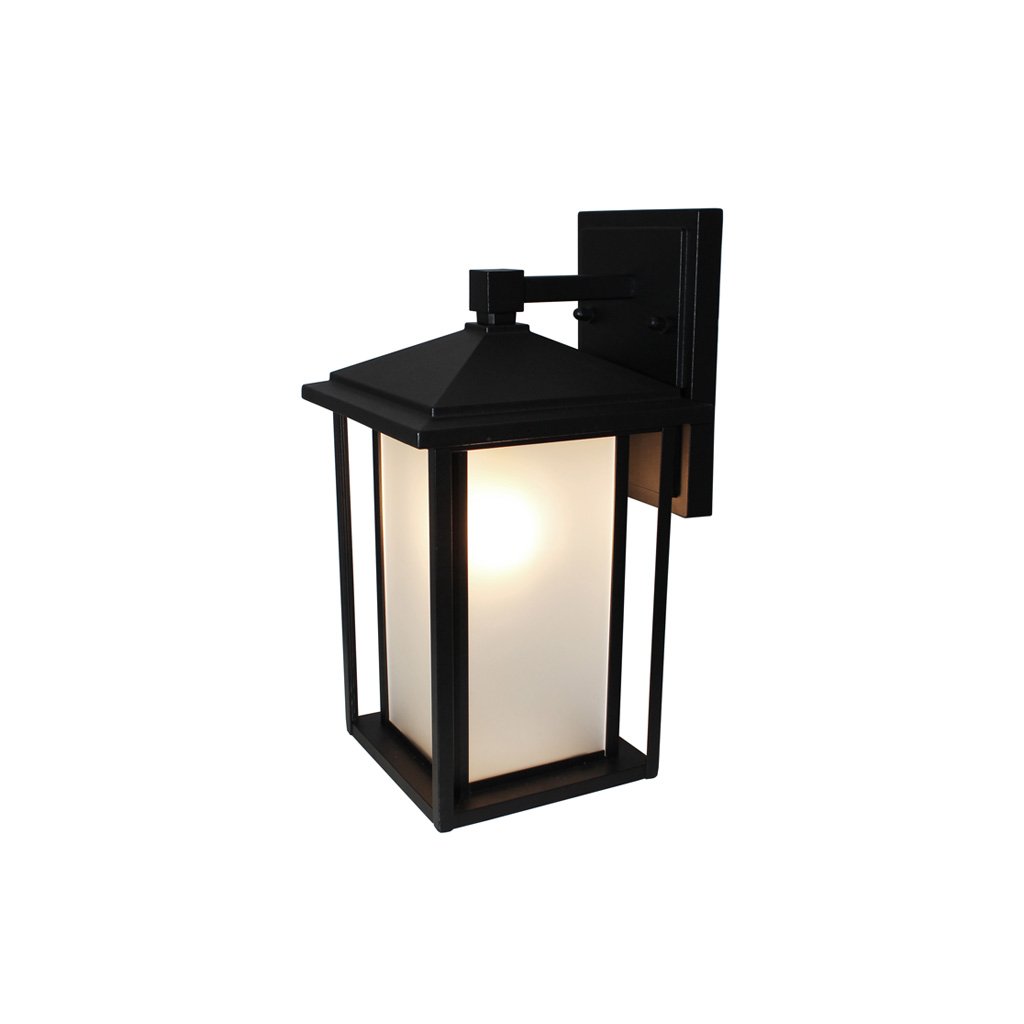
Mounts flush to posts, columns, and walls and directs light downward across the surface rather than outward into your eyes. This makes it the right answer near doorways, seating, and anywhere a traditional post cap would create glare. The low-profile housing keeps the fixture visually quiet during the day.
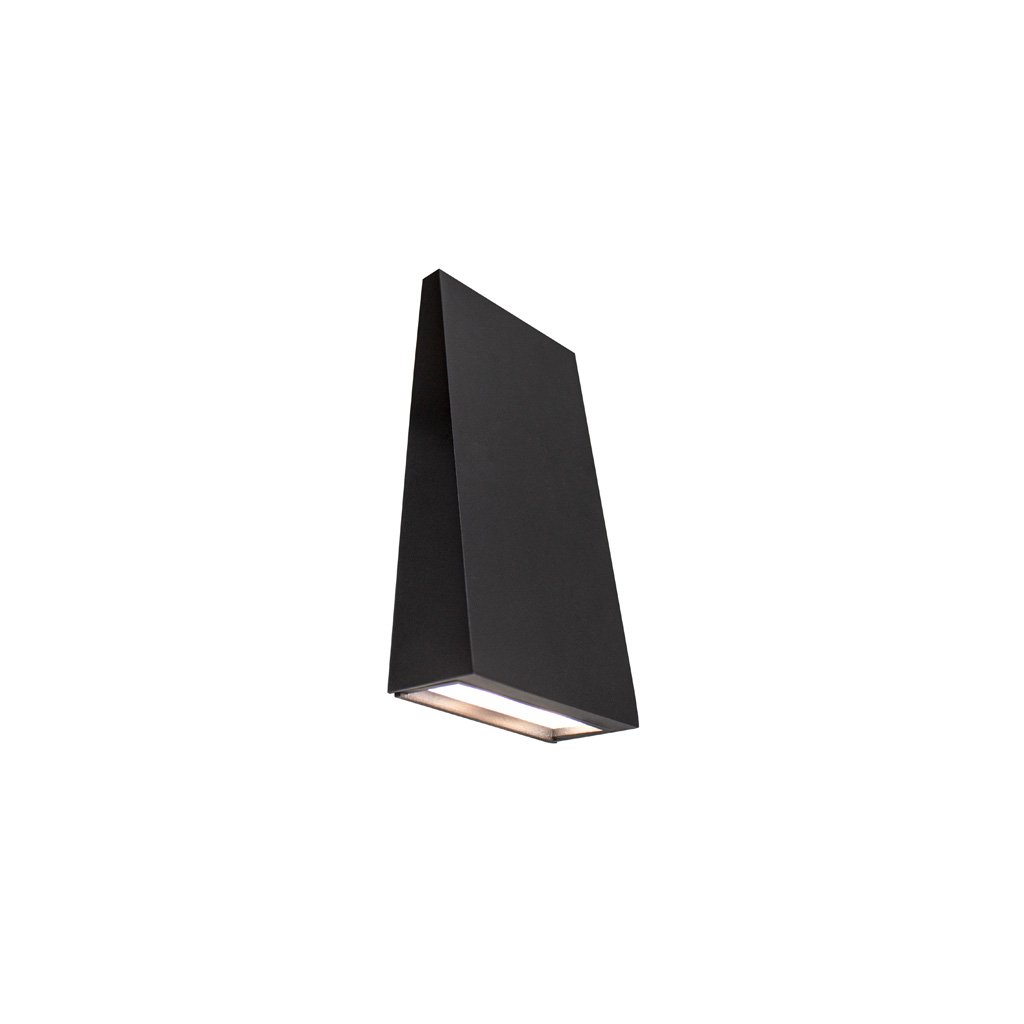
Recesses into stair risers and vertical faces to light the tread below without any visible fixture profile. Because it sits flush, there is nothing to catch, kick, or knock loose over time. This is the fixture that solves unlit steps, which is the most common safety gap on residential decks.
A: Three things: corrosion-resistant housing material, controlled optics that shield the light source, and tight LED color binning so fixtures match each other. A fixture that fails any one of these will look wrong within a couple of seasons.
A: Enough that the pools of light overlap slightly along the walking surface. Spacing matters more than count, and evenly spaced lights on both sides of a path usually looks worse than staggered placement on one side.
A: Usually the opposite. Unshielded brightness causes glare, which reduces how much of the surrounding landscape your eyes can actually resolve. Better beam control almost always beats higher output.
A: Stay in the warm range and keep it consistent everywhere. Cooler light reads as clinical outdoors and makes plant foliage look gray rather than green.
A: Yes. The Tru-Scapes® Wedge Light recesses directly into the riser and lights the tread below, so the stairs are safely lit with no fixture sticking out of the deck structure.
A: Low-voltage systems are within reach for a capable homeowner, but transformer sizing, wire gauge, and voltage drop across long runs are where most self-installs go wrong. If your run exceeds roughly 100 feet, get a professional to size the system. For more on efficient systems, see the DOE guidelines on LED performance.
A: Solid brass and marine-grade housings routinely outlast the LED drivers inside them, which is why serviceable, replaceable components matter as much as the housing itself.
A: Only if it is unshielded or aimed poorly. Downward-facing, shielded fixtures keep light on your property, which is the core recommendation from DarkSky International.
Nighttime landscape lighting fails for predictable reasons. Housings corrode at the seams. LED colors drift apart. Beams land in people’s eyes instead of on the ground. Water gets into a socket and takes out a whole run. Tru-Scapes engineers their fixtures around those specific failure points rather than around a spec sheet.
That shows up in details that only matter after installation. Sealed sockets on the Tru-Scapes® Hanging Bistro Lights address the moisture path that ends most string lighting early. Recessed geometry on the Wedge Light means there is no exposed profile to damage. Downward-directed optics on the Modern Sconce keep the source out of your sightline where people actually sit.
The company builds for deck and outdoor living environments specifically, which is a harsher setting than general landscape use. Fixtures mounted on wood structures deal with movement, moisture, and direct contact in ways that in-ground lighting does not.
Homeowners who choose Tru-Scapes are generally solving for the same outcome: a property that still looks intentional after dark in year five, without a maintenance cycle of chasing dead fixtures every spring.
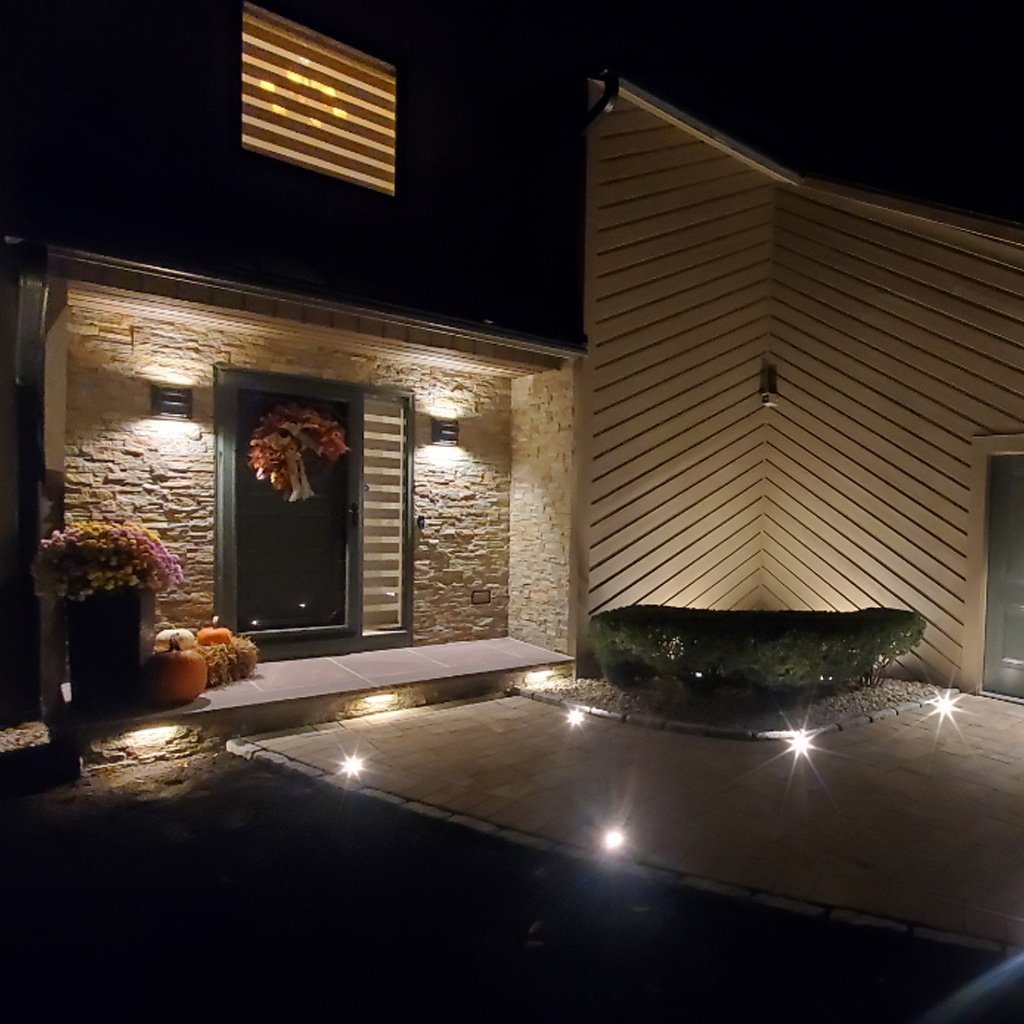
The difference high-quality landscape lighting fixtures make at night is not subtle once you know what to look for. Controlled beams instead of glare. Consistent warm color across the whole property. Housings that patina instead of corrode. Layers that give a space depth rather than a single flat wash of brightness.
Start where the impact is largest. If your steps are dark, begin with the Tru-Scapes® Wedge Light and solve the safety problem first. If your patio already works but feels unfinished after sunset, add the overhead layer with the Tru-Scapes® Traditional Pendant Light and watch how quickly the space starts getting used.
Build the system once, with fixtures made to stay in service, and the yard keeps working every night after.
The gap between a yard that looks styled at night and one that looks lit by accident almost never comes
Most homeowners judge landscape lighting by how it looks the night it gets installed. That is the worst possible moment