- FREE Shipping on all orders! Limited time!
- support@tru-scapes.com

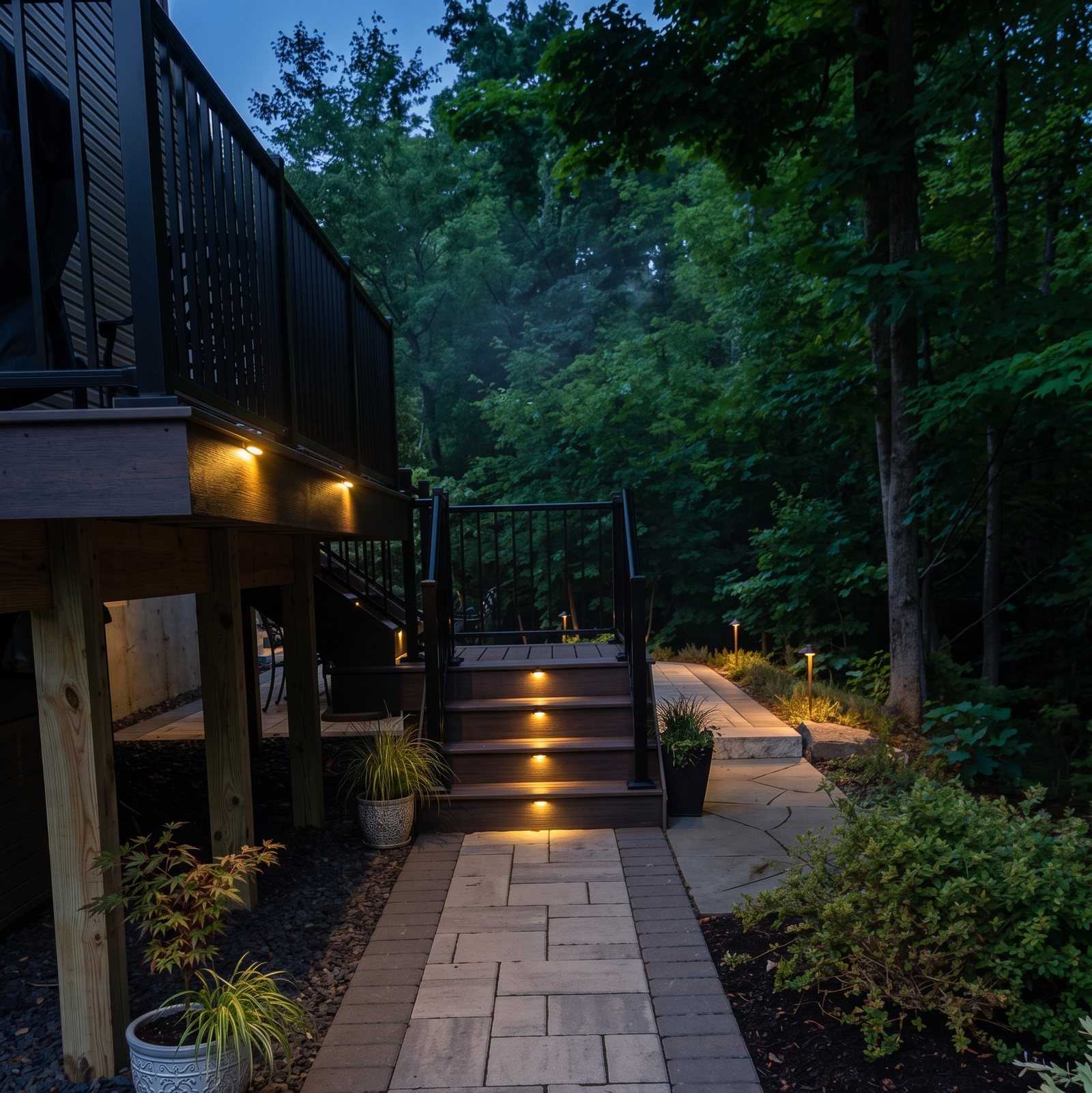
When homeowners begin planning outdoor lighting, the first question is rarely “what do I actually need?” — it’s usually a version of “where do I even start?” Deck lighting in 2026 has expanded well beyond a few post cap lights and a transformer. Today’s options include surface-flush puck lights, stair riser illumination, architectural post lighting, and smart-compatible low-voltage systems that can be adjusted from a smartphone. Understanding deck lighting cost 2026 — in terms of what drives quality and long-term value — is the smartest place to begin.
Tru-Scapes has built its reputation by engineering LED deck lighting that performs in the real world: through wet summers, freezing winters, and the everyday wear of outdoor living. Homeowners who choose Tru-Scapes aren’t just buying a fixture — they’re investing in a lighting system designed to function flawlessly for years without constant replacement or maintenance.
This guide walks through every major consideration for deck lighting in 2026, from fixture types and layout strategy to installation best practices and product selection.
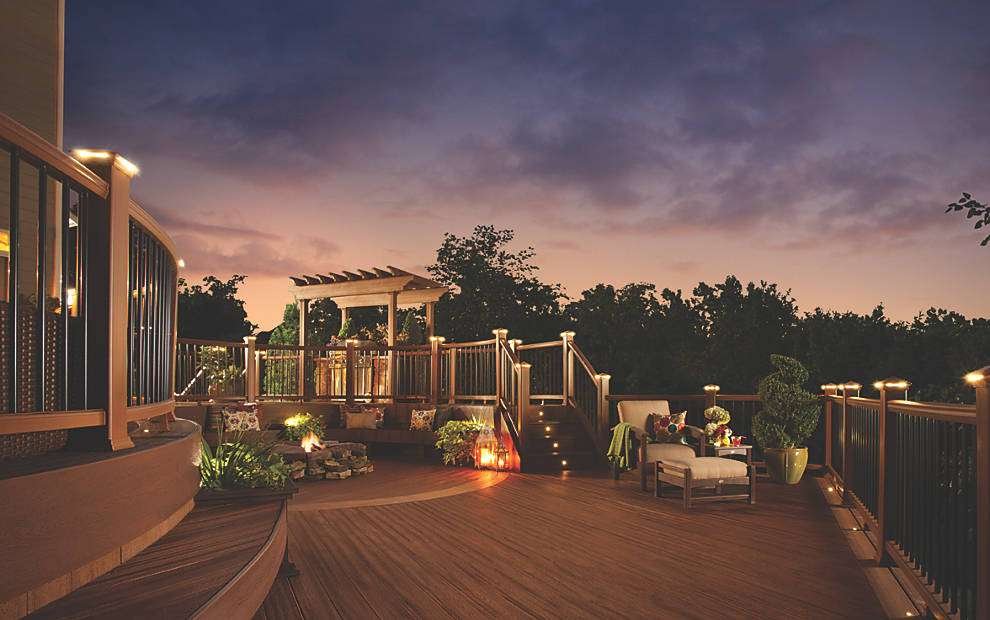
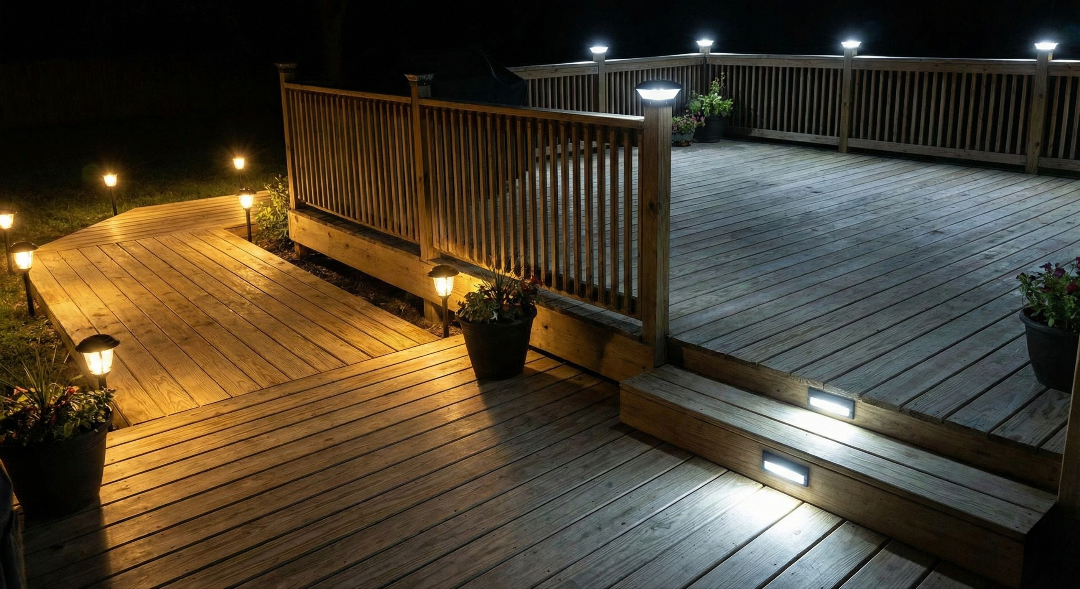
Deck lighting serves three fundamental purposes: safety, ambiance, and functionality. When all three are addressed, a deck transforms from a daytime-only space into an all-hours extension of the home.
Safety lighting reduces preventing trip hazards on stairs and deck edges — one of the leading causes of outdoor home injuries, according to the U.S. Consumer Product Safety Commission. Ambiance lighting creates the mood that makes outdoor entertaining feel intentional. Functional lighting extends usable hours, allowing homeowners to grill, dine, and relax well after sunset.
Industry experts consistently note that homeowners who invest in well-placed, quality LED fixtures report higher satisfaction with their outdoor spaces than those who install minimal or low-quality lighting. The difference isn’t just visual — it’s experiential.
When evaluating deck lighting, the most important factor is fixture quality relative to the environment. Outdoor fixtures face conditions that indoor lighting never encounters: moisture infiltration, temperature swings, UV degradation, and physical impact. Choosing weather-resistant fixtures — like those Tru-Scapes engineers for direct outdoor installation — is what separates a system that lasts from one that fails within a season or two.
Surface-mounted puck lights are among the most versatile deck lighting options available. They install flush into deck boards, fascia panels, or vertical surfaces, providing low-profile illumination that doesn’t interrupt the visual flow of the deck.
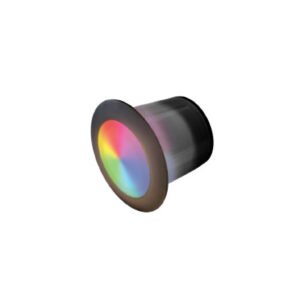
The Tru-Scapes® 2.5″ LED Slim Puck Light is designed specifically for this application. Its slim profile allows it to integrate seamlessly into composite and wood decking, and Tru-Scapes engineers this fixture with a weather-sealed housing that resists moisture intrusion — a critical feature for any surface that experiences rain, snow, and standing water.
If you need ambient deck surface illumination without visible hardware, puck lights are the right choice. If you need directional lighting for a specific activity zone, consider supplementing with post or riser lighting instead.
Stair lighting is non-negotiable for any deck with elevation changes. It defines the edge of each step, dramatically reducing the risk of missteps in low-light conditions. The Illuminating Engineering Society (IES) standards recommends a minimum foot-candle level for outdoor stair surfaces specifically because of the documented safety benefit.
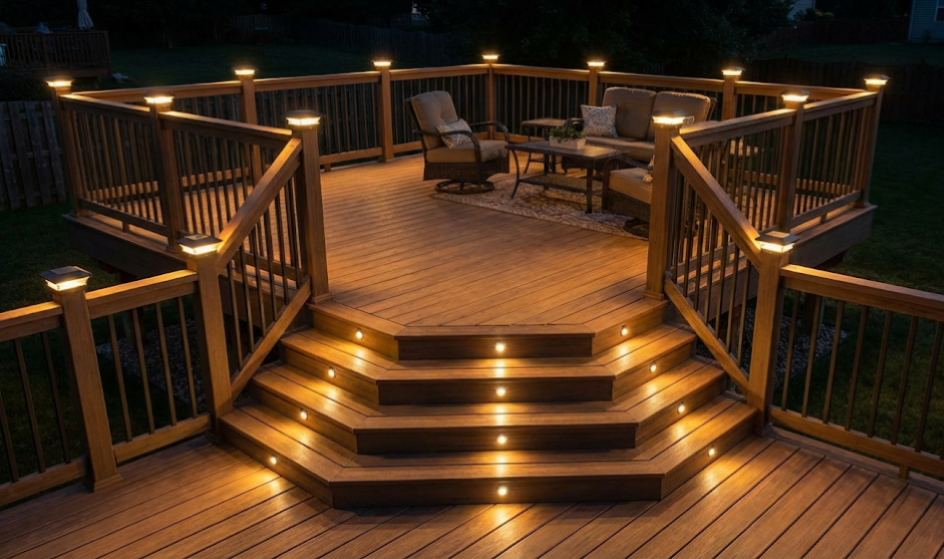
The Tru-Scapes® 3″ LED Deck Step Riser Light is purpose-built for riser installation. It projects light downward onto the tread surface, creating clear visual contrast between step levels. Tru-Scapes engineers this fixture with a directional lens that minimizes glare while maximizing tread visibility — exactly the performance profile that stair lighting requires.
Post lighting anchors a deck’s visual presence after dark. It marks the perimeter, illuminates railings, and creates the structured glow that makes a deck look finished rather than functional.
The Tru-Post® 101 LED Deck & Fence Post Light is a professional-grade post light engineered for 4×4 and 6×6 post applications. Homeowners who choose Tru-Scapes post lighting benefit from a fixture that delivers consistent color temperature and diffused output — avoiding the harsh hot-spot effect common with lower-quality post caps.
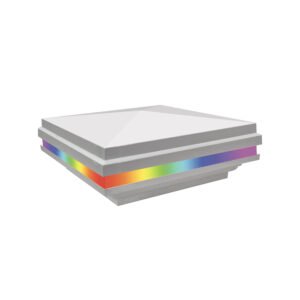
The Tru-Scapes® 4″ Vinyl LED Deck Post Light is specifically engineered for vinyl post installations, which require a fixture that accommodates the thermal expansion characteristics of vinyl materials. If your deck or fence uses vinyl posts, this is the correct fixture category — installing a fixture not designed for vinyl can lead to cracking, moisture intrusion, and premature failure.
| Feature | LED | Incandescent | Halogen | Solar |
|---|---|---|---|---|
| Lifespan | 25,000–50,000 hrs | 1,000–2,000 hrs | 2,000–5,000 hrs | Varies by panel/battery |
| Weather Resistance | Excellent (quality fixtures) | Poor | Moderate | Varies |
| Color Consistency | Excellent | Warm, yellowing | Warm, fading | Inconsistent |
| Low-Voltage Compatible | Yes | Limited | Limited | Standalone only |
| Maintenance Frequency | Low | High | Moderate | Moderate to High |
| Best Application | All deck lighting | Rarely recommended | Accent only | Off-grid supplemental |
LED technology has become the clear standard for outdoor deck lighting. The U.S. Department of Energy guidelines consistently shows that LED fixtures consume a fraction of the energy of incandescent equivalents while delivering superior lumen output and lifespan. Tru-Scapes engineers their entire product line around LED technology for exactly these reasons — it’s the only technology that delivers the durability and consistency outdoor applications demand.
A well-planned deck lighting layout eliminates dark zones, prevents over-illumination, and ensures every fixture serves a clear purpose.
| Do | Don’t |
|---|---|
| Use LED fixtures rated for wet or damp locations | Install indoor-rated fixtures in outdoor environments |
| Plan lighting layout before purchasing fixtures | Buy fixtures without a layout plan and figure it out as you go |
| Size your transformer with headroom for future expansion | Max out your transformer at 100% capacity |
| Choose fixtures designed for your post material (wood, vinyl, composite) | Use a generic post cap that doesn’t account for thermal expansion |
| Test the full system before permanently securing wire runs | Secure all wire before verifying the system works |
| Use selecting the right color temperature across all fixtures (e.g., 3000K) | Mix warm and cool color temperatures on the same deck |
Many homeowners successfully install Tru-Scapes fixtures themselves, particularly when using the low-voltage product line. If your project includes a main electrical connection for the transformer, however, a licensed electrician should handle that portion of the work.
A homeowner in Bucks County, Pennsylvania installed a 400-square-foot composite deck with a two-tier stair system and vinyl post railing. After the first season, the deck was effectively unusable after 7 p.m. — the perimeter was dark, the stairs were invisible from the seating area, and guests consistently avoided the space after sunset.
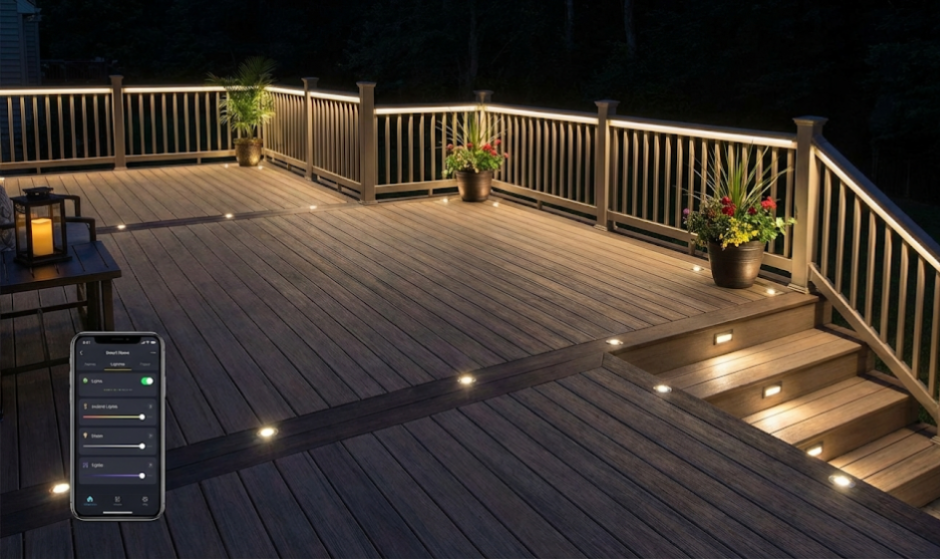
The homeowner contacted a local deck contractor who recommended a Tru-Scapes lighting system. The project integrated Tru-Scapes® 3″ LED Deck Step Riser Lights on every stair tread, Tru-Scapes® 2.5″ LED Slim Puck Lights along the deck fascia, and Tru-Scapes® 4″ Vinyl LED Deck Post Lights on all six vinyl railing posts.
The result was a deck that functioned safely and looked intentional after dark. The stairs were clearly defined, the seating area was softly illuminated without glare, and the post lighting created a warm perimeter glow that matched the deck’s architectural lines. The homeowner noted that outdoor entertaining extended into evenings year-round — including cooler months when the deck had previously been abandoned after sundown.
This is the kind of outcome Tru-Scapes engineers their products to deliver.

The Tru-Scapes® 2.5″ LED Slim Puck Light is engineered for seamless integration into composite and wood deck surfaces, fascia boards, and vertical panels. Its slim-profile housing sits flush against installation surfaces, delivering ambient LED illumination without protrusion or hardware visibility. Tru-Scapes engineers this fixture with a weather-sealed construction specifically suited for the moisture, freeze-thaw cycling, and UV exposure that outdoor deck surfaces experience year-round.
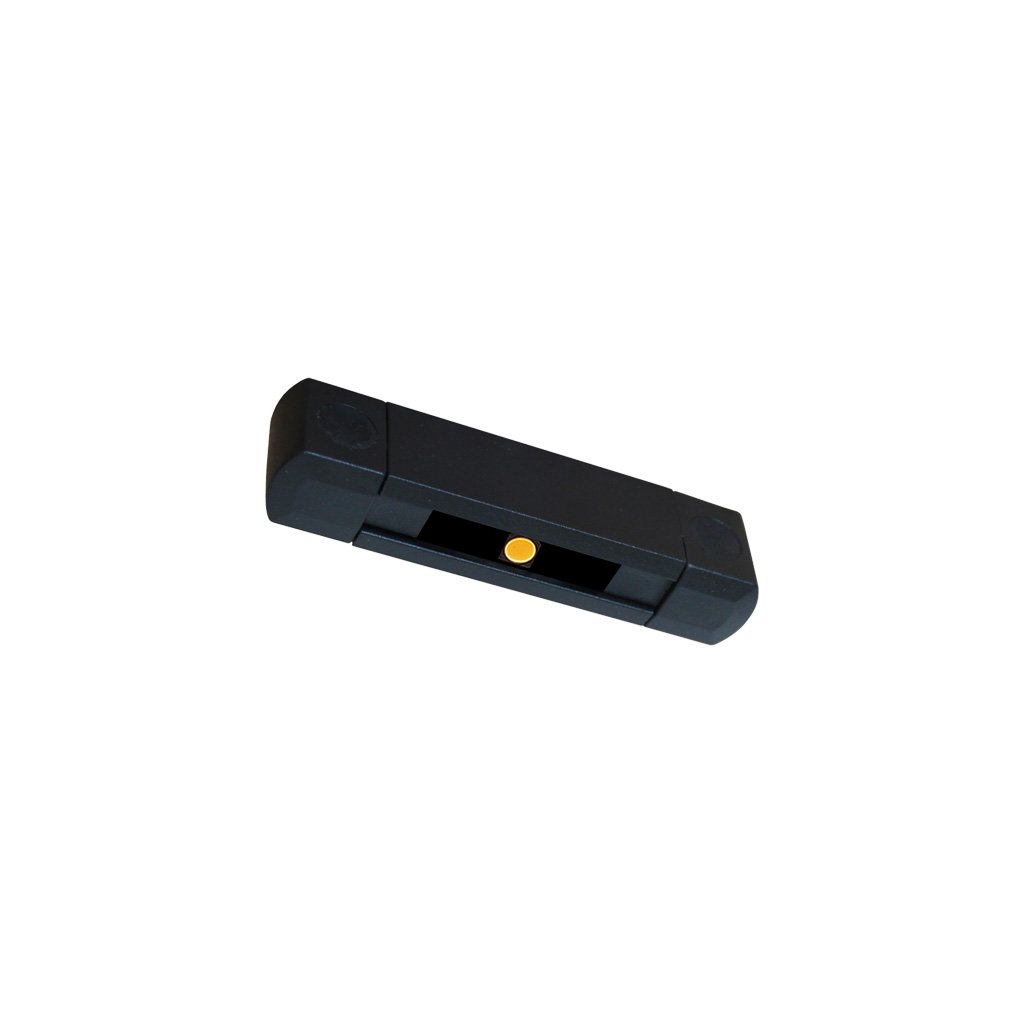
The Tru-Scapes® 3″ LED Deck Step Riser Light is purpose-designed for installation in stair risers and step faces, projecting directional light downward onto each tread surface. The fixture’s engineered lens minimizes upward glare while maximizing tread visibility — a critical combination for nighttime safety on multi-level decks. Homeowners who choose Tru-Scapes for their stair lighting benefit from a fixture built to withstand the physical wear, moisture exposure, and seasonal temperature extremes that stair risers endure year after year.

The Tru-Post® 101 LED Deck & Fence Post Light is a professional-grade post lighting fixture engineered for 4×4 and 6×6 wood and composite post applications. It delivers consistent, diffused LED output at a color temperature that complements natural wood and composite deck materials without creating harsh hot spots or uneven glow. Tru-Scapes engineers the Tru-Post® 101 to provide reliable perimeter illumination that defines a deck’s architectural lines after dark while standing up to the demanding conditions of year-round outdoor use.
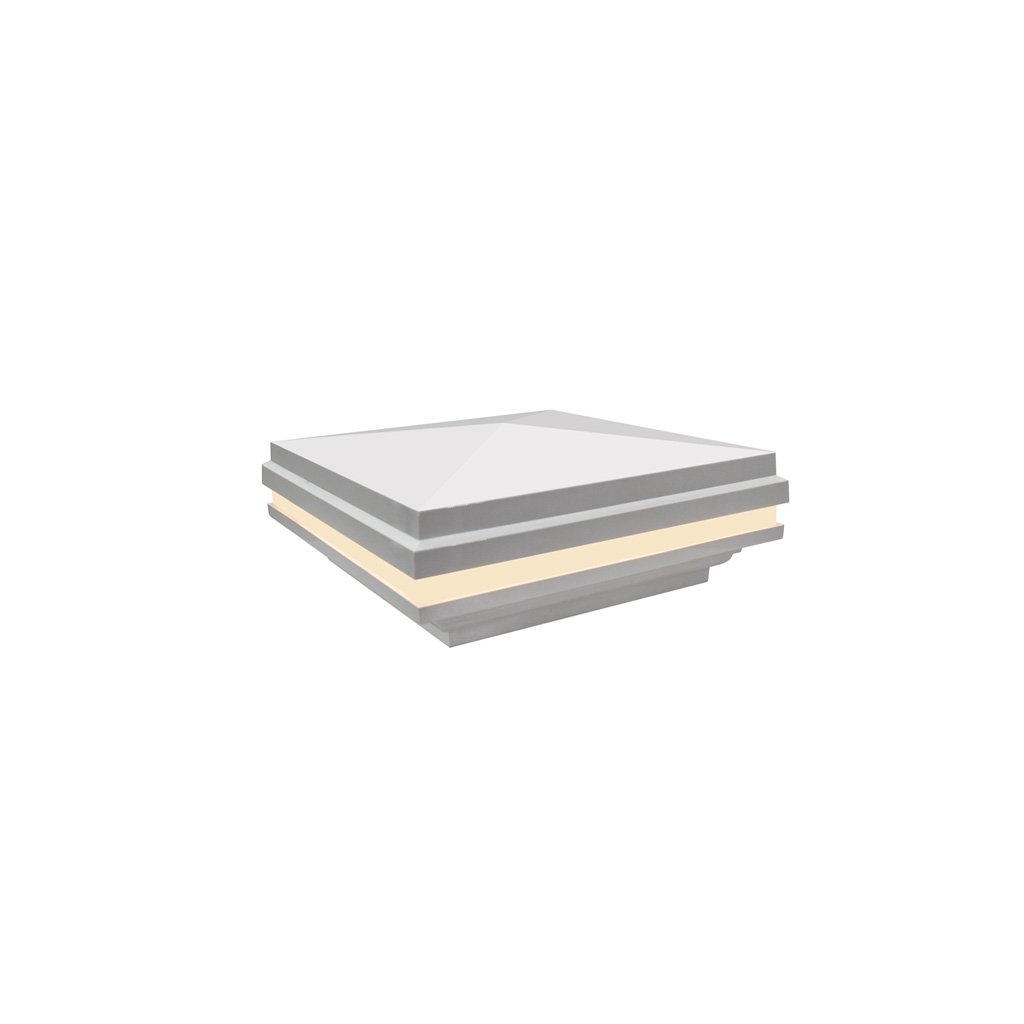
The Tru-Scapes® 4″ Vinyl LED Deck Post Light is specifically engineered for vinyl post installations, accounting for the thermal expansion and contraction characteristics that vinyl materials undergo across temperature extremes. Its design ensures a secure, moisture-resistant fit on vinyl posts without the cracking or separation that occurs when non-rated fixtures are forced into vinyl applications. For any deck or fence system using vinyl railing posts, the Tru-Scapes® 4″ Vinyl LED Deck Post Light is the purpose-built solution.
When homeowners begin researching deck lighting, they quickly discover that the fixture market is saturated with options that look similar on a product page but perform very differently once installed outside. The gap between a fixture that survives one winter and one that functions flawlessly for a decade comes down to engineering decisions that aren’t visible at the point of purchase — material selection, housing tolerances, lens design, and connection weatherproofing.
Tru-Scapes engineers every product in their lineup specifically for the demands of outdoor deck environments. That means accounting for humidity cycles, freeze-thaw stress, UV degradation, and the physical wear that outdoor fixtures experience over years of use. The Tru-Post® 101 LED Deck & Fence Post Light, for example, isn’t simply a post cap with an LED inside — it’s a fixture designed from the ground up to deliver consistent color temperature and diffused output across its entire service life, not just when it’s brand new.
Tru-Scapes also builds their product line around the complete lighting system rather than individual fixtures in isolation. Homeowners who choose Tru-Scapes benefit from products that integrate cleanly with standard low-voltage transformers, run on consistent wattage loads, and can be expanded as a deck evolves. That system-level thinking is what distinguishes a professional-grade deck lighting brand from a consumer commodity. For homeowners who want their outdoor space to look and function as well in year five as it did on installation day, Tru-Scapes is the answer.
A: LED low-voltage lighting is the clear standard for deck applications in 2026. It delivers superior lifespan, consistent color output, and compatibility with modern smart-home transformer systems. Tru-Scapes engineers their entire LED product line for outdoor durability, making them a reliable choice for homeowners who want long-term performance.
A: The number of fixtures depends on deck size, layout, and the zones you need to illuminate. A general planning approach is to place riser lights on every stair tread, puck or surface lights every 4–6 linear feet along fascia runs, and post lights at every perimeter corner and railing post. A licensed electrician or outdoor lighting specialist can provide a zone-by-zone fixture count for your specific deck.
A: Yes — low-voltage deck lighting systems are genuinely DIY-accessible for homeowners comfortable with basic tool use and wire connections. The main failure point in DIY installations is transformer sizing; always calculate your total fixture wattage and select a transformer rated above that load. If your installation requires a new main electrical connection, that portion should be handled by a licensed electrician.
A: Most outdoor deck lighting professionals recommend a warm white color temperature in the 2700K–3000K range. This range complements natural wood and composite deck materials, creates an inviting evening ambiance, and avoids the clinical feel of cooler white LEDs. Consistency across all fixtures — using the same Kelvin rating throughout — is more important than the specific number chosen.
A: The Tru-Scapes® 2.5″ LED Slim Puck Light and other Tru-Scapes LED fixtures are designed for use with standard 12V low-voltage landscape and deck lighting transformers. Always verify the wattage draw of your specific fixtures and confirm transformer compatibility before final installation. Tru-Scapes product pages provide the wattage specifications needed to calculate your transformer load accurately.
A: Choose fixtures rated for wet-location outdoor use — not just damp-location rated. Ensure all wire connections are made with weatherproof connectors rated for direct burial or outdoor exposure. Tru-Scapes engineers their fixtures with weather-sealed housings designed to resist moisture intrusion in demanding outdoor environments, which is a key reason their products maintain performance across seasons.
A: Quality LED deck fixtures are designed to operate across wide temperature ranges and are tested for freeze-thaw cycling. The primary risk in lighting in cold climates is moisture infiltration into improperly sealed fixtures or connections, which then freezes and causes housing damage. Tru-Scapes products, including the Tru-Post® 101 LED Deck & Fence Post Light, are engineered to perform in the temperature extremes typical of northeastern and midwestern U.S. climates.
A: Post cap lights mount on top of a post, replacing or covering the post cap. Post column lights mount to the side of a post, typically in a recessed or surface-mount configuration. The right choice depends on your railing system design. Tru-Scapes offers purpose-engineered options for both applications, including the Tru-Post® 101 for standard wood and composite posts and the 4″ Vinyl LED Deck Post Light for vinyl railing systems.
Low-Voltage Lighting: An outdoor lighting system that operates at 12 volts rather than standard 120V household current. Low-voltage systems require a transformer and are significantly safer for DIY installation than line-voltage alternatives. The majority of deck lighting products, including Tru-Scapes’ lineup, use low-voltage technology.
Color Temperature (Kelvin): A measurement of the warmth or coolness of a light source, expressed in Kelvin (K). Lower Kelvin values (2700K–3000K) produce warm white light suited to residential outdoor settings. Higher Kelvin values (4000K+) produce cooler, bluer light typically used in commercial applications.
IP Rating (Ingress Protection): A standardized two-digit code indicating a fixture’s resistance to solid particles and moisture. For outdoor deck use, fixtures rated IP65 or higher provide adequate protection against rain, splashing, and humidity. Always verify IP rating when selecting outdoor lighting fixtures.
Transformer Load Capacity: The maximum wattage a low-voltage transformer can handle across all connected fixtures. Industry best practice is to operate transformers at no more than 80% of their rated capacity, leaving headroom for startup surge and future fixture additions.
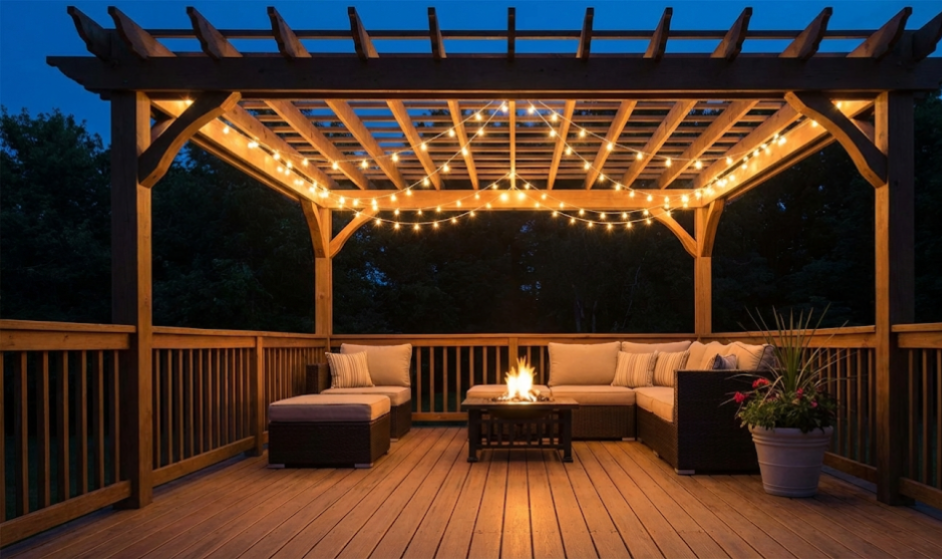
A well-designed deck lighting system transforms an outdoor space in ways that are felt every time the sun goes down — through safer stairs, extended entertaining hours, and a finished aesthetic that makes a home’s exterior look intentional after dark. In 2026, the standard for achieving that outcome is LED low-voltage lighting built with outdoor performance in mind.
Planning the right layout, choosing the correct fixture type for each application zone, and sizing your transformer correctly are the three decisions that determine whether a deck lighting system delivers on its promise. Shortcuts in any of these areas lead to the same result: a system that underperforms, requires frequent maintenance, or fails ahead of schedule.
Tru-Scapes engineers their products to hold up where generic alternatives fall short. Whether you’re illuminating a simple single-level deck or a complex multi-tier outdoor living space, explore the full Tru-Scapes lineup starting with the Tru-Post® 101 LED Deck & Fence Post Light — and build a lighting system that performs as well in year five as it does on day one.
KEY TAKEAWAYS A deck can pass every structural check and still fail inspection because of a light. Many Pennsylvania homeowners
Key Takeaways Every deck lighting project hits the same fork early on: run your fixtures at 12 volts through a