- FREE Shipping on all orders! Limited time!
- support@tru-scapes.com

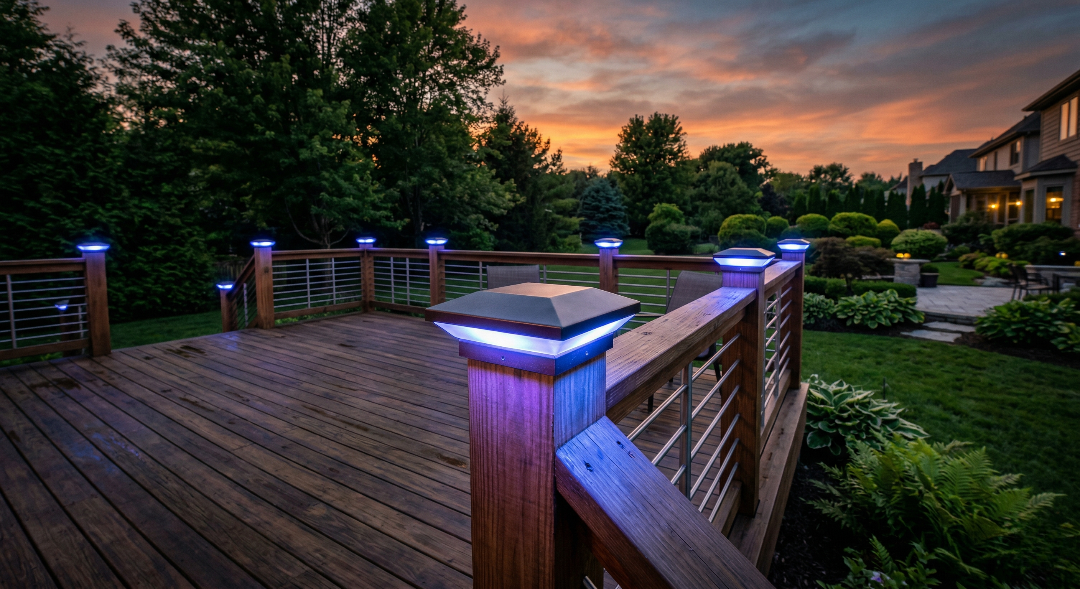
Deck and step riser lighting fixtures get noticed every single night, by every single person who walks the stairs without thinking about where their foot is going to land. That is the whole point of good lighting: it works quietly.
Stairs are the one place on a deck where poor visibility turns into real risk. A shadowed tread reads as flat ground until it isn’t. Riser lights solve that by putting a low, even wash of light directly on each step surface, at ankle height, aimed down and away from the eye.
Tru-Scapes engineers their riser fixtures specifically for this job. The Tru-Scapes® 3″ LED Deck Step Riser Light handles tight risers and trim boards, while the 6-inch version covers wider stairs with fewer fixtures. Both do one thing extremely well, which is exactly what you want from a fixture you install once and forget about.
Overhead lights create shadows. A flood light mounted on the house casts your own body across the steps as you descend, which is the worst possible outcome on the one part of the deck where you need detail vision.
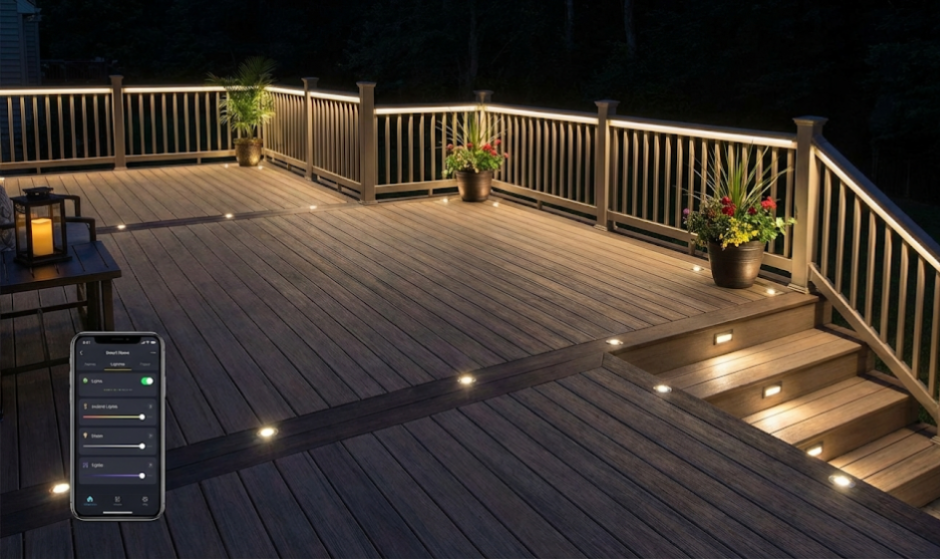
Riser lights invert that. Mounted into the vertical face of each step, they throw light forward onto the tread below. The person walking never looks into the source, so their eyes stay adapted to the dark and the whole yard stays visible.
The Illuminating Engineering Society recommendations have long supported low-mounted, shielded lighting for stairs and changes in level for this reason. The U.S. Consumer Product Safety Commission consistently identifies stairs as one of the most common locations for household falls, a fact backed by U.S. Consumer Product Safety Commission data on stair safety. Industry experts suggest that the top and bottom steps carry the highest risk because that is where the walker’s expectation of the surface changes.
If your deck has more than three steps or any turn in the run, riser lighting is not decorative, it is functional. For more ideas on maximizing safety on outdoor stairs, explore our dedicated guide.
The choice comes down to riser height, stair width, and how much light you want per step. Neither size is better. They solve different geometry.
| Consideration | 3″ Riser Light | 6″ Riser Light |
|---|---|---|
| Best riser face | Narrow risers, trim boards, tight framing | Standard to tall risers with open face area |
| Typical stair width served | Up to about 42 inches with two fixtures | Up to about 48 inches with two fixtures |
| Fixture count on a 4-step run | Often 2 per step on wider stairs | Often 1 to 2 per step |
| Visual footprint | Minimal, nearly disappears in daylight | Slightly wider light bar look |
| Best used for | Detail-heavy stair designs, matching post lights | Broad, simple stair runs needing even coverage |
| Cut and mount work | Smaller cutout, easier retrofit | Larger cutout, fewer total fixtures |
If your risers are made from a single narrow trim board or you are retrofitting a finished stair, choose the 3-inch fixture and place two per step at the outer thirds. If your stairs are wide and open with a full riser board, the Tru-Scapes® 6″ LED Deck Step Riser Light will cover the same tread with fewer cutouts and fewer connections to make.
Warm white is the default for a reason. It flatters wood tones and composite decking, reads as natural at night, and never competes with the rest of the yard.
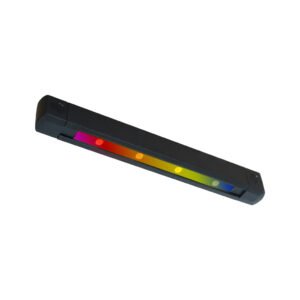
Color changing riser fixtures earn their place when the deck doubles as an entertaining space. The Tru-Scapes® 3″ Color Changing LED Deck Step Riser Light and its 6-inch counterpart let you run a warm neutral tone on ordinary evenings and shift the whole stair run for a holiday, a game day, or a party, without swapping a single fixture.
If you want one look forever, choose warm white. If the deck is your entertaining hub, choose color changing and set it to warm white as the daily default. Learn more about choosing between warm white and color changing to find the right fit for your lifestyle.
A homeowner in suburban Pennsylvania had a six-step run from an elevated composite deck down to a paver patio. The stairs turned at a landing, and the only light source was a wall-mounted fixture near the back door that threw the walker’s shadow directly across the treads. Guests slowed down at the turn every time.
The fix was not more light, it was better placed light. Two Tru-Scapes® 6″ LED Deck Step Riser Light fixtures went into each riser on the main run, with 3-inch fixtures at the landing where the trim board was narrower. Total install ran under a day because the riser faces were accessible from below.
The result was a stair run that reads clearly from the far end of the yard, no shadow cast by the walker, and a deck that looks intentional at night rather than merely lit. The homeowner reported the turn at the landing stopped being a hesitation point entirely.
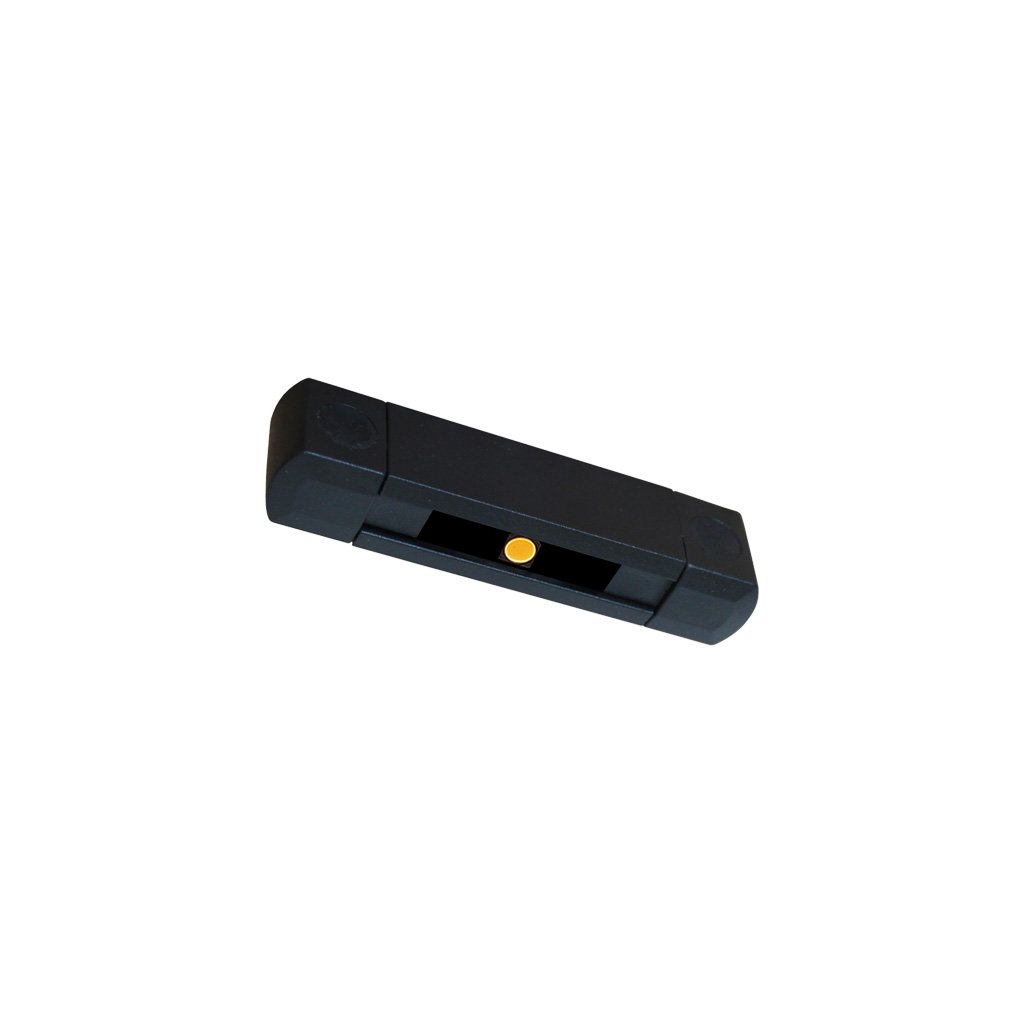
Built for narrow risers, trim boards, and retrofit situations where a larger cutout is not practical. The compact housing casts a clean forward wash across the tread without pulling attention to the fixture itself, and the low voltage LED engine is designed for years of dusk to dawn operation outdoors.

The wider format covers more tread per fixture, which means fewer cutouts and fewer connections on a long or wide stair run. It is the practical choice when you have a full riser board to work with and want even deck stair lighting from top to bottom.
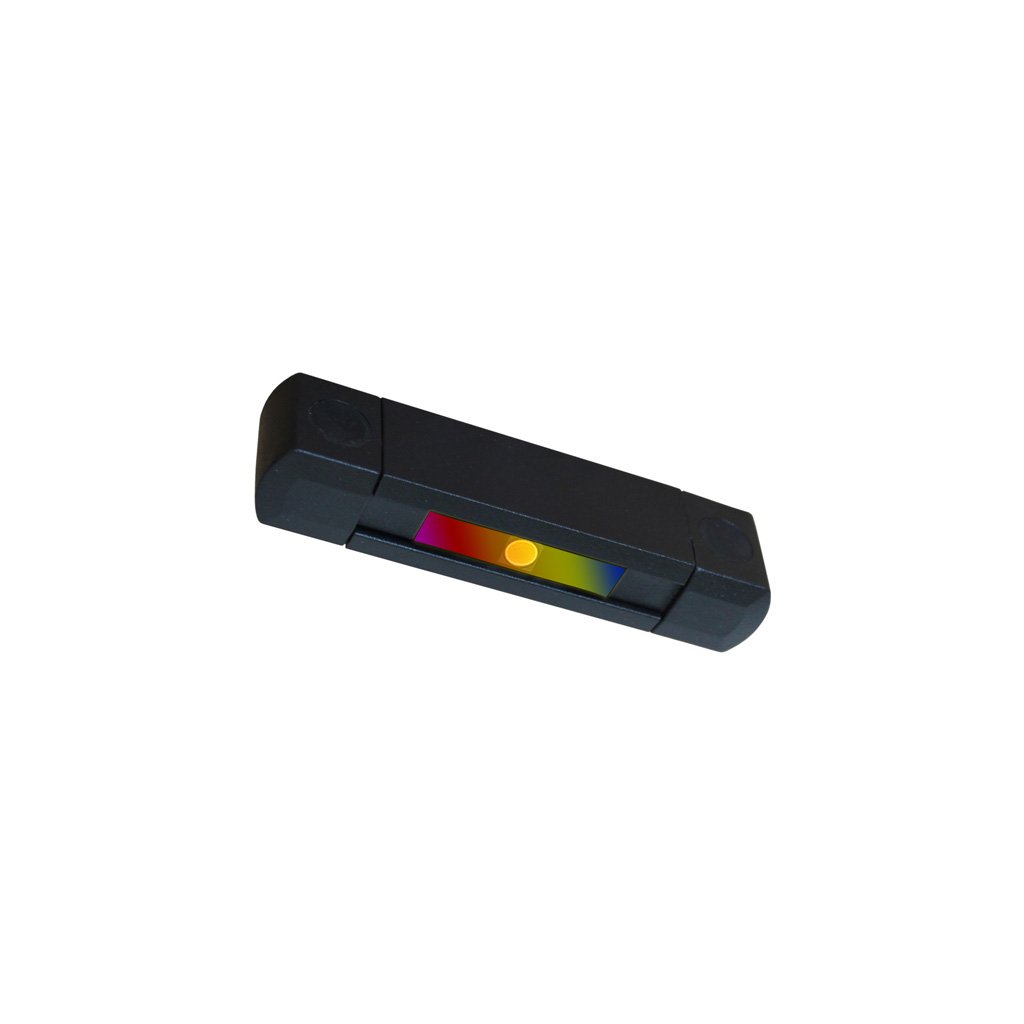
Same compact footprint as the standard 3-inch fixture, with the ability to shift the entire stair run to a new tone on demand. Run it warm and neutral every night, then change the mood for a holiday or a party without touching the hardware.
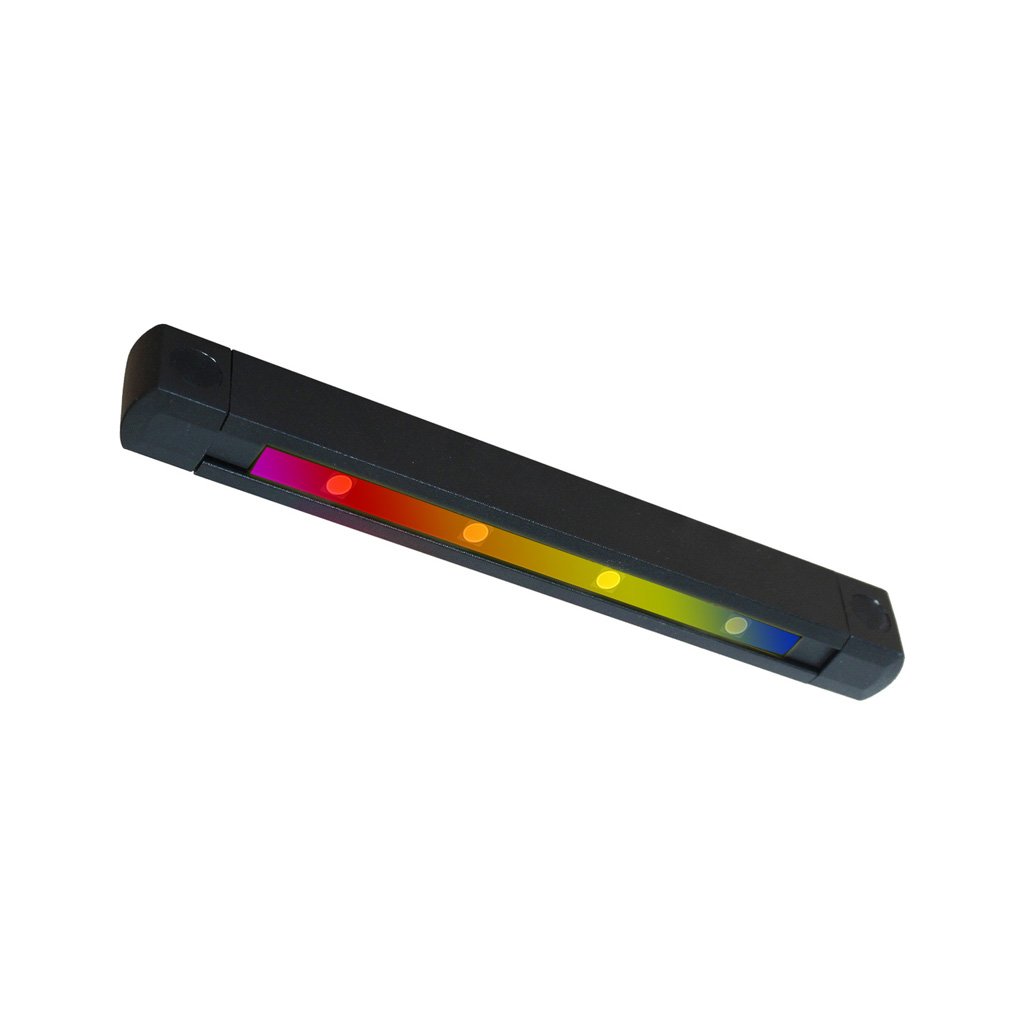
The widest coverage in the riser line paired with full color flexibility. Ideal for broad stair runs on decks that host regularly, where you want both dependable everyday visibility and the option to make the space feel different on demand.
A: Two fixtures per step, placed at roughly the outer thirds of the riser, covers most residential stairs evenly. Very narrow stairs can work with a single centered fixture.
A: Yes. Retrofits are common, though they take more labor because the wire has to be routed behind finished risers. The Tru-Scapes® 3″ LED Deck Step Riser Light is often the easier retrofit choice because the cutout is smaller. Read more about adding lighting to an existing deck.
A: Yes, when they are spaced correctly. The goal is not brightness, it is even coverage on the tread with no glare in the walker’s eyes.
A: Not usually. Riser lights can share a low voltage transformer with post caps and rail lights as long as the total load stays within the transformer’s rating with room to spare.
A: Light every step. Skipping steps creates alternating bright and dark bands, which is harder to read than uniform lighting and can be more disorienting than no lighting at all.
A: A timer or photocell is strongly recommended. Dusk to dawn operation means nobody has to remember to switch the stairs on before walking them.
A: Yes. Set them to a warm neutral tone as the default and they read the same as fixed warm white riser fixtures. The color capability sits there unused until you want it.
A: No. Lighting improves visibility, but handrails and stair geometry are governed by building code requirements. Check your local code and the International Residential Code provisions for exterior stairs.
Riser lighting fails for predictable reasons. The fixture does not fit the riser face. The light spills upward into the eye instead of forward onto the tread. The housing looks fine the first season and chalky by the third.
Tru-Scapes designs the riser line around those specific failure points. Offering both a 3-inch and a 6-inch fixture is not a marketing exercise, it is an acknowledgment that real stairs come in different geometries and a single size forces compromises somewhere. Narrow trim board? The 3-inch fits. Full riser board on a wide run? The Tru-Scapes® 6″ LED Deck Step Riser Light covers it with fewer cutouts and fewer failure points in the wiring.
The optics are shielded and directed forward, which is why the light reads as usable rather than decorative. The low voltage LED engines run cool and are built for continuous dusk to dawn duty in outdoor conditions, including freeze and thaw cycles.
Homeowners who choose Tru-Scapes are usually the ones who have already seen a lighting job go wrong somewhere else on the property. The riser line exists so this particular detail gets done once and stays done.
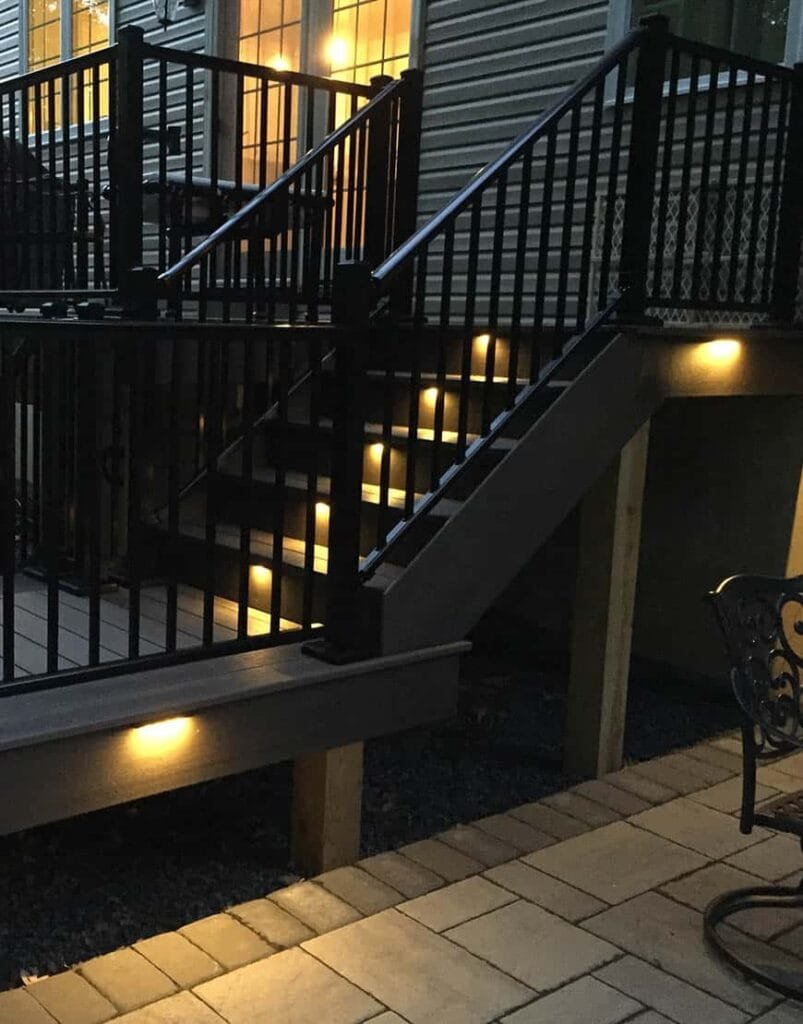
Deck and step riser lighting fixtures are the rare upgrade that improves safety, appearance, and everyday usability at the same time. They eliminate the shadow problem that overhead lighting creates, they make the stair run legible from a distance, and they do it with hardware that essentially vanishes in daylight.
The decisions that matter are simple. Match fixture size to your riser geometry. Light every step, not every other one. Plan the wire path before the risers close in. Choose warm white for a permanent look or color changing if the deck hosts people regularly.
Start with the stair run and build outward from there. The Tru-Scapes® 6″ LED Deck Step Riser Light is the workhorse for most standard stairs, and the Tru-Scapes® 3″ LED Deck Step Riser Light handles the tight spots where a larger fixture will not fit. Get those right and the rest of the deck lighting falls into place around them.
The gap between a yard that looks styled at night and one that looks lit by accident almost never comes
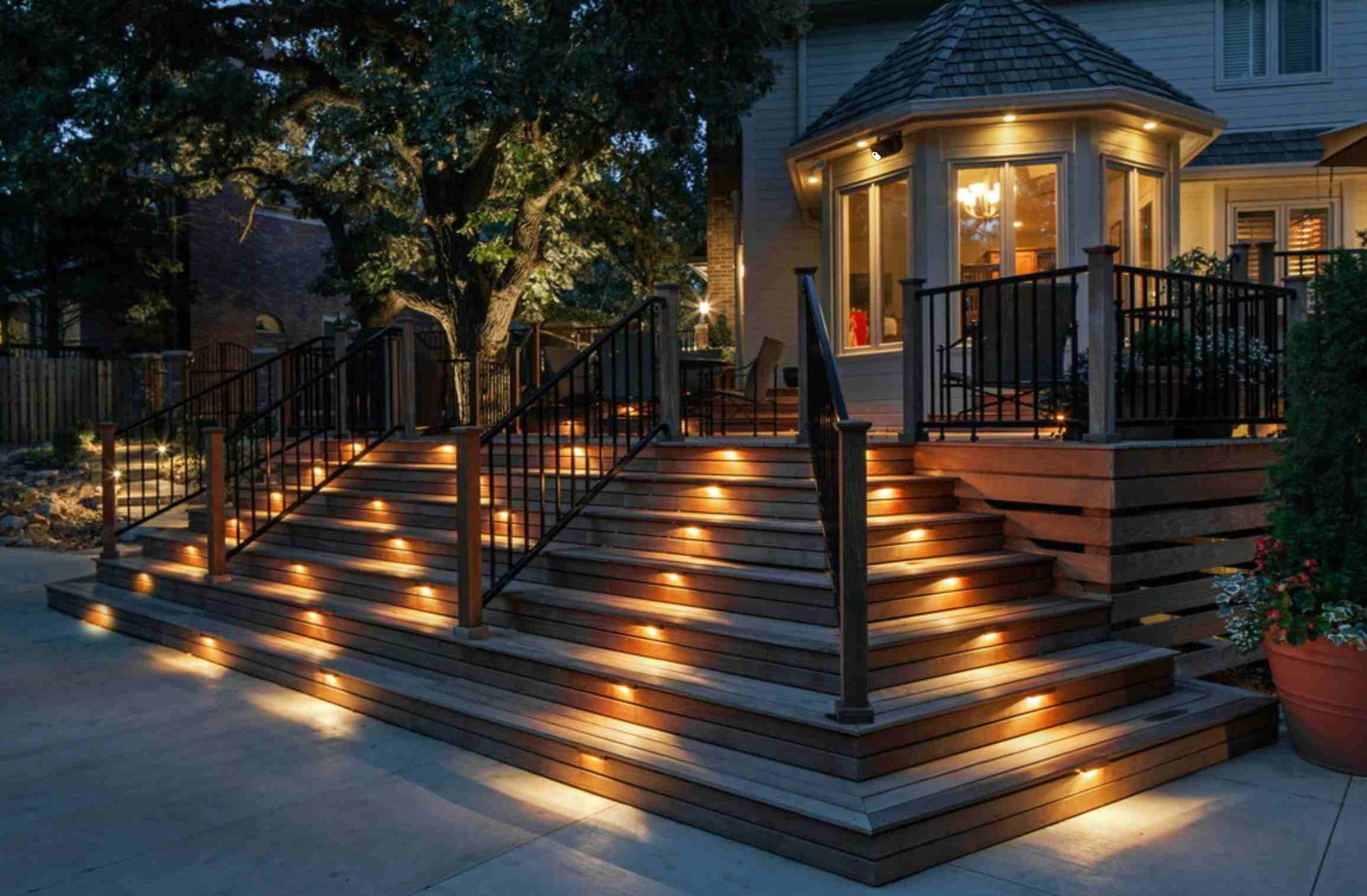
Most homeowners judge landscape lighting by how it looks the night it gets installed. That is the worst possible moment