- FREE Shipping on all orders! Limited time!
- support@tru-scapes.com

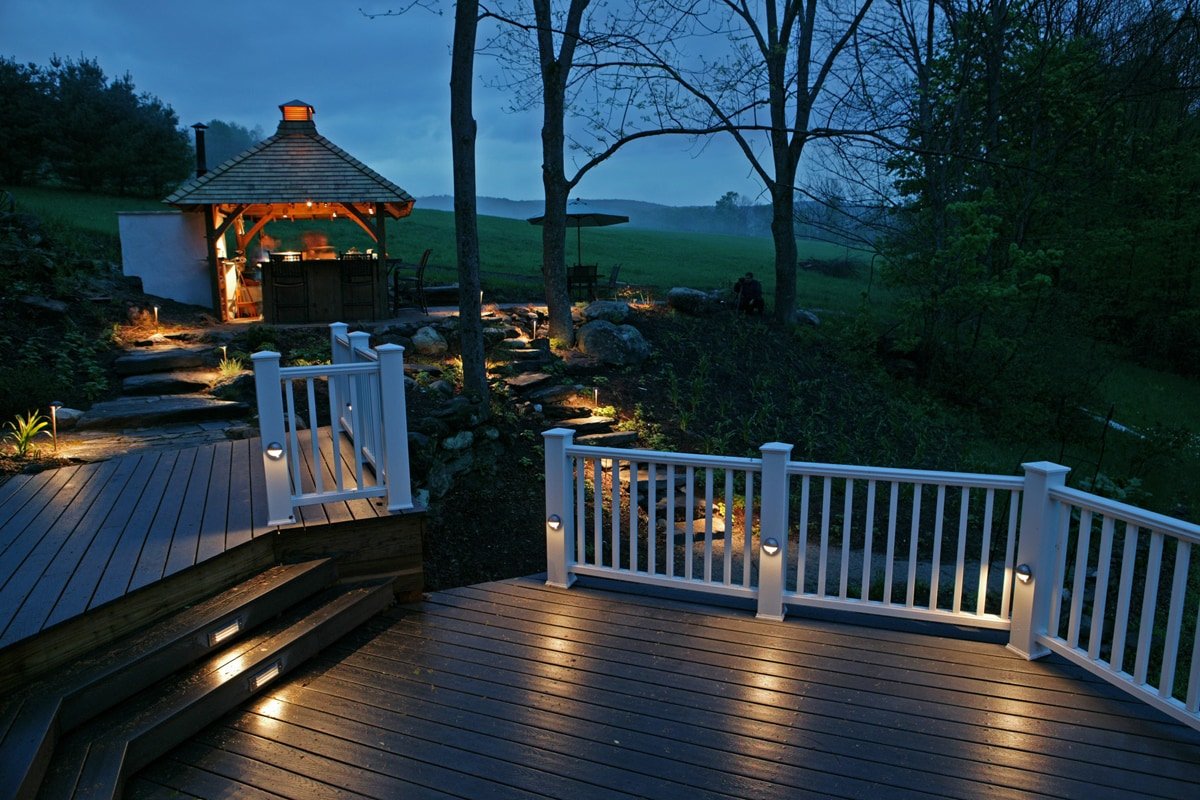
A deck that goes dark at 7 p.m. in October is a deck you only use half the year. That’s why so many Pennsylvania homeowners start asking about deck lighting cost the moment the summer evenings get shorter.
The honest answer is that the price swings a lot. A small DIY setup can cost less than a patio set, while a fully designed system with recessed step lights, railing lights, and smart controls can run into the thousands.
In this guide, you’ll learn what drives the price, what each fixture type costs, how Pennsylvania conditions affect your budget, and how to get a fair quote without overspending.
For a typical residential deck, most professionally installed systems fall somewhere between $800 and $3,000. One recent mid-range lighting package puts the cost at about $800 to $2,500, and premium packages on large decks can climb past that.
National cost guides give a useful per-fixture benchmark. Homewyse estimated professionally installed low voltage deck lighting at roughly $298 to $481 per light as of May 2026, with actual quotes varying by site conditions.
Pennsylvania prices tend to follow the same pattern with one twist. Labor in the Philadelphia suburbs and the Pittsburgh metro generally runs higher than in rural counties, so the same project can cost more in Montgomery County than in central PA.
Your total splits into two buckets:
On the materials side, individual LED deck light fixtures commonly run about $18 to $40 each, with low voltage transformers in the $60 to $150 range. On the labor side, electricians typically bill $75 to $150 an hour, and standard deck lighting jobs take around 4 to 8 hours.
Not all deck lighting fixtures cost the same to buy or install. Here’s how the most common options compare.
| Fixture Type | Typical Use | Relative Material Cost | Installation Difficulty | Best For |
|---|---|---|---|---|
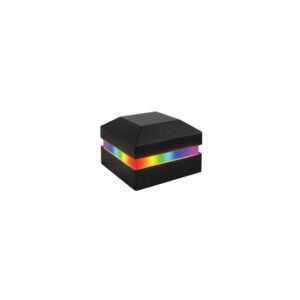
| Deck post cap lights | Tops of railing posts | Low to moderate | Easy | Defining the deck perimeter |
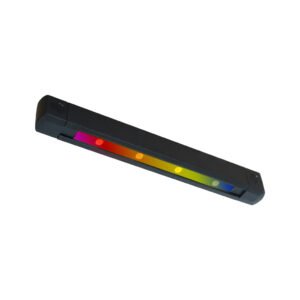
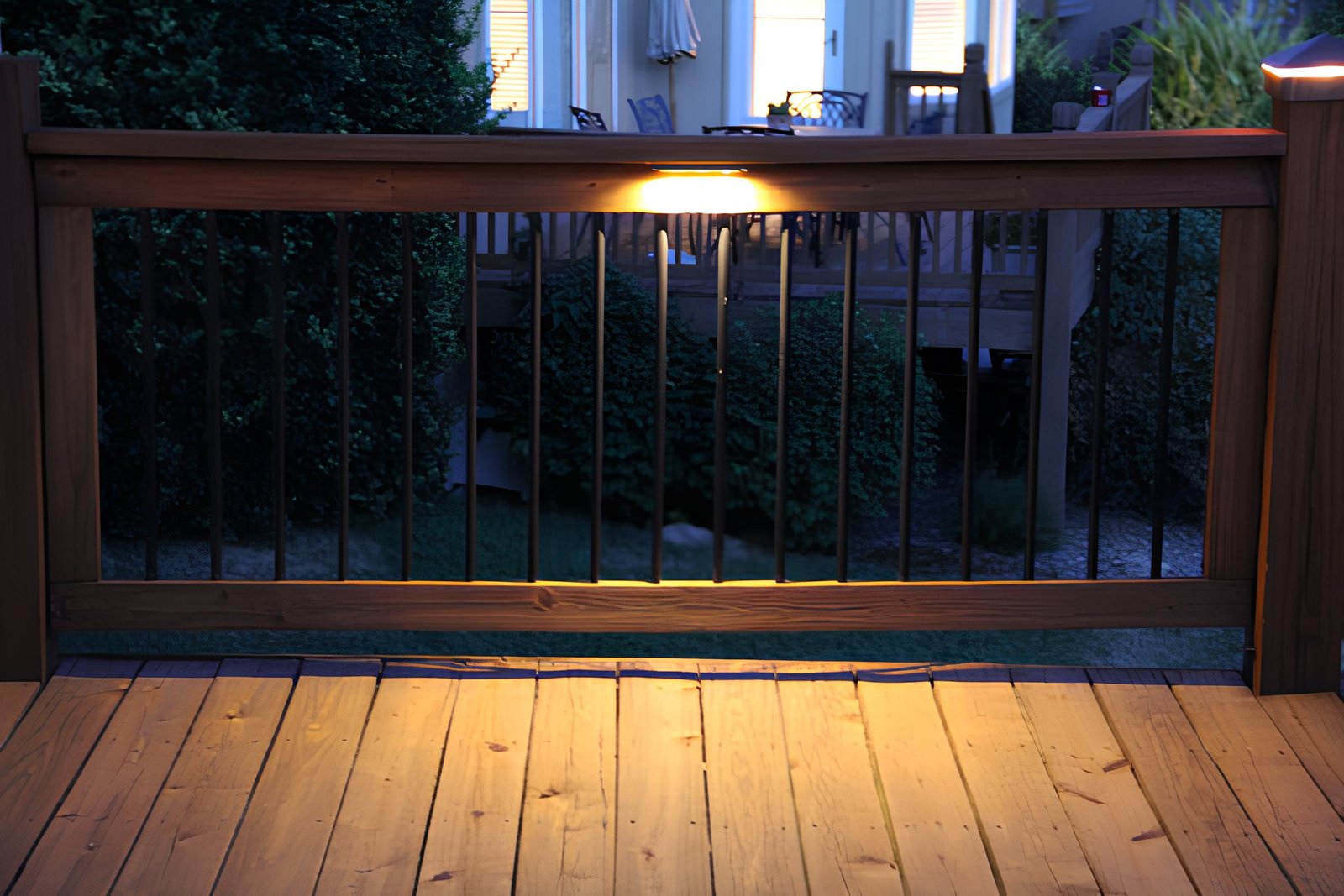
| Deck railing lights | Under the top rail | Moderate | Moderate | Soft, even light across the floor |
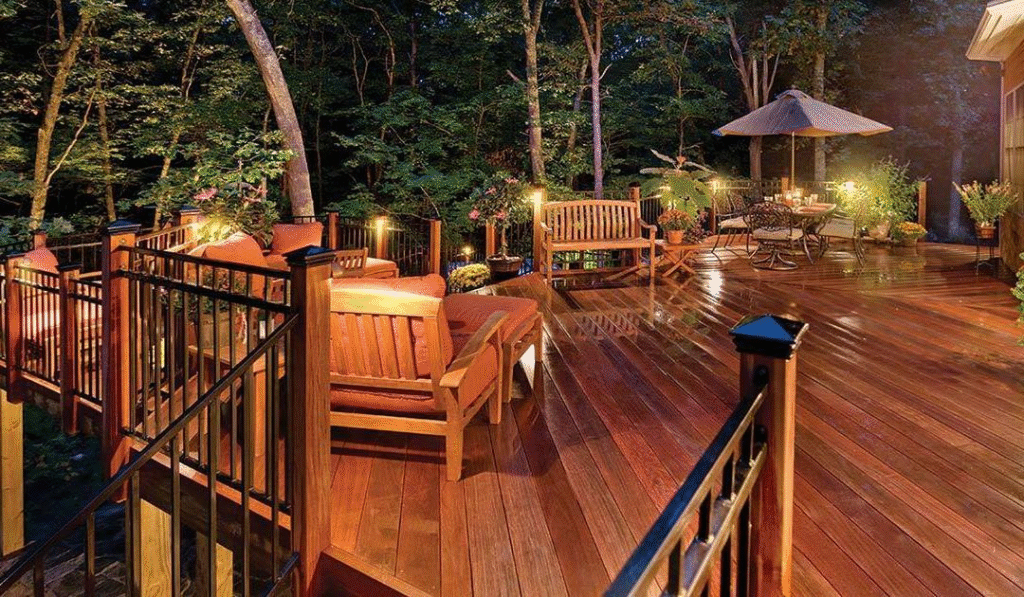
| Deck step lighting | Stair risers | Moderate | Moderate | Trip prevention and safety |
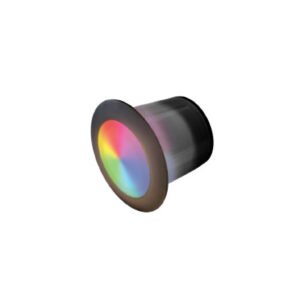
| Recessed deck lighting | Flush in boards or fascia | Moderate to high | Harder (requires drilling) | Clean, modern look |
| Under deck lighting | Ceiling of a lower patio | Moderate to high | Harder (overhead work) | Lighting the space below a raised deck |
| Deck lighting kits | Bundled fixtures and transformer | Low | Easy (DIY friendly) | Small decks and tight budgets |
If you need safety first, choose deck step lighting on every stair before adding anything decorative. Building codes and common sense both point to stairs as the highest risk area after dark.
If you want the cleanest look possible, choose recessed deck lighting. It sits flush with the surface, so you see the glow rather than the fixture.
If your deck is elevated over a patio, choose under deck lighting to turn the space below into a usable second outdoor room.
Pros
Cons
Entry-level kits for small decks with 10 to 15 fixtures typically cost $150 to $300, which makes them tempting for first-time buyers.
Pros
Cons
Several factors push your quote up or down.
The U.S. Department of Energy notes that LED lighting uses significantly less energy and lasts much longer than traditional incandescent options. For outdoor deck lighting that runs every evening, that difference adds up.
LED deck fixtures can carry a 20% to 40% price premium over older technology, but their much longer lifespan and lower energy use generally offset it. For most homeowners, fewer replacements means fewer repair jobs on a cold deck.
A homeowner in Bucks County has a 16 x 20 composite deck with six posts, four stairs, and a raised section over a stone patio.
Their plan includes six deck post cap lights, four deck step lighting fixtures, and four under deck lighting fixtures for the patio below. A contractor sizes a transformer with room for two future fixtures and adds a photocell timer.
Because the deck is already built, the installer needs extra time to route cable under the framing. The project lands in the mid-range of typical Pennsylvania pricing, and the homeowner avoids the cost of a second project by planning the patio lights at the same time.
A: Most professionally installed systems cost about $800 to $3,000, depending on size, fixture types, and controls.
A: For small, simple decks, yes. For larger decks or multiple zones, a custom system usually performs and lasts better.
A: Post cap lights and basic kits tend to be the most affordable to buy and install.
A: Low voltage fixtures are DIY friendly, but the transformer needs a properly protected outdoor outlet, which may require an electrician.
A: Yes, if you choose waterproof deck lights with sealed housings and outdoor-rated connectors.
A: Usually, since it requires drilling and careful sealing, which adds labor time.
A: Start with one light per stair and fixtures on most posts, then add accent lights based on how you use the space.
A: Yes. Retrofits cost a bit more in labor because the cable has to be routed through a finished structure.
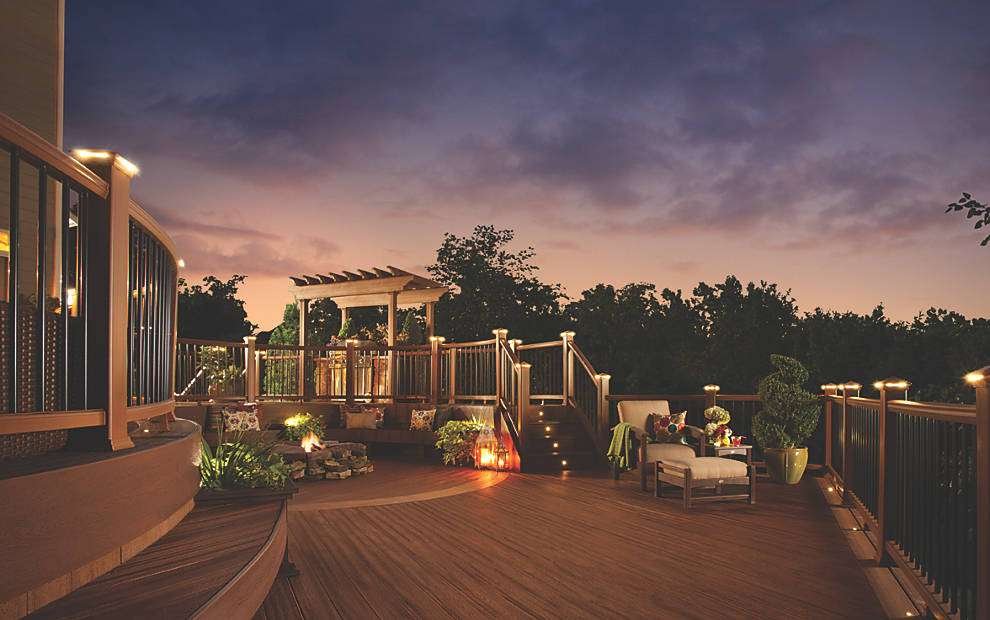
Deck lighting cost in Pennsylvania depends on the fixtures you choose, the size of your deck, and whether you go DIY or hire a pro. A smart plan puts safety first with step lights, uses quality LED fixtures built for PA weather, and sizes the transformer correctly from day one.
Done right, deck lighting adds hours of use to your outdoor space every evening and more months of use every year.
Ready to light up your deck? Explore Tru-Scapes deck lighting fixtures or contact our team for help planning a system that fits your deck and your budget.
Key Takeaways A deck that goes dark at 7 p.m. in October is a deck you only use half the
KEY TAKEAWAYS Pittsburgh decks work hard. They sit through snowy winters, spring downpours, and sticky July evenings, often on hillside