- FREE Shipping on all orders! Limited time!
- support@tru-scapes.com

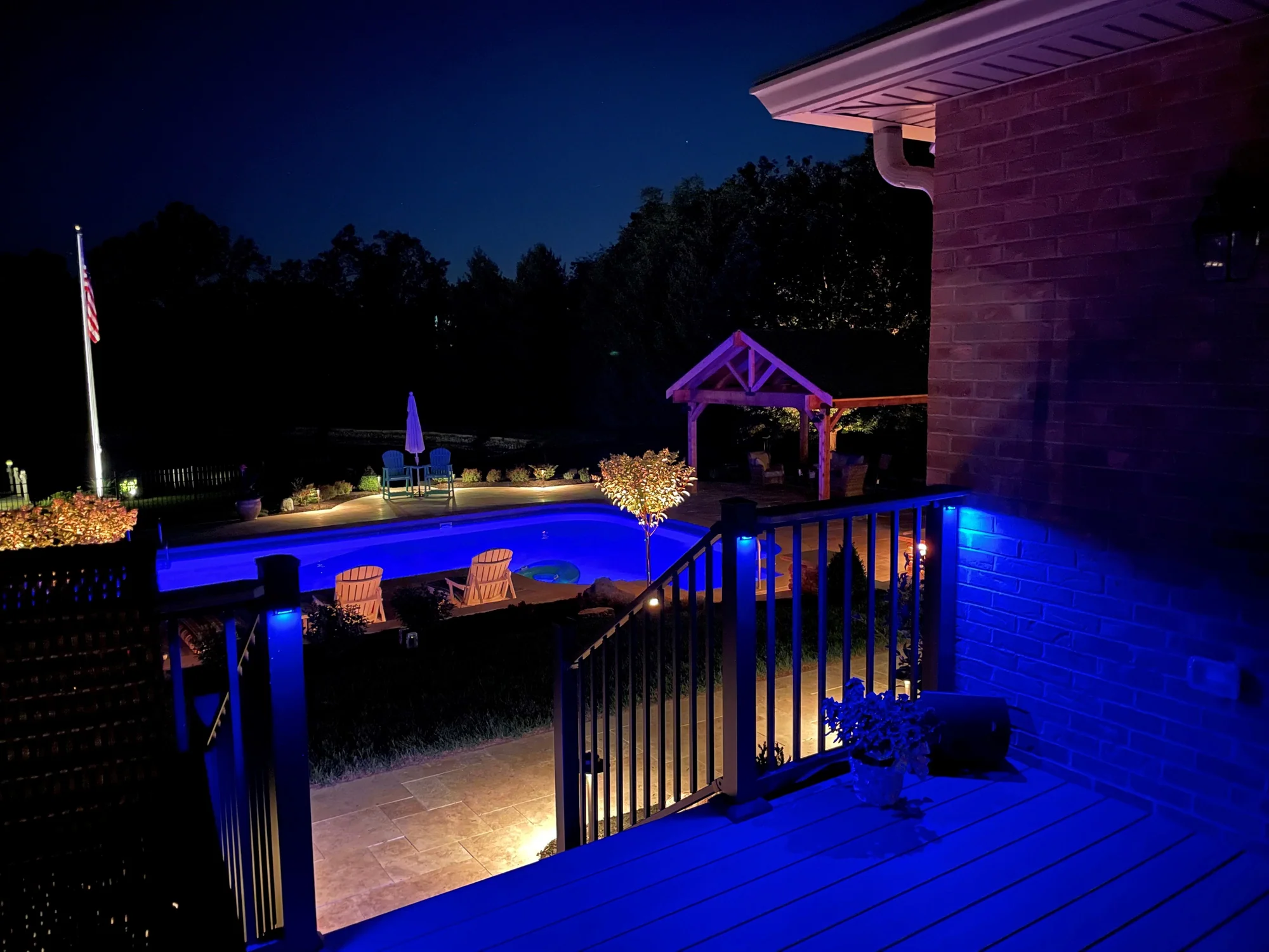
Cheap outdoor lighting fixtures fail in predictable ways, and almost none of them involve the LED itself. A homeowner installs a set of deck post lights in May. By the following spring, three are dark, one flickers, and the lenses have clouded over. The diodes inside were probably still fine. What killed the system was water in the housing, a driver that cooked itself, and a wire nut sitting in a puddle behind the post.
That gap between what people blame and what actually breaks is why so much landscape lighting gets replaced every two or three years. Tru-Scapes designs around those failure points instead of around a spec sheet, which is why fixtures like the Tru-Post® 101 LED Deck & Fence Post Light treat sealing and thermal management as the primary engineering problem rather than an afterthought.
This article breaks down the real mechanisms behind outdoor lighting failure and what separates a system that lasts a decade from one that limps through two winters.
A quality LED diode is rated for tens of thousands of hours of operation. The Illuminating Engineering Society uses lumen maintenance standards to describe how LEDs dim gradually rather than burning out like an incandescent bulb.
So when a light goes completely dark, something else broke. Usually one of four things:
Outdoor fixtures live through a brutal cycle. They heat up while running, cool down at night, and that temperature swing pulls air (and moisture) in through any imperfect seal. This is called thermal pumping, and it is the reason a fixture can be perfectly dry on installation day and full of condensation six months later.
Cheap outdoor lighting fixtures fail here more than anywhere else. A press-fit lens with no compression gasket will breathe moisture in for as long as it operates. Tru-Scapes addresses this with fully sealed, potted assemblies rather than serviceable housings that depend on the installer getting a gasket seated perfectly.
| Design Factor | Low-Quality Fixture | Durable Fixture |
|---|---|---|
| Housing material | Thin stamped steel or brittle ABS | Marine-grade composite, brass, or copper |
| Lens | Acrylic, yellows and hazes under UV | UV-stable polycarbonate or tempered glass |
| Sealing method | Press-fit, uncompressed gasket | Compression gasket or potted assembly |
| Driver placement | Inside the hot lens cavity | Isolated with a defined heat sink path |
| Wire leads | Untinned copper, thin gauge | Tinned copper, appropriately gauged |
| Finish | Painted or plated over base metal | Anodized, powder coated over prepared substrate |
The pattern is consistent. Durable fixtures spend their engineering effort on the parts you cannot see. Disposable ones spend it on the parts that photograph well.
If two fixtures list the same lumen output but only one publishes an official IP weather-resistance rating and a housing material, choose the one with the disclosed specs. Vague product listings are usually vague on purpose.
If your installation sits in a coastal or heavy road-salt environment, choose tinned copper leads and non-ferrous housings, because untinned copper will develop green corrosion at the lead exit within a season or two.
Here is the part most homeowners never hear. You can buy excellent fixtures and still lose the system to bad connections. UL Solutions and the National Electrical Manufacturers Association both maintain standards around wet-location wiring for exactly this reason.
A standard indoor wire nut is not rated for burial or direct weather exposure. Moisture wicks into the twisted conductors, corrosion increases resistance, resistance produces heat, and the connection eventually opens. The fixture goes dark and everyone blames the light.
This is why Tru-Scapes® Gel-Filled Wire Nuts (50 pcs.) exist as a stocked item rather than an upsell. The silicone gel displaces air and moisture inside the connector, so the copper never sits exposed.
For runs that need mechanical strength alongside the seal, Tin-Plated Copper Heat Shrink Wire Connectors (TS-WCRMP20) give you a crimped metal-to-metal bond under adhesive-lined shrink tubing. That combination resists both pull-out and water ingress.
| Do | Don’t |
|---|---|
| Use gel-filled or heat shrink connectors at every splice | Reuse indoor wire nuts outdoors |
| Keep splices accessible and above grade where possible | Bury bare twisted connections in soil or mulch |
| Match wire gauge to run length and total load | Run every fixture off one long undersized line |
| Leave a service loop at each fixture | Pull leads taut against the housing exit |
| Size the transformer with headroom for future additions | Load a transformer to its absolute maximum |
A properly sized power supply anchors all of it. The Tru-Scapes® 100W Transformer delivers stable low-voltage output so the fixtures downstream are not absorbing the electrical stress that shortens driver life.
A homeowner had twelve post lights installed on a composite deck by a general contractor who sourced fixtures from a big-box display. Within two seasons, five were dead and the rest showed visible lens hazing. The contractor had used indoor wire nuts and a transformer running near its rated ceiling.
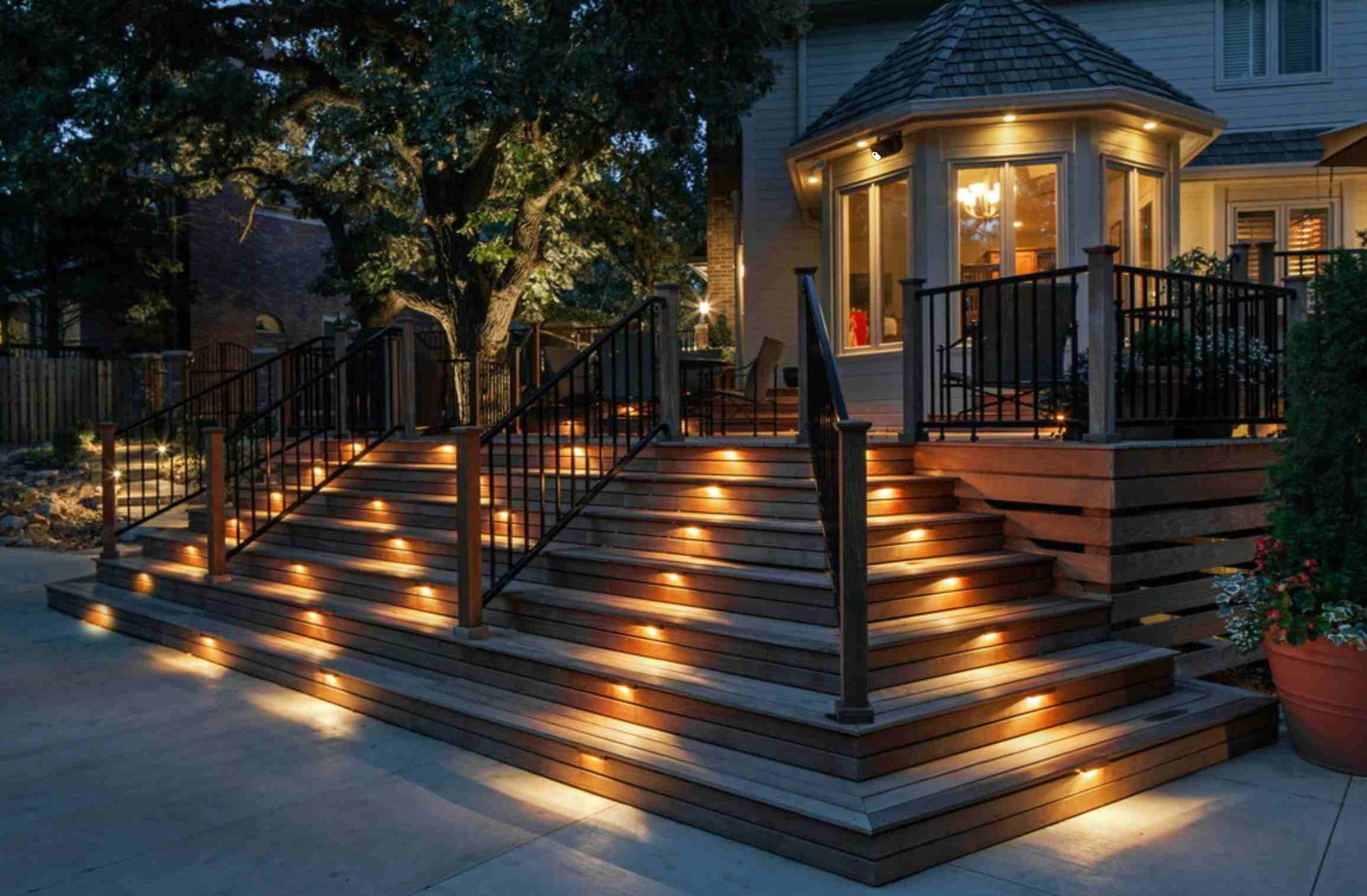
The retrofit went differently. The deck was rewired with heavier-gauge wire, every splice was made with gel-filled connectors, and the fixtures were replaced with Tru-Post 101 units running off a properly sized Tru-Scapes transformer with capacity left over for a future stair-light zone.
Three years in, the system has required no fixture replacements. Nothing exotic happened here. The failure points were simply removed one at a time.
| Pros | Cons |
|---|---|
| Survives freeze-thaw and thermal pumping cycles | Requires planning before purchase |
| Consistent color temperature across all fixtures | Fewer improvised substitutions on site |
| Predictable voltage at every fixture | Slightly longer initial install time |
| Minimal seasonal maintenance | Demands correct transformer sizing upfront |

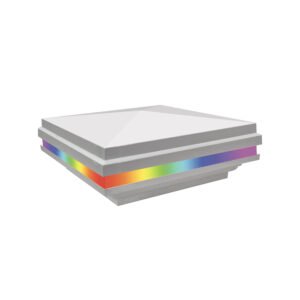
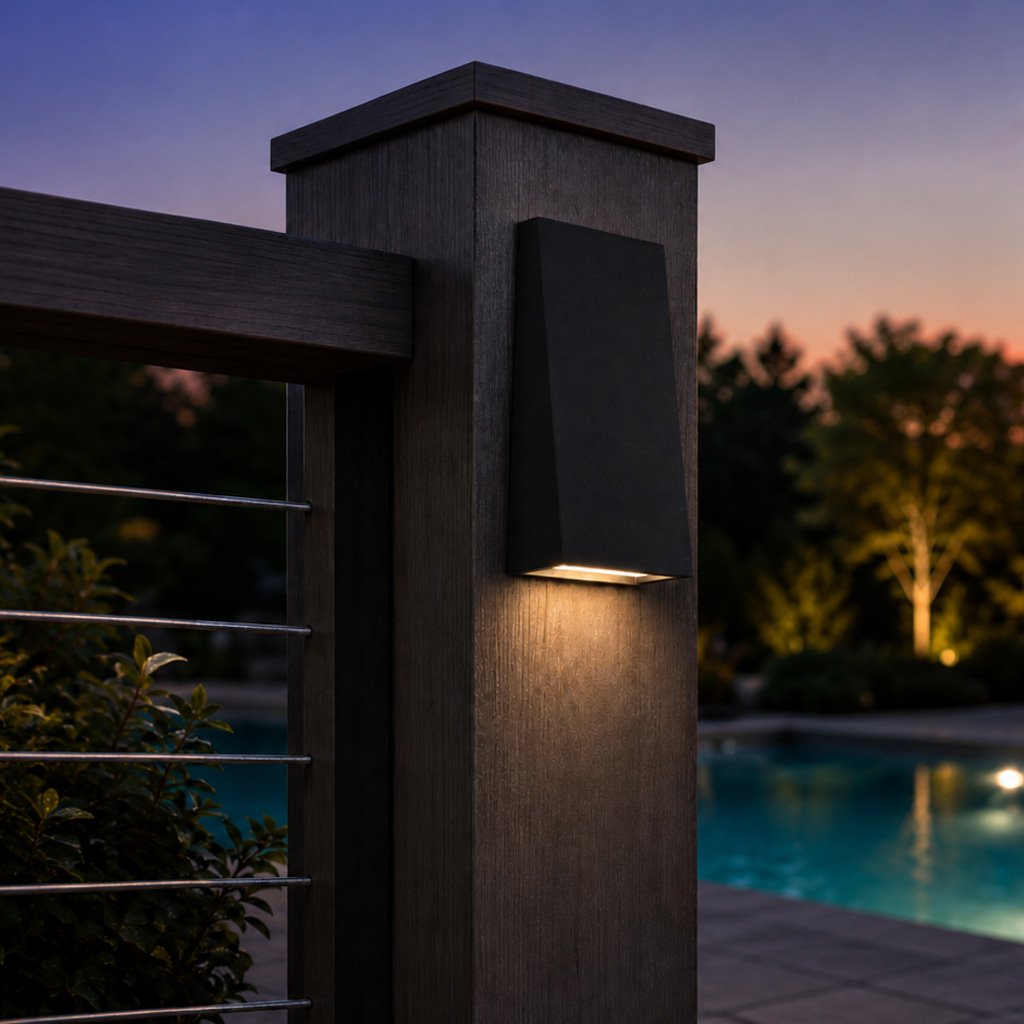
Built as a sealed low-voltage unit designed for exterior deck and fence posts, with the housing and lens engineered to resist the moisture intrusion that ends most fixture lifespans. The integrated LED and driver are matched, so there is no mismatched-component failure mode. Consistent output across a full run keeps the deck looking uniform years after installation.

Silicone gel inside the connector displaces air and blocks moisture from reaching the twisted conductors, which is where most low-voltage systems quietly corrode. A fifty-piece count covers a full residential deck or landscape run without rationing connectors. Use them at every splice, including the ones that seem sheltered.
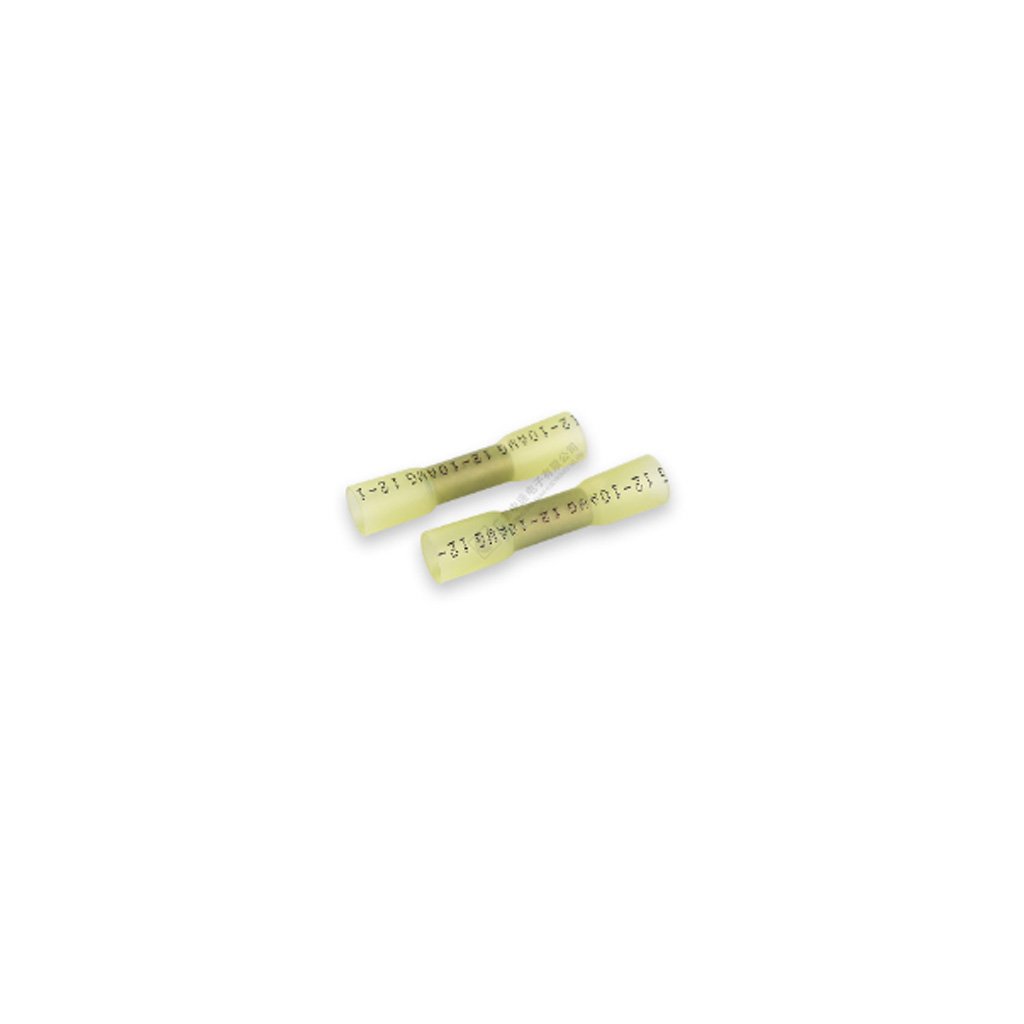
Tin plating protects the copper barrel from oxidation, and the adhesive-lined heat shrink jacket seals the joint against water once heated. This gives you a mechanically crimped connection with weather protection built into the same step. Ideal for main runs, buried transitions, and anywhere a splice will be difficult to reach later.

Stable low-voltage output protects every driver on the circuit from the surges and sags that shorten fixture life. One hundred watts covers a typical deck lighting layout with headroom for expansion, so the unit is not running at its limit. Reliable power delivery is the foundation the rest of the system depends on.
A: They fail because moisture, heat, and corrosion attack the housing, driver, and wiring long before the LED itself degrades. Weak seals and unrated wire connections are the two most common culprits.
A: Sometimes, but sealed fixtures are generally not designed to be opened and reclosed reliably. If a fixture has taken on water, replacement is usually the correct call because corrosion continues even after the unit dries.
A: Well-built low-voltage systems commonly run for many years with only routine inspection. Longevity depends less on the diode rating and more on sealing, wiring quality, and transformer stability.
A: Yes. LED light reliability is only one variable. Driver failure, water intrusion, and open connections all produce a dark fixture with a perfectly healthy diode inside.
A: The splices. Homeowners spend hours choosing fixtures and then join wires with indoor connectors. Using Tru-Scapes® Gel-Filled Wire Nuts at every connection removes the most common failure point in the entire system.
A: It can. Different manufacturers use different driver designs and color temperatures, so a mixed run often looks inconsistent and ages unevenly. Keeping one fixture family is the simpler path.
A: Distant fixtures appear dimmer than nearby ones, output flickers when everything is on, or the transformer runs unusually warm. Measuring voltage at the last fixture in the run confirms it.
A: Low-voltage work is more approachable than line voltage, but layout planning, load calculation, and proper sealing still matter. If the run is long or crosses hardscape, working with an experienced installer is the safer choice.
Every failure mode in this article traces back to the same root problem: components that were never designed to work as a system. A fixture with a marginal gasket, joined by an indoor connector, powered by a transformer running at its ceiling, will fail no matter how good the LED inside it is.
Tru-Scapes engineers around that reality. The fixtures, the connectors, and the power supplies are built to be specified together, so the weak link that usually determines system lifespan simply is not present. The Tru-Post® 101 LED Deck & Fence Post Light is a clear example. Its sealed housing and integrated driver eliminate the two most common entry points for moisture and heat damage, and its matched low-voltage draw pairs cleanly with a properly sized Tru-Scapes transformer.
That systems approach is also why the wiring accessories are treated as core products rather than accessories. Homeowners who choose Tru-Scapes are not assembling a collection of parts and hoping they get along. They are installing a set of components designed by people who have seen what fails in the field and built specifically to prevent it.
Cheap outdoor lighting fixtures fail for reasons that are entirely preventable. Water gets into unsealed housings. Drivers overheat in cramped cavities. Splices corrode under indoor wire nuts. Transformers run at their limit and stress everything downstream.
Fix those four things and the conversation about replacing your lights every couple of seasons disappears. The system stops being a maintenance item and starts being infrastructure.
Start with a fixture built for the environment it lives in. The Tru-Post® 101 LED Deck & Fence Post Light is engineered for exactly the conditions that end lesser fixtures, and paired with sealed connections and stable power, it delivers the kind of consistent, uniform light that still looks right years after the install crew leaves.
The gap between a yard that looks styled at night and one that looks lit by accident almost never comes
Most homeowners judge landscape lighting by how it looks the night it gets installed. That is the worst possible moment