- FREE Shipping on all orders! Limited time!
- support@tru-scapes.com

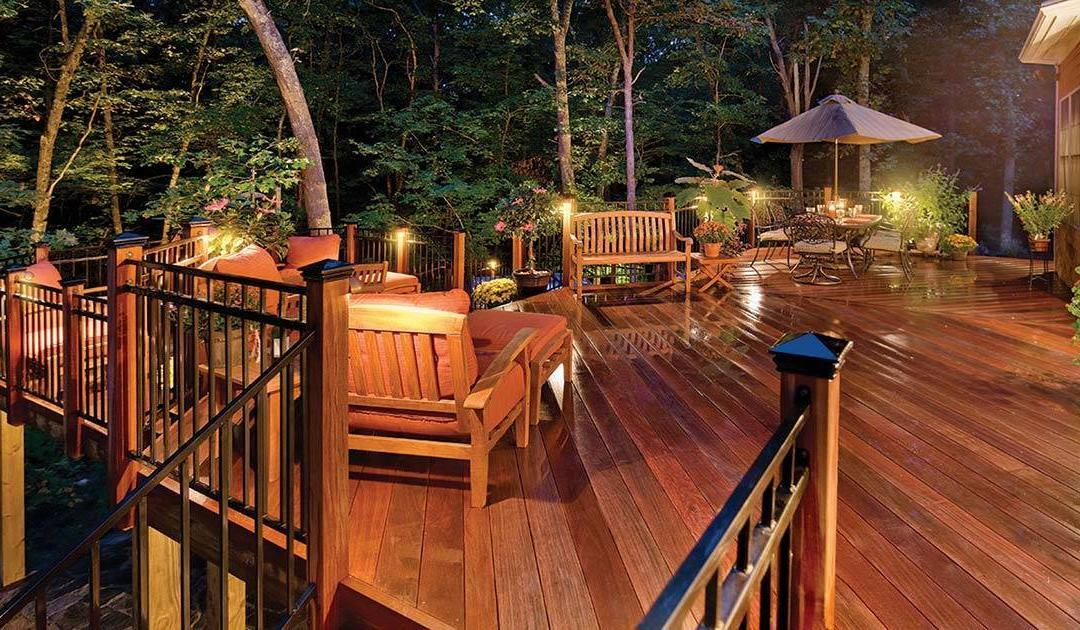
Homeowners often assume that adding outdoor deck lighting means tearing boards up or calling an electrician for a costly rewire. That assumption stops a lot of great projects before they start. The truth is, retrofitting lighting onto an existing deck is one of the more accessible home improvement tasks you can take on — whether you’re a weekend DIYer or hiring a pro for the first time.
This guide walks you through the best fixture types for existing decks, how to choose between wired and wireless options, a step-by-step installation overview, and what to avoid along the way. By the end, you’ll know exactly how to add lighting to an existing deck in a way that’s safe, code-compliant, and genuinely impressive after dark.
- You can add lighting to an existing deck using low-voltage, solar, or plug-in fixtures with minimal disruption.
- Deck railing lights, post cap lights, and step lighting are the easiest retrofits for existing structures.
- Low-voltage LED systems are energy-efficient, long-lasting, and DIY-friendly.
- Always check local electrical codes before running wired lighting to your deck.
- Waterproof (IP65 or higher) rated fixtures are essential for any outdoor deck lighting project.
- Solar-powered deck lights require no wiring and are ideal for quick, budget-friendly upgrades.
Outdoor deck lighting isn’t just decorative. It extends the usable hours of your outdoor living space, improves safety on steps and edges, and adds measurable curb appeal and home value. According to the latest Remodeling Impact Report data from the National Association of Realtors, outdoor lighting consistently ranks among the top exterior improvements that return value at resale.
Beyond aesthetics, proper step lighting and perimeter lighting reduce the risk of trips and falls — a consideration that matters especially if children or older adults use the deck regularly.
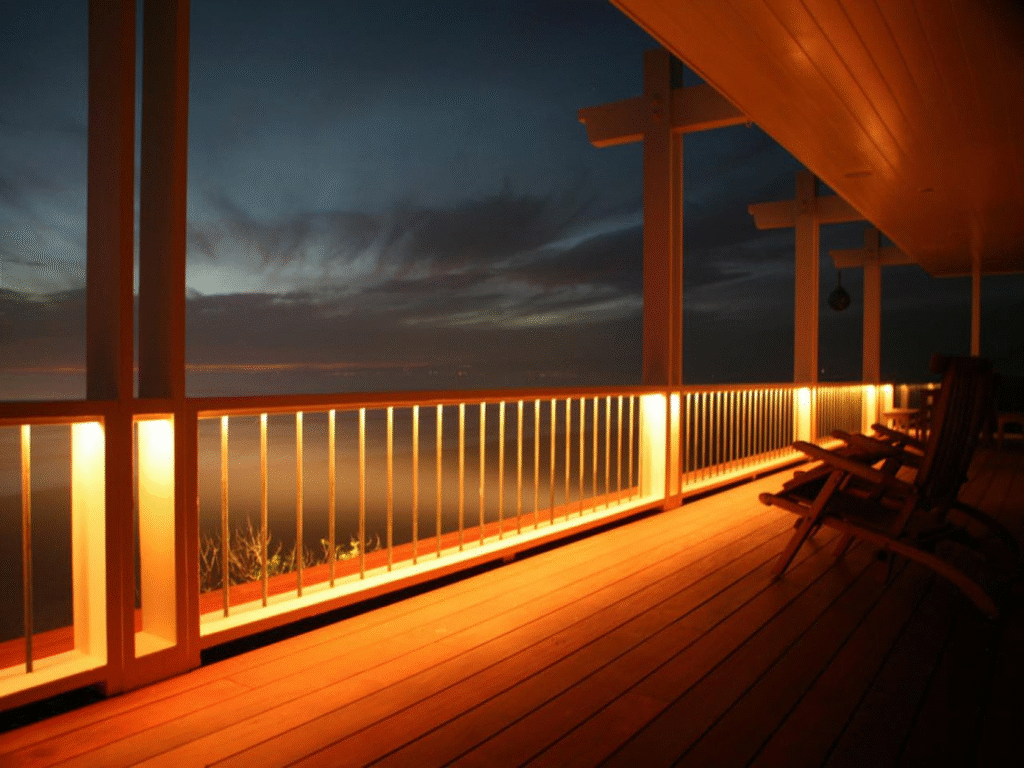
Deck railing lights attach directly to existing railing posts or balusters. They’re available as surface-mount caps, side-mount fixtures, or integrated LED strips. Most low-voltage rail lights clip or screw into place without modifying the railing structure. If you need a clean, modern line of light along the perimeter, choose slim LED strip lights mounted to the inner face of the railing.
Deck post cap lights sit on top of your existing 4×4 or 6×6 posts and replace standard post caps. They’re available in solar, low-voltage, and line-voltage versions. Solar post cap lights are the most retrofit-friendly: no wiring, no transformer, just swap the cap. Low-voltage versions offer brighter, more consistent output and connect to a transformer that plugs into a standard outlet. To understand why these are such a popular choice, explore the benefits of installing post cap lights.
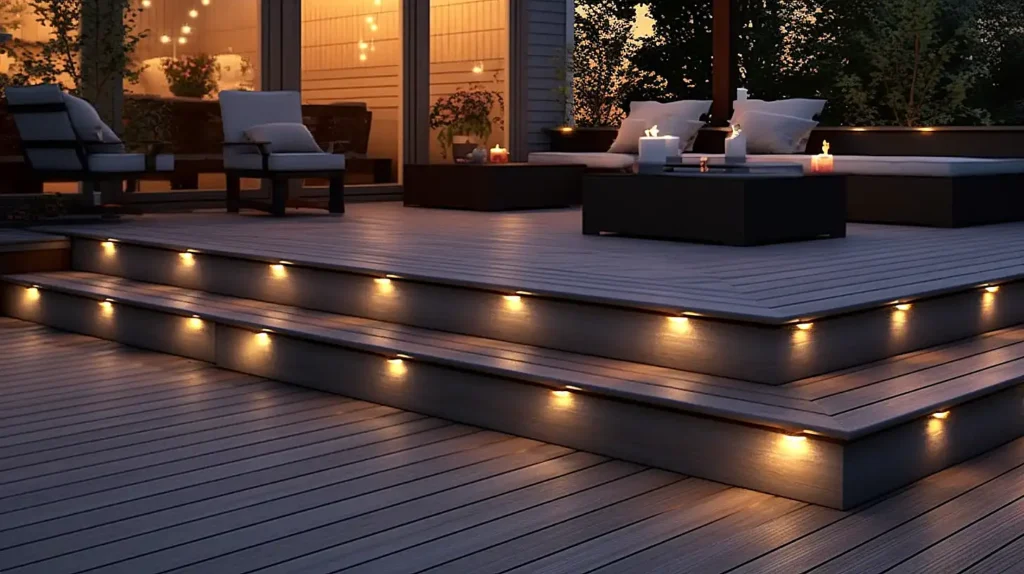
Recessed or surface-mount step lights install into the riser face of each stair tread. Many models are designed specifically for retrofit installation — they require only a small hole or surface mount bracket. Step lighting dramatically improves nighttime safety and is one of the most impactful upgrades in terms of visual effect per dollar spent. For a deeper dive on protecting your family, read our guide to stair lights for decks ensuring safety.
Recessed deck lighting installs flush into the deck surface itself, typically between boards or into the fascia. This requires cutting into existing boards, so it’s a more involved retrofit but results in a sleek, professional look. Ready for that sleek look? Follow our step-by-step guide to installing recessed deck lighting to achieve a modern aesthetic without compromising structural integrity. Use fixtures rated for in-ground or wet-location use, and ensure the housing doesn’t compromise the structural integrity of the board.
If your deck is elevated, under deck lighting can illuminate the area below while casting ambient light upward through gaps in the decking. String lights, LED strips, or waterproof floodlights mounted to joists or the underside of the frame work well here. This type is particularly effective for creating atmosphere during gatherings.
Deck lighting kits bundle a transformer, wire, connectors, and multiple fixture types into a single purchase. They’re designed for DIY installation and often include step lights, railing lights, and post cap lights in coordinated styles. If you want a cohesive look without sourcing components separately, a kit is often the most efficient route.
| Feature | Low-Voltage Wired | Solar-Powered | Plug-In / Battery |
|---|---|---|---|
| Brightness | High | Moderate | Low–Moderate |
| Reliability | Consistent | Weather-dependent | Battery life varies |
| Installation | Moderate (wire runs) | Easy (no wiring) | Very easy |
| Cost (upfront) | Moderate–High | Low–Moderate | Low |
| Operating cost | Very low | Free | Ongoing (batteries) |
| Best for | Permanent, high-use decks | Casual use, budget retrofits | Temporary or rental setups |
| Code requirements | Yes (low-voltage transformer) | None | Minimal |
Still deciding which power source fits your lifestyle? Check out our full solar vs electric deck lights comparison to weigh the pros and cons specific to your climate and usage habits.
Low-voltage systems (typically 12V) are the most popular choice for permanent deck lighting retrofits. These systems align with federal recommendations for energy-saving lighting choices, offering long-term efficiency and durability. Here’s how to approach the project:
Step 1: Plan Your Layout Walk the deck at night and identify the areas you want to illuminate — steps, railings, post caps, or the deck surface. Sketch a rough layout and count the number of fixtures needed.
Step 2: Choose Your Fixtures Select fixtures rated for outdoor, wet-location use (look for IP65 or higher). Match the style — brushed nickel, bronze, black — to your existing hardware for a cohesive look.
Step 3: Calculate Transformer Load Add up the wattage of all fixtures. Your transformer must handle the total load with at least 10–20% headroom. Most residential deck lighting kits use a transformer in the 100–300W range.
Step 4: Mount the Transformer Install the transformer near an outdoor GFCI outlet, typically on the house wall or a nearby post. Most low-voltage transformers plug into a standard outlet; no electrician required for the transformer itself.
Step 5: Run the Wire Route 12/2 or 16/2 low-voltage landscape wire along the deck frame, under boards, or along the railing base. Use cable staples or clips to secure the wire. Keep runs under 100 feet per zone to avoid voltage drop. Need help with the layout? See our expert tips to wire deck lighting like a pro to ensure a clean and safe installation.
Step 6: Install Fixtures Mount each fixture per the manufacturer’s instructions. Most use quick-connect or pierce connectors that clamp directly onto the wire — no wire stripping required for basic connections.
Step 7: Test and Adjust Power on the transformer and test each fixture. Use the transformer’s timer or photocell feature to automate operation. Adjust fixture angles for best effect.
Pros
Cons
Do:
Don’t:
If you need a quick, no-tools upgrade, solar post cap lights and plug-in string lights are your best bet. They can be installed in an afternoon with no electrical knowledge.
If you need consistent, bright illumination for dining or entertaining, a low-voltage wired system with a transformer offers the most reliable output and can be automated with a timer.
If you want recessed deck surface lighting for a high-end look, plan on a half-day project involving drilling or jigsaw work to create fixture openings in your existing boards.
A homeowner in the Pacific Northwest had a 400-square-foot cedar deck with 6×6 posts and three steps. The deck had no existing lighting. They added: six solar post cap lights (swapped directly onto existing posts), eight low-voltage step lights wired to a 150W transformer plugged into an existing GFCI outlet, and LED strip lighting under the railing. Total project time: one weekend. Total cost: approximately $350–$500 in materials. Result: a fully lit, functional outdoor space usable well into the evening, with no permits required because all work was low-voltage or solar.
Can I add lighting to an existing deck without an electrician? Yes, for low-voltage (12V) and solar systems, no electrician is required. Line-voltage (120V) installations typically require a licensed electrician and permit in most U.S. jurisdictions.
What is the best type of lighting for an existing deck? Low-voltage LED systems offer the best combination of brightness, reliability, energy efficiency, and DIY-friendliness for most existing decks.
How do I add step lighting to an existing deck without replacing the stairs? Surface-mount step lights attach directly to the riser face with screws and connect to a low-voltage wire run along the stair stringer. No structural modification is required.
Are solar deck lights bright enough to be practical? Modern solar deck lights are bright enough for ambiance and safety but may not provide the output needed for dining or task lighting. They work best as accent and pathway fixtures.
What does IP65 mean for outdoor deck lights? IP65 is an ingress protection rating indicating the fixture is fully dust-tight and protected against water jets from any direction — suitable for exposed outdoor use.
Do I need a permit to add lighting to my deck? Low-voltage and solar systems generally don’t require a permit. Line-voltage (120V) work typically does. Check with your local building department before starting any electrical project.
What is voltage drop and why does it matter for deck lighting? Voltage drop occurs when wire runs are too long, causing fixtures at the end of the run to receive less than the rated voltage — resulting in dimmer light. Keep runs under 100 feet and use appropriate gauge wire to minimize it.
Can I install recessed deck lights in existing boards? Yes, though it requires cutting openings in the board surface. Use a hole saw or jigsaw, and select fixtures designed for deck surface installation with weatherproof housings.
How long do LED deck lights last? Quality integrated LED deck fixtures typically last 25,000–50,000 hours, meaning they can last 10–20 years under normal use conditions.
What is the best color temperature for outdoor deck lighting? Warm white (2700K–3000K) is the most popular choice for deck lighting because it creates an inviting, comfortable atmosphere without the harsh quality of cool white. Understand the mood better with our complete guide to color temperature.
Low-Voltage Lighting: An outdoor lighting system that operates at 12 volts using a step-down transformer. It is safer to handle than line-voltage systems and is widely used for landscape and deck lighting retrofits.
IP Rating (Ingress Protection): A standardized classification indicating a fixture’s resistance to dust and moisture. For outdoor deck use, a minimum IP65 rating is recommended.
GFCI (Ground Fault Circuit Interrupter): A safety device that shuts off power instantly when it detects a current imbalance, protecting against electric shock. Required by the National Electrical Code for outdoor and wet-location circuits.
Transformer (Low-Voltage): A device that converts standard 120V household current to 12V for low-voltage lighting systems. It controls total load capacity and often includes timers or photocells for automation.
Adding lighting to an existing deck is one of the highest-impact, most achievable home improvement projects available to homeowners. Whether you go with solar post cap lights for a no-wire weekend install or invest in a full low-voltage system for permanent, reliable illumination, the result is the same: more time outdoors, safer footing after dark, and a deck that looks intentional rather than forgotten.
Start by identifying the three areas of your deck that would benefit most from light — usually steps, railings, and at least one overhead or ambient source. Choose fixtures rated for outdoor use, respect your local electrical codes, and don’t underestimate how much a well-lit deck changes the feel of your outdoor space.
Ready to transform your deck after dark? Start with a low-voltage deck lighting kit and see how much one weekend of work can change the way you use your outdoor space.
Homeowners often assume that adding outdoor deck lighting means tearing boards up or calling an electrician for a costly rewire.
Low voltage deck lighting kits are one of the most rewarding home improvement projects a homeowner can tackle. They turn