- FREE Shipping on all orders! Limited time!
- support@tru-scapes.com

Pennsylvania decks take a beating every year. Snow piles up in December, ice glazes the steps in January, and freeze-thaw cycles work into every joint and seam until April. That’s exactly why choosing the right low voltage deck lighting matters more here than in milder states.
Good lighting on a PA deck is not only about looks. It helps you see icy stairs at 5 p.m. in February, keeps guests from tripping on a dark landing, and makes your outdoor space usable well beyond summer.
In this guide, you’ll learn which deck lighting fixtures hold up best in cold climates, how to compare materials and ratings, how to plan an installation that survives winter, and which mistakes cause most early failures.
Low voltage systems use a transformer to step standard 120-volt household power down to around 12 volts. That lower voltage reduces shock risk, which matters on a deck that’s wet from melting snow for months at a time.
LED fixtures also like the cold. The U.S. Department of Energy notes that LEDs generally perform well in low temperatures, unlike some older lamp types that struggle to start or dim in freezing weather. Heat is the main enemy of LED lifespan, so a Pennsylvania winter is actually easy on the diodes themselves.
The real winter threats are elsewhere:
Pick fixtures and install methods that address these four problems and your outdoor deck lighting will last for years.
Deck step lighting is the most important safety upgrade for a winter deck. Stairs are where most slips happen, and early winter sunsets mean you’re often using them in the dark.
Look for low-profile riser lights that sit nearly flush with the riser face. Side-mounted or riser-mounted lights stay clear of shovel blades better than lights on the tread.
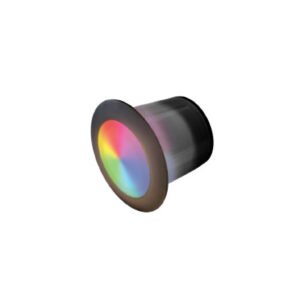
Recessed deck lighting sits flush in the deck boards or rim joist. It looks clean and stays out of the way, but it takes the most direct winter abuse.
If you plan to shovel your deck, choose recessed fixtures with a fully flush, rounded top and a sealed lens rated IP67 or IP68. If you rarely clear snow, slightly raised fixtures are fine but still need that sealing.
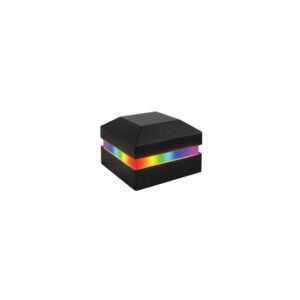
Deck post cap lights replace standard post caps and cast light downward along the railing. They sit above snow level, which makes them one of the easiest fixtures to maintain in winter.
The main concern is water pooling on top. Choose caps with a sloped or domed top so melting snow runs off instead of sitting on the seams.
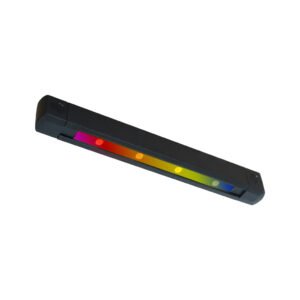
Deck railing lights mount under the top rail and wash light onto the deck surface. They stay sheltered from most direct snowfall and are rarely hit by shovels.
These are a smart choice if you want general deck illumination without putting anything in the walking surface.
Under deck lighting turns the space beneath an elevated deck into a usable patio. Since fixtures mount to joists, they’re protected from snow but exposed to drips and condensation.
Use damp-rated or wet-rated fixtures here. Many homeowners underestimate how much water drains through deck board gaps during a thaw.
Surface-mounted lights attach to posts, skirting, or fascia boards. They’re easy to install and replace, which makes them a practical pick for DIY retrofits.
Keep them at least a few inches above the deck surface so snow drifts don’t bury them all winter.
Deck lighting kits bundle fixtures, a transformer, and cable in one box. They’re convenient, but quality varies widely.
If you buy a kit, check that the fixtures carry a real IP rating and that the transformer is listed to UL 1838, the Underwriters Laboratories standard for low voltage landscape lighting systems.
| Fixture Type | Best Use | Main Winter Risk | Recommended Rating | Snow Shovel Safe? |
|---|---|---|---|---|
| Deck step lighting | Stairs and risers | Ice buildup on lens | IP65 or higher | Yes, if riser-mounted |
| Recessed deck lighting | Deck surface, rim joist | Shovel strikes, pooling water | IP67 or IP68 | Only if fully flush |
| Deck post cap lights | Railing posts | Water sitting on top | IP65 or higher | Yes |
| Deck railing lights | Under top rail | Minimal | IP65 or higher | Yes |
| Under deck lighting | Joists below deck | Drips, condensation | Wet-rated | Not applicable |
| Surface-mounted accents | Skirting, fascia | Snow burial | IP65 or higher | Usually |
| Deck lighting kits | DIY projects | Inconsistent quality | Check each fixture | Depends on kit |
Material choice decides how your waterproof deck lights look after five winters.
Solid brass and copper develop a natural patina but resist corrosion from salt and moisture very well. They cost more upfront but rarely need replacement.
Powder-coated aluminum is affordable and lightweight. Once the coating chips from a shovel or ice, though, salt can attack the metal underneath.
Composite or polymer housings won’t corrode, but lower-grade plastics can turn brittle and crack in deep cold.
If your deck is near a driveway or walkway where rock salt gets tracked up, choose brass. If your deck is sheltered and you rarely use deicers, quality powder-coated aluminum can work fine.
For wiring questions, the National Electrical Code (NEC) published by the NFPA covers low voltage lighting, and Pennsylvania’s Uniform Construction Code, administered through the Pennsylvania Department of Labor & Industry, may apply to your project. Your local municipality can confirm permit needs.
| Do | Don’t |
|---|---|
| Use fixtures with a stated IP rating | Trust “weather-resistant” labels without a rating |
| Choose brass or marine-grade metals near salted areas | Use rock salt directly around metal fixtures |
| Leave slack in cables for board movement | Pull wires tight across joists |
| Use a plastic shovel near recessed lights | Run a metal snow blower blade over the deck surface |
| Clean fixture lenses after major thaws | Let ice build up on step lights all season |
| Seal every connection | Twist wires together with standard tape |
If you need to melt ice near your fixtures, consider a deicer labeled safe for your decking material. Many composite decking manufacturers publish guidance on which deicers they approve, and following it protects both your boards and your lights.
A homeowner in Lancaster County has a two-level composite deck with a 10-step staircase. Their original lighting kit used thin aluminum recessed lights on the deck surface. After two winters, several lenses cracked from shovel strikes and three fixtures filled with water.
They replaced the system with riser-mounted deck step lighting, brass post cap lights, and railing lights under the top rail. They moved the transformer from ground level to a post about three feet up and added a photocell timer.
The next winter, snow removal went faster because nothing stuck up from the deck surface. The stairs stayed lit every evening, and no fixtures needed replacing by spring. The lesson: in cold climates, fixture placement matters as much as fixture quality.
A: Sealed LED fixtures with IP67 or IP68 ratings in brass or marine-grade materials perform best. Riser-mounted step lights and post cap lights avoid most snow damage.
A: Yes. LEDs generally perform well in the cold, and the U.S. Department of Energy notes cold conditions are easier on LEDs than heat.
A: Only if the fixtures are fully flush and rated for foot traffic. Use a plastic shovel and avoid metal blades near them.
A: Yes. Melting snow seeps into unsealed fixtures and refreezes, which cracks housings and damages electronics.
A: Add up your total fixture wattage and choose a transformer rated comfortably above that number. Many installers keep the load at or below about 80 percent of capacity.
A: Salt can corrode aluminum and other metals, especially where coatings are chipped. Brass and copper resist salt damage much better.
A: It depends on your municipality. Check with your local code office, since Pennsylvania’s Uniform Construction Code is enforced locally.
A: Some are, but quality varies. Look for a UL 1838 listed transformer and a real IP rating on every fixture.
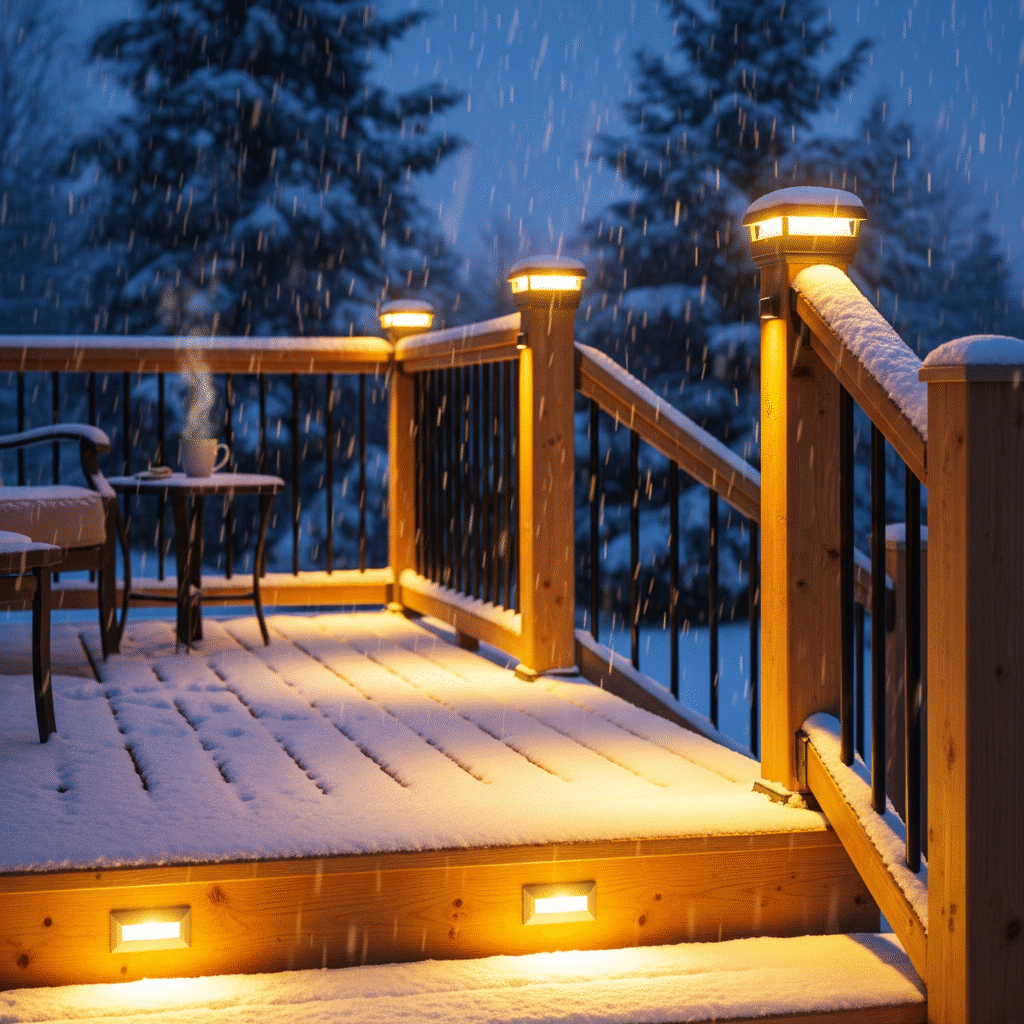
The best low voltage deck lighting for Pennsylvania winters combines sealed, corrosion-resistant fixtures with smart placement. Riser-mounted step lights, domed post cap lights, and railing lights avoid most snow and shovel damage, while IP67 or better ratings keep meltwater out.
Size your transformer with headroom, protect every connection, and mount the transformer above snow level. Do that, and your deck stays safe, usable, and inviting through the darkest months of the year.
Ready to light up your deck for winter? Schedule a free consultation today and get a system designed to handle everything a Pennsylvania winter throws at it.
Key Takeaways Philadelphia decks work hard. A rooftop in Fishtown, a narrow rear deck behind a South Philly rowhome, or
Key Takeaways Pennsylvania decks take a beating every year. Snow piles up in December, ice glazes the steps in January,