- FREE Shipping on all orders! Limited time!
- support@tru-scapes.com

Most homeowners replace their deck lights twice before they figure out what went wrong. The lights were bright on day one, dimmed by year two, and half of them went dark before the third summer ended. The frustrating part is that nothing about the LED technology failed. What failed was everything built around it.
Premium outdoor lighting fixtures are engineered around a simple reality: the diode is the most reliable part of the assembly. Housings crack. Gaskets shrink. Solder joints fatigue. Connectors corrode. Transformers deliver inconsistent voltage. Any one of those failures kills a fixture that still has 40,000 hours of LED life left in it.
Tru-Scapes designs around those failure points instead of around a spec sheet. Products like the Tru-Scapes® 3″ Aluminum LED Deck Post Light exist because the company treated corrosion, thermal expansion, and moisture as the real enemies from the start. This article breaks down exactly what makes a fixture survive a decade outdoors, and what quietly kills the ones that do not.
Understanding failure modes is more useful than reading lumen ratings. Here is what genuinely ends a fixture’s life.
Water almost never enters through an obvious crack. It enters through gasket compression that relaxes over time, through unsealed wire entry points, and through condensation that forms inside the housing when a hot fixture cools rapidly after a rainstorm. Once moisture reaches the driver board, corrosion starts and the fixture is on a countdown.
Ingress protection standards published by the International Electrotechnical Commission give you a shorthand for this. Fixtures rated for sustained water exposure use compressed silicone or EPDM gaskets rather than foam, and they seal the wire entry, not just the lens.
An outdoor fixture in a northern climate might swing 60 degrees in a single day. Materials expand and contract at different rates, which stresses seals and solder joints thousands of times per year. This is why a fixture that performs perfectly in a lab can fail in a Pennsylvania winter.
When dissimilar metals touch in the presence of moisture, one of them corrodes. Cheap fixtures mix steel fasteners with aluminum housings and start eating themselves within a season. Marine-grade aluminum with anodized or powder-coated finishes resists this, which is one reason the Tru-Scapes approach to post lighting standardizes on compatible metals throughout the assembly.
This one surprises people. A fixture fed inconsistent or excessive voltage runs hotter than designed, and heat is what degrades LED output over time. Undersized wire across a long run causes voltage drop at the far end and forces the transformer to compensate. The fixtures nearest the transformer then get overdriven.
Not all durable LED fixtures use the same construction. Here is how the common housing materials actually compare in real outdoor service.
| Housing Material | Corrosion Resistance | UV Stability | Thermal Performance | Best Application |
|---|---|---|---|---|
| Marine-grade aluminum | Excellent when anodized | Excellent | Excellent heat sinking | Post caps, exposed fixtures |
| UV-stabilized composite | Immune to corrosion | Excellent | Good | Composite deck integration |
| Standard ABS plastic | Immune to corrosion | Poor, chalks and yellows | Poor | Short-term or covered use |
| Painted steel | Poor, rusts at any chip | Good | Fair | Not recommended outdoors |
| Untreated brass | Good, patinas over time | Excellent | Good | Landscape path fixtures |
Two conditional rules follow directly from this table.
If your deck uses composite railing and you want the fixture to age at the same rate as the deck surface, choose a composite-bodied fixture engineered for that exact post profile. The Tru-Scapes® 4.5″ Composite LED Deck Post Light is built for TREX Transcend posts specifically, so the fit is mechanical rather than improvised with shims and sealant.
If your installation faces coastal salt air or heavy road salt exposure, choose anodized marine-grade aluminum over any painted finish, because a single chip in paint becomes a corrosion site within one season.
High-quality landscape lighting is a system, not a collection of parts. Two components decide whether your fixtures see clean, stable power for a decade.
Transformer quality determines voltage consistency. A transformer with multiple output taps lets you compensate for voltage drop on longer runs instead of accepting dim fixtures at the end of the line. The Tru-Scapes® 400W Wifi Transformer adds scheduling and remote control, which reduces unnecessary run hours and lowers cumulative thermal load on every fixture downstream.
Wire gauge determines how much voltage actually arrives. Twelve gauge wire carries current across long runs with far less drop than sixteen gauge, and direct-burial rated jacketing resists the soil chemistry and rodent damage that ends cheaper wire. Running Tru-Scapes® 250′ 12/2 EZ Pull Wire on a long deck perimeter keeps the last fixture in the run as bright as the first.
Guidance from the National Electrical Manufacturers Association and the Illuminating Engineering Society both point the same direction here. Stable, correctly specified power delivery extends usable fixture life more than any single spec on the fixture itself.
Installation quality accounts for a large share of premature failures. Follow this sequence.
| Do | Don’t |
|---|---|
| Use gel-filled waterproof connectors | Use indoor wire nuts outdoors |
| Match fixture housing to post material | Force a generic cap onto a branded post |
| Size wire gauge to run length | Assume one gauge fits every layout |
| Clean lenses seasonally with mild soap | Pressure wash fixtures or seals |
| Keep transformer load under 80 percent capacity | Max out the transformer at install |
| Replace a failed fixture promptly | Leave an open socket exposed to rain |
| Pros of Premium Fixtures | Trade-offs |
|---|---|
| Sealed housings resist moisture for years | Higher upfront material quality standards |
| Aluminum and composite bodies survive UV and freeze-thaw | Requires correct post sizing before purchase |
| Consistent color temperature across every fixture | Fewer novelty styles than economy lines |
| Serviceable components rather than sealed throwaways | Installation deserves more planning time |
| Matched transformer and wire ecosystem | Mixing brands undermines the system benefit |
A homeowner with a large multi-level composite deck installed budget post caps three seasons earlier. By the third spring, eleven fixtures were dark, color temperature had drifted noticeably between the older and replaced units, and the far corner of the deck was visibly dimmer than the section nearest the transformer.
Diagnosis found three overlapping problems. Sixteen gauge wire across a 180 foot perimeter created significant voltage drop. Taped wire nuts at every splice had corroded. The plastic caps had chalked and cracked at the mounting collar.
The rebuild used Tru-Scapes® 4.5″ Composite LED Deck Post Light units matched to the existing TREX Transcend posts, a center-fed Tru-Scapes® 400W Wifi Transformer, and a full rerun in Tru-Scapes® 250′ 12/2 EZ Pull Wire with gel-filled connectors throughout.
Measured voltage at the last fixture came within spec of the first. The scheduling function cut nightly run time by roughly a third, which reduces thermal cycling over the life of the system. Homeowners who choose Tru-Scapes for a rebuild like this are usually solving a power and sealing problem, not a brightness problem.

Engineered to fit TREX Transcend posts without shims or adapters, this composite fixture ages at the same rate as the deck surface it sits on. The UV-stable housing resists the chalking and cracking that ends plastic post caps, and the sealed assembly keeps moisture away from the driver.
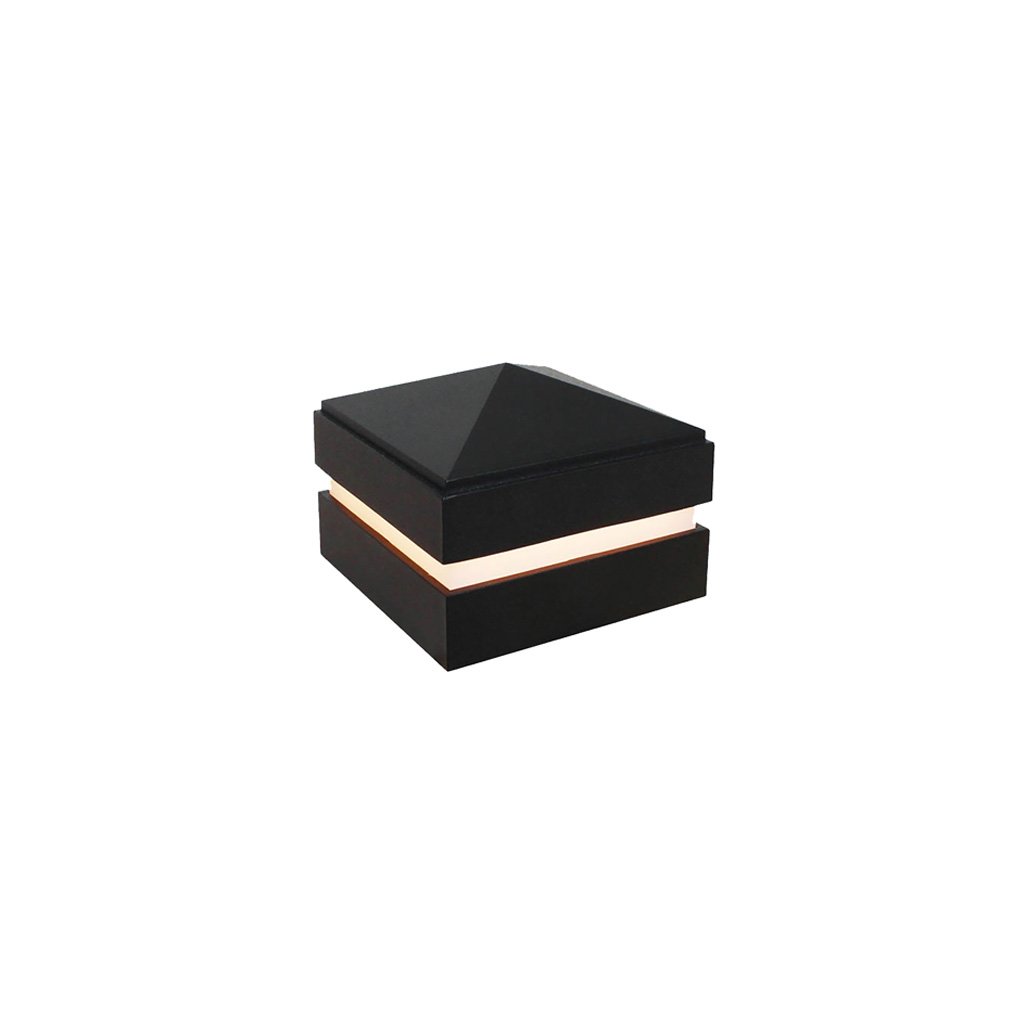
The aluminum body doubles as a heat sink, pulling thermal load away from the LED and slowing the lumen depreciation that dims lesser fixtures. Its low-profile design suits both deck and fence posts where a bulky cap would look wrong.
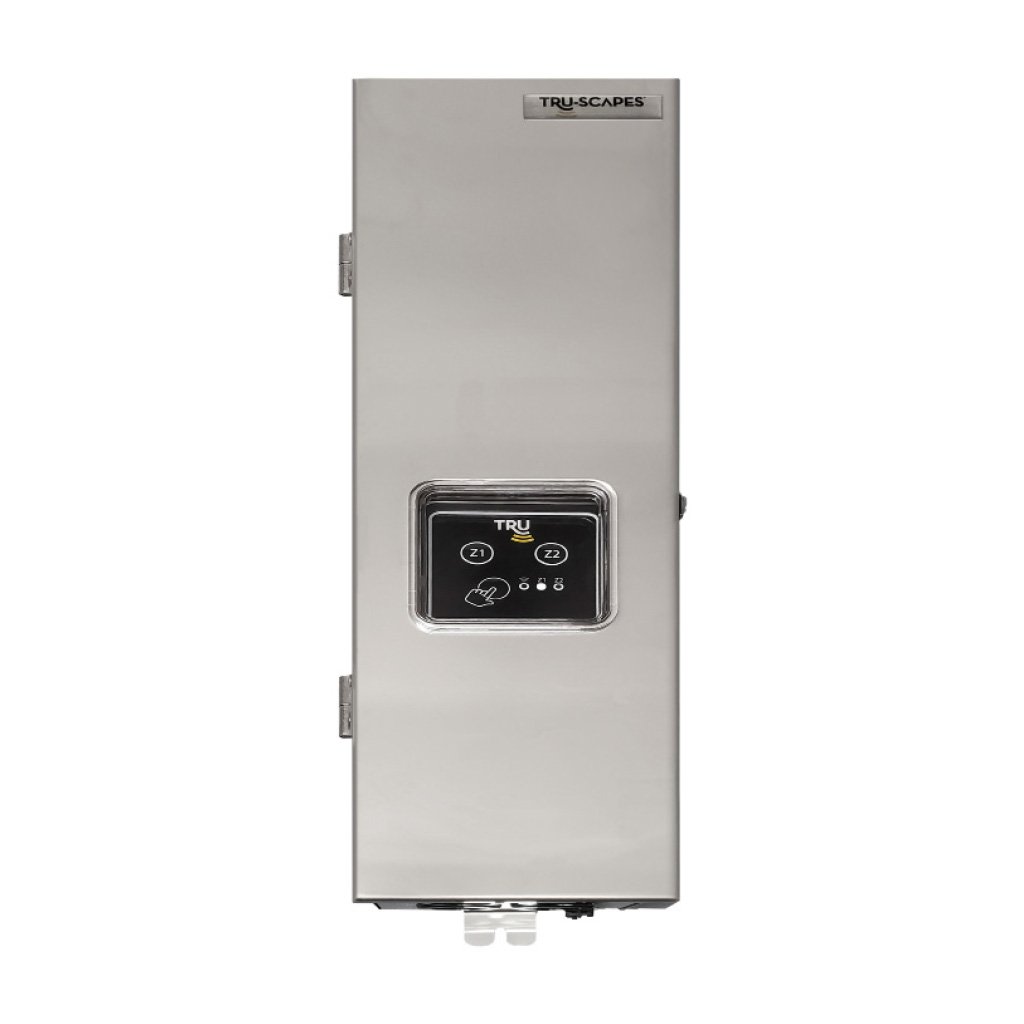
Stable output voltage is what keeps fixtures from running hot, and this transformer delivers it across large multi-zone layouts. Wifi scheduling reduces unnecessary run hours, which lowers cumulative thermal stress on every fixture connected to it.

Twelve gauge conductors minimize voltage drop across long perimeter runs so the last fixture performs like the first. The direct-burial rated jacket resists soil moisture and abrasion, and the EZ Pull carton keeps the run clean during installation.
A: Rarely. LEDs dim gradually rather than failing outright, and most rated for outdoor service still produce usable light well past 40,000 hours. According to LED lifespan research from the U.S. Department of Energy, what fails first is almost always the seal, the driver, or the connection.
A: A well-sealed fixture on a correctly specified power system commonly performs for a decade or more. Industry experts suggest that installation quality and voltage stability influence lifespan as much as the fixture itself.
A: Water reaching the driver board. It usually gets there through unsealed splices or wire entry points rather than through the lens.
A: You can, but you lose the benefit of a matched system. Fixtures with different voltage tolerances on one circuit means some will run hot while others run dim.
A: Indirectly, yes. The Tru-Scapes® 400W Wifi Transformer lets you schedule run hours precisely, and fewer unnecessary hours means less heat cycling across the whole system.
A: Mild soap, water, and a soft cloth. Skip pressure washers and solvent cleaners, which degrade gaskets and cloud lenses.
A: Both perform well. Choose aluminum when you want maximum heat dissipation and a metal finish, and choose composite when you want the fixture to visually and thermally match a composite deck.
A: Twelve gauge is the practical default for most residential perimeter runs. If your total run exceeds roughly 150 feet or carries heavy load, center-feed the layout rather than stepping down gauge.
Most lighting failures trace back to a mismatch. A generic cap forced onto a branded post. A transformer sized for a smaller layout. Wire chosen by price per foot instead of by run length. Each decision looks small on installation day and compounds over ten winters.
Tru-Scapes engineers their fixtures, transformers, and wire as one ecosystem, which removes those mismatches before they happen. The Tru-Scapes® 4.5″ Composite LED Deck Post Light is a good example of that philosophy in practice. It is not a universal cap with an adapter kit. It is built for TREX Transcend posts specifically, so the seal seats correctly the first time and stays seated through freeze-thaw cycles that split improvised installations.
That same thinking runs through the aluminum post lights, the wifi transformer’s stable multi-tap output, and the twelve gauge direct-burial wire. Every component assumes the next one exists.
The result homeowners notice is not a spec. It is walking out on the deck in year eight and finding every fixture still lit, still the same color temperature, still doing exactly what it did the first night.
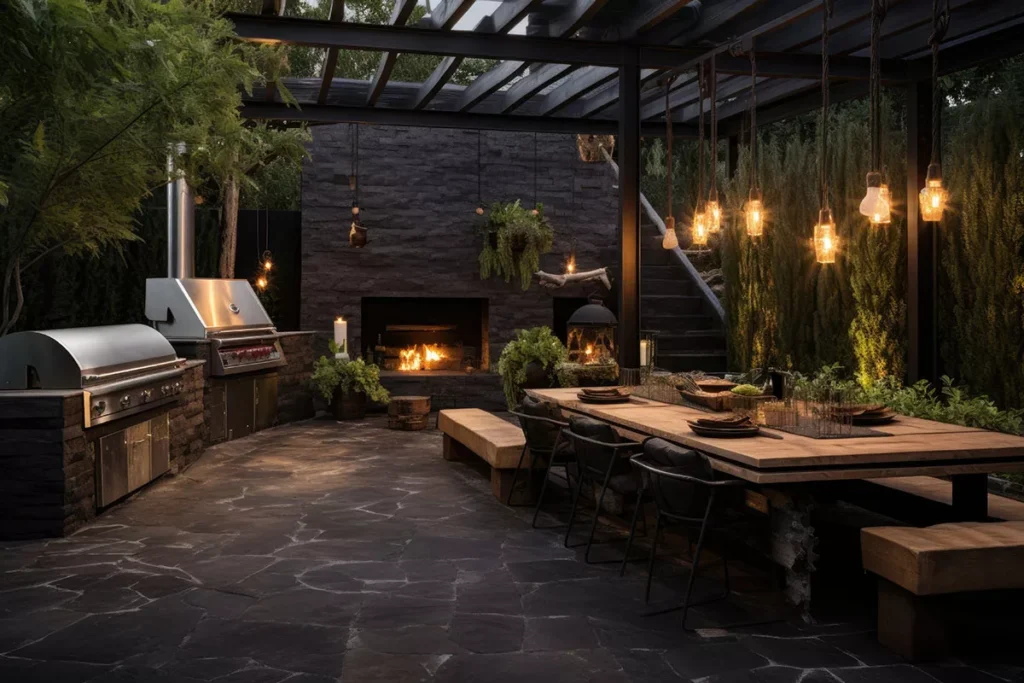
Long-lasting outdoor lights are not the product of one impressive component. They come from sealed housings that keep moisture off the driver, materials that tolerate UV and thermal swings, and a power system that delivers consistent voltage to the last fixture in the run.
Get those three right and a decade of service becomes the expectation rather than the exception. Get any one of them wrong and even excellent LEDs will disappoint you by the third season.
If you are planning a new deck lighting layout or rebuilding one that failed early, start with the fixture that matches your post and build the system outward from there. The Tru-Scapes® 3″ Aluminum LED Deck Post Light is a strong starting point for deck and fence posts where clean lines and long service life both matter.
The gap between a yard that looks styled at night and one that looks lit by accident almost never comes
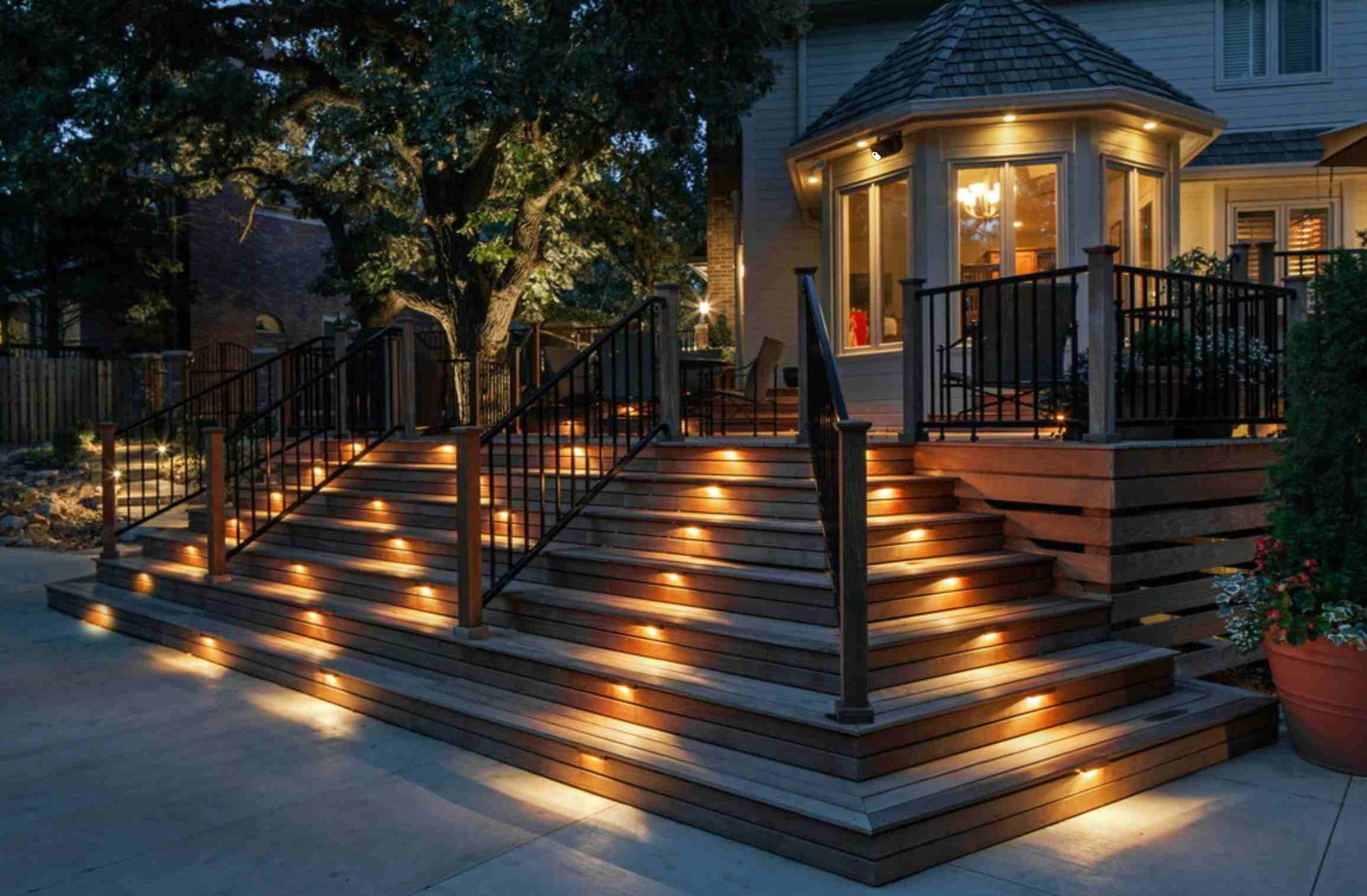
Most homeowners judge landscape lighting by how it looks the night it gets installed. That is the worst possible moment