- FREE Shipping on all orders! Limited time!
- support@tru-scapes.com

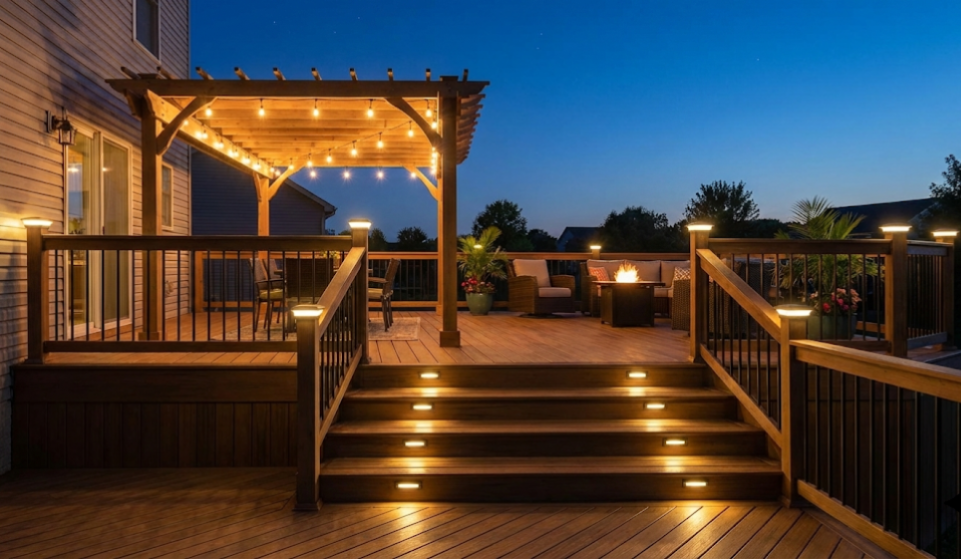
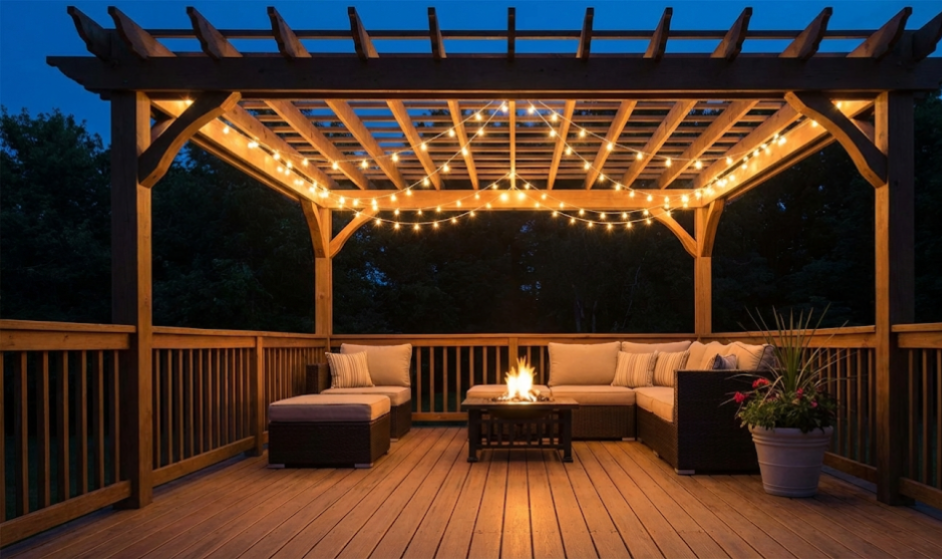
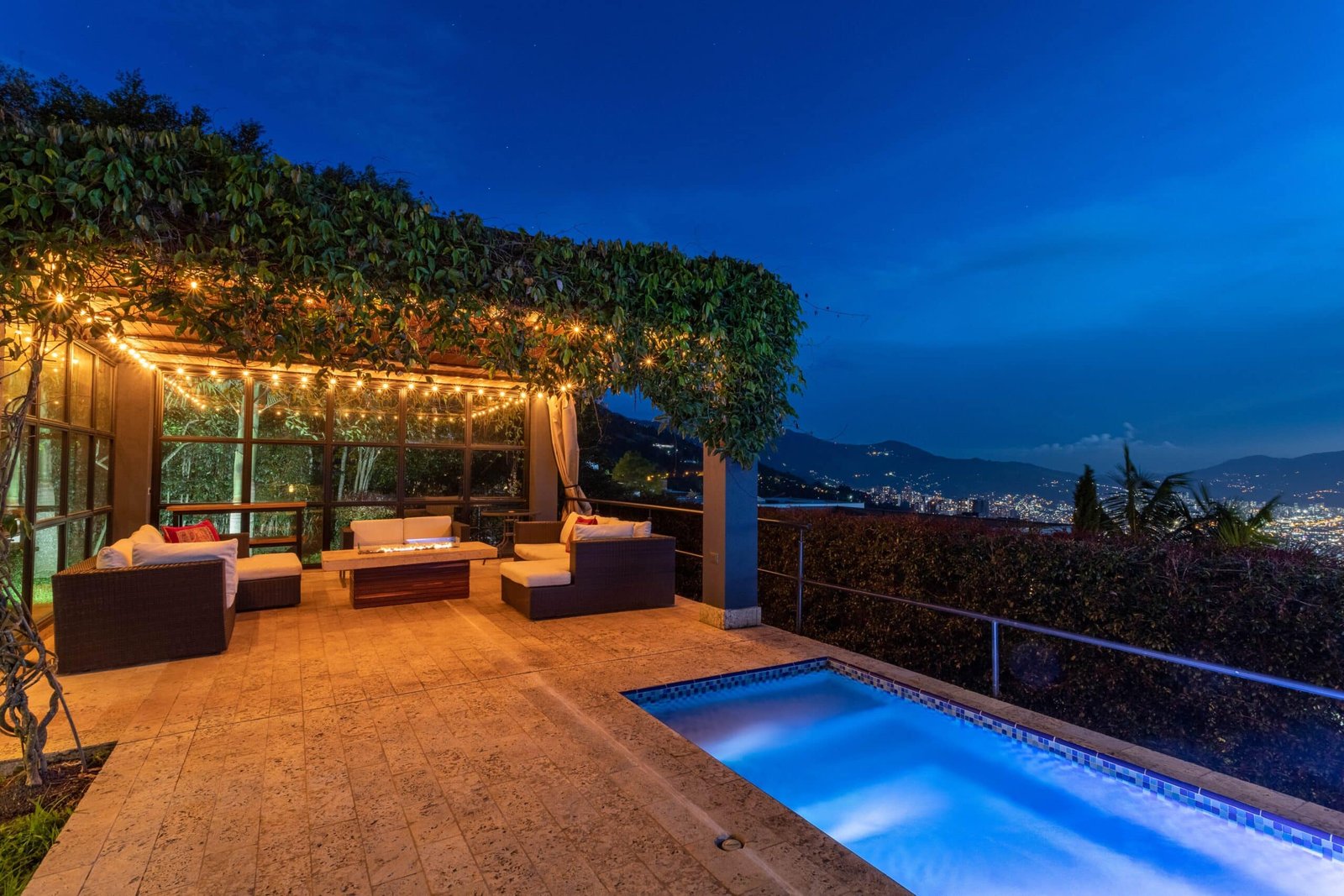
Outdoor living spaces have become essential extensions of our homes, and proper illumination transforms a basic deck into a stunning nighttime retreat. The right lighting system does more than prevent stumbles on stairs—it creates ambiance, highlights architectural features, and extends your outdoor enjoyment well into the evening hours.
Choosing the best LED deck lighting involves balancing aesthetics with functionality, durability with budget, and DIY-friendliness with professional-grade results. This guide walks you through everything you need to know about deck lighting fixtures, from recessed options that disappear into your decking to eye-catching deck post cap lights that serve as decorative accents.
Whether you’re planning a complete outdoor deck lighting overhaul or adding strategic deck step lighting for safety, understanding your options ensures you make informed decisions that you’ll appreciate for years to come.
LED technology has revolutionized outdoor illumination, offering significant advantages over traditional incandescent and halogen options. LEDs consume up to 80% less energy while producing comparable or superior light output, making them ideal for extended evening use without dramatically impacting electricity bills.
Modern LED deck lighting systems typically feature color temperature options ranging from warm white (2700K–3000K) to cool white (4000K–5000K). Warm tones create inviting, cozy atmospheres, while cooler temperatures provide crisp visibility for task-oriented areas like grilling stations. Learn more about understanding color temperature for deck lighting to match your mood and style.
The lifespan of quality LED fixtures extends 25,000 to 50,000 hours under normal operating conditions. This translates to approximately 10–20 years of typical residential use, dramatically reducing replacement frequency compared to traditional bulbs that might last only 1,000–2,000 hours.
When evaluating LED options, several technical specifications determine real-world performance. Lumens measure actual light output—most deck lighting fixtures produce between 10–100 lumens, with step lights typically on the lower end and post cap lights often brighter. Higher lumens don’t always mean better; excessive brightness can create glare and reduce ambiance.
The Color Rendering Index (CRI) indicates how accurately colors appear under the lighting. A CRI above 80 ensures that your deck’s wood tones, plant colors, and outdoor furniture appear natural rather than washed out or distorted.
Beam angle determines light spread. Narrow beams (15–30 degrees) create focused spotlighting effects, while wide beams (60–120 degrees) provide general ambient illumination. Most deck lighting applications benefit from wider beam angles that minimize dark spots between fixtures.
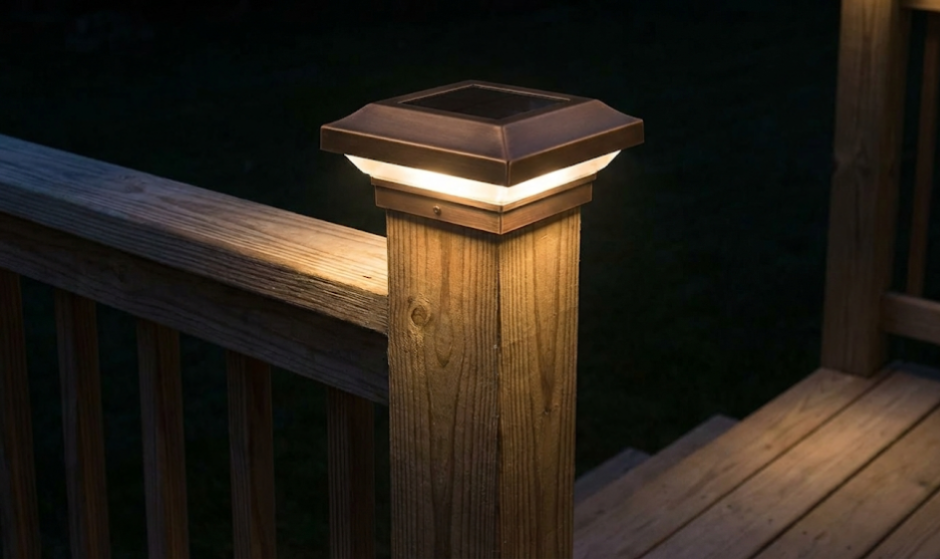
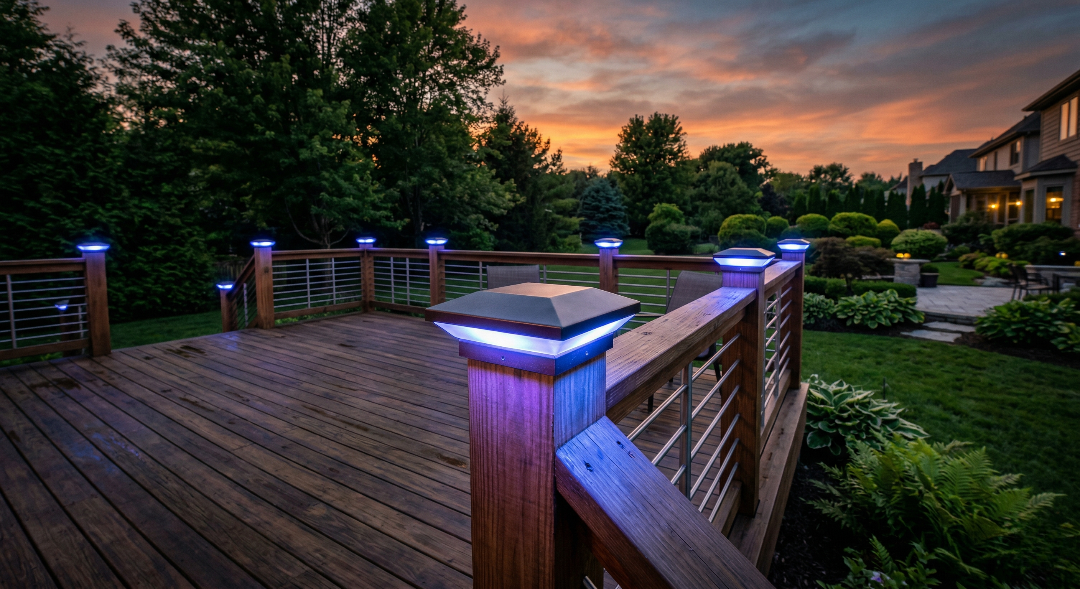
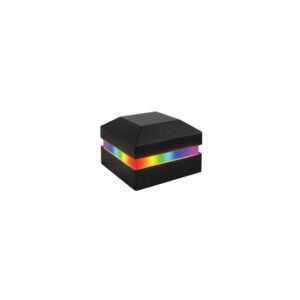
These fixtures mount atop deck posts, providing both decorative appeal and functional illumination. Post cap lights typically produce 20–50 lumens and come in materials ranging from copper and stainless steel to composite materials that match modern decking.
If you need perimeter definition and architectural emphasis, post cap lights excel at framing your deck’s boundaries while adding vertical interest. They’re particularly effective on railings where they can guide movement without requiring floor-level installation. Explore how deck perimeter lighting defines your space for design inspiration.
Installation is straightforward—most designs simply secure to standard 4×4 or 6×6 posts with mounting brackets or screws. Solar-powered versions eliminate wiring concerns entirely, though they may produce less consistent illumination than low-voltage alternatives. Compare your options in our guide to solar vs. electric deck lights: pros and cons.
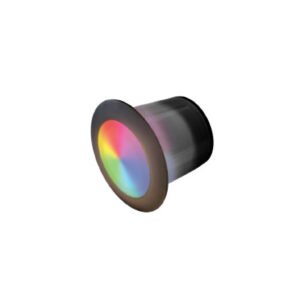
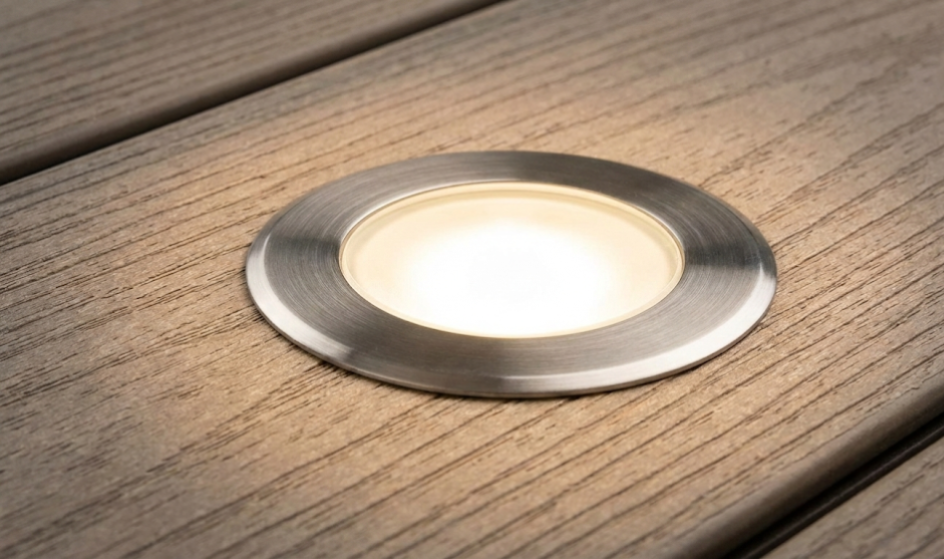
Flush-mount fixtures install directly into deck boards or risers, creating a clean, modern aesthetic. Recessed deck lighting preserves sightlines and walking surfaces while providing focused downward illumination.
These fixtures typically mount in 2–3 inch diameter openings and sit flush with the decking surface. Quality models feature bezels or trim rings that prevent moisture intrusion while maintaining a polished appearance.
Recessed options work exceptionally well for deck step lighting, where they can illuminate each tread without protruding hardware that might catch feet or create trip hazards. They’re also ideal for marking level changes or creating pathway lighting along deck perimeters.
Integrated into handrail systems or mounted beneath railings, these fixtures provide horizontal illumination that defines deck edges while creating ambient glow. Deck railing lights often incorporate diffusers that soften light output and prevent harsh glare.
Many contemporary railing systems now offer built-in lighting channels that accept LED strip lights or individual fixtures, creating seamless integration between structure and illumination. This approach yields professional results that appear intentional rather than retrofitted.
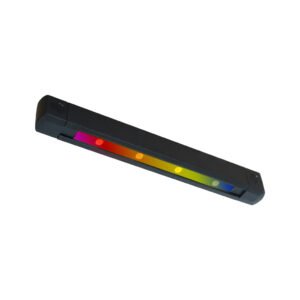
For multi-level outdoor spaces, under deck lighting transforms unused areas beneath elevated decks into functional, illuminated zones. These systems typically employ strip lighting or individual fixtures mounted to deck joists or the underside of decking boards.
If you need to maximize usable outdoor space, proper under-deck illumination makes lower-level patios, storage areas, or entertainment zones accessible after dark. Waterproof ratings of IP65 or higher ensure reliable performance despite exposure to dripping water and humidity. Get inspired with creative under-deck lighting ideas.
| System Type | Average Cost | Installation Difficulty | Best For | Typical Lumens | Weather Rating |
|---|---|---|---|---|---|
| Recessed Deck Lights | $15–35/fixture | Moderate | Step lighting, clean aesthetics | 10–30 | IP65–IP67 |
| Post Cap Lights | $20–60/fixture | Easy | Perimeter definition, decorative accents | 20–50 | IP44–IP65 |
| Railing Lights | $25–45/fixture | Moderate | Edge definition, ambient glow | 15–40 | IP54–IP65 |
| Under Deck Strip | $40–80/16ft roll | Moderate–Difficult | Lower-level illumination | 150–300/ft | IP65–IP68 |
| Deck Lighting Kits | $150–600/complete | Easy–Moderate | Comprehensive coverage, DIY-friendly | Varies | IP65+ |
| In-Ground Uplights | $30–70/fixture | Difficult | Accent lighting, dramatic effects | 50–100 | IP67–IP68 |
Complete deck lighting kits simplify installation by including all necessary components—fixtures, transformer, wiring, connectors, and mounting hardware. Following a systematic approach ensures safe, professional results.
Step 1: Plan Your Layout
Map fixture locations before purchasing materials. Space recessed deck lighting 6–8 feet apart for even coverage. Mark step locations that require dedicated illumination. Identify the transformer location—typically near an outdoor GFCI outlet and protected from direct weather exposure.
Step 2: Prepare the Power Source
Most low-voltage systems operate on 12V or 24V power supplied through a transformer. Mount the transformer near an outdoor outlet, ensuring it’s weatherproof rated and sized appropriately for your total fixture load. Calculate total wattage by multiplying the number of fixtures by individual wattage.
Step 3: Route the Main Cable
Run the primary low-voltage cable from the transformer along the deck’s perimeter or beneath decking. Secure cables with plastic clips rather than metal staples that could damage insulation. Leave slight slack to accommodate thermal expansion.
Step 4: Install Fixtures
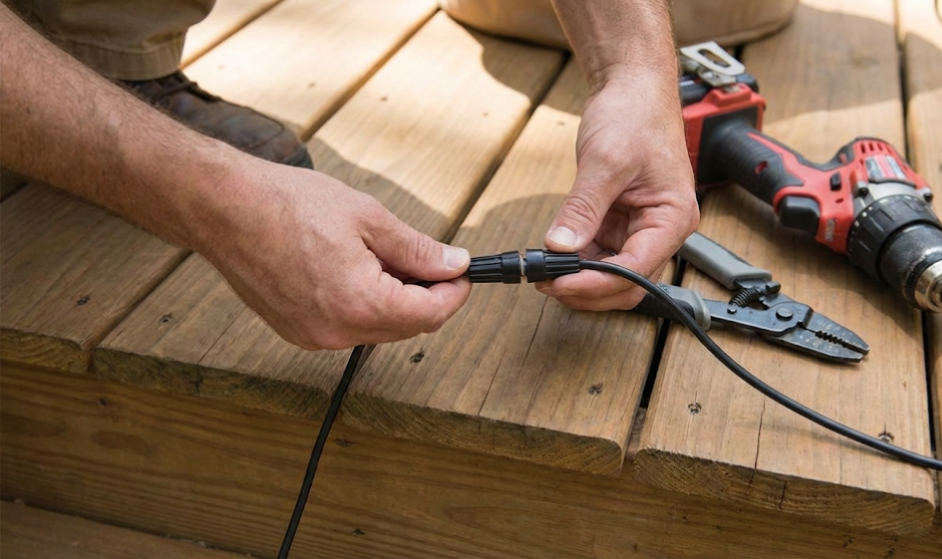
For recessed lights, drill pilot holes using the template provided, then connect fixtures to the main cable using quick-connect terminals. For surface-mount options, secure the base first, connect wiring, then attach the lens or cover.
Step 5: Test and Adjust
Before finalizing all connections, test the complete system. Verify that each fixture illuminates properly and check for any flickering or dimming that might indicate voltage drop. Adjust fixture angles as needed to optimize light distribution.
Step 6: Seal and Protect
Apply silicone sealant around recessed fixture edges to prevent moisture intrusion. Ensure all wire connections are waterproof using provided caps or heat-shrink tubing. Coil and secure excess wire away from moving parts or sharp edges.
For detailed guidance, see our full tutorial on how to wire deck lighting like a pro. Always follow local electrical codes and consult the NFPA safety guidelines for outdoor electrical systems to ensure compliance and safety.
Pros:
Cons:
Pros:
Cons:
Do calculate voltage drop for cable runs exceeding 50 feet. Use thicker gauge wire or install multiple transformer outputs to maintain consistent brightness across all fixtures.
Do choose fixtures with appropriate IP ratings for your climate. Coastal areas require higher corrosion resistance, while regions with extreme temperature fluctuations need fixtures rated for wider thermal ranges. Our guide to how to choose weatherproof deck lights covers everything you need to know.
Do create layered lighting by combining ambient, task, and accent lighting types. This approach provides versatility for different activities and moods.
Do include dimming capability in your system design. Dimmers allow you to adjust brightness levels for intimate gatherings versus functional task lighting.
Do maintain color temperature consistency across all fixtures unless intentionally creating zones. Mixing warm and cool white LEDs creates an unplanned, amateurish appearance. Understand the difference with our comparison of warm vs. cool deck lighting: which is right for you?
Don’t over-illuminate your space. More fixtures don’t automatically create better results. Strategic placement of fewer, well-positioned lights often yields more attractive outcomes than saturating every surface.
Don’t use indoor-rated fixtures outdoors regardless of perceived protection. Temperature fluctuations and humidity will compromise non-rated fixtures quickly.
Don’t ignore local building codes that may require permits for low-voltage installations, particularly if you’re integrating lighting with new deck construction.
Don’t connect fixtures directly to 120V household current. All outdoor deck lighting should operate through appropriate transformers or be specifically rated for line voltage.
Don’t position lights where they’ll shine directly into seating areas or neighboring properties. Thoughtful aiming prevents glare and maintains good neighbor relations.
The Ingress Protection (IP) rating system defines a fixture’s resistance to dust and water intrusion. This two-digit code determines whether a light will survive your local weather conditions.
The first digit (0–6) indicates solid particle protection, while the second digit (0–9) defines moisture resistance. For deck applications, focus primarily on the second digit—this determines how well fixtures handle rain, snow, and humidity.
IP44 fixtures resist water splashing from any direction. Suitable for covered porch areas with minimal direct weather exposure.
IP65 fixtures withstand water jets from any direction. This represents the minimum acceptable rating for most outdoor deck lighting applications in typical residential settings.
IP67 fixtures can survive temporary water immersion up to 1 meter deep. Ideal for ground-level installations or areas subject to standing water during heavy rain.
IP68 fixtures tolerate continuous submersion beyond 1 meter. Necessary for fountain lighting, pond applications, or areas regularly flooded during storms.
Manufacturers follow standards developed by organizations like the National Electrical Manufacturers Association (NEMA) to ensure consistent performance and safety across outdoor lighting products.
If you live in regions with harsh winters, prioritize fixtures rated for extended temperature ranges (–40°F to 120°F) in addition to appropriate IP ratings. Temperature cycling can crack lenses and degrade seals even on water-resistant fixtures not designed for thermal stress.
LED technology delivers remarkable energy efficiency compared to traditional lighting options. A typical 3-watt LED deck light produces illumination equivalent to a 20-watt halogen bulb while consuming 85% less electricity.
For a moderate-sized deck using twenty LED fixtures operating 4 hours nightly, annual electricity consumption totals approximately 88 kilowatt-hours. At the national average electricity rate, this translates to roughly $11 per year in operating costs. Comparable halogen fixtures would consume nearly $75 annually.
Initial system costs vary significantly based on fixture quality and installation complexity:
Budget Systems ($150–300): Basic deck lighting kits with 6–12 fixtures, often solar-powered or simple low-voltage options. Suitable for small decks or temporary installations.
Mid-Range Systems ($300–800): Quality low-voltage kits with 12–20 fixtures, transformer, and comprehensive wiring. Ideal for most residential applications seeking reliable performance and attractive aesthetics.
Premium Systems ($800–2,500): High-end fixtures with advanced features like color-changing capability, smart home integration, and architectural-grade construction. Designed for luxury installations or commercial applications.
Professional installation typically adds $50–100 per fixture for labor, though comprehensive system installations may achieve lower per-fixture rates. DIY installation eliminates labor costs but requires time investment and basic electrical competency.
See a real-world breakdown in our case study on planning a stunning deck lighting project.
The Patterson family in suburban Minneapolis wanted to extend their deck’s usability into cooler months while enhancing safety on their multi-level outdoor space. Their existing setup included three deck levels connected by stairs—a configuration that became hazardous after sunset.
They selected a mid-range low-voltage system combining recessed deck step lighting (18 fixtures at stair treads), deck post cap lights (12 fixtures along railings), and under deck lighting (two 16-foot LED strips) to illuminate the ground-level patio beneath their elevated main deck.
The project cost approximately $950 in materials and required two full days for DIY installation. The family reports that proper illumination has dramatically increased their deck usage during autumn evenings. The step lighting specifically eliminated several near-miss incidents with guests navigating stairs after dark.
Their energy consumption averages $8 monthly during peak summer use (6 hours nightly) and decreases to $3–4 monthly during spring and fall. The system’s timer automatically activates lighting at dusk and deactivates at midnight, providing convenient automation without smart home integration complexity.
Note: This example represents a composite case study based on typical residential installation experiences.
Contemporary deck lighting systems increasingly incorporate smart technology that extends beyond simple on-off functionality. These advanced systems offer scheduling, dimming, color adjustment, and integration with broader smart home ecosystems.
Basic automation starts with photocell sensors and timers. Photocells detect ambient light levels and automatically activate fixtures at dusk, while timers allow scheduled operation that aligns with your typical usage patterns. These simple controls provide convenience without requiring smartphone apps or network connectivity.
More sophisticated systems utilize WiFi or Bluetooth connectivity, enabling smartphone control from anywhere. Popular platforms include:
Dedicated lighting controllers that manage low-voltage systems through centralized hubs. These typically offer zone control, allowing different deck areas to operate independently with customized brightness levels.
Smart home integration through platforms like Apple HomeKit, Google Home, or Amazon Alexa. This approach enables voice control and routine creation that coordinates deck lighting with other smart home devices.
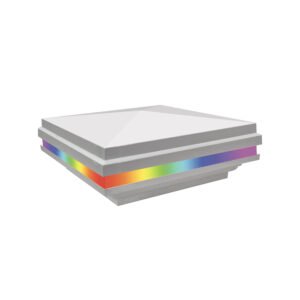
Color-changing RGB fixtures that transition between colors for decorative effects or mood creation. While less common in deck applications than pathway lighting, these options appeal to homeowners seeking entertainment-focused outdoor spaces.
If you need maximum flexibility, prioritize systems with open protocols that work across multiple platforms rather than proprietary solutions that lock you into specific ecosystems. Technology evolves rapidly, and interoperability ensures your lighting investment remains functional as smart home standards develop.
LED deck lighting systems require minimal maintenance compared to traditional fixtures, but regular attention ensures optimal performance and longevity.
Quarterly Tasks:
Clean fixture lenses with mild soap and water to remove dirt, pollen, and debris that reduce light output. Inspect mounting hardware for corrosion or loosening caused by thermal cycling. Check visible wiring for damage from rodents, lawn equipment, or weather exposure.
Annual Tasks:
Test all fixtures for consistent brightness—dimming often indicates developing electrical issues. Verify that transformers remain securely mounted and weatherproof seals stay intact. Inspect wire connections for corrosion, particularly in coastal environments where salt exposure accelerates degradation.
Common Issues and Solutions:
Flickering lights typically indicate loose connections or voltage fluctuation. Tighten all terminal connections and verify that the transformer output matches system requirements.
Dim or dark fixtures may result from failed LEDs (rare) or corroded connections (common). Clean contact points with electrical contact cleaner and verify proper connection.
Entire zones not functioning usually trace to transformer issues or primary cable damage. Test transformer output voltage and inspect main cable runs for cuts or breaks.
Moisture inside fixtures suggests seal failure. Replace gaskets or apply fresh silicone sealant around lens interfaces. Persistent moisture issues may require fixture replacement.
Industry experts suggest keeping spare fixtures and basic replacement parts on hand, particularly for discontinued product lines where future availability may be uncertain.
How many lumens do I need for deck lighting?
Most deck applications require 10–30 lumens per fixture for ambient lighting and 30–50 lumens for task areas like stairs. Total illumination depends on spacing and deck size rather than individual fixture brightness.
Can I install deck lighting myself, or should I hire a professional?
DIY installation is feasible for low-voltage systems with basic electrical knowledge. Complex layouts, integration with home wiring, or commercial applications benefit from professional installation to ensure code compliance and optimal performance.
What’s the difference between warm white and cool white LED deck lights?
Warm white (2700K–3000K) creates cozy, inviting atmospheres similar to incandescent bulbs, while cool white (4000K–5000K) provides crisp, bright illumination better suited for task lighting and modern aesthetics. Dive deeper into this topic with our guide on warm vs. cool deck lighting.
How long do LED deck lights actually last?
Quality LED fixtures typically last 25,000–50,000 hours, equivalent to 10–20 years of typical residential use. Harsh weather conditions, poor installation, or cheap components may reduce lifespan significantly.
Do I need special deck boards to install recessed lighting?
Standard deck boards accommodate recessed lighting with proper drilling. Composite decking requires manufacturer approval to maintain warranty coverage, as some brands restrict modifications that compromise structural integrity.
What IP rating do outdoor deck lights need?
Minimum IP65 for exposed locations subject to rain and weather. Covered areas may use IP44, while ground-level or submersible applications require IP67 or IP68 ratings. Learn how to select the right fixtures in our guide to how to choose weatherproof deck lights.
Are solar deck lights as bright as hardwired options?
Solar fixtures typically produce lower lumens (5–20) compared to low-voltage systems (10–50+ lumens). They work well for accent lighting but may not provide sufficient illumination for primary deck lighting needs. Compare both in our detailed analysis of solar vs. electric deck lights.
How much does professional deck lighting installation cost?
Professional installation ranges from $800–2,500 depending on deck size, fixture quantity, and complexity. Simple systems may cost less, while integrated smart systems or challenging layouts increase labor requirements. See a real-world example in our feature on planning a stunning deck lighting project.
Can deck lighting increase home value?
Well-designed outdoor lighting enhances curb appeal and extends functional living space, potentially adding 5–10% to home value according to real estate professionals, though individual results vary based on overall property quality.
What gauge wire should I use for deck lighting?
12 or 14 AWG wire works for most low-voltage systems. Longer runs (over 100 feet) or higher wattage loads require heavier 12 AWG to minimize voltage drop and maintain consistent brightness. Master the technique with our step-by-step on how to wire deck lighting like a pro.
Lumens: The measurement of total light output produced by a fixture. Unlike watts (which measure energy consumption), lumens quantify actual visible light, making them the most accurate specification for comparing brightness across different bulb types.
Color Temperature: Measured in Kelvin (K), this describes the appearance of light from warm orange/yellow tones (2700K) through neutral white (3500K) to cool blue-white (5000K+). Lower numbers create warm, inviting atmospheres while higher numbers provide crisp, functional illumination.
Voltage Drop: The reduction in electrical voltage that occurs as current travels through wire over distance. In low-voltage lighting systems, voltage drop causes fixtures farthest from the transformer to appear dimmer unless compensated through proper wire sizing or multiple transformer outputs.
IP Rating: The Ingress Protection rating system that defines a fixture’s resistance to solid objects (first digit) and liquids (second digit). Higher numbers indicate greater protection, with IP65+ generally required for outdoor residential applications.
Successful deck lighting balances functional requirements with aesthetic preferences and budget realities. Starting with a clear understanding of your priorities streamlines the selection process.
Assess your primary goals: Safety-focused installations prioritize step and level-change illumination, while entertainment-oriented designs emphasize ambient lighting that creates mood without harsh brightness. Many homeowners benefit from layered approaches that serve multiple purposes.
Evaluate your DIY comfort level: Solar-powered post cap lights and simple low-voltage kits suit confident DIYers, while complex recessed systems or smart home integration may justify professional installation investment.
Consider long-term costs: While premium fixtures command higher initial prices, superior build quality and longer lifespans often yield lower lifetime costs than repeatedly replacing cheap alternatives. Calculate total cost of ownership including energy consumption and maintenance requirements.
Match lighting style to architecture: Contemporary homes typically pair well with recessed deck lighting and minimalist fixtures, while traditional designs may benefit from decorative post cap lights and period-appropriate finishes.
Plan for expansion: Install transformers with capacity exceeding immediate needs, allowing future additions without system replacement. Run extra wire during initial installation to locations where fixtures might be added later.
Selecting the best LED deck lighting transforms your outdoor space from a daytime-only area into a versatile environment you’ll enjoy year-round. Quality fixtures combine energy efficiency, weather resistance, and attractive design while providing safety and ambiance that extends your home’s living space.
Whether you choose recessed deck lighting for minimalist aesthetics, decorative deck post cap lights for architectural emphasis, or comprehensive deck lighting kits for complete coverage, prioritize waterproof construction, appropriate lumens for your needs, and installation approaches that match your skill level and budget.
The investment in proper outdoor deck lighting pays dividends through increased home value, enhanced safety, and countless additional hours of outdoor enjoyment. Modern LED technology ensures your system operates economically for decades with minimal maintenance.
Ready to illuminate your deck? Start by mapping your space, identifying critical lighting zones, and exploring systems that align with your aesthetic preferences and functional requirements. Your evenings outdoors will never be the same.
Homeowners ask the same thing before every deck project: are low voltage systems safe around kids, pets, bare feet, rain,
Most homeowners assume a lit deck means trenching, conduit, a transformer, and a licensed electrician. That assumption stops a lot