- FREE Shipping on all orders! Limited time!
- support@tru-scapes.com

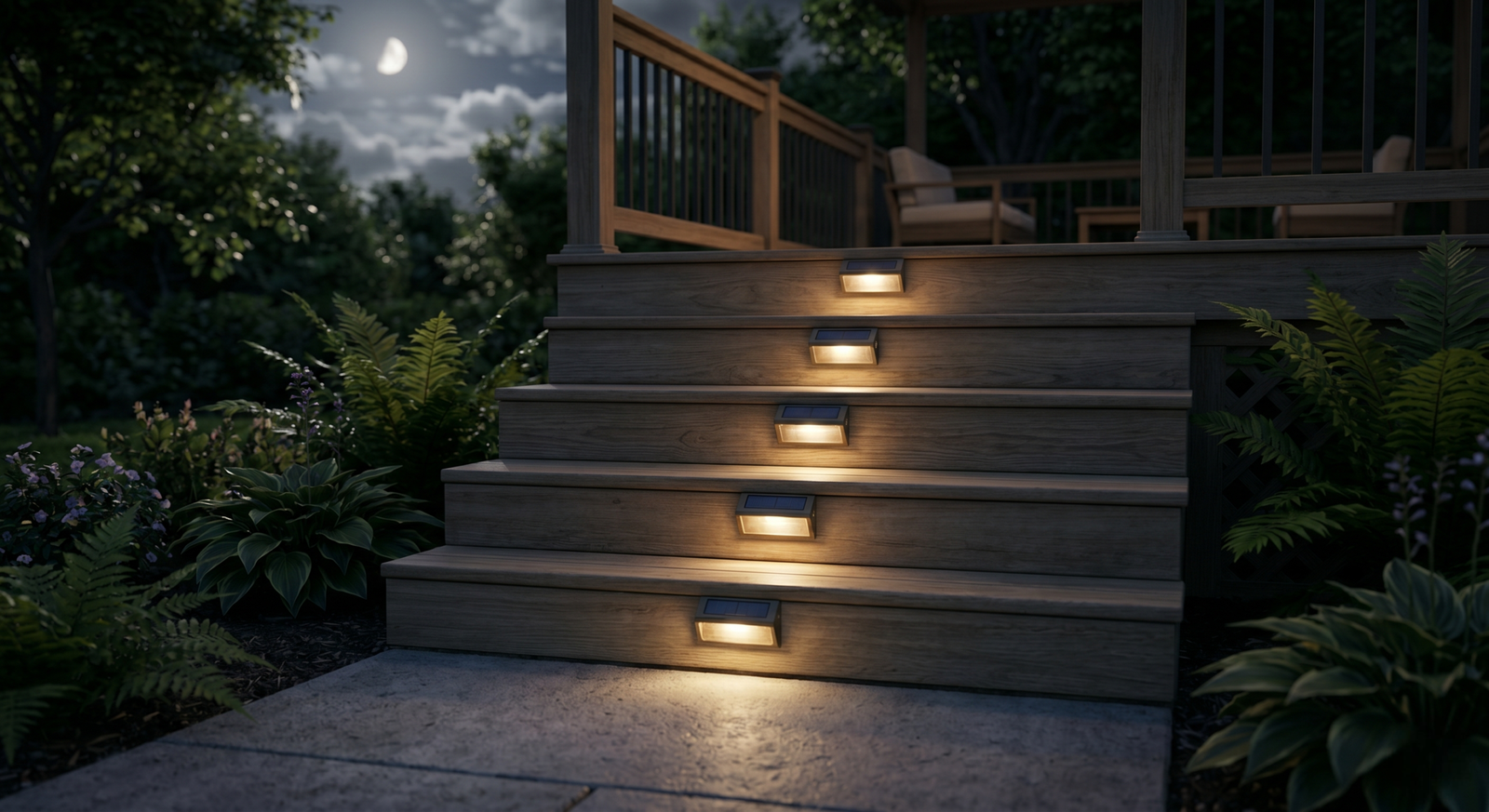
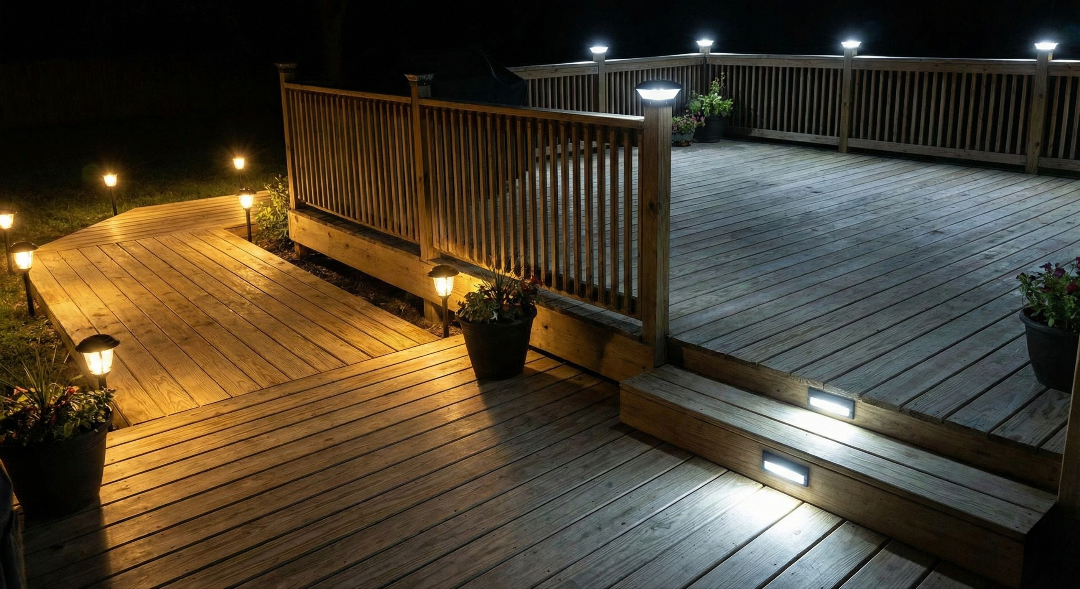
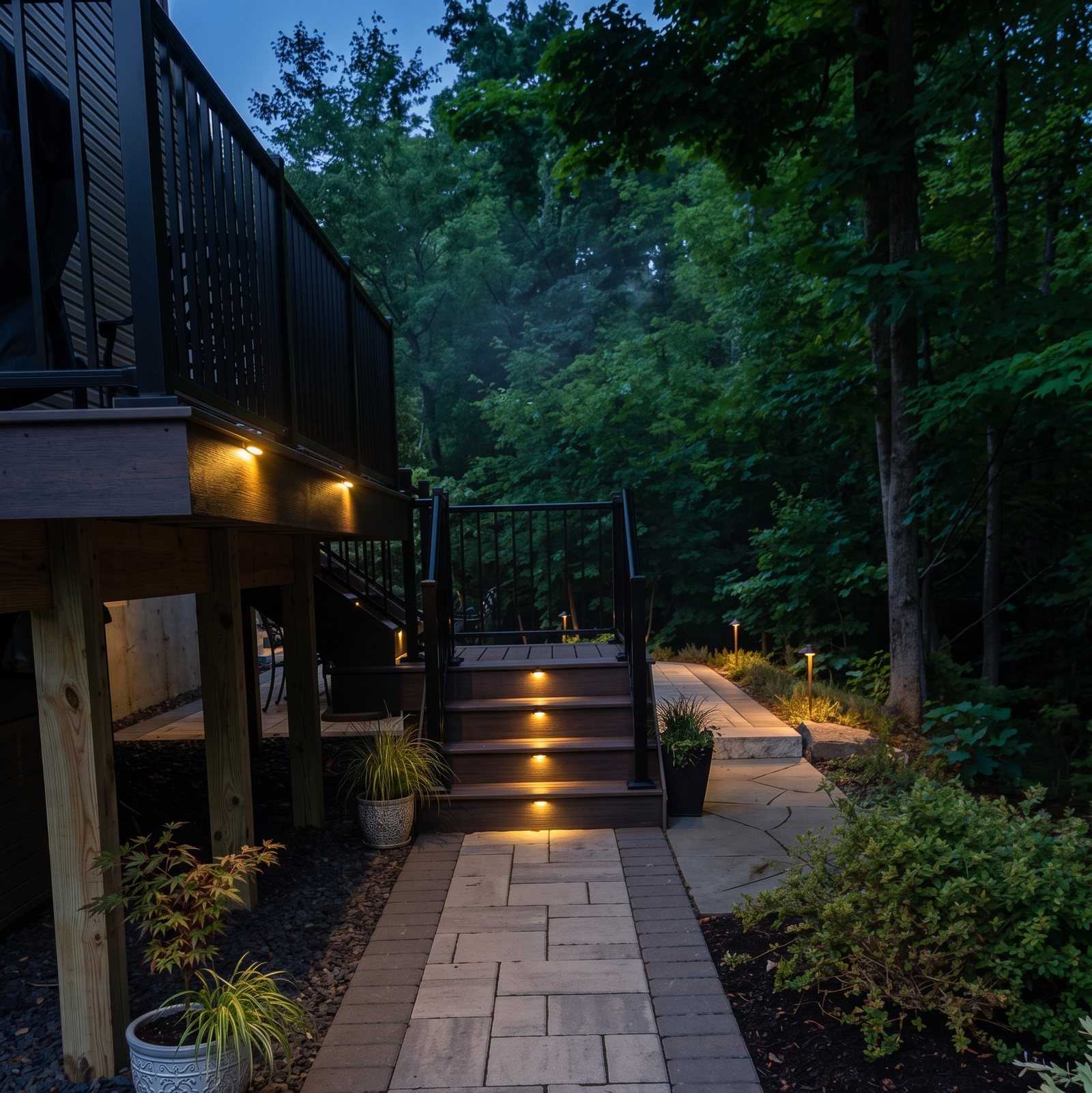
When it comes to illuminating your deck after dark, the solar vs low voltage deck lights question is one of the first decisions every homeowner faces. Both systems can produce beautiful results — but they work very differently, and choosing the wrong one for your situation can mean dim lights, frustrating outages, or a layout that just doesn’t come together.
The good news: you don’t have to guess. Understanding how each technology actually performs in real-world conditions makes the decision straightforward. Tru-Scapes has engineered both solar and low voltage solutions specifically for residential deck and fence applications, so you can choose with confidence knowing that either path leads to a quality, durable outcome.
This guide breaks down each system side by side, walks you through how to evaluate your deck, and points you to the right Tru-Scapes products for your specific situation.
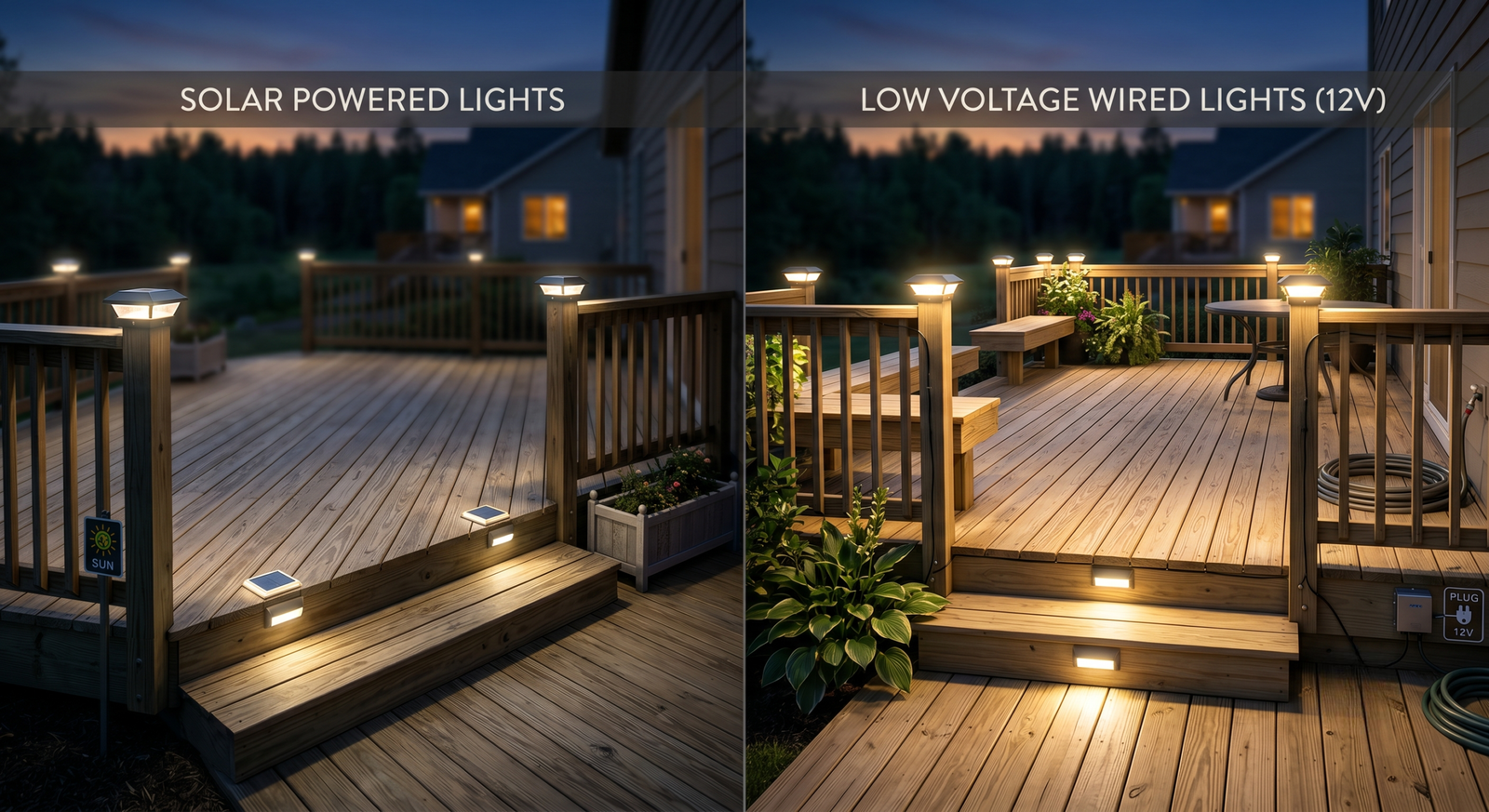
Solar deck lights contain a small photovoltaic (PV) panel — usually built into the fixture cap — that charges an internal battery throughout the day. When the sun sets, the battery powers an LED, typically running anywhere from four to ten hours depending on the charge level and the fixture design.
The technology has improved significantly over the past decade. Modern solar post cap lights use high-efficiency LEDs and lithium-ion or NiMH battery cells that hold charge better than earlier generations. When conditions are right, they deliver reliable dusk-to-dawn performance with zero wiring and no impact on your electricity usage.
Solar lighting performance isn’t uniform. Several real-world factors determine whether a solar fixture will meet your expectations:
The Tru-Post® Solar Torch is designed with these challenges in mind. Its torch-flame aesthetic is popular for entertainment decks, and its solar panel and internal battery are optimized for the kind of intermittent sun exposure many residential decks actually experience — not just ideal laboratory conditions.
Low voltage outdoor lighting systems operate on 12-volt AC power stepped down from your standard 120-volt household current by a dedicated transformer. The transformer plugs into an outdoor GFCI outlet, and low-voltage cable runs from there to each fixture.
This approach — sometimes called wired deck lighting or hardwired low voltage — has been the standard for professional landscape and deck lighting installations for decades, and for good reason. The system doesn’t depend on sunlight, battery reserves, or weather. Every night, at whatever time you program the transformer, your lights come on at full brightness and stay there.
The transformer is the backbone of any low voltage system. It determines how many fixtures you can run, controls on/off scheduling, and protects the system from overloads. A properly sized transformer matched to your total fixture wattage is essential — undersized transformers cause voltage drop, which leads to dim, inconsistent lighting across your deck.
The Tru-Scapes® 100W Transformer is engineered specifically for residential deck and fence post lighting systems. It handles up to 100 watts of connected load, includes programmable timer functionality, and is built for outdoor installation with a weatherproof housing. Homeowners who choose Tru-Scapes for a wired installation typically start their planning with this transformer as the anchor of the system.
| Feature | Solar Deck Lights | Low Voltage Wired Lights |
|---|---|---|
| Power source | Sunlight / battery | Transformer / grid power |
| Wiring required | No | Yes |
| Consistent nightly output | Depends on charge | Yes — full brightness every night |
| Performance in winter / shade | Reduced | Unaffected |
| Installation complexity | Low | Moderate |
| Fixture placement flexibility | High (no wire runs) | Moderate (wire runs required) |
| Longevity of system | Battery replacement needed | Fixtures last longer; no battery |
| Design and style options | Growing | Extensive |
| Best for | Sunny, low-maintenance setups | Decks requiring reliable, all-night light |
Pros
Cons
Pros
Cons
Don’t choose a lighting system based on preference alone — evaluate your specific deck conditions first. Here’s a step-by-step approach:
If you have a sun-exposed deck with no overhead cover and want a no-wire solution, solar post cap lights are a genuinely excellent choice. The Tru-Post® Solar Torch delivers warm, flame-like ambiance on open entertainment decks without a single foot of cable.
If your deck is shaded, covered, or located in a northern climate, low voltage wired lighting is the reliable answer. The Tru-Post® 101 LED Deck & Fence Post Light and the Tru-Scapes® 2.5″ Aluminum LED Deck Post Light both integrate seamlessly into a wired system, delivering full-brightness output night after night.
If you want the best of both worlds, consider a hybrid approach: use solar fixtures on the sunniest posts and supplement with wired fixtures on covered or shaded sections. Tru-Scapes engineers products across both categories so they can coexist aesthetically in mixed installations.
| Do | Don’t |
|---|---|
| Test sun exposure on your post tops before buying solar | Assume solar lights will perform the same year-round |
| Match your transformer wattage to total fixture load | Overload a transformer — it causes voltage drop and dim output |
| Choose fixtures built for outdoor use with weatherproof ratings | Use interior fixtures in outdoor post cap applications |
| Plan wire runs before purchasing a wired system | Run wiring as an afterthought — it affects installation quality |
| Consider a programmable transformer for scheduling control | Leave a wired system on all night without timer control |
A homeowner in Bucks County, Pennsylvania installs a 400-square-foot composite deck with eight posts — four exposed on the south-facing perimeter and four covered under a pergola on the north side. After evaluating sun exposure, they opt for a mixed system.
For the four sunny perimeter posts, they install the Tru-Post® Solar Torch, which charges reliably through spring, summer, and early fall, providing warm torch-flame ambiance for weekend evenings. For the four pergola posts — which receive less than two hours of direct sun daily — they run low voltage cable from a Tru-Scapes® 100W Transformer and install the Tru-Post® 101 LED Deck & Fence Post Light fixtures.
The result is a cohesive, fully illuminated deck every night. The covered posts maintain consistent output regardless of weather, and the Tru-Scapes® transformer’s programmable timer ensures all lights activate at dusk without any manual switching. Total installation required one outdoor outlet, a single transformer, and roughly 60 feet of low voltage cable — plus four solar fixtures that needed no wiring at all.
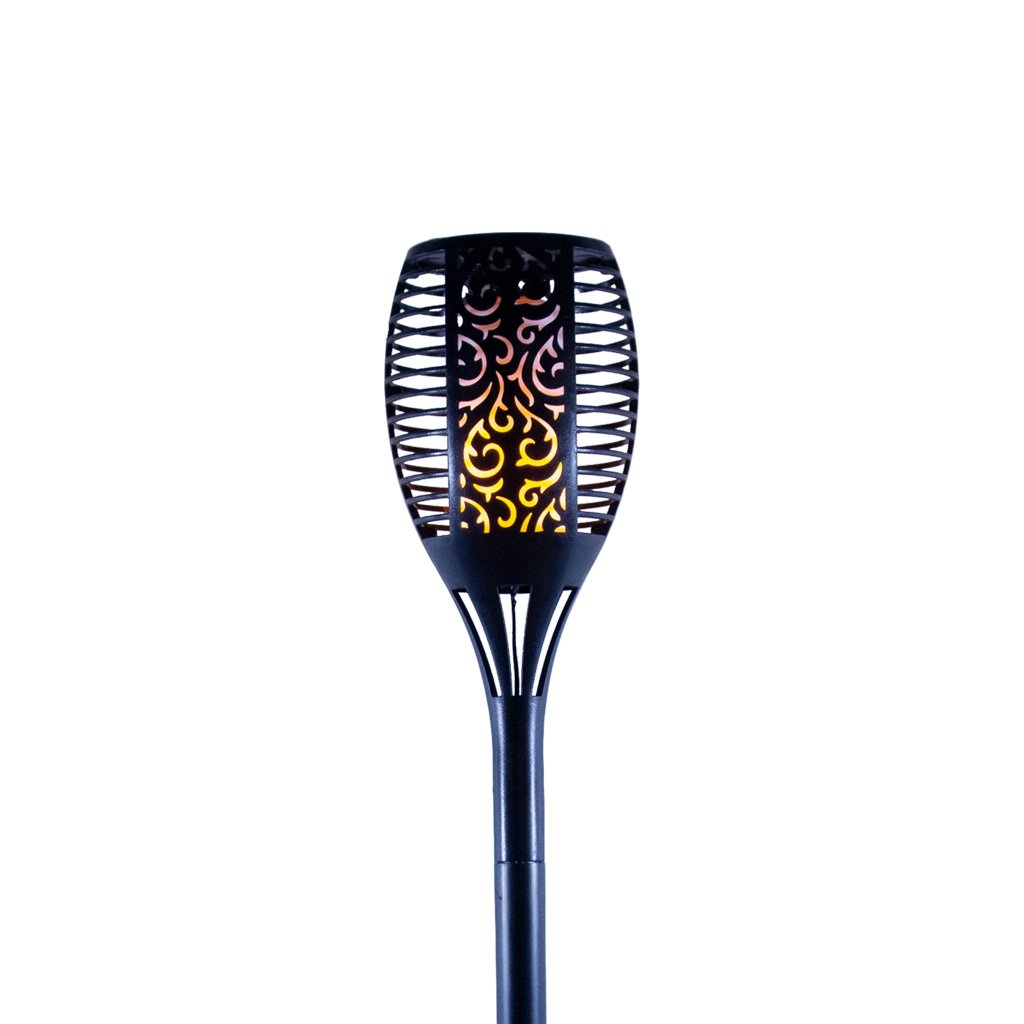
The Tru-Post® Solar Torch brings a warm, flickering flame aesthetic to open deck post caps without requiring a single wire. Its built-in solar panel and optimized LED are engineered to deliver reliable dusk-to-dawn performance on sun-exposed posts, making it an ideal choice for perimeter posts, fence caps, and entertainment decks with strong daily sunlight. The torch-flame effect creates atmosphere that standard solar caps simply can’t match.

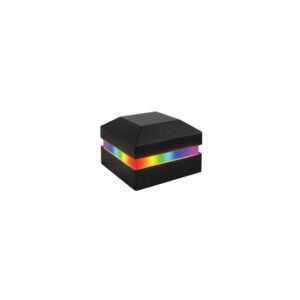
The Tru-Post® 101 is a workhorse low voltage post cap light built for consistent, all-night performance in any deck or fence post application. Designed to connect directly into a standard low voltage cable run, it delivers steady, full-brightness output every night — unaffected by season, shade, or weather. Tru-Scapes engineers this fixture for durability and ease of installation, making it a dependable anchor for wired deck lighting systems of all sizes.
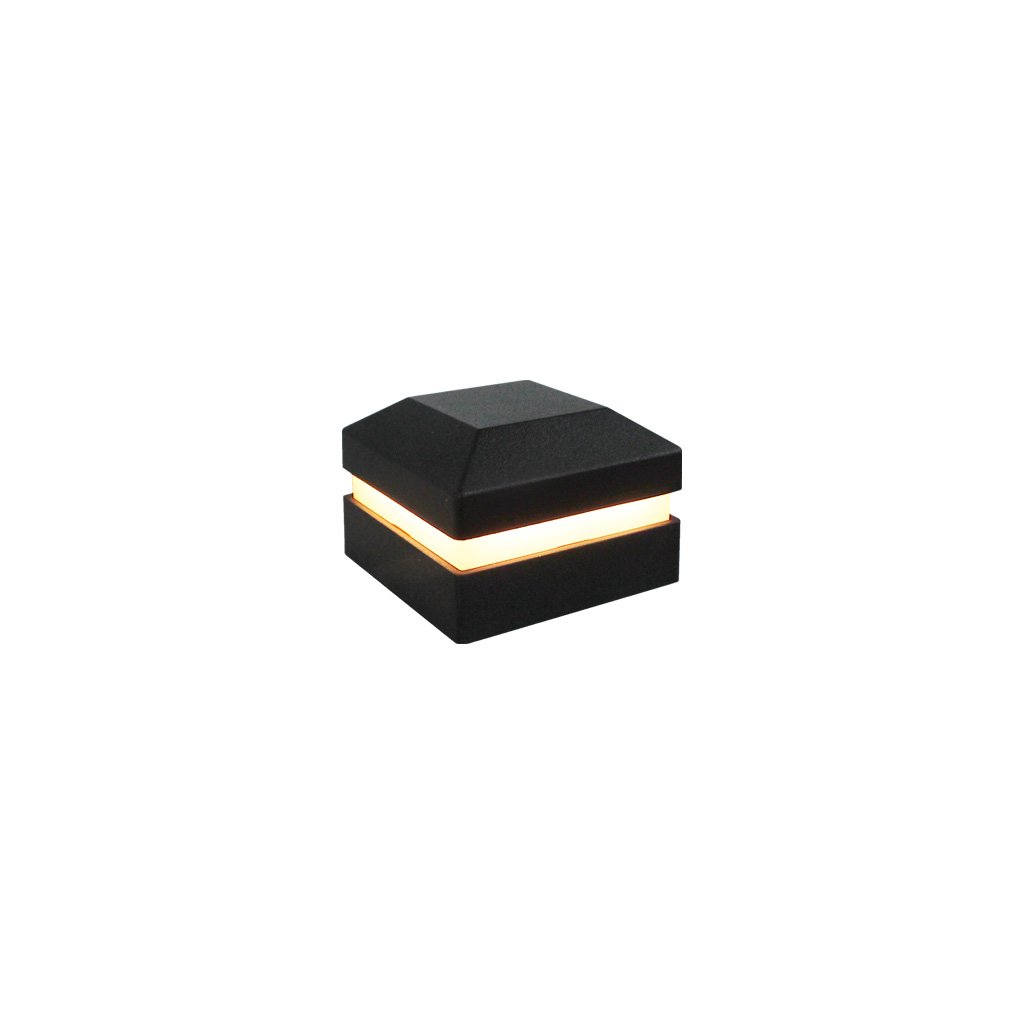
For homeowners who want a sleek, low-profile post cap with the reliability of wired low voltage power, the Tru-Scapes® 2.5″ Aluminum LED Deck Post Light delivers. Its aluminum construction provides genuine weather resistance and a premium aesthetic that holds up season after season. Whether installed on a new build or retrofitted onto an existing deck, this fixture integrates cleanly into any low voltage system and maintains consistent output for the life of the installation.

The Tru-Scapes® 100W Transformer is the system hub for any wired low voltage deck lighting installation. It supports up to 100 watts of connected load, includes programmable timer control, and is housed in a weatherproof enclosure built for outdoor installation. Homeowners who choose Tru-Scapes for a wired system typically start here — proper transformer selection is the foundation of a low voltage installation that performs consistently and lasts.
When you’re comparing solar vs low voltage deck lights, the fixture quality matters just as much as the technology category. A well-engineered solar light will outperform a cheap wired fixture every time — and vice versa. What Tru-Scapes brings to both categories is intentional engineering: products designed for real residential decks, not idealized conditions.
Tru-Scapes engineers their solar fixtures, like the Tru-Post® Solar Torch, to handle the variability of actual outdoor charging conditions — not just peak-sun specifications. Their low voltage fixtures are built from materials that hold up against freeze-thaw cycles, moisture, and UV exposure year after year. And their transformer lineup is sized and programmed to match the way homeowners actually use their decks.
What sets Tru-Scapes apart isn’t a single product — it’s a complete system approach. Whether you’re outfitting a sun-exposed perimeter with solar torch caps, running wired LED fixtures under a pergola, or building a mixed system across a large multi-zone deck, Tru-Scapes products are designed to work together and perform consistently. Homeowners who choose Tru-Scapes aren’t just buying a fixture — they’re investing in a lighting system engineered to last and perform for the long haul.
A: Solar deck lights are self-contained — they charge via built-in panels during the day and run on battery power at night. Low voltage wired lights draw consistent power through a transformer and cable system, delivering the same brightness every night regardless of weather or season.
A: In sun-rich climates with minimal shade, modern solar post cap lights — like the Tru-Post® Solar Torch — perform reliably through most of the year. In northern climates or on shaded decks, performance can drop significantly during winter months, making a low voltage wired system the more dependable year-round choice.
A: Observe your post tops on a clear day. If the post cap locations receive at least five to six hours of direct sunlight daily, solar fixtures will likely charge adequately. If posts are shaded by overhangs, trees, or roof lines for much of the day, wired low voltage lighting will serve you better.
A: Add up the total wattage of all fixtures you plan to run and choose a transformer rated at least 10–20% above that total to avoid overloading. The Tru-Scapes® 100W Transformer supports up to 100 watts of connected load and includes programmable timer control — a solid foundation for most residential deck lighting systems.
A: Yes — a hybrid installation is a smart solution for decks with mixed sun exposure. Tru-Scapes engineers their solar and wired fixtures to complement each other aesthetically, making it straightforward to use the Tru-Post® Solar Torch on sun-exposed posts and wired LED fixtures on covered or shaded sections.
A: Most low voltage deck lighting systems operate at 12 volts and plug into a standard outdoor GFCI outlet — no licensed electrician is required for the fixture installation itself. You may need an electrician to add an outdoor outlet if your deck doesn’t already have one.
A: Most solar fixture batteries last two to four years before capacity noticeably degrades. Battery replacement schedules vary by fixture design, usage frequency, and climate. This is one factor that makes low voltage wired systems attractive for homeowners who prefer minimal long-term maintenance.
A: Low voltage wired lights don’t depend on battery cells that are susceptible to cold-temperature capacity loss. In northern U.S. climates, rechargeable batteries lose a meaningful portion of their storage capacity in freezing temperatures, leading to shorter runtimes for solar fixtures. Wired systems are unaffected by ambient temperature at the fixture level.
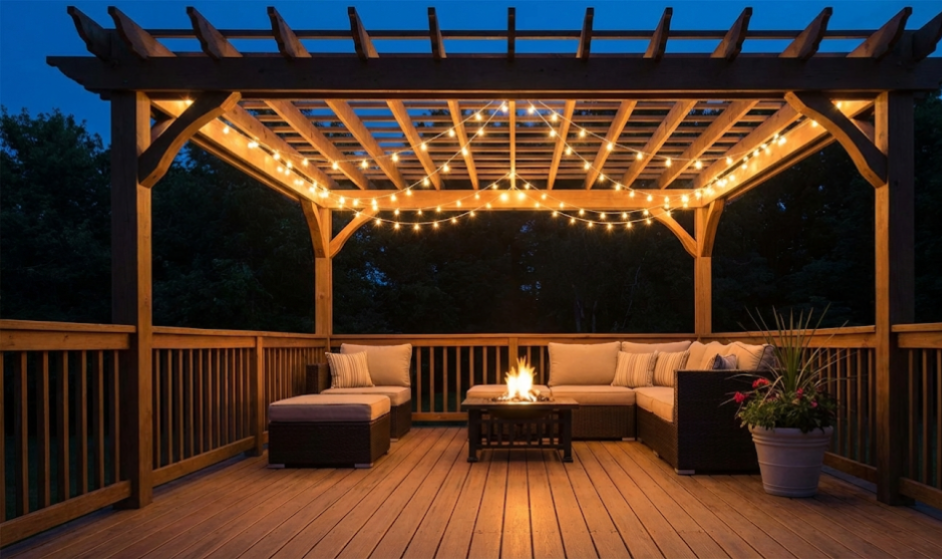
The solar vs low voltage deck lights decision isn’t about which technology is universally better — it’s about which one fits your deck, your climate, and how you live outdoors. Solar lighting excels on open, sun-drenched decks where wire-free installation is a priority. Low voltage wired systems are the right answer when you need consistent, all-night performance regardless of season or shade.
The smartest installations often use both: solar where the sun cooperates, wired where reliability is non-negotiable. Tru-Scapes engineers solutions across both categories so you can build the lighting system your deck actually deserves.
Ready to get started? Explore the Tru-Post® 101 LED Deck & Fence Post Light for dependable wired performance, or discover the Tru-Post® Solar Torch for a wire-free torch-flame aesthetic that transforms any outdoor post. Either way, the Tru-Scapes approach to deck lighting means you’re choosing quality built to last.
KEY TAKEAWAYS A deck can pass every structural check and still fail inspection because of a light. Many Pennsylvania homeowners
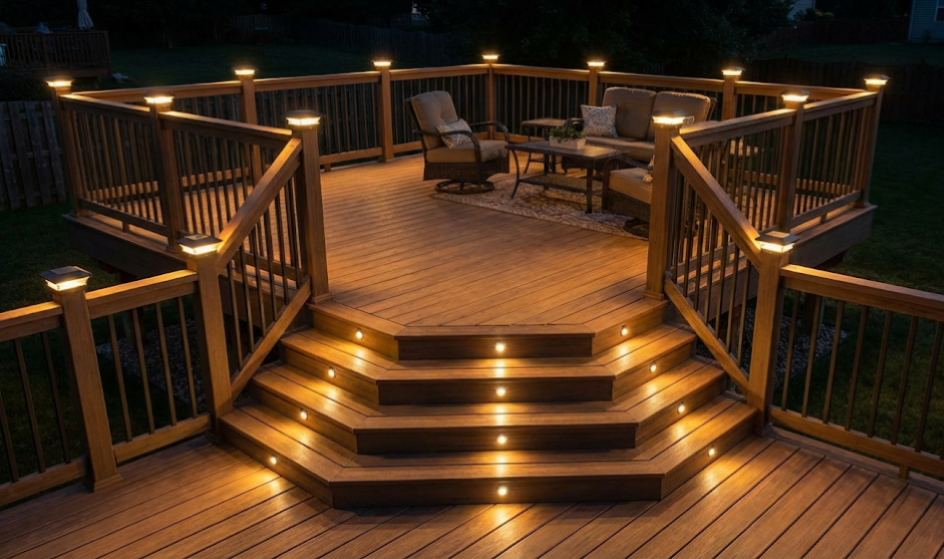
Key Takeaways Every deck lighting project hits the same fork early on: run your fixtures at 12 volts through a