- FREE Shipping on all orders! Limited time!
- support@tru-scapes.com

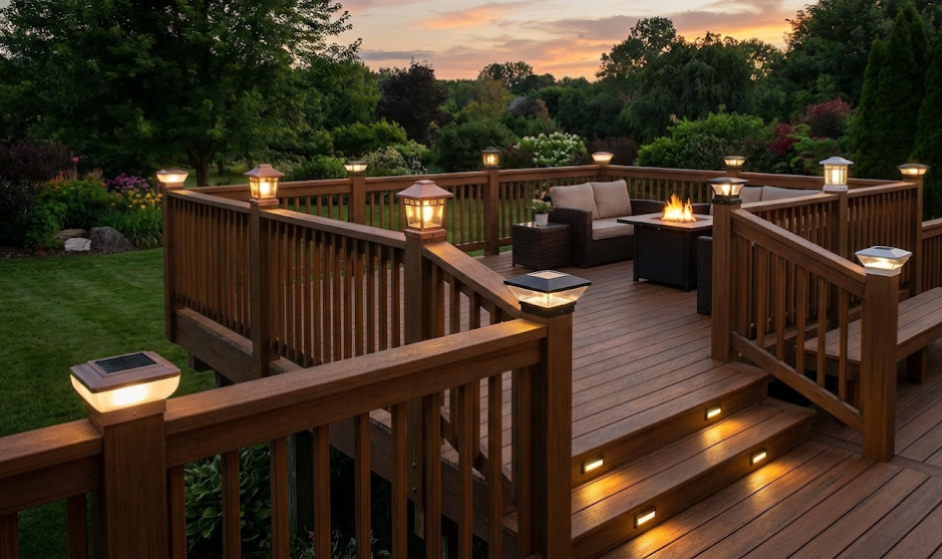
You have finally finished your deck renovation. The furniture is arranged perfectly, the grill is ready, and the evening air is cool. You sit down to enjoy the ambiance, but within minutes, you are swatting away moths, gnats, and mosquitoes because your outdoor lights attract bugs. It is a frustrating scenario that plays out in backyards across the United States every summer.
Many homeowners assume that outdoor lighting is the culprit. They believe that to enjoy the outdoors, they must sit in the dark to avoid being eaten alive. But here is the good news: not all lights are created equal.
The type of technology, color temperature, and heat output of your fixtures play a massive role in whether your deck becomes a sanctuary or a bug magnet. If you are still using outdated incandescent or halogen bulbs, you are essentially putting out a welcome mat for pests. However, switching to high-quality LED deck lights can drastically change your outdoor experience.
In this guide, we will explore the science behind why bugs swarm certain lights and explain the benefits of low-voltage deck lighting for a comfortable evening outdoors.

To understand why your current lighting might be causing issues, we first have to look at how insects perceive the world. It is not just about brightness; it is about biology.
The scientific term for an organism’s physical movement toward or away from light is phototaxis. Positively phototactic insects, like moths and beetles, are naturally drawn to light sources.
For years, scientists believed bugs used the moon for navigation and got confused by artificial lights. Recent scientific research suggests that artificial lights interfere with their internal orientation systems, causing them to trap themselves in a loop around the bulb. Regardless of the exact biological reason, the result is the same: a swarm around your deck post.
Humans see visible light in a specific spectrum. Insects, however, see differently. Most bugs are highly sensitive to:
Traditional incandescent bulbs and older fluorescent lights emit a significant amount of UV radiation and blue light. This is why a standard porch light often looks like a chaotic meeting place for every insect in the neighborhood. Data from the NIH indicates that the specific spectrum of cool white light increases attractiveness to mosquitoes compared to warmer tones.
The short answer is: No, not nearly as much as traditional lighting.
While no light is 100% invisible to insects, LED deck lights are significantly less attractive to them than any other light source. Here is why LEDs are the game-changer you need for your backyard.
The biggest advantage of LED technology is its spectrum. Quality LEDs produce very little to no UV light. Since the primary “beacon” that draws insects in is absent, most bugs simply do not realize the light is there. They fly right past your illuminated deck posts without stopping to investigate.
Insects are also drawn to heat. Thermal receptors help them find food sources (like warm-blooded humans) and comfortable places to rest.
By eliminating the heat source, you remove a secondary trigger that brings lights attract bugs issues to your deck.
Not all LEDs are the same. If you go to a big-box store and buy a “Daylight” LED bulb, you might still see bugs. This is where choosing the best LED color temperature, measured in Kelvin (K), becomes critical for pest control.
| Color Temperature | Appearance | Attractiveness to Bugs | Recommended for Decks? |
| 5000K – 6500K | Bluish-White (Daylight) | High | No |
| 3000K – 4000K | Neutral White | Moderate | Sometimes |
| 2700K – 3000K | Warm White (Yellowish) | Very Low | Yes |
Export to Sheets
When comparing warm vs. cool deck lighting, insects see cool, blueish light (higher Kelvin) much better than they see warm, yellowish light (lower Kelvin).
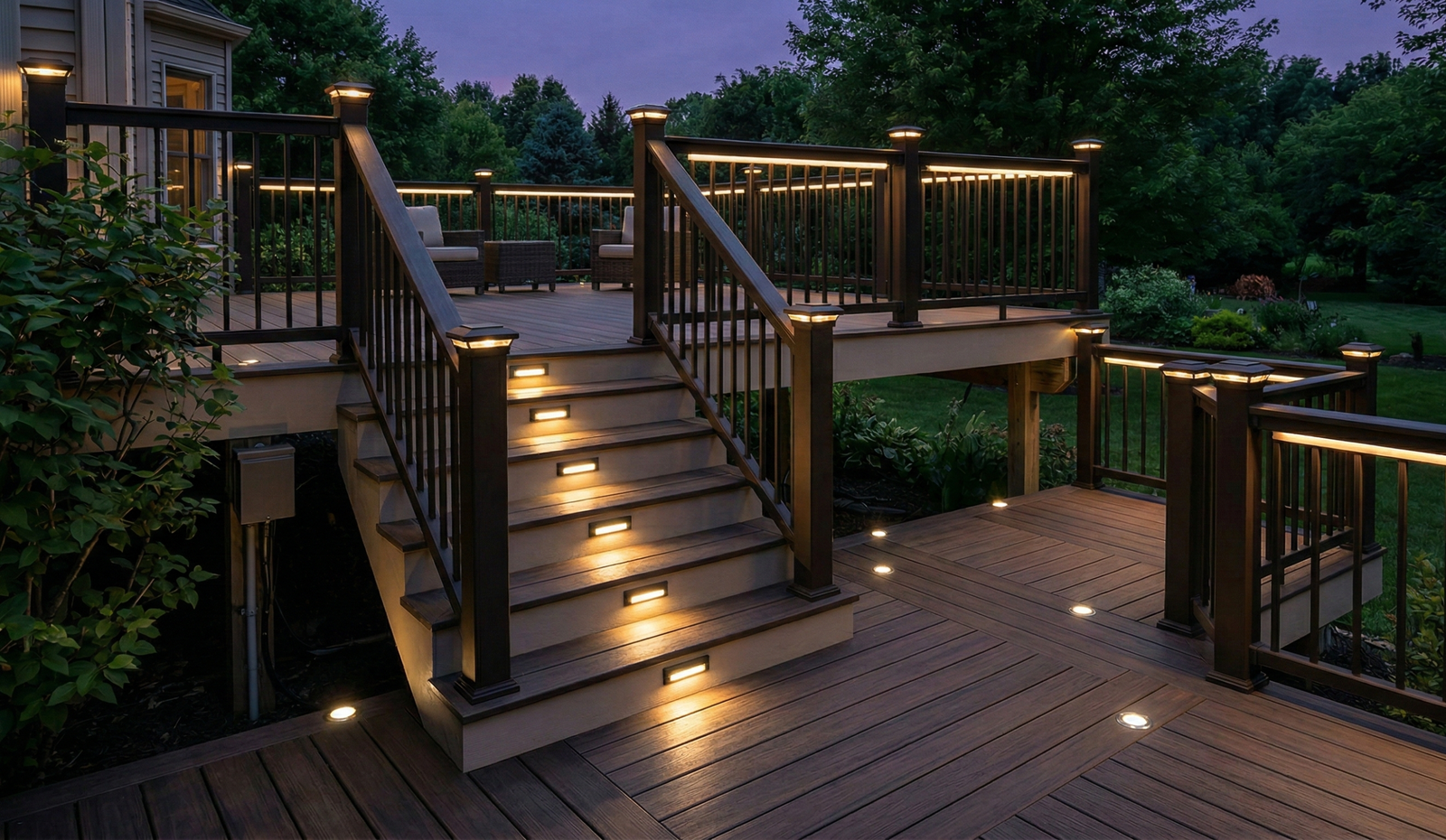
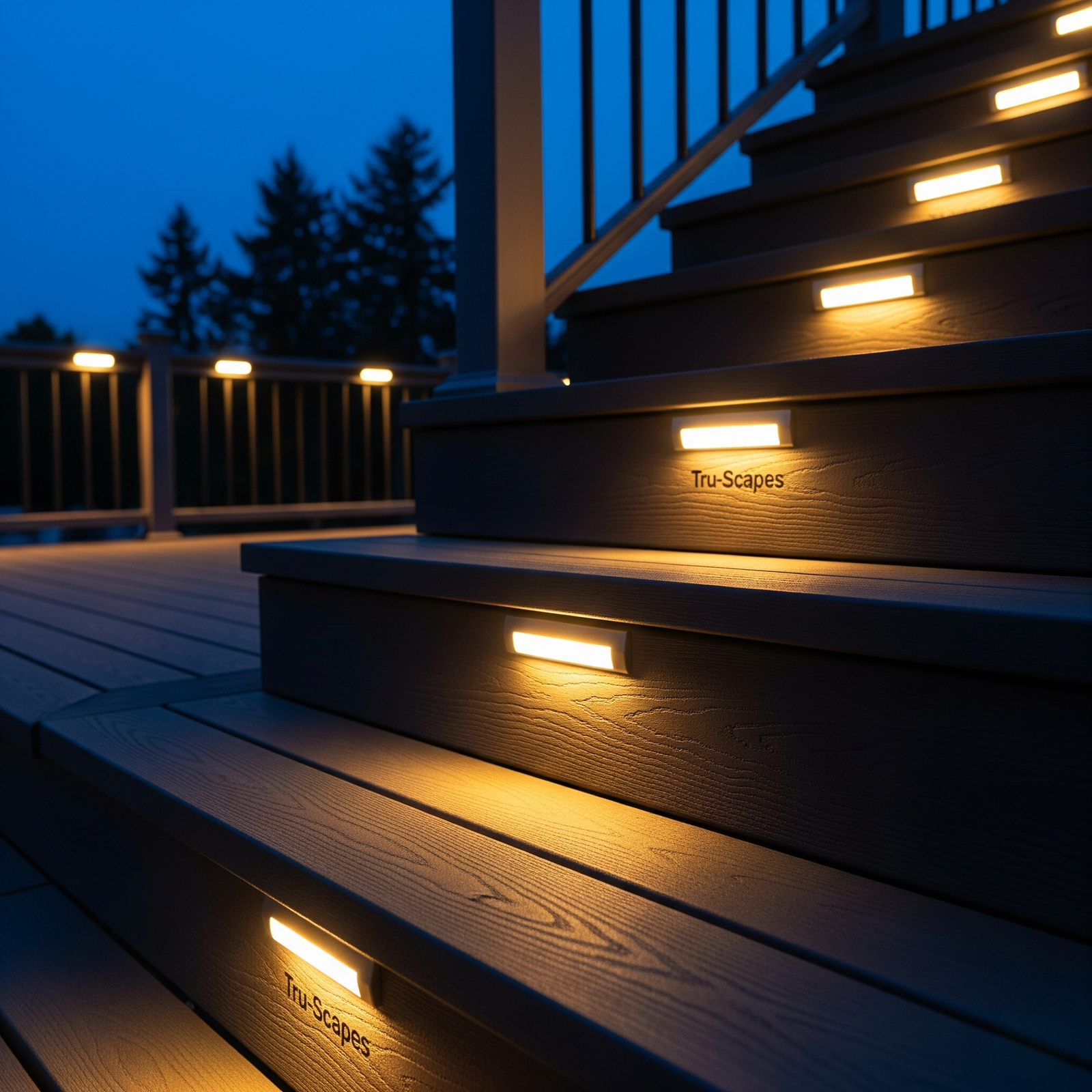
At Tru-Scapes, we specifically engineer our fixtures to emit a Warm White light (typically around 2700K to 3000K). This creates a cozy, inviting atmosphere for you and your guests while remaining largely invisible to the insect population. It is the perfect balance of aesthetics and functionality.
To make this easier to digest, let’s look at a direct comparison between the technology we use and the old-school bulbs you might be replacing.
| Feature | Traditional Incandescent | Tru-Scapes LED Fixtures |
| UV Output | High (Attracts bugs) | Negligible / None |
| Heat Emission | Very Hot | Cool to the touch |
| Lifespan | 1,000 – 2,000 Hours | 30,000 – 50,000+ Hours |
| Energy Use | High | Very Low (Low Voltage) |
| Bug Attraction | Magnet for pests | Minimal attraction |
Installing Tru-Scapes LED deck lights is the most effective step you can take, but there are other strategies to make your outdoor space even more pest-proof.
Because our lights are low-voltage and easy to install, you have flexibility in where you place them.
Lighting is only one part of the equation. Standing water is a breeding ground for mosquitoes. Ensure your gutters are clean and there are no puddles near the deck. Keeping tall grass trimmed near the deck edges also reduces hiding spots for pests.
Occasionally, a spider might decide your deck post is a great place for a web, hoping to catch the stray moth that wanders by. Knowing how to properly maintain your deck lighting ensures your fixtures shine brightly and look professional. Since Tru-Scapes lights are built with heavy-duty construction, they can easily withstand a quick wipe-down or a gentle spray.
We know you care about the appearance of your home. You want a deck that looks high-end, functions perfectly, and lasts for years.
Many generic lighting options found online are made of cheap plastic that cracks in the winter or fades in the summer sun. Tru-Scapes fixtures are built for durability and style. We focus on:
When you choose our lights, you aren’t just buying a bulb; you are investing in a system designed to enhance your lifestyle—without inviting the whole insect kingdom to the party.
Do yellow bug lights actually work? Yes, yellow “bug lights” work because they filter out the blue and UV wavelengths that insects see. However, many people dislike the deep yellow/orange “construction zone” look they give off. A 2700K Warm White LED offers similar bug-repelling benefits but with a much more attractive, sophisticated color.
Will LED lights repel mosquitoes? It is important to clarify that LEDs do not repel mosquitoes; they simply do not attract them. Mosquitoes are primarily hunting for carbon dioxide (from your breath) and heat. By using cool-running LEDs, you avoid adding a heat source that draws them in, but you may still need citronella or a repellant spray for the mosquitoes already in the area.
Can I replace my old bulbs with LEDs to stop bugs? Swapping a bulb helps, but replacing the fixture is better. Old fixtures often have gaps where bugs can crawl inside and die, looking messy. Tru-Scapes LED deck lights are integrated fixtures, meaning they are sealed and designed to keep bugs out of the housing entirely.

You shouldn’t have to choose between a beautifully lit deck and a bug-free evening. The science is clear: traditional lighting acts as a magnet for pests due to UV rays and high heat. By switching to warm white LED deck lights, you drastically reduce the number of uninvited guests crashing your outdoor parties.
At Tru-Scapes, we are dedicated to providing high-quality, low-voltage lighting solutions that make your home look its best. Our fixtures provide the warm, inviting glow you want, without the heat and UV light that bugs love.
Ready to reclaim your evening? Shop our full collection of deck lighting today and see the difference professional-grade LEDs can make for your home.
Why Post Cap Lights Deserve a Spot on Every Deck Most homeowners spend considerable time and money building or upgrading
Planning to light up your outdoor deck? Before you pick a fixture style or browse lighting kits, you need a