- FREE Shipping on all orders! Limited time!
- support@tru-scapes.com

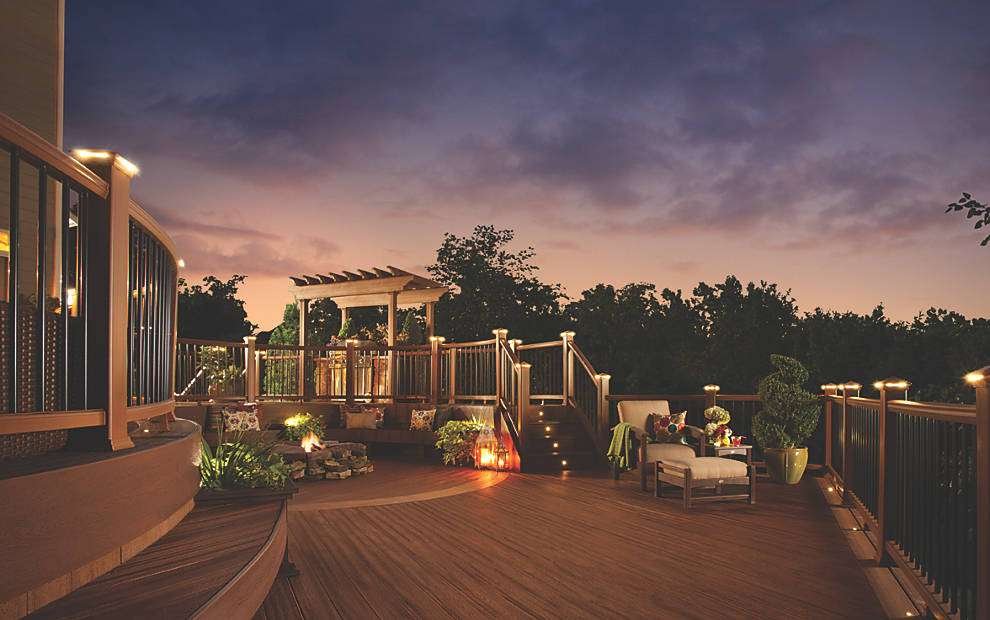
Pittsburgh decks work hard. They sit through snowy winters, spring downpours, and sticky July evenings, often on hillside lots where the deck stands a full story off the ground. That makes lighting a safety feature as much as a design choice.
If you are researching deck lighting Pittsburgh options, this guide covers what matters most. You will learn how the local climate affects fixtures, which lighting styles hold up best, how low-voltage and solar compare, and how to plan an installation that still works after years of freeze-thaw cycles.
Western Pennsylvania has a humid continental climate. According to the National Weather Service, the region sees cold winters with regular snowfall, warm and humid summers, and precipitation spread across the whole year. Each of those conditions puts stress on outdoor deck lighting in a different way.
Winter temperatures in Pittsburgh often swing above and below freezing. Water that gets into a fixture or connector can freeze, expand, and crack seals or housings. Over time, that small gap lets in more water, which leads to corrosion and flickering lights.
This is why sealed, waterproof deck lights matter more here than in milder climates.
Moisture is a year-round issue. Summer humidity can cause condensation inside poorly sealed fixtures. Pittsburgh is also known for its many cloudy days, which limits how much charge solar lights can collect, especially from November through February.
Many Pittsburgh homes sit on slopes. That often means tall decks, long staircases, and under-deck patios. More stairs and more height mean a greater need for clear, reliable lighting at every level.
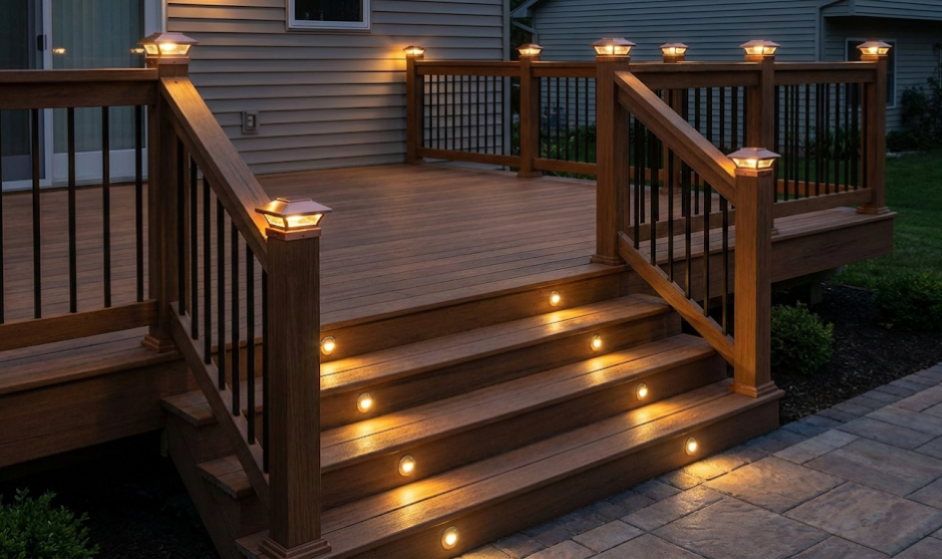
Deck step lighting belongs at the top of the list. Small fixtures mounted on stair risers or stringers light each tread so guests can see where to step, even when stairs are wet or icy. The International Code Council’s residential code includes lighting requirements for exterior stairways, so check with your local building department before you build.
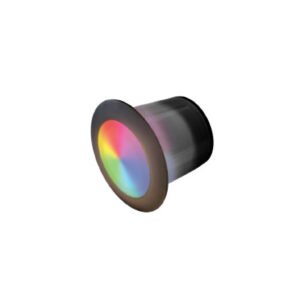
Recessed deck lighting installs flush with deck boards or fascia. Because nothing sticks up, snow shovels and furniture are less likely to catch the fixture. Choose models rated for direct walk-over use if you plan to set them into the deck surface.
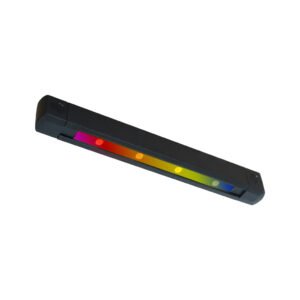
Deck railing lights mount under the top rail or on balusters and cast a soft glow downward. They outline the edge of the deck, which is helpful on elevated decks. Under-rail placement also shields fixtures from direct snow and rain.
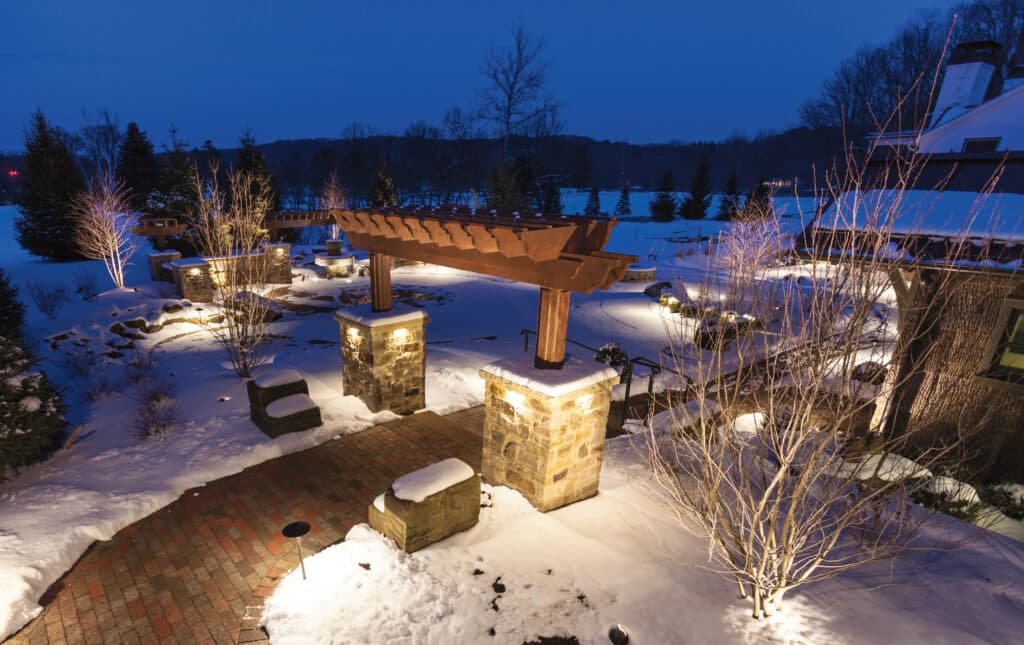
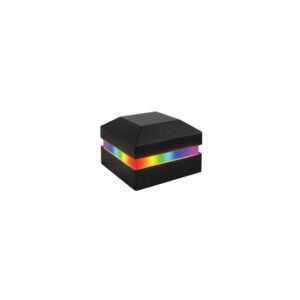
Deck post cap lights replace standard post caps with lit versions. They add a classic look and mark the corners of the deck. In Pittsburgh, choose caps with sealed lenses and corrosion-resistant finishes, since the tops of posts collect snow and standing water.
If your elevated deck shelters a patio, under deck lighting turns that space into a usable room. Water drips through gaps between deck boards, so fixtures under a deck should be wet-rated, not just damp-rated, unless the deck has a sealed drainage system above.
Deck lighting kits bundle fixtures, cable, and a transformer. They are a practical starting point for small or medium decks. Before buying, confirm the kit’s fixtures carry the same weather ratings you would require of individual lights.
Winter evenings in Pittsburgh get dark early. A photocell or astronomical timer turns lights on at dusk automatically, so you are never stepping onto a dark deck with groceries or a snow shovel.
| Fixture Type | Best For | Climate Notes | Snow Shovel Risk |
|---|---|---|---|
| Deck step lighting | Stairs and landings | Choose sealed, wet-rated units | Low (mounted on risers) |
| Recessed deck lighting | Deck surface, fascia | Needs good drainage behind fixture | Very low (flush) |
| Deck railing lights | Perimeter, elevated decks | Rail shields fixture from snow | Very low |
| Deck post cap lights | Corners, entry points | Top surface collects snow and water | Low |
| Under deck lighting | Patios below decks | Drip-through water requires wet rating | None |
| Solar accent lights | Low-use decorative areas | Weak output in overcast winters | Moderate |
Pros:
Cons:
Pros:
Cons:
The U.S. Department of Energy notes that LEDs perform well in cold temperatures, which gives hardwired LED systems a real advantage in Pittsburgh winters.
Use these simple rules to narrow your choices:
When comparing products, check the IP rating. An IP65 rating means the fixture is dust-tight and protected against water jets. IP67 adds protection against temporary immersion, which is useful for fixtures near the deck surface where water can pool.
Outdoor receptacles must have GFCI protection under the National Electrical Code published by the NFPA. If you are unsure about any electrical step, hire a licensed electrician.
DarkSky International recommends shielded fixtures, warm color temperatures, and lighting only where it is needed. These habits also make a deck feel more relaxing.
A homeowner in a South Hills neighborhood has a second-story deck on a sloped lot, with 14 stairs down to the yard. They install solar post cap lights in the fall. By January, the lights barely glow for an hour after dark, and the stairs are nearly invisible on snowy evenings.
The next spring, they switch to a low-voltage system. Recessed deck step lighting goes on each riser, deck railing lights line the top level, and wet-rated fixtures light the patio below. A photocell handles the timing. The following winter, the stairs stay lit every night, and the homeowner no longer carries a flashlight to take out the trash.
A: Low-voltage LED fixtures with sealed housings and wet-location ratings. They keep working through cold, cloudy stretches when solar lights often fade.
A: They work, but performance drops in winter because of short days and frequent cloud cover. They are best for decoration, not for stair safety.
A: Look for at least IP65 for most deck fixtures. Choose IP67 for fixtures set into the deck surface where water can collect.
A: Yes, with care. Use a plastic shovel and avoid chipping ice directly over the lens.
A: In most cases, yes. Water drips between deck boards, so wet-rated fixtures are the safer choice.
A: Warm white, around 2700K to 3000K, gives a cozy look and reduces glare for guests and neighbors.
A: They are a good value for small decks. Just confirm the fixtures carry the same weather ratings you would expect from individual lights.
A: Plug-in low-voltage systems are often DIY-friendly. Any new outlet or line-voltage work should be handled by a licensed electrician and may require a permit.
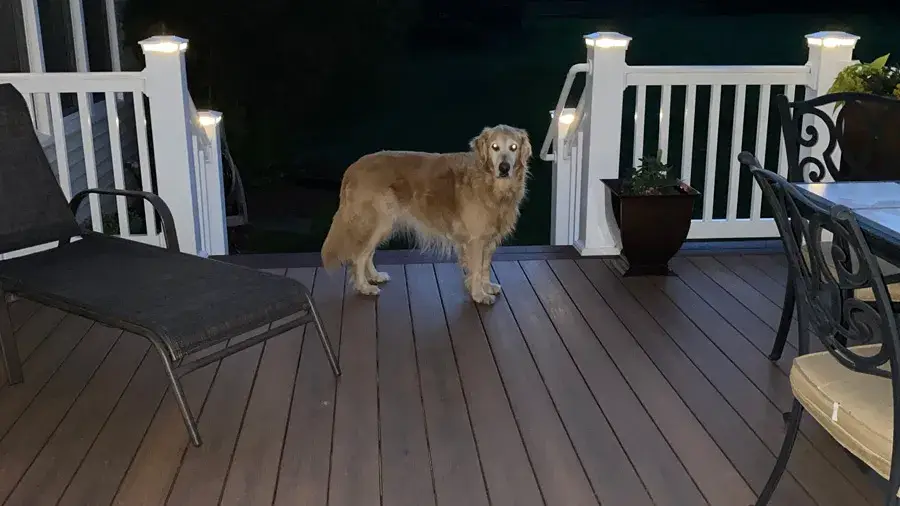
Good lighting makes a deck safer, more usable, and more inviting, especially in a city with long winter nights and steep lots. The best deck lighting Pittsburgh homeowners can choose is sealed, wet-rated, low-voltage LED lighting placed where it matters most: stairs first, then railings, posts, and the space below.
Plan the layout, seal every connection, and pick fixtures built for moisture and cold. Your lights will keep working long after cheaper options fail.
Ready to light up your deck? Talk to a local deck lighting specialist and get a layout designed for Pittsburgh weather.
KEY TAKEAWAYS Pittsburgh decks work hard. They sit through snowy winters, spring downpours, and sticky July evenings, often on hillside
Key Takeaways Philadelphia decks work hard. A rooftop in Fishtown, a narrow rear deck behind a South Philly rowhome, or