- FREE Shipping on all orders! Limited time!
- support@tru-scapes.com

A deck that goes dark at sunset loses half its value. In Pennsylvania, that problem gets worse, because the lights you install have to work through January ice, April downpours, and July humidity without failing.
This guide covers deck lighting Pennsylvania homeowners can rely on in every season. You will learn which fixture types hold up best, what weather ratings actually mean, how to compare materials, and how to plan an installation that stays safe and bright for years. Whether you are lighting a new composite deck in the Lehigh Valley or upgrading an older wood deck outside Pittsburgh, the same principles apply.
Pennsylvania sits in a climate zone that swings between extremes. Winters bring snow, sleet, and repeated freeze-thaw cycles. Summers bring heat, heavy thunderstorms, and high humidity.
Each of these conditions attacks outdoor deck lighting differently:
The takeaway is simple. Weather resistance is not an optional feature in Pennsylvania; it is the main buying criterion.
Three factors separate lights that last from lights that fail after one winter: ingress protection, materials, and voltage.
The IP (Ingress Protection) rating system, defined by the International Electrotechnical Commission (IEC), uses two digits. The first measures protection against solids like dust. The second measures protection against water.
| IP Rating | Dust Protection | Water Protection | Best Deck Use |
|---|---|---|---|
| IP44 | Protects against objects over 1 mm | Splashing water | Covered areas only |
| IP65 | Dust-tight | Low-pressure water jets | Railing lights, post cap lights, under deck lighting |
| IP66 | Dust-tight | Powerful water jets | Exposed railings, step lights |
| IP67 | Dust-tight | Temporary immersion | Recessed deck lighting, in-board lights |
| IP68 | Dust-tight | Continuous immersion (per maker specs) | Areas where water pools or snow sits for weeks |
If a fixture sits flush in the deck surface, choose IP67 or higher. Snowmelt and standing water will test it constantly. If a fixture mounts vertically under a rail cap, IP65 is usually enough.
Also check that the fixture carries a listing from a recognized testing lab such as UL (Underwriters Laboratories) and is marked suitable for wet locations.
Housing material matters as much as the seal. Here is how common options compare:
Most waterproof deck lights run on a 12-volt low voltage system powered by a transformer. Line voltage (120V) fixtures exist, but they typically require a licensed electrician and stricter wiring methods under the National Electrical Code.
If you want a DIY-friendly project, choose low voltage. If you need to power heavy fixtures far from the house, consult an electrician about line voltage options.
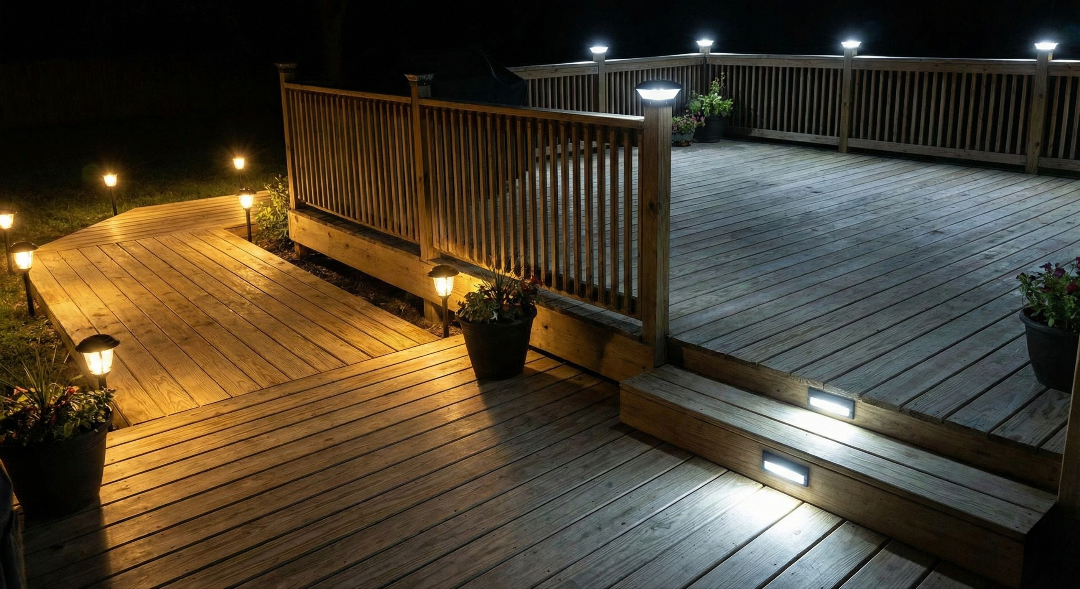
Each type of deck lighting fixture serves a different purpose. The strongest designs combine several.
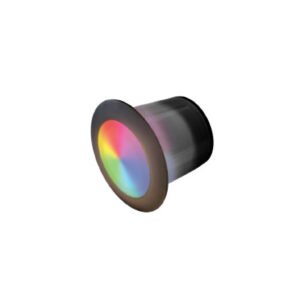
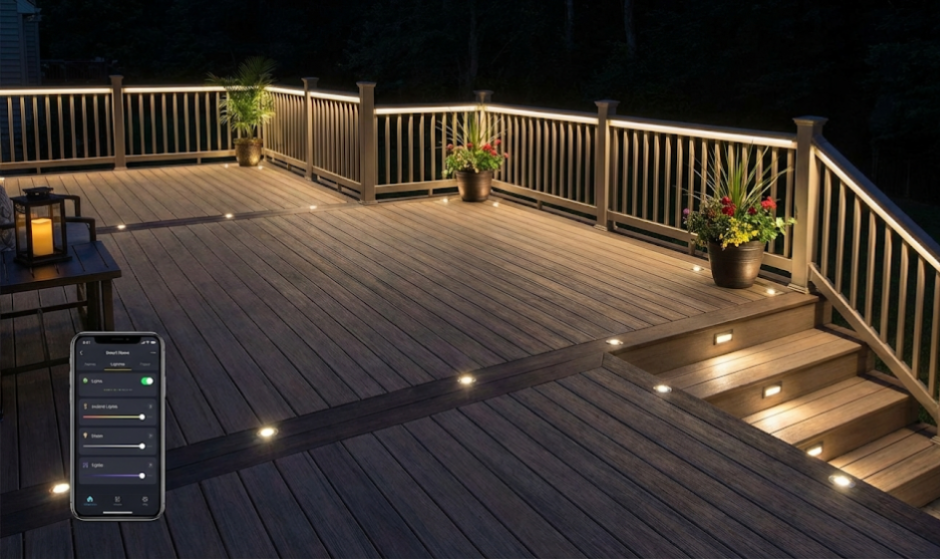
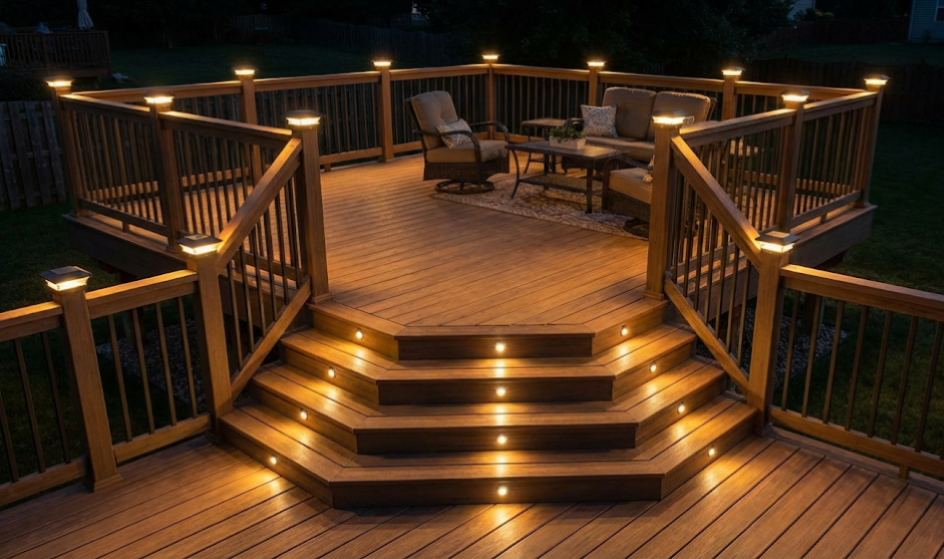
Installed flush with the deck boards, Recessed Deck Lighting marks edges and walkways without adding clutter. In Pennsylvania, choose IP67-rated, low-profile units that sit level with the surface so shovels glide over them.
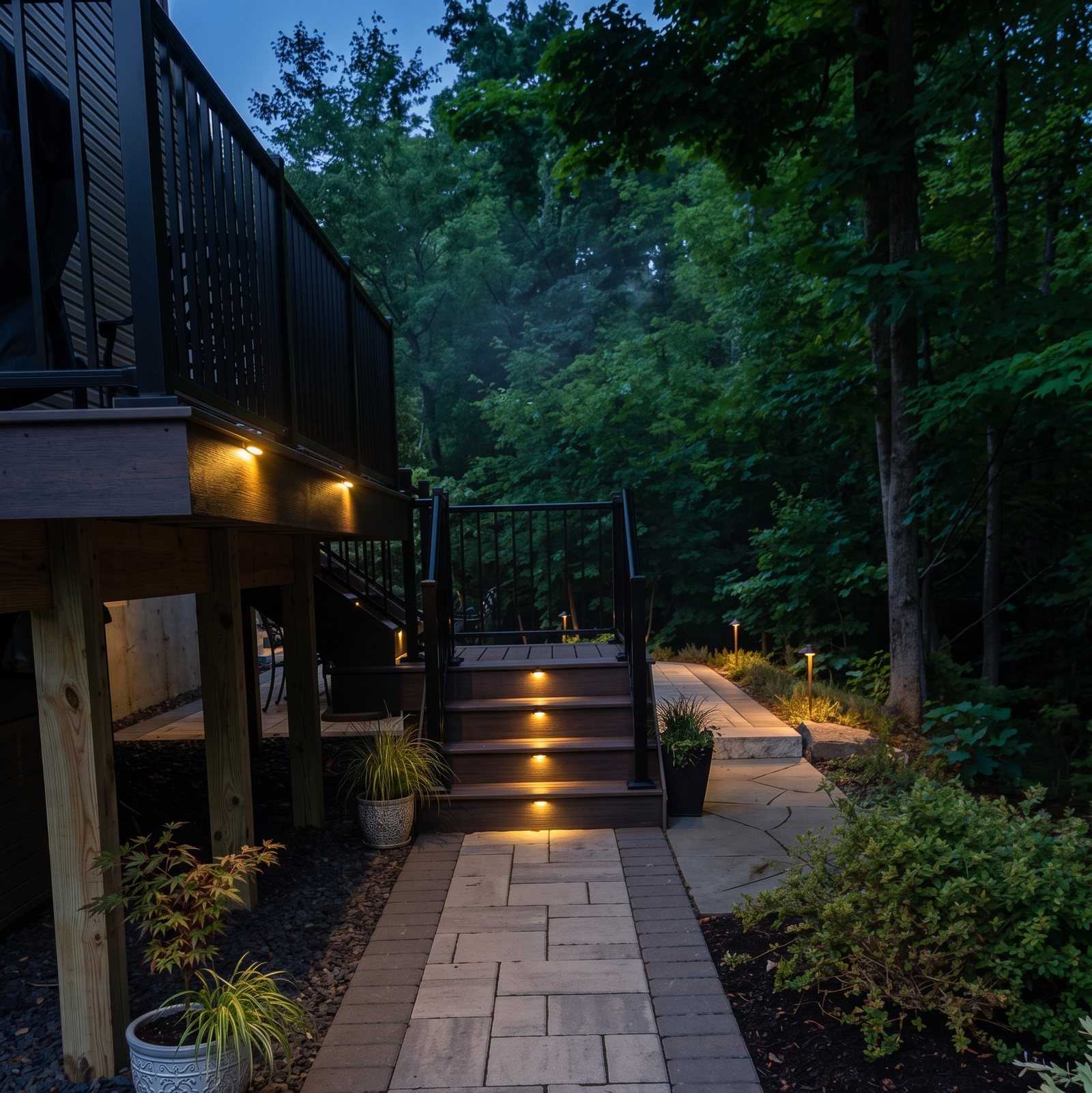
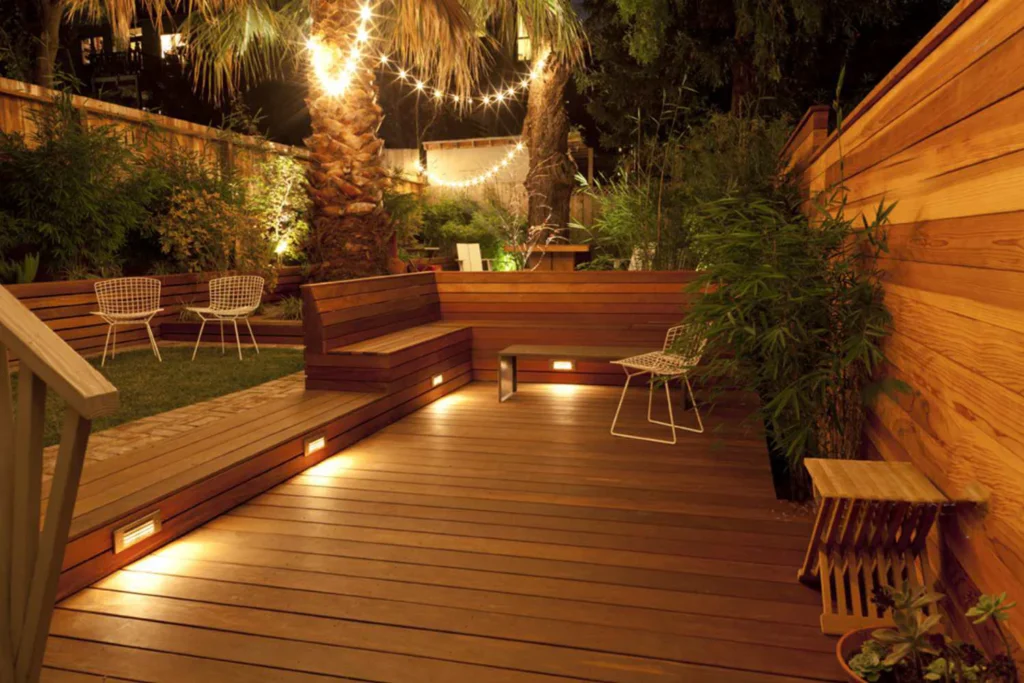
Deck Step Riser Lighting is the most important safety upgrade you can make. Mounted on stair risers or stringers, these lights make each tread visible on icy winter evenings.
Deck railing lights mount under the rail cap or on the side of the rail. They cast a soft downward glow and stay protected from direct snowfall.
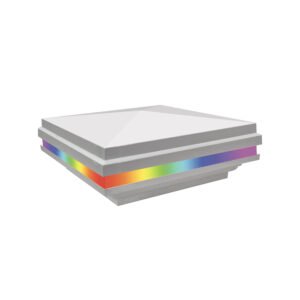
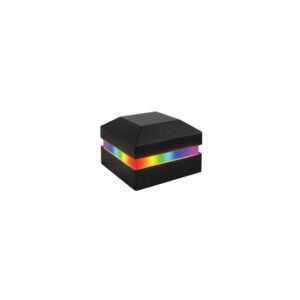
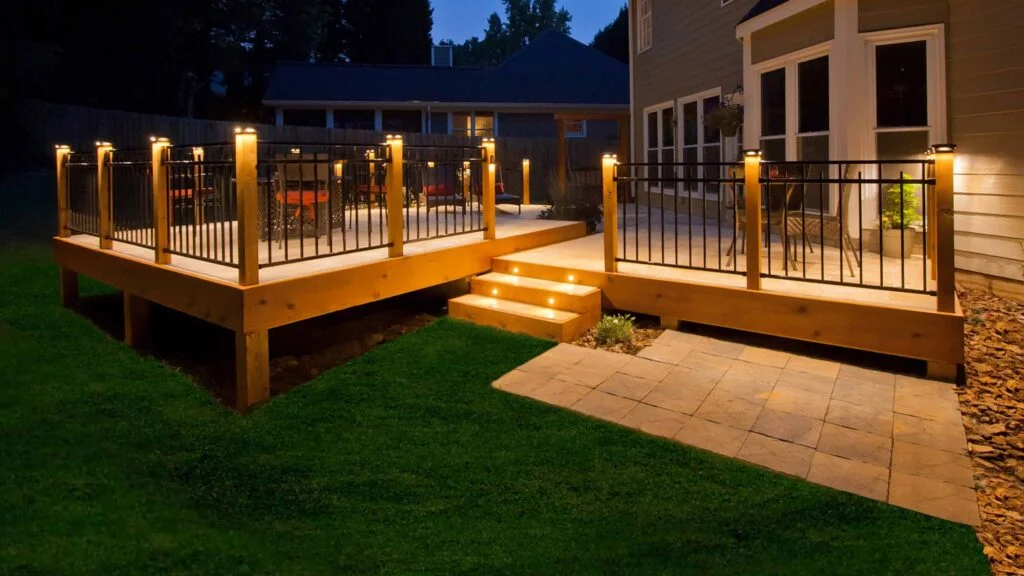
Deck post cap lights replace standard post caps and provide both style and perimeter light. Look for sealed caps that shed water rather than let it pool on top.
Under deck lighting brightens the patio or storage area below an elevated deck. Because fixtures sit under the deck structure, they avoid the worst of the snow, though humidity is still a factor.
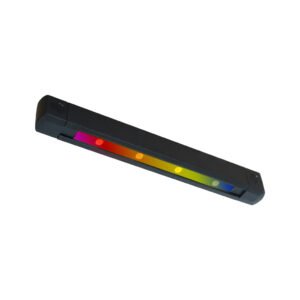
Flexible LED strips tucked under rails or stair nosings create a continuous line of light. Only use strips rated for outdoor use with sealed silicone jackets and end caps.
Deck lighting kits bundle fixtures, wire, connectors, and a transformer. They simplify planning and ensure components are compatible. Check that every part in the kit, including connectors, carries a weather rating.
Stake-mounted path lights and small spotlights connect the deck to the yard. They are useful for lighting steps down to the lawn or highlighting planters.
| Fixture Type | Primary Purpose | Snow Exposure | Recommended Rating | DIY Difficulty |
|---|---|---|---|---|
| Recessed deck lighting | Edge and path marking | High | IP67 or higher | Moderate |
| Deck step lighting | Stair safety | Moderate | IP65 or higher | Moderate |
| Deck railing lights | Ambient glow | Low | IP65 | Easy |
| Deck post cap lights | Perimeter and style | Moderate | IP65 | Easy |
| Under deck lighting | Lower-level patio light | Low | IP65 | Moderate |
| LED strips | Continuous accent | Low to moderate | IP67 | Moderate |
| Deck lighting kits | All-in-one setup | Varies | Check each part | Easy |
Follow these steps to plan a system that performs year-round:
Your deck’s design and how you use it should guide your choices.
A family near Harrisburg built a two-level composite deck with a hot tub on the lower level. Their first lighting setup used inexpensive solar post caps and plastic step lights. After one winter, several step lights had cracked lenses, and the solar caps barely charged during short, cloudy days.
For the replacement, they switched to a low voltage LED system. They installed IP67 recessed lights along the hot tub path, stainless deck step lighting on both staircases, and deck railing lights under the upper rail cap. A photocell timer handled on and off cycles. The family also swapped rock salt for a pet- and surface-safe de-icer near the fixtures.
The result was consistent lighting through the following winter, safer stairs, and a deck they could enjoy after dark in any season.
Good fixtures still need simple care:
Organizations such as the U.S. Department of Energy note that LEDs are long-lasting and efficient, but real lifespan depends on heat, moisture, and installation quality. Small maintenance habits protect that investment.
For guidance on reducing glare and light pollution, DarkSky International recommends shielded, downward-facing fixtures. That approach also keeps light where you need it on the deck.
A: Low voltage LED fixtures with IP65 or higher ratings and corrosion-resistant housings perform best. Recessed lights should be IP67 or higher.
A: Solar lights can struggle during short, overcast winter days. Wired low voltage systems deliver more consistent light year-round.
A: Many homeowners install plug-in low voltage deck lighting kits themselves. Line voltage work should be handled by a licensed electrician.
A: IP65 works for railing and post cap lights. Recessed deck lighting set into the surface should be IP67 or higher.
A: Yes, salt can corrode metal finishes and wiring over time. Keep de-icers away from fixtures and rinse any salt residue in spring.
A: Place deck step lighting on each riser or on the stringers so every tread is clearly visible.
A: LEDs generally perform well in cold temperatures. Quality drivers and sealed housings help them stay reliable through winter.
A: It depends on size and layout. Light every stair first, then add fixtures at corners, entries, and seating areas.
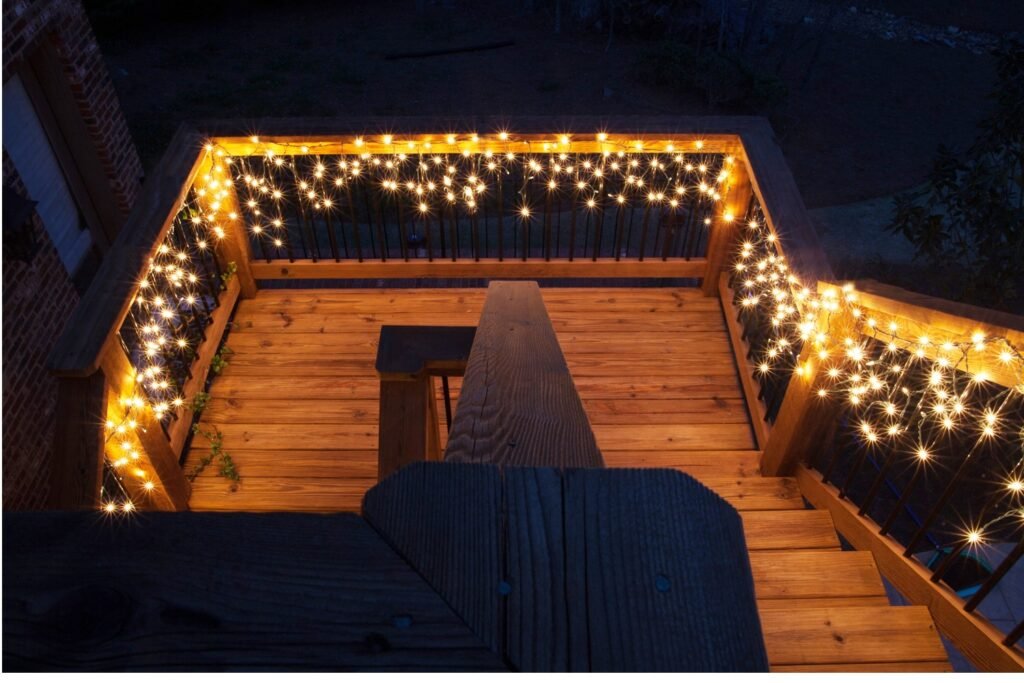
Pennsylvania weather is tough on outdoor fixtures, but the right choices make all the difference. Focus on IP ratings, corrosion-resistant materials, and a well-planned low voltage system. Layer deck step lighting, railing lights, and post cap lights for safety and style, and add under deck lighting if your deck is elevated.
With smart planning and simple seasonal care, deck lighting Pennsylvania homeowners install today can stay bright through many winters. Ready to light up your deck for every season? Explore our weather-resistant deck lighting collection or contact our team for help planning your layout.
KEY TAKEAWAYS A deck can pass every structural check and still fail inspection because of a light. Many Pennsylvania homeowners
Key Takeaways Every deck lighting project hits the same fork early on: run your fixtures at 12 volts through a