- FREE Shipping on all orders! Limited time!
- support@tru-scapes.com

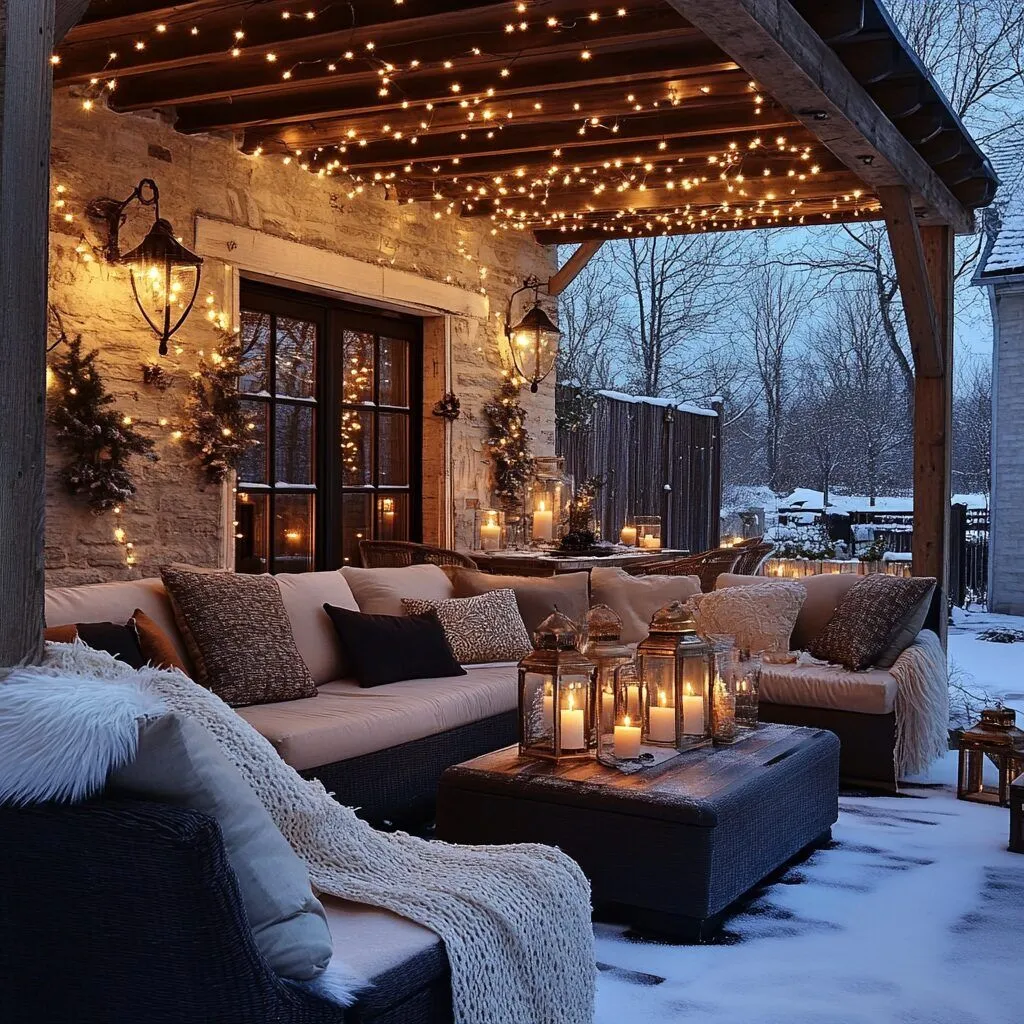
The sun dips below the horizon, and it’s only 4:30 PM. For many homeowners, this early winter darkness signals the end of deck season. That beautiful outdoor space you enjoyed all summer is suddenly just a dark, cold rectangle you glance at through the window.
But what if it didn’t have to be?
What if your deck could be just as inviting and useful in December as it is in July? The secret isn’t complicated. It’s all about the right deck lighting for winter. This isn’t just about stringing up a few holiday lights; it’s about a permanent, durable, and beautiful strategy for cold-weather illumination.
This post is your complete guide to turning your dark deck into a safe, warm, and stunning winter feature. We’ll cover why winter lighting is essential, what kind of fixtures can actually survive the cold, and how to design a layout that works with the snow, not against it.
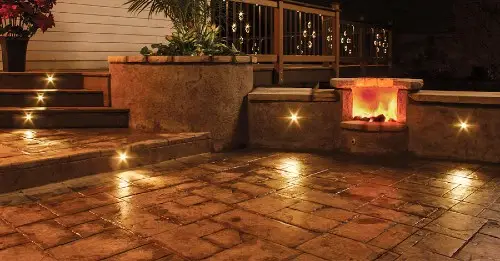
We often think of deck lighting for late-night summer parties, but its true value shines brightest in the dark months. A well-lit deck in winter isn’t a luxury; it’s a smart upgrade that provides three huge benefits.
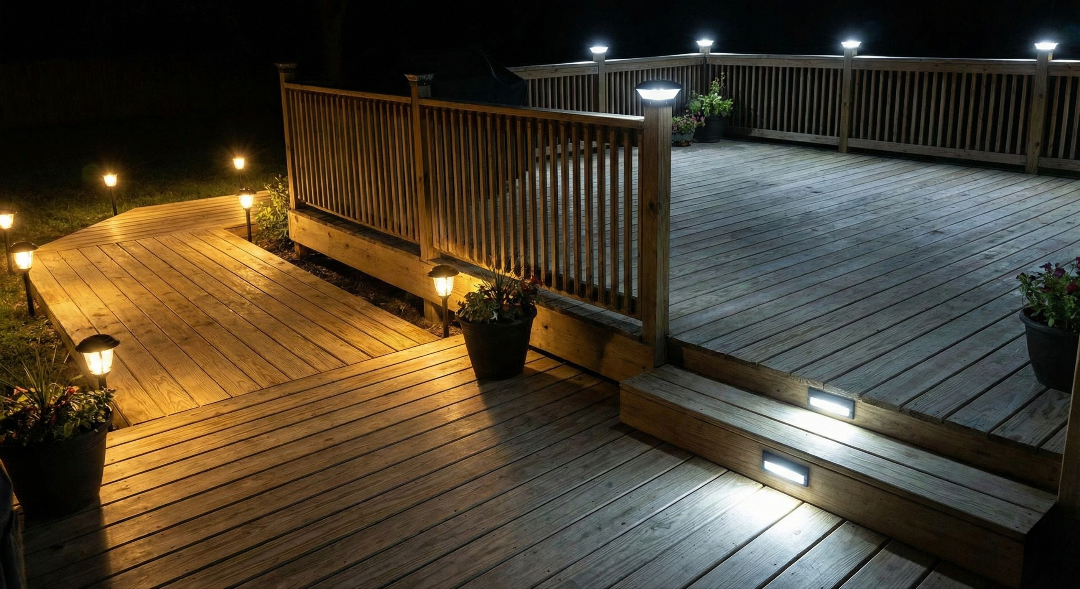
Ice, snow, and wet leaves create a minefield of slip-and-fall hazards. This is especially true for the most-used parts of your deck: the stairs and the path to the door.
Good deck lighting isn’t just about beauty; it’s about seeing exactly where you’re stepping.
Let’s be realistic: you’re probably not hosting a barbecue in a blizzard. On the coldest nights, you’ll be enjoying your deck from the warmth of your living room.
This is where “ambiance” becomes a real, tangible thing. A dark, unlit deck creates a “black mirror” effect on your windows, reflecting your interior back at you. A deck with soft, warm lighting extends your view. It makes your home feel larger and cozier, turning the outdoors into a beautiful, snowy backdrop—like a living postcard.
Your deck’s “off-season” doesn’t have to be a complete shutdown. You still need to take the dog out. You might want to grill a few steaks (a little snow can’t stop a dedicated grill master). You might even have a hot tub that sees more use in the winter than any other time.
Proper lighting makes these tasks possible, safe, and even pleasant. It transforms the deck from a “no-go” zone into a functional extension of your home, 365 days a year.
Here’s the most important tip in this entire article: the cheap plastic lights you grab from a big-box store will not survive a harsh winter.
Cold, ice, and moisture are ruthless. Plastic becomes brittle and cracks. Water seeps into poor connections and shorts out the system. For true, reliable cold-weather illumination, you need to invest in a system built for the job. This means a professional, low-voltage system.
Here’s a look at why professional-grade systems are the only choice for a four-season climate.
| Feature | Standard DIY/Box-Store Lights | Professional-Grade Systems (Like Tru-Scapes) |
| Fixture Material | Often plastic or thin, painted aluminum. | Solid brass, heavy-gauge aluminum, or copper. |
| Winter Risk | Becomes brittle, cracks in freezing temps. Paint chips. | Built to last. Withstands ice, snow, and impacts. |
| Light Source | Varies; may be older tech or cheap, unsealed LEDs. | High-quality, integrated, and fully-sealed LEDs. |
| Cold Performance | Can dim, flicker, or fail in extreme cold. | Excellent. LEDs are more efficient in the cold. |
| Connections | Basic twist-on or snap-on connectors. | Waterproof, gel-filled, or heat-shrink connections. |
| Failure Point | Water and ice seep in, causing shorts and corrosion. | Fully protected from the elements for reliable power. |
The takeaway is simple: buy it nice, or buy it twice (or, in this case, buy it every spring).
A key (and surprising) fact: LEDs love the cold! Unlike other light sources, high-quality LEDs actually become more efficient in the cold. The minimal heat they produce is also just enough to help melt a light dusting of snow or frost off the lens, keeping your light clear.
Okay, you’re on board with durable, high-quality lights. Now, where do you put them? A winter lighting plan is slightly different from a summer one. Here’s how to get it right.
Color temperature makes a huge difference in winter. That crisp, blue-white light (around 4000K-5000K) that looks “modern” in the summer can feel sterile and cold against snow.
For winter, you want to create a feeling of warmth.
As we mentioned, safety is critical. Start your design by lighting all potential hazards.
Once safety is covered, you can add the “wow” factor. Use uplighting to hit a beautiful evergreen tree near the deck, or use downlights from a pergola to create a soft “moonlight” effect on the deck boards.
Snow is a giant reflector. This can be a problem or a huge advantage.
When you use downlighting, the snow on the deck actually helps you. It will catch the warm light and softly reflect it, creating a beautiful, diffused glow that makes the entire space feel brighter and more magical.
Your lighting needs are different at 5 PM on a Tuesday than at 8 PM on a Saturday.
The best part about a professional-grade system is its low-maintenance design. But following a simple maintenance routine can keep it in perfect shape.
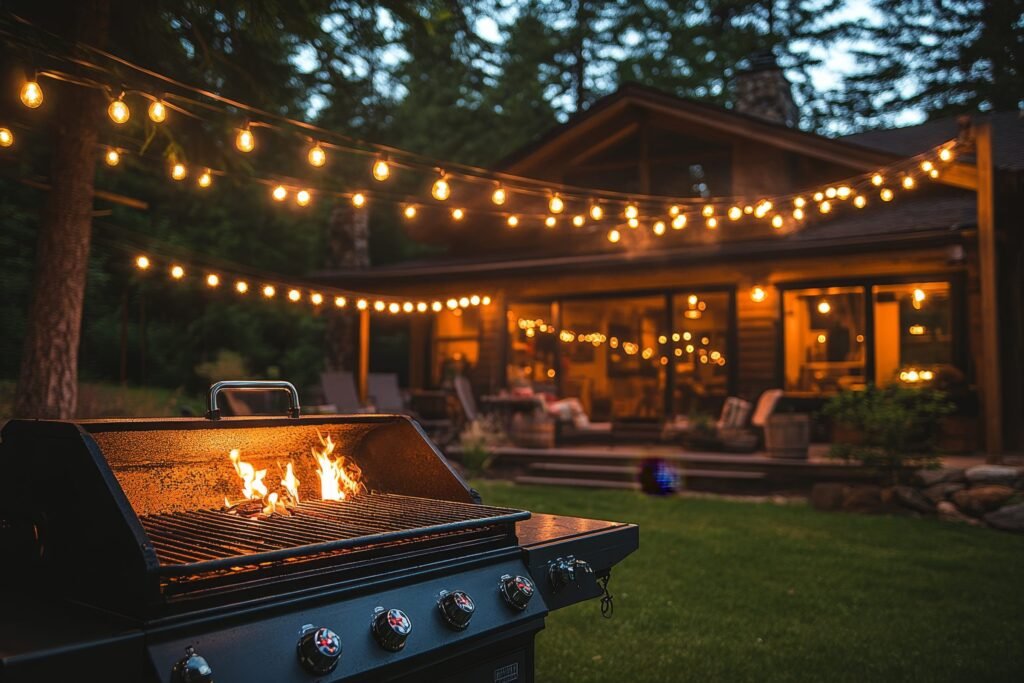
Your deck is one of the best parts of your home, and it deserves to be seen and used all year long. Don’t let the early darkness of winter relegate it to a dark, forgotten space.
By investing in high-quality, durable deck lighting for winter, you’re not just adding lights; you’re not just adding lights; you’re adding safety, warmth, and countless beautiful nights. You’re extending your home, creating a stunning view from your sofa, and ensuring your outdoor space is safe and welcoming, no matter what the thermometer says.
Ready to see your deck in a new light this winter? The experts at Tru-Scapes Deck Lighting can design a custom, professional-grade cold-weather illumination system built to last a lifetime. Contact us today for a consultation.
Upgrading your outdoor space doesn’t have to mean hiring an electrician or tearing up your deck boards to run conduit.
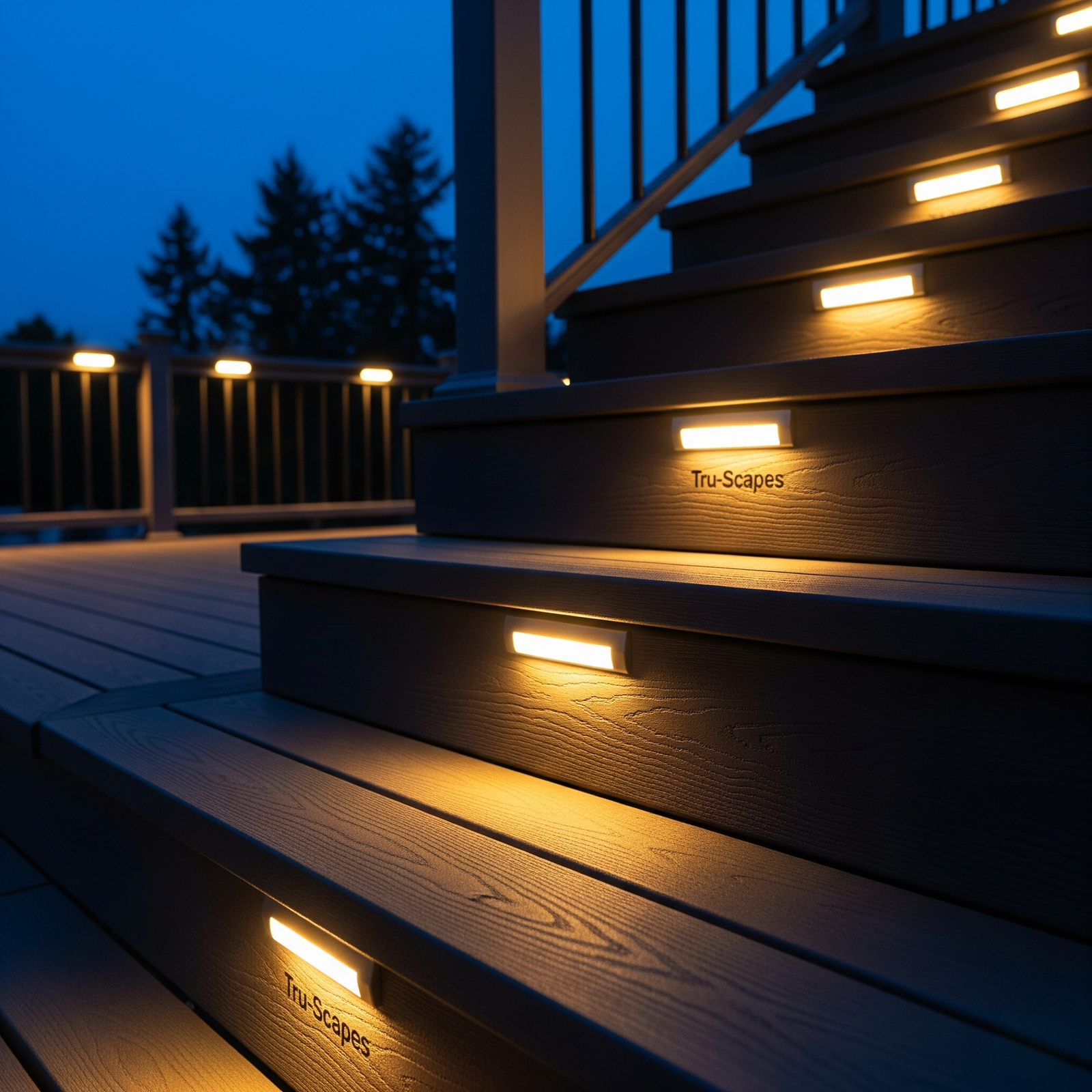
The short answer is: it depends. Deck lighting has come a long way. Today you can buy plug-and-play solar deck