- FREE Shipping on all orders! Limited time!
- support@tru-scapes.com

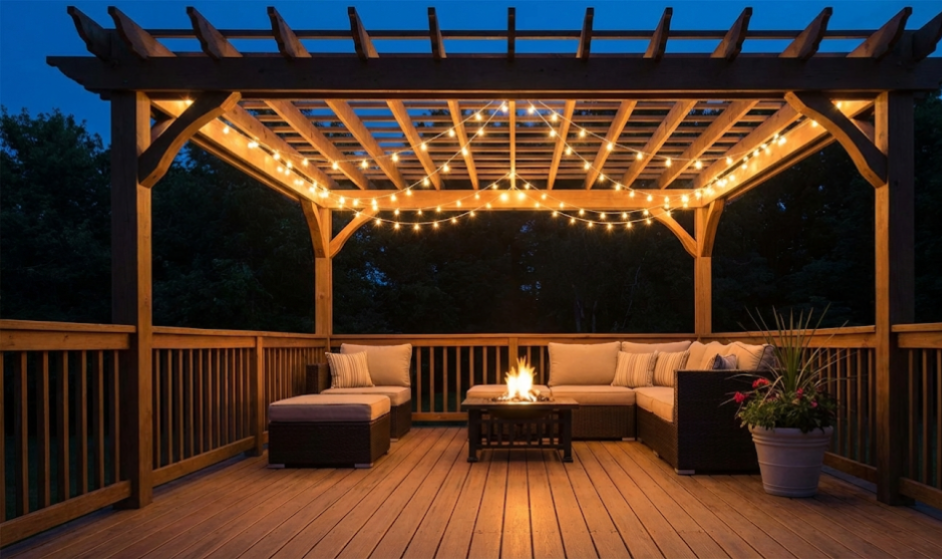
When it comes to extending the life and livability of your outdoor area, few upgrades deliver more impact than thoughtful deck lighting ideas. The right fixtures don’t just illuminate — they define the space, improve safety, and add genuine curb appeal after sunset. Whether you’re working with a modest platform deck or a sprawling multilevel outdoor retreat, a well-designed lighting plan can transform your outdoor space from a daytime-only feature into an all-hours destination.
This guide covers everything from planning your layout to choosing the right fixture types, voltage systems, and specific products that perform in real outdoor conditions.
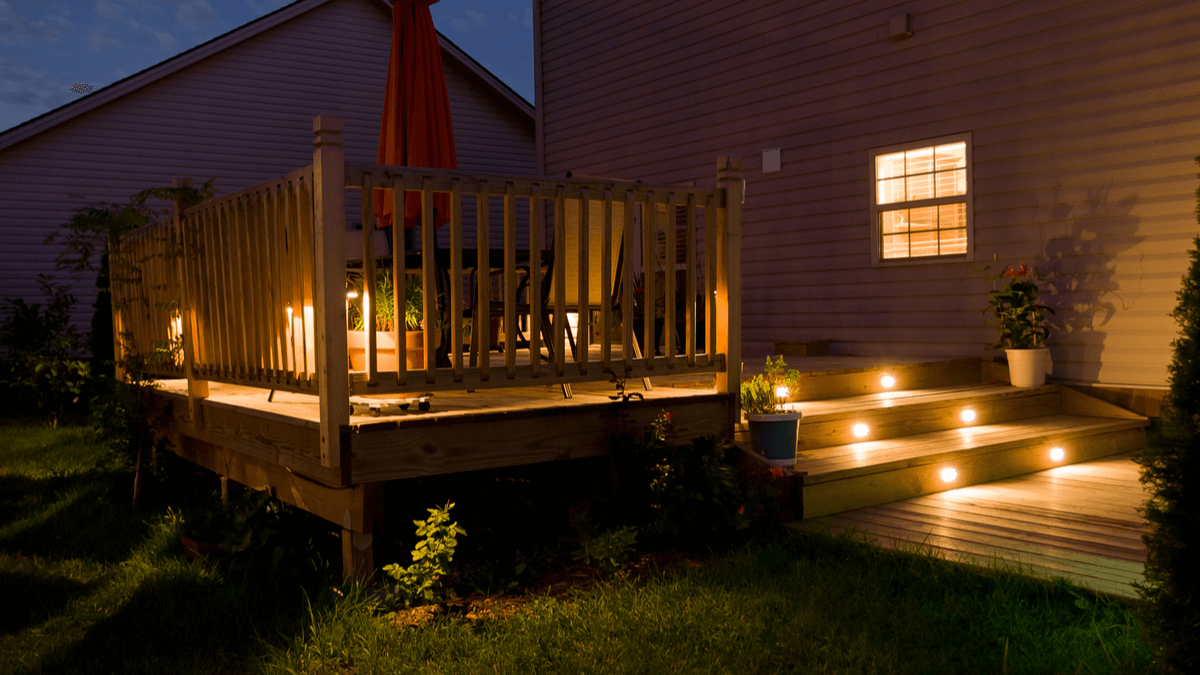
Outdoor deck lighting serves three distinct purposes: safety, aesthetics, and functionality. Most homeowners focus on aesthetics first, but safety should anchor your planning. Poorly lit steps and edges are a leading cause of outdoor fall injuries, according to the U.S. Consumer Product Safety Commission. Adequate deck lighting safety and step and perimeter lighting addresses this directly.
Beyond safety, well-executed deck accent lighting dramatically increases the hours you can use your outdoor space. Industry experts suggest that homes with professionally designed outdoor lighting see a measurable increase in the perceived value of their outdoor living areas — a detail real estate professionals frequently highlight during home assessments.
Functionality ties the two together. Lighting that works with your furniture arrangement and traffic flow makes your deck genuinely usable, not just photogenic.
Divide your deck into three functional zones before buying a single fixture:
The benefits of low voltage deck lighting make it the standard recommendation for residential decks. It’s safer to install, more energy-efficient than line-voltage systems, and compatible with a wide range of LED fixtures. A low voltage transformer connects to a standard outdoor outlet and powers the entire circuit.
If you need X — a large deck with many fixtures spread over a wide area — choose a transformer with at least 150–300 watts of capacity to avoid voltage drop at the far ends of your run.
Before purchasing fixtures, sketch a simple overhead map of your deck. Mark every stair, post, and railing section. This helps you calculate total wire length, identify where you’ll need junction points, and avoid running wire across high-traffic areas.
Match fixture types to the zones you defined:
Always do a dry-run test before permanently mounting fixtures. Connect your transformer, power the circuit, and walk the deck at night to identify dark spots or over-bright areas. Adjust fixture placement before final installation.
| Fixture Type | Best Use | Typical Voltage | Avg. Life (Hours) | Installation Difficulty |
| Step Riser Lights | Stair safety | 12V (low voltage) | 50,000+ | Low |
| Post Cap Lights | Perimeter accent | 12V (low voltage) | 50,000+ | Low |
| Dot Lights | Fascia / panel accent | 12V (low voltage) | 50,000+ | Low–Medium |
| Under-Rail Lights | Ambient fill | 12V (low voltage) | 50,000+ | Medium |
| String Lights | Overhead ambiance | 120V or solar | 15,000–25,000 | Low |
LED fixtures dominate all categories because they consume a fraction of the power of halogen alternatives and last significantly longer. According to theU.S. Department of Energy, LED bulbs use at least 75% less energy and last 25 times longer than traditional incandescent lighting. If you need a fixture that will hold up through harsh winters and humid summers, LED is the only practical choice for permanent deck installations.
| Factor | Low Voltage (12V) | Line Voltage (120V) |
| Safety | Safer — no shock risk at 12V | Higher risk if wire is damaged |
| Energy Use | Very efficient | Higher consumption |
| DIY-Friendly | Yes — no electrician needed in most states | Often requires licensed electrician |
| Brightness | Sufficient for all deck applications | Brighter, but often too harsh |
| Fixture Selection | Wide range of deck-specific options | More limited for deck use |
| Cost to Operate | Low | Higher |
If you need bright, consistent lighting across a large multilevel deck, low voltage LED fixtures with a quality transformer will match or exceed the practical performance of line voltage systems without the installation complexity or ongoing energy cost.
| ✅ Pros | ❌ Cons |
| Dramatically extends usable hours outdoors | Upfront cost of fixtures and transformer |
| Improves safety on stairs and edges | Requires occasional maintenance |
| Adds visual depth and dimension at night | Poor planning leads to uneven lighting |
| Color-changing LEDs offer year-round versatility | Color-changing fixtures cost more upfront |
| Low voltage systems are DIY-friendly | Wire management requires planning |
| Increases perceived home value | Solar alternatives lack consistent output |
| ✅ Do | ❌ Don’t |
| Plan your zones before buying fixtures | Buy fixtures without measuring wire runs first |
| Use low voltage LED for all permanent fixtures | Mix voltage systems on the same circuit |
| Light every stair riser for safety | Skip stair lighting to save money |
| Test placement at night before final install | Permanently mount before a night test |
| Match fixture finish to your deck hardware | Use indoor-rated fixtures outdoors |
| Use a transformer with 20–30% spare capacity | Max out your transformer at 100% load |
Consider a hypothetical homeowner in the Pacific Northwest with a 400-square-foot composite deck attached to the rear of a two-story home. The deck has 12 stairs, four corner posts, and a pergola structure along one side. Prior to lighting, the deck was unusable after 7 p.m. in the fall and winter months.
After installing deck stair safety lighting on all 12 stairs, color-changing deck lights on the four corner posts, and dot lights along the fascia of the pergola, the homeowner reported using the deck three to four evenings per week year-round — even in overcast Pacific Northwest conditions. The total system ran on a single 150-watt low voltage transformer, and energy costs were negligible compared to interior room lighting.
This scenario illustrates the compounding value of a complete lighting plan: each fixture type addressed a different zone, and together they created a genuinely functional outdoor space rather than a patchwork of bright spots.
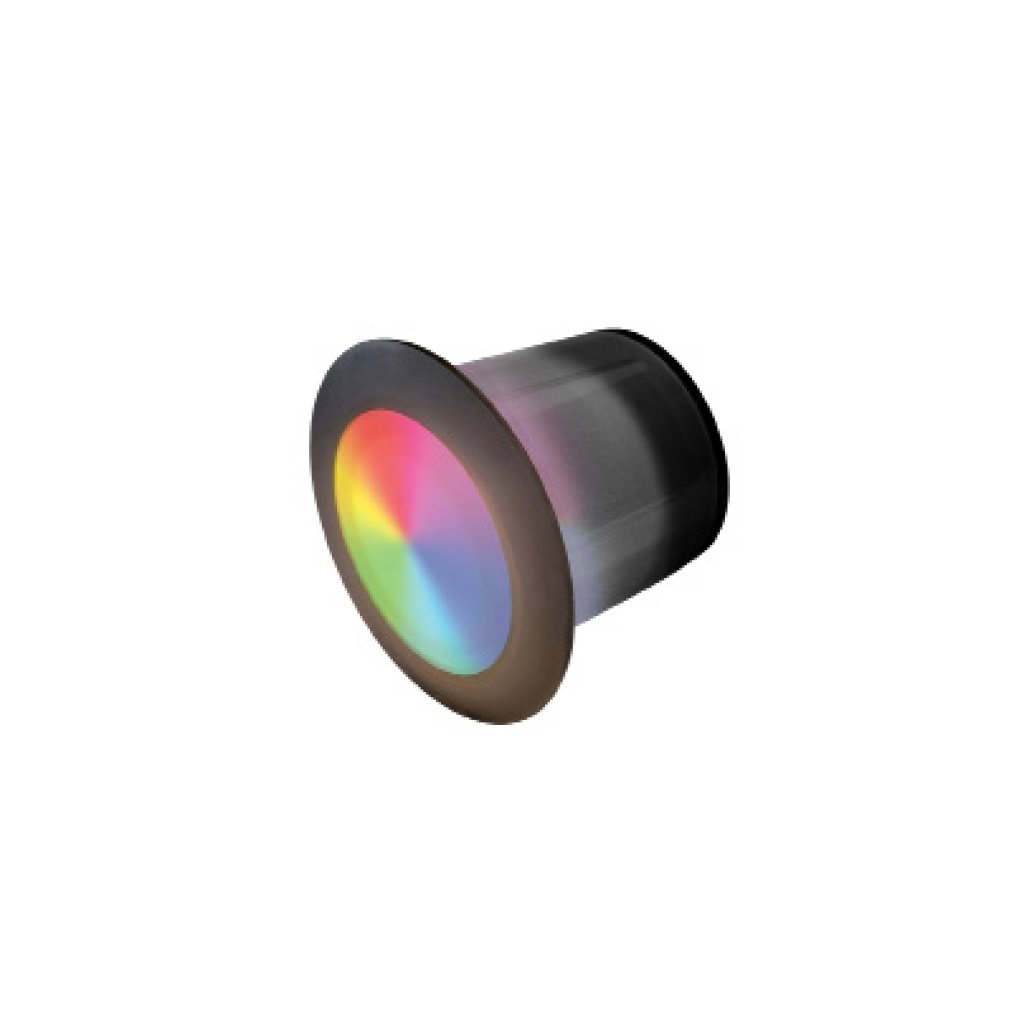
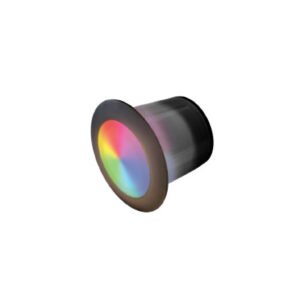
Tru-Scapes 2.5″ Traditional Color Changing Dot Light
This compact dot light is designed for fascia boards, stair stringers, and accent panels where you want subtle, color-adjustable illumination without bulk. The traditional profile blends cleanly with classic deck aesthetics, and the color-changing capability means you can shift the mood from warm white for everyday use to seasonal colors for holidays or entertaining.
Tru-Scapes 2.5″ Modern Color Changing Dot Light
The modern profile version of the 2.5″ dot light is built for contemporary deck designs with clean lines and minimal ornamentation. Like its traditional counterpart, it delivers full color-changing LED performance in a low-profile housing that sits flush with your deck’s surface materials. If you need a fixture that disappears into the architecture while still doing the lighting work, this is the right choice.
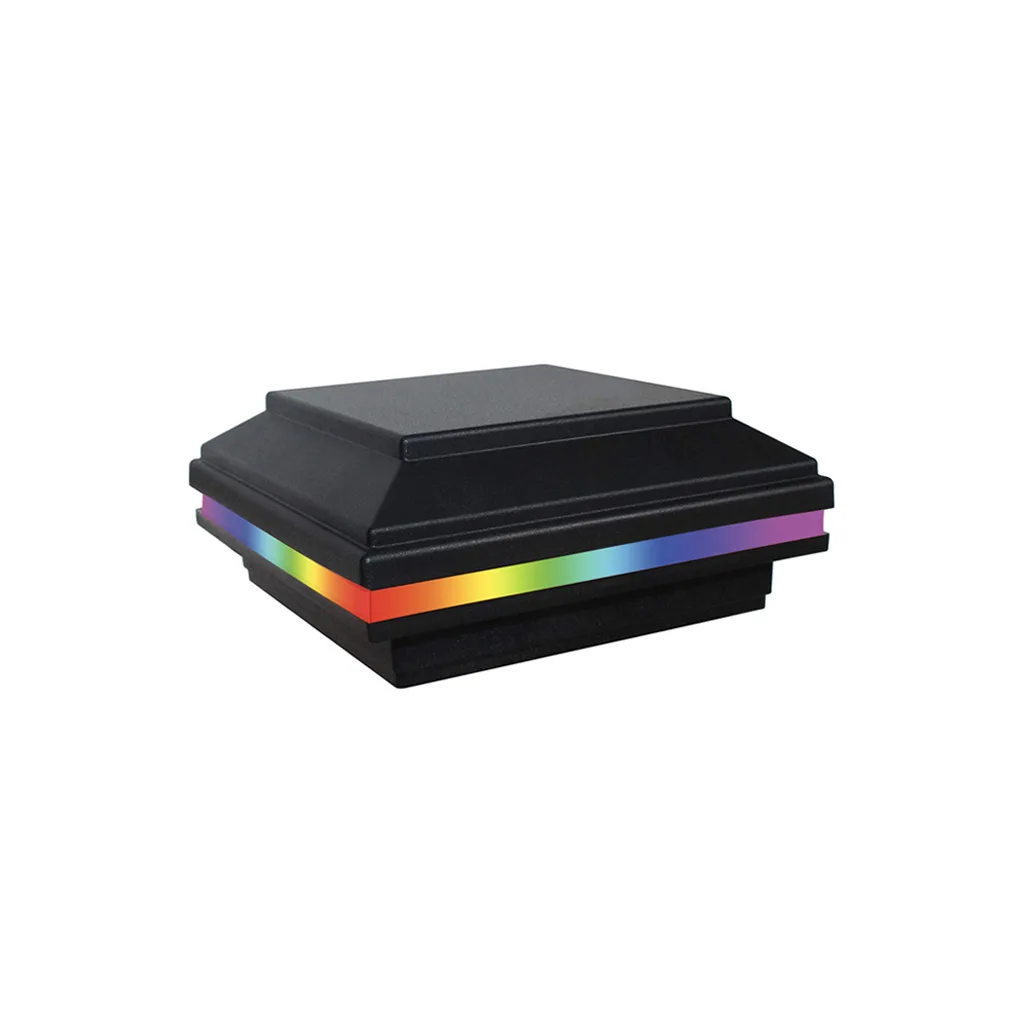
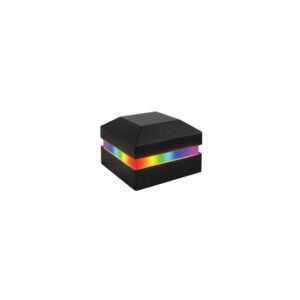
Tru-Scapes 4.5″ Composite Color Changing LED Post Cap Light
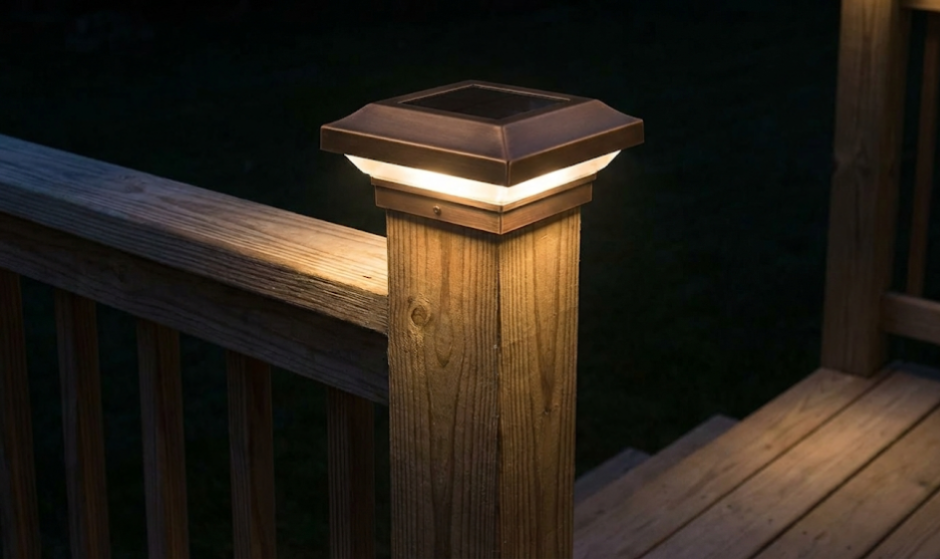
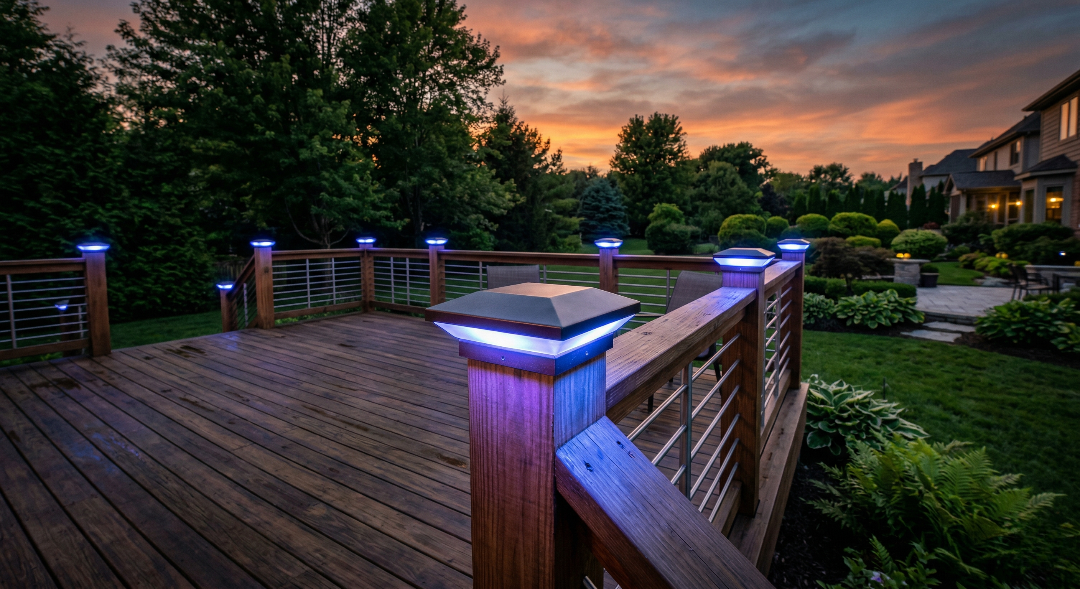
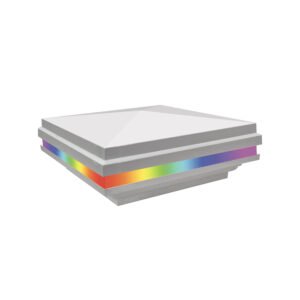
Engineered to fit Trex Transcend posts, this post cap light eliminates the compatibility guesswork that plagues many deck lighting projects. The composite construction holds up to outdoor weathering, and the color-changing LED array lets you coordinate perimeter lighting with your accent and step lighting for a unified look. Post cap lights like this one do double duty — they mark the boundaries of your deck space while casting enough light to define pathways and seating areas.
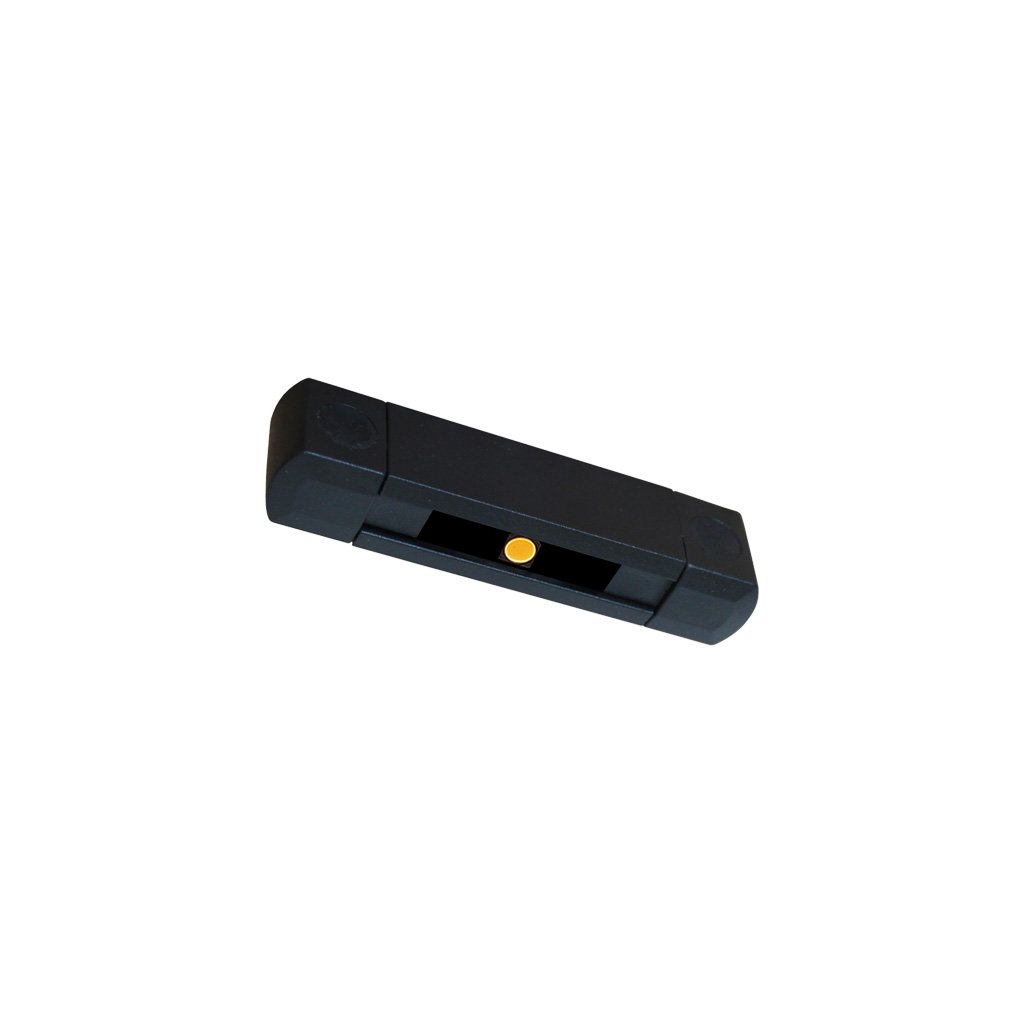
Tru-Scapes 3″ LED Deck Step Riser Light
Step riser lights are the single most important safety fixture on any deck with stairs, and this 3″ LED option from Tru-Scapes is built specifically for that application. Installed directly into the riser face of each stair, it casts a focused wash of light across the tread — eliminating the shadow zones that cause missteps. At 3 inches, it fits cleanly into standard composite and wood risers without requiring oversized cutouts.
Low voltage LED fixtures are widely considered the best choice for residential decks. They’re energy-efficient, long-lasting, safe to install without a licensed electrician in most jurisdictions, and available in a wide range of styles including step lights, post cap lights, and accent dot lights.
Step and safety lighting generally performs well in the 30–80 lumen range per fixture, which provides visibility without creating glare. Ambient and accent lighting can range from 10 to 50 lumens depending on the desired effect. The goal is layered, even illumination rather than one or two high-intensity sources. The Illuminating Engineering Society provides professional guidance on recommended lumen levels for residential outdoor spaces.
Yes — low voltage deck lighting systems are designed for DIY installation. You’ll need basic hand tools, a drill, a low voltage transformer rated for your total fixture load, and outdoor-rated wire. Most manufacturers provide detailed installation guides, and no electrical license is required for 12V systems in most U.S. states.
Voltage drop occurs when the wire run is too long for the gauge of wire being used. To prevent it, use 12-gauge wire for runs over 50 feet, connect fixtures in a loop rather than a daisy chain where possible, and use a transformer with sufficient wattage capacity. A transformer running at 70–80% of its rated load will maintain consistent voltage better than one running at full capacity.
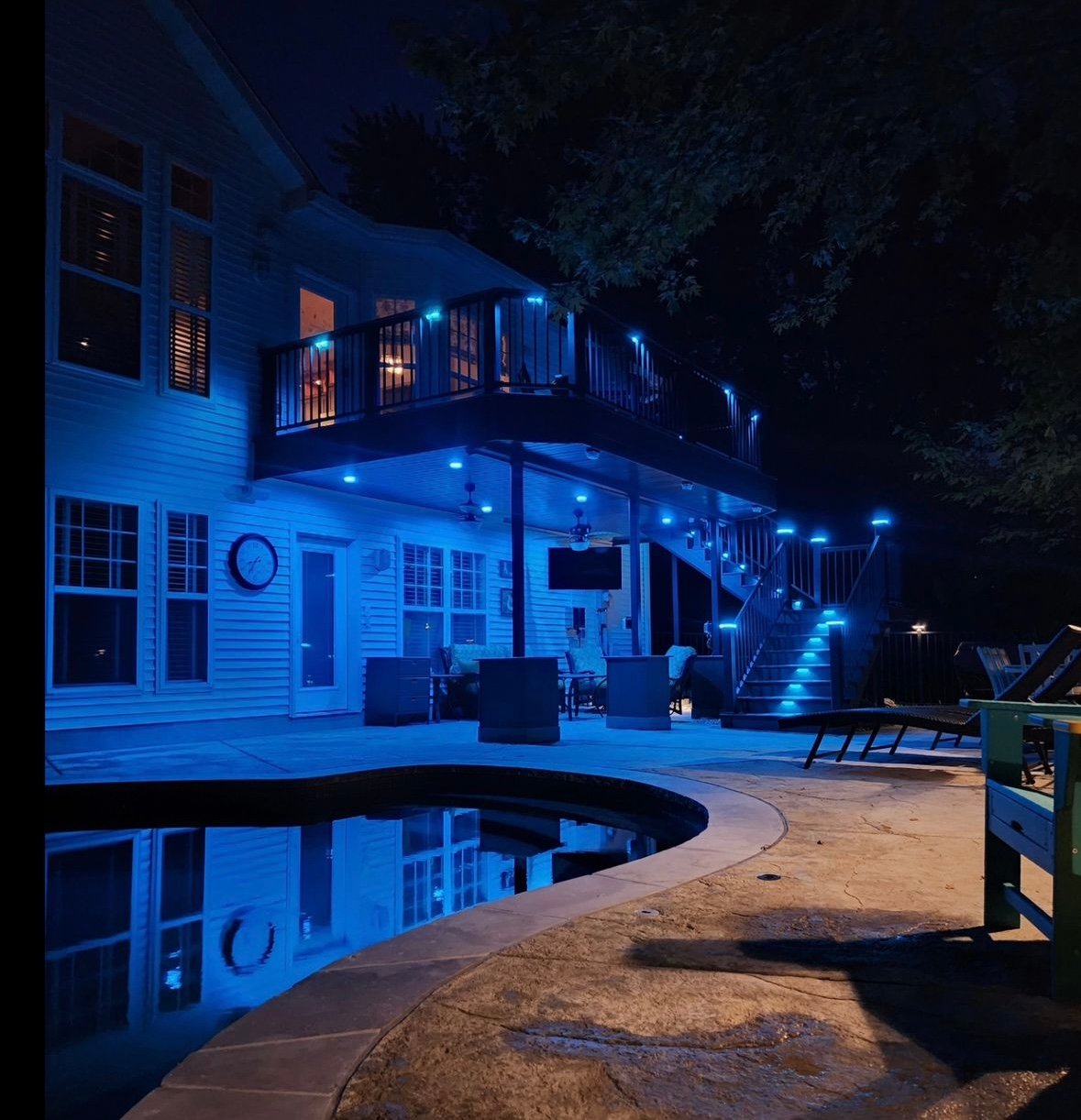
For homeowners who use their deck for entertaining, hosting seasonal gatherings, or simply want flexibility in how their outdoor space looks at night, color-changing deck lights offer genuine value. The premium over fixed-color LEDs is relatively modest, and the ability to switch from warm white to any color without replacing hardware is a long-term benefit.
Quality LED deck fixtures are rated for 50,000 hours or more of operation. At four hours of use per night, that translates to over 34 years of rated lifespan. In practice, outdoor exposure may reduce that somewhat, but LED deck lights routinely outlast the decks they’re installed on.
Match your fixture finish to your existing deck hardware — railing brackets, post hardware, and door hardware. Bronze and black finishes are the most versatile and tend to complement composite and natural wood decking equally well. Avoid bright chrome or silver finishes on decks, as they tend to show weathering and oxidation more visibly.
For safety and code compliance in most jurisdictions, every riser in a flight of stairs should be lit. Skipping risers creates uneven illumination that can actually be more disorienting than no lighting at all, as the eye struggles to judge depth between lit and unlit treads.
Many low voltage transformers now include Wi-Fi or Bluetooth controllers that are compatible with platforms like Amazon Alexa, Google Home, and Apple HomeKit. Learn more about integrating deck lights with your smart home to get the most out of color-changing fixtures and scheduled lighting changes.
Use outdoor-rated deck lighting fixtures and direct-burial wire for all deck lighting runs. Where wire passes through or under the deck framing, use conduit for added protection. Seal all fixture mounting holes with weatherproof sealant rated for exterior use, and choose fixtures with an IP65 or higher weatherproofing rating for maximum protection in wet climates.
Low Voltage Lighting: A lighting system that operates at 12 volts rather than the standard 120V household current. Low voltage systems are safer, more energy-efficient, and easier for homeowners to install without a licensed electrician.
Lumen: The unit of measurement for the total amount of visible light emitted by a source. In deck lighting, lumens help you gauge how bright a fixture will appear in real-world conditions rather than relying on wattage alone.
IP Rating (Ingress Protection): A standardized two-digit code that indicates how well an electrical fixture resists the intrusion of solid particles (first digit) and water (second digit). For outdoor deck lighting, a minimum IP65 rating is recommended, which indicates complete dust resistance and protection against direct water jets.
Voltage Drop: The reduction in electrical voltage that occurs over the length of a wire run, particularly relevant in low voltage systems. Excessive voltage drop causes LED fixtures to appear dim or produce inconsistent light output, and is addressed through proper wire gauge selection and transformer sizing.
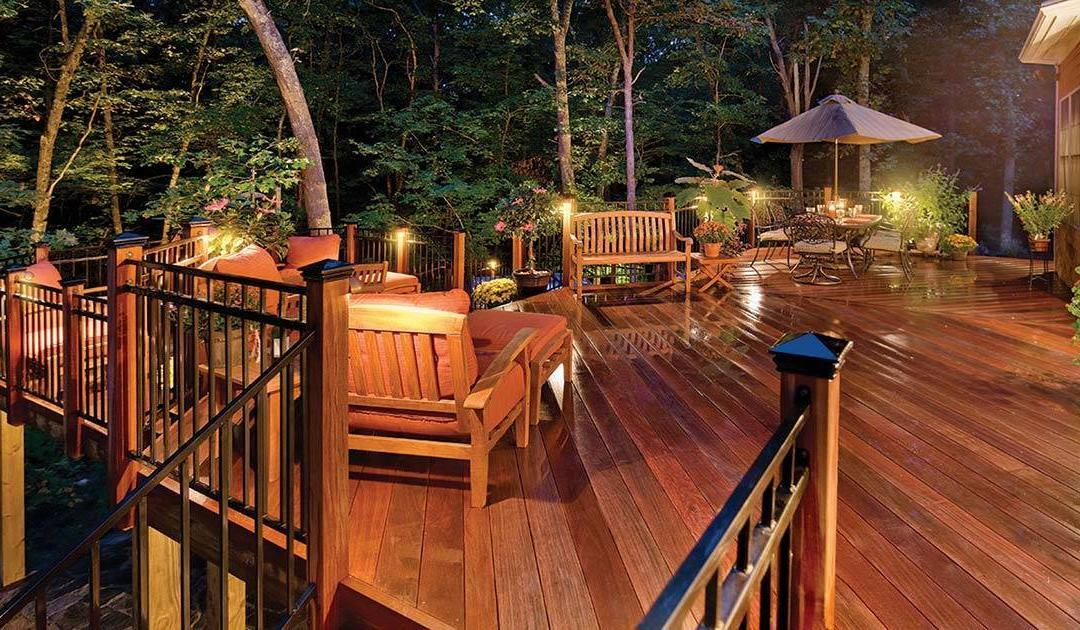
Transforming your outdoor space with the right deck lighting ideas comes down to one principle: plan your zones first, then match fixtures to function. Step riser lights handle safety, post cap lights define your perimeter, and accent dot lights add depth and visual interest that makes your deck genuinely enjoyable after dark.
Low voltage LED systems make all of this accessible for most homeowners without professional installation costs, and modern color-changing deck lights give you the flexibility to adapt the look of your space year-round. If you’re ready to start, the Tru-Scapes 3″ LED Deck Step Riser Light is the highest-impact first fixture for any deck — because a well-lit staircase is both the safest and most noticeable improvement you can make in a single evening.
Build your lighting plan zone by zone, start with safety, and add accent and ambient layers from there. Your deck will look — and function — like an entirely different space.
Homeowners ask the same thing before every deck project: are low voltage systems safe around kids, pets, bare feet, rain,
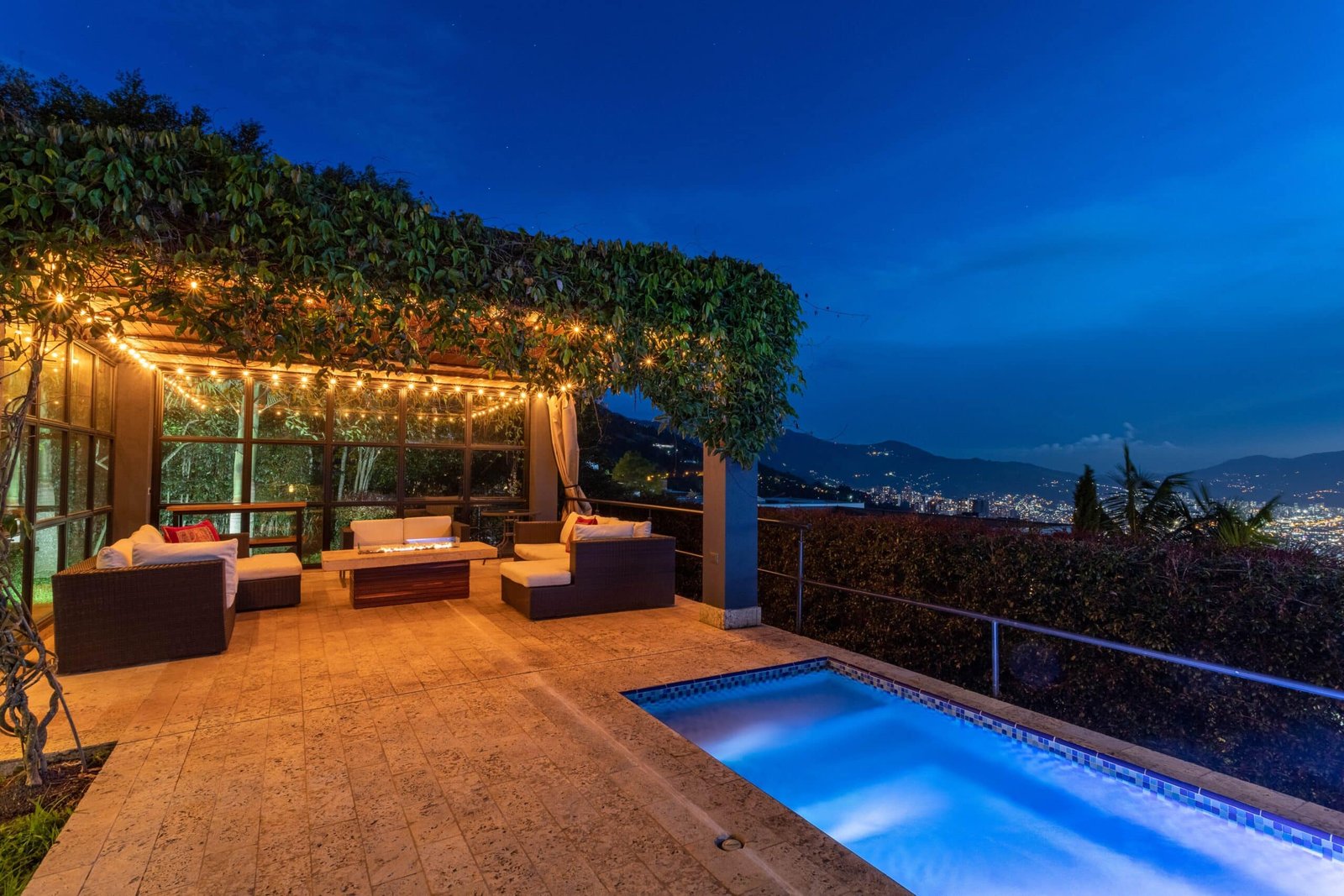
Most homeowners assume a lit deck means trenching, conduit, a transformer, and a licensed electrician. That assumption stops a lot