- FREE Shipping on all orders! Limited time!
- support@tru-scapes.com

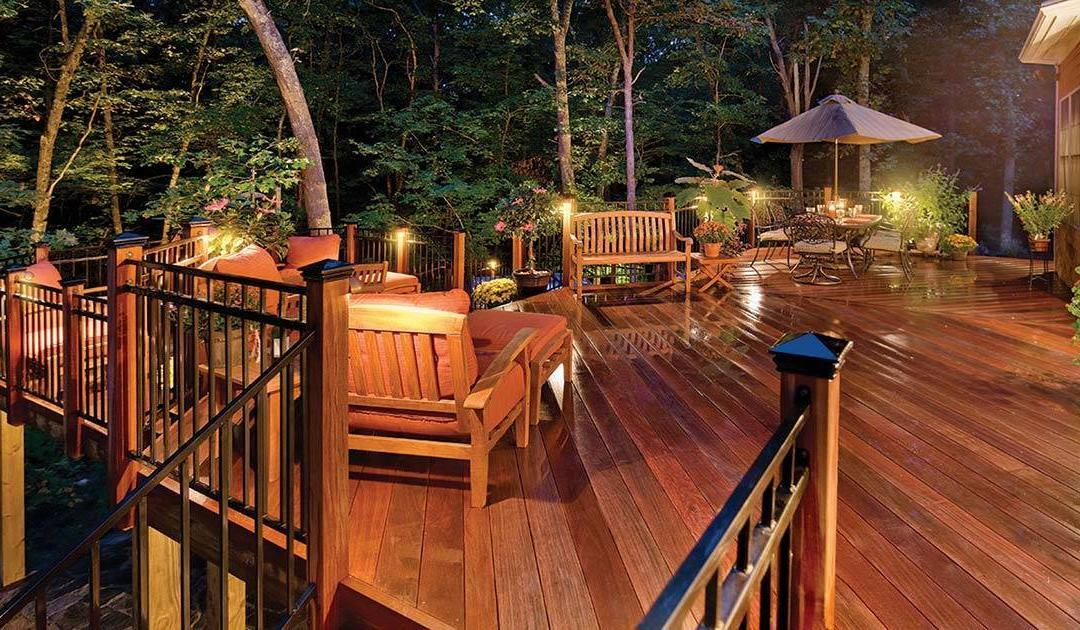
Outdoor deck lighting is one of the highest-impact upgrades any homeowner can make. The best deck lighting fixtures do more than just illuminate a space — they define the mood, extend the usable hours of your outdoor living area, and add genuine value to your property. Whether you’re hosting summer gatherings or unwinding after work, the right lighting transforms a plain wooden platform into an inviting outdoor room.
This guide walks you through every major category of deck lighting fixtures — from under deck lighting and recessed options to deck railing lights, post cap lights, and step lights. You’ll also find a comparison table, pros and cons breakdowns, a step-by-step installation overview, and an FAQ section to answer the questions homeowners ask most. By the end, you’ll know exactly which fixtures suit your deck and how to install them like a pro.
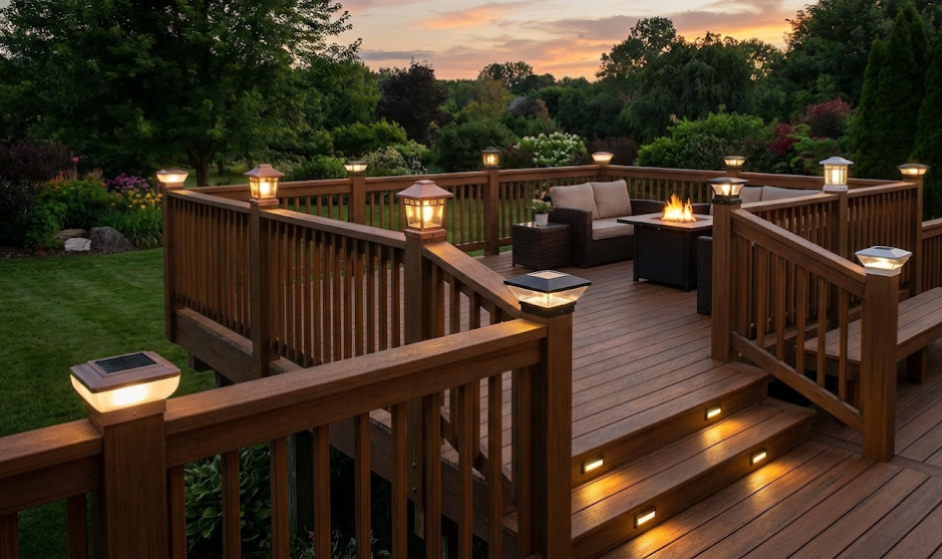
Deck lighting falls into several distinct categories, each serving different purposes. Understanding the differences helps you build a layered lighting plan that looks polished and functions well.
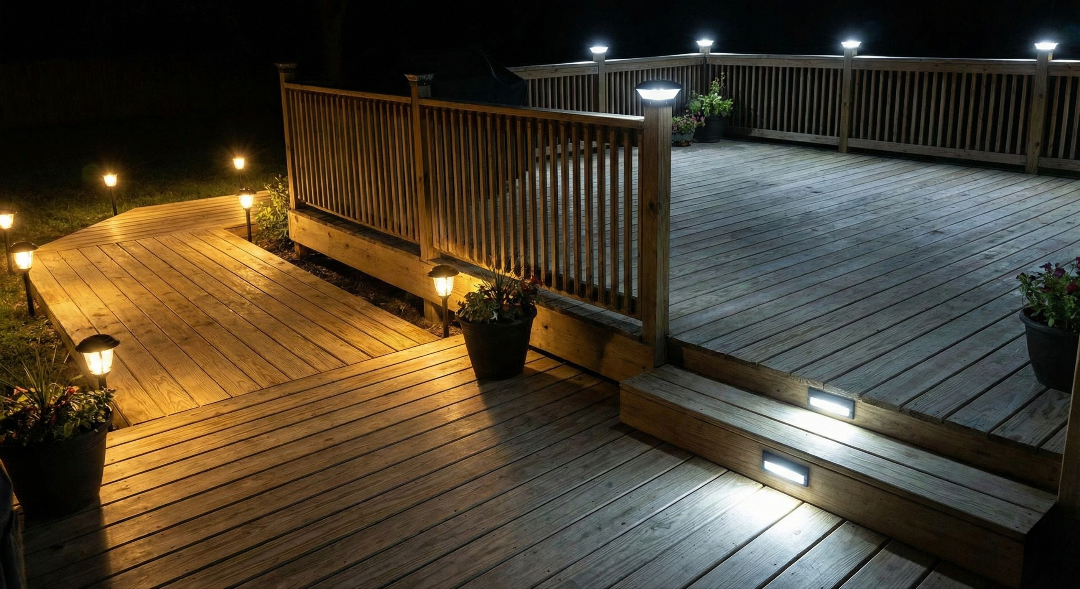
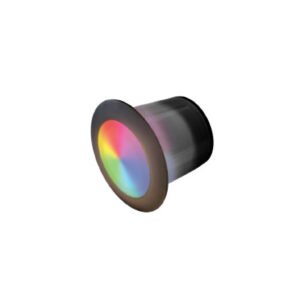
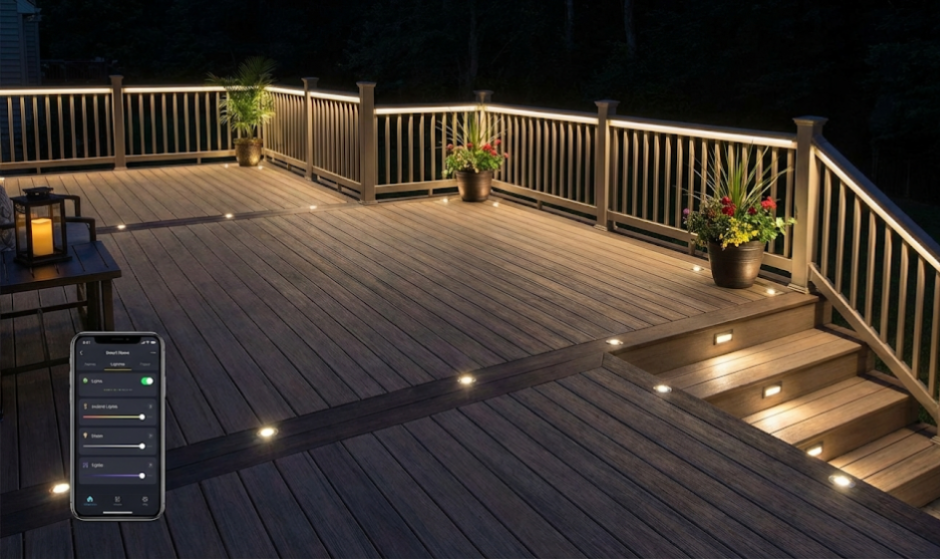
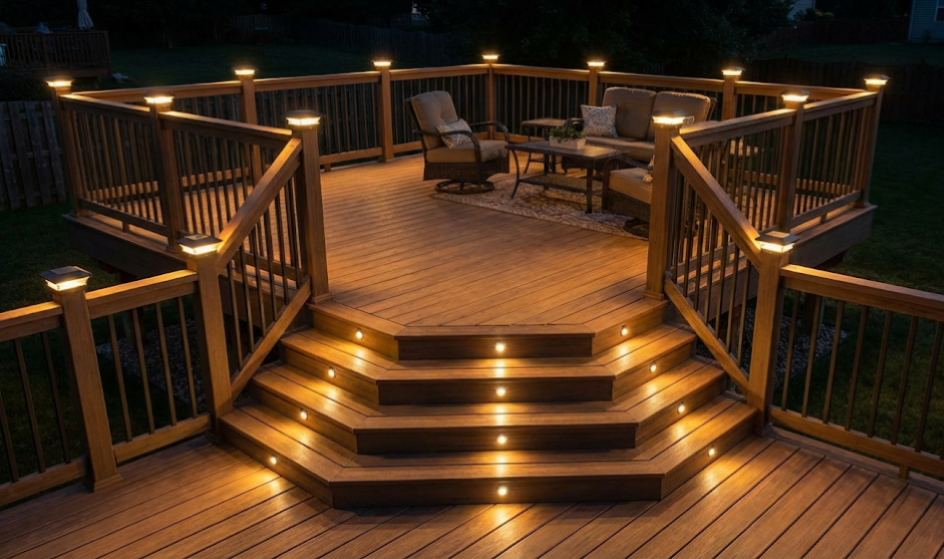
Modern recessed deck lighting sits flush with your deck surface or fascia board, creating a clean, contemporary look. These fixtures are popular in modern outdoor designs because they don’t protrude above the deck surface, reducing trip hazards and keeping the visual lines of the deck uncluttered. Most modern recessed lights use LED technology and are available in warm white, cool white, or color-changing versions. According to the American Lighting Association, LED fixtures consume up to 75% less energy than traditional incandescent equivalents.
If you want a minimalist deck aesthetic that still provides solid ambient lighting, recessed deck lighting is your best option.
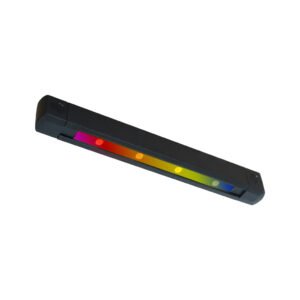
Deck railing lights attach directly to railing posts or balusters and cast light downward or outward. They’re available in solar, low-voltage, and line-voltage configurations. Rail-mount lights are ideal for decks that surround a patio or pool, as they provide perimeter illumination without requiring additional posts or fixtures. Many homeowners combine railing lights with deck step lighting to create a continuous glow around the entire deck edge.
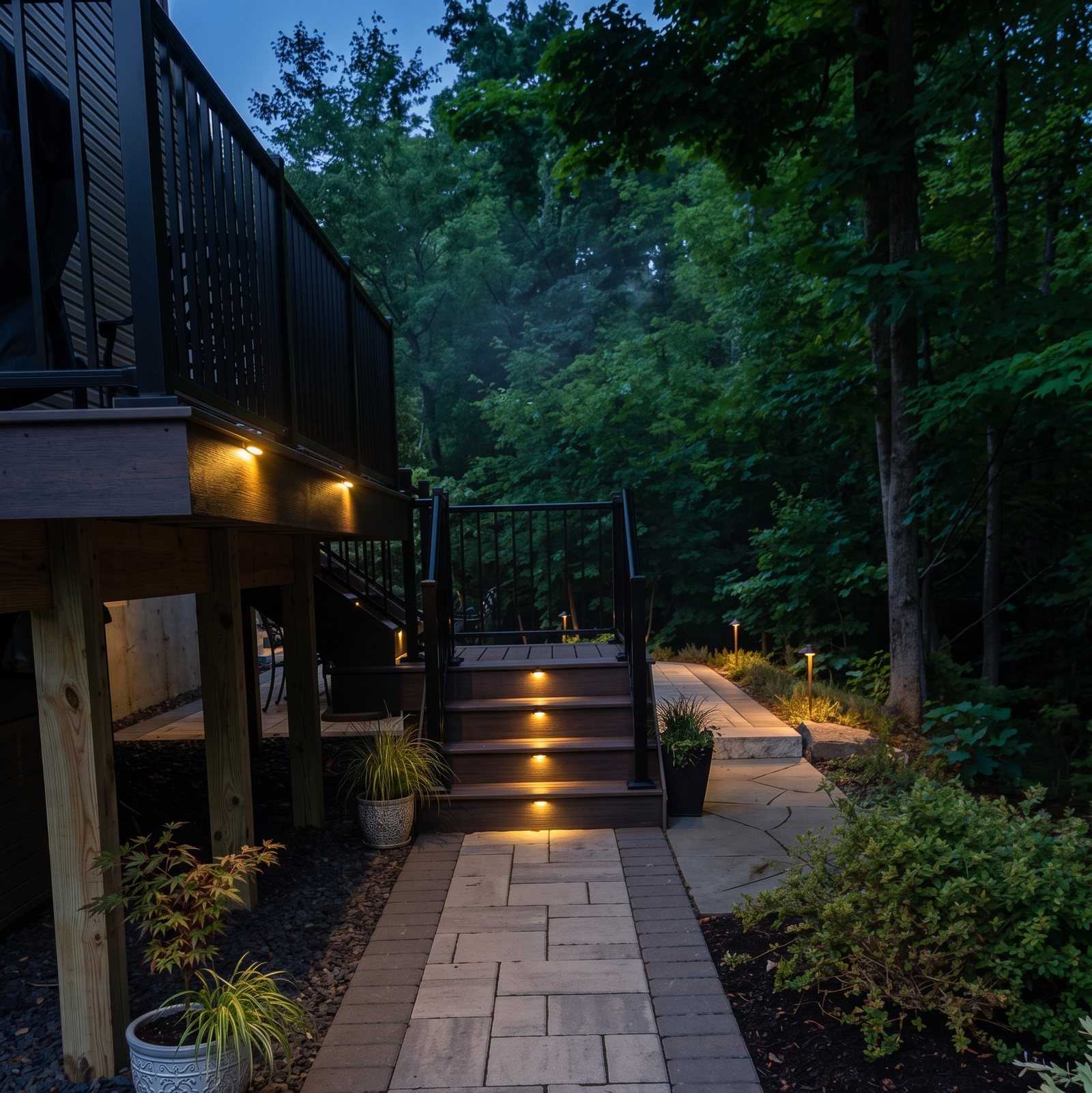
Proper deck step lighting is one of the most practical investments you can make. These small fixtures mount on the riser of each step and cast light downward onto the tread, dramatically reducing the risk of trips and falls. The National Safety Council identifies poor outdoor lighting as a significant contributing factor to residential fall injuries, a concern further highlighted by safety data from the U.S. Consumer Product Safety Commission regarding home safety. Step lights are typically low-voltage or solar-powered, making them easy to install without an electrician.
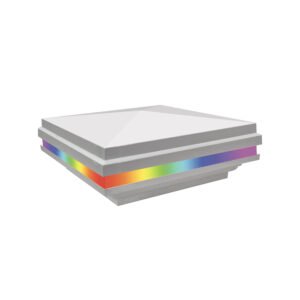
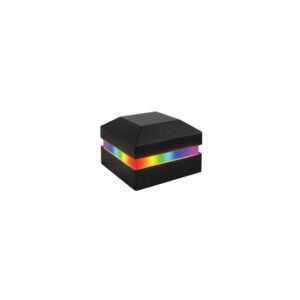
Deck post cap lights sit on top of the railing posts and provide both functional illumination and decorative flair. They’re one of the easiest deck upgrades available — in many cases, you simply replace an existing post cap with a solar or low-voltage version. Post cap lights come in a wide range of styles, from classic lantern shapes to sleek contemporary domes, making them easy to match with any deck aesthetic.
Under deck lighting is installed on the underside of the deck joists or decking boards and illuminates the space below the deck. This type of lighting is especially popular on elevated decks where the area underneath is used as additional covered living space. Under deck lighting can also serve as a dramatic uplighting effect, casting warm light up through the deck boards for a sophisticated nighttime look.
Deck lighting kits bundle multiple fixture types — often a transformer, cable, connectors, and an assortment of step lights, railing lights, and accent lights — into a single purchase. Kits are ideal for homeowners tackling a full deck lighting project for the first time, as they simplify sourcing and ensure all components are compatible. Brands like Dekor and VOLT Lighting offer well-regarded kits that are popular among DIY enthusiasts and professional landscapers alike.
| Fixture Type | Best For | Power Source | Avg. Price Range | DIY Friendly |
|---|---|---|---|---|
| Recessed Deck Lights | Modern, flush look | Low-voltage / Line | $15–$60 each | Moderate |
| Railing Lights | Perimeter safety lighting | Solar / Low-voltage | $10–$40 each | Yes |
| Step Lights | Stair safety | Solar / Low-voltage | $8–$35 each | Yes |
| Post Cap Lights | Decorative accent | Solar / Low-voltage | $12–$50 each | Yes |
| Under Deck Lighting | Elevated deck ambiance | Low-voltage / Line | $20–$80 each | Moderate |
| Deck Lighting Kits | Complete projects | Low-voltage | $100–$400/kit | Yes |
Low-voltage systems operate at 12V and are safe for DIY installation in most U.S. states without a permit. Here’s a straightforward process to get your deck lighting up and running:
When deciding between power sources, our guide on comparing Solar and Low-Voltage options offers a deeper dive. Below is a quick summary:
Pros:
Cons:
Pros:
Cons:
DO:
DON’T:
Choosing the right fixtures depends on your specific situation. Here are two conditional guidelines that cover the most common scenarios homeowners face:
If you have a raised deck with an enclosed underside: Choose under deck lighting or recessed deck lighting installed in the soffit. These fixtures provide ambient illumination for the covered area below and can double as safety lighting for the steps leading down from the main deck level.
If you want a low-effort upgrade with high visual impact: Deck post cap lights and solar railing lights are your best bet. Both can be installed in under an hour with no wiring knowledge, and they immediately improve the nighttime appearance of any deck.
(Note: The following is a hypothetical example for illustrative purposes.) The Peterson family has a 400-square-foot ground-level deck in the Midwest. Their goal was to extend evening use through fall. They installed a low-voltage kit that included: six step lights on a three-step staircase, eight railing lights spaced evenly along the perimeter, four post cap lights, and two recessed accent lights near the grill area. Total project cost: approximately $320 for fixtures and a 150W transformer. Installation time: roughly four hours. Result: the deck became usable until 10 p.m. even in October, and they reported that guests consistently commented on the welcoming atmosphere.
Q: What are the best deck lighting fixtures for a modern home? A: Recessed deck lighting and low-voltage LED railing lights are the top choices for modern homes. They offer clean lines, energy efficiency, and a wide range of styles to match contemporary architecture.
Q: Are solar deck lights worth buying? A: Solar deck lights are a good option for areas that receive consistent direct sunlight. However, they are less reliable in shaded decks or climates with limited winter sun. Low-voltage wired lights offer more consistent performance.
Q: What does IP65 mean for waterproof deck lights? A: IP65 is an Ingress Protection rating that indicates a fixture is fully dust-tight and protected against water jets from any direction. For deck lighting, IP65 or IP67 rated fixtures are recommended for long-term durability.
Q: How much does it cost to install deck lighting? A: A basic DIY low-voltage deck lighting kit typically costs between $100 and $400. Professional installation by an electrician can add $200 to $600 depending on your region and the complexity of the project.
Q: What color temperature is best for outdoor deck lighting? A: Warm white at 2700K to 3000K is ideal for deck lighting. It creates a comfortable, inviting atmosphere. Cool white (4000K+) can feel harsh outdoors and is better suited for task-oriented areas like outdoor kitchens.
Q: Do I need a permit to install deck lighting? A: Low-voltage (12V) systems generally do not require a permit in most U.S. jurisdictions. Line-voltage (120V) installations typically do require a permit and may need to be performed by a licensed electrician to comply with the guidelines within the National Electrical Code. Always check with your local building department.
Q: How do I prevent voltage drop in my deck lighting system? A: Use 12-gauge wire for runs longer than 50 feet, and keep total cable runs under 150 feet where possible. You can also use a daisy-chain or T-connection layout to distribute load more evenly.
Q: Can I install deck lighting myself? A: Yes, most homeowners can successfully install low-voltage and solar deck lighting without professional help. Line-voltage systems should be installed by a licensed electrician to comply with the National Electrical Code.
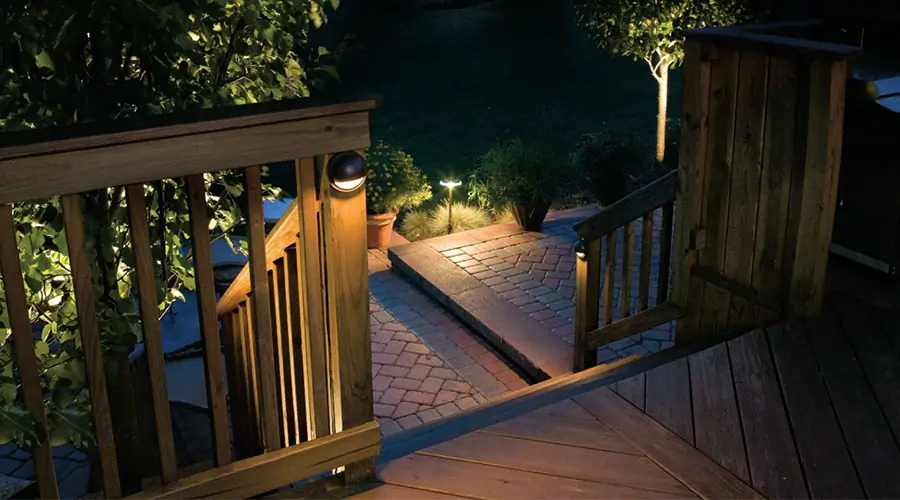
Great outdoor deck lighting is a combination of smart planning, the right fixture selection, and quality installation. Whether you start simple with a few solar post cap lights or go all-in with a full low-voltage system featuring recessed deck lighting, railing lights, and step lights, the payoff in safety, beauty, and extended outdoor enjoyment is well worth the investment.
The best deck lighting fixtures are the ones that match your deck’s style, work within your budget, and hold up to your local climate. Use the comparison table and do/don’t guidelines in this article to narrow your choices, and don’t be afraid to start small and expand your system over time.
Ready to upgrade your outdoor space? Start with a complete deck lighting kit to get coordinated fixtures at the best value, then add accent lights as your budget allows. Your evenings outside will never be the same.
KEY TAKEAWAYS A deck can pass every structural check and still fail inspection because of a light. Many Pennsylvania homeowners
Key Takeaways Every deck lighting project hits the same fork early on: run your fixtures at 12 volts through a