- FREE Shipping on all orders! Limited time!
- support@tru-scapes.com


Adding waterproof deck lights to your outdoor space does more than set the mood for a summer cookout. Done right, deck lighting extends usable hours after sunset, improves safety on steps and railings, and adds measurable curb appeal. Done wrong, you end up with corroded fixtures, tripped breakers, and a deck that looks worse than before.
This guide breaks down everything you need to evaluate before you buy: IP waterproofing ratings, fixture types, power options, and installation best practices. Whether you’re outfitting a first-floor patio or a multi-level raised deck, the same core principles apply.
The Ingress Protection (IP) rating system, defined by the International Electrotechnical Commission (IEC), is the clearest way to evaluate how well a light fixture resists moisture and debris. You’ll see ratings like IP44, IP65, or IP67 stamped on packaging or spec sheets.
The first digit measures protection against solid objects (dust, dirt); the second measures protection against water. For deck lighting fixtures exposed to rain and seasonal moisture, the National Electrical Manufacturers Association (NEMA) and most electrical code authorities recommend a minimum rating of IP65. If you are unsure which rating fits your specific climate, review our guide on choosing weatherproof deck lights for a detailed breakdown.
| IP Rating | Water Protection Level | Best Use Case |
|---|---|---|
| IP44 | Splash-proof from all directions | Covered porches, pergolas |
| IP55 | Low-pressure water jets | Open deck railings, step risers |
| IP65 | High-pressure water jets | Most exposed deck locations |
| IP67 | Temporary submersion (1 m / 30 min) | Flush-mount or recessed deck lighting |
| IP68 | Continuous submersion | In-ground or pond-edge fixtures |
If you need fixtures for an uncovered deck that gets direct rain, choose IP65 or higher. If you are installing recessed deck lighting flush with the deck boards where standing water may collect, IP67 is the safer choice.
Outdoor deck lighting comes in several categories. Each serves a different functional purpose, and most well-designed decks combine at least two or three types.
Deck step lighting mounts into the vertical face (riser) of each step. These fixtures cast light downward to illuminate the tread surface, reducing trip-and-fall risk. They are typically low-voltage (12V) LED fixtures that connect to a central transformer. The Electrical Safety Foundation International consistently identifies improperly lit steps as one of the top causes of outdoor fall injuries. To ensure your stairs are safe, explore our resources on stair lights for decks ensuring safety.
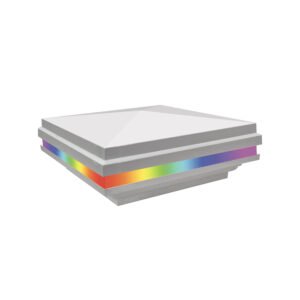
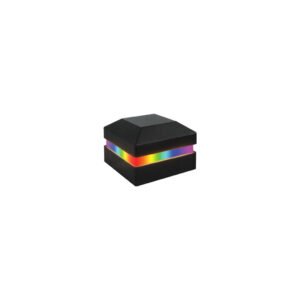
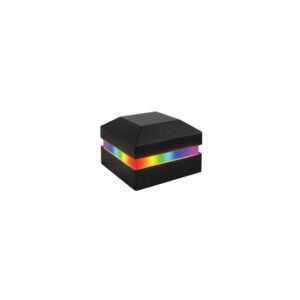
Post cap lights mount on top of 4×4 or 6×6 railing posts, producing a warm wash of light at waist-to-shoulder height. They are excellent for general ambient lighting and come in solar, low-voltage, and line-voltage versions. If you need path definition without hardwiring, solar deck post cap lights offer zero installation complexity.
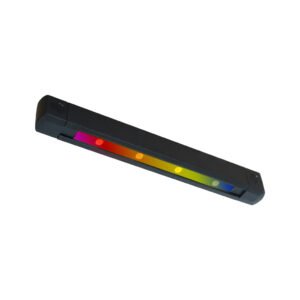
Deck railing lights attach along the top rail or the balusters themselves. String-style railing lights create a festive look; strip LED railing lights offer a more modern, architectural finish. Railing lights are especially effective on multi-story decks where overhead light sources are impractical.
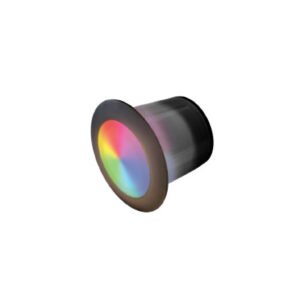
Recessed deck lighting (also called in-deck lights or puck lights) installs flush into the deck surface or fascia boards. Because they sit at foot level, they create dramatic shadow lines and are popular in contemporary deck designs. This fixture type requires IP67 or higher because water pools on the deck surface directly over the lens.
Under deck lighting systems attach to the underside of the joists or the ceiling of an enclosed under-deck living area. They serve dual purposes: they illuminate the space below and can project ambient light upward through deck board gaps. If you’ve finished the space beneath your deck as an outdoor room, under deck lighting turns it into a true year-round living area.
Deck lighting kits bundle a transformer, cable, connectors, and a set of fixtures (most commonly step lights and post cap lights) into a single package. They are designed to simplify installation and ensure electrical compatibility. Industry experts suggest that kits reduce wiring errors by standardizing voltage and connector types. If you’re new to low-voltage outdoor wiring, a deck lighting kit is almost always the right starting point.
Deck lighting runs on one of three power systems, each with meaningful trade-offs.
| Feature | Low-Voltage (12V) | Line-Voltage (120V) | Solar |
|---|---|---|---|
| Safety | High — safe to handle | Moderate — must follow code | High — no wiring |
| Brightness | Moderate to high | Very high | Low to moderate |
| Installation | DIY-friendly | Electrician recommended | No installation needed |
| Running Cost | Low (LED) | Higher | Zero |
| Reliability | Consistent | Most consistent | Weather-dependent |
If you need consistent brightness and are comfortable with a transformer install, low-voltage LED is the most popular choice for most residential decks in the United States. Learn more about the benefits of low-voltage deck lighting to see why it’s often the smart choice. If you need accent or post-cap lighting with zero installation effort, solar is a reasonable option in sunbelt states. Line-voltage systems make sense for large commercial-grade decks or when integrating with an existing outdoor electrical panel.
Nearly all new outdoor deck lighting fixtures use LED technology, and for good reason. Here is a side-by-side breakdown.
LED Deck Lights
Pros:
Cons:
Incandescent Deck Lights
Pros:
Cons:
Industry experts consistently recommend LED for waterproof outdoor deck lighting due to the dramatic total-cost-of-ownership advantage over a five-to-ten-year deck lifespan.
DO:
DON’T:
This guide covers a standard low-voltage LED deck lighting kit installation. Always verify local codes before beginning any electrical work.
(Hypothetical scenario based on common homeowner projects)
A homeowner in the mid-Atlantic region had a 500-square-foot two-level deck that was completely dark after sunset, limiting its use to daylight hours. She installed a 300W low-voltage transformer, eight recessed deck lighting puck lights (IP67 rated) in the upper deck surface, four deck step lights on each stair run, and solar deck post cap lights on all 12 railing posts.
Total fixture cost came in at roughly $400–$600 using a mid-range deck lighting kit plus add-on fixtures. The install took a single weekend with two people. Within the first month, she reported using the deck 3–4 evenings per week after dark — something she had never done before. The recessed lights and step lights ran on the hardwired transformer; the solar post caps required zero wiring. The combination of systems eliminated both dark zones and electrical complexity. This project is a perfect example of how to layer lighting on your deck for a balanced design.
What IP rating do I need for outdoor deck lights? For most exposed deck locations, a minimum of IP65 is recommended. For recessed deck lighting installed flush with deck boards where water can pool, choose IP67 or higher.
Are deck lighting kits worth it? Yes, especially for first-time installers. Deck lighting kits include matched components that simplify wiring and reduce compatibility issues. They typically cost less than buying the transformer, wire, and fixtures separately.
Can I install deck lights myself? Low-voltage (12V) deck lighting is DIY-friendly and does not require an electrician in most jurisdictions. Line-voltage (120V) outdoor wiring typically requires a licensed electrician and a permit.
What is the best type of light for deck steps? Deck step lighting installed in the stair risers is the safest and most effective option. They direct light onto the tread surface exactly where it is needed and are available in low-voltage LED formats with IP65 or IP67 ratings.
How many lumens do deck lights need? Step lights and recessed accent lights typically perform well in the 30–100 lumen range. Post cap lights and overhead-style outdoor deck lighting may range from 200–800 lumens depending on the intended coverage area.
What is under deck lighting? Under deck lighting refers to fixtures mounted on the underside of deck joists or on the ceiling of an enclosed under-deck room. It illuminates the lower living space while providing ambient uplight through deck board gaps.
Do waterproof deck lights work in winter? Most IP65+ rated fixtures are designed for year-round use including temperatures well below freezing. Check the manufacturer’s rated operating temperature range; most quality LED fixtures are rated down to -22°F (-30°C). For more advice, check out our winter-proof deck lighting tips.
Can I connect deck lights to a smart home system? Yes. Many low-voltage transformers now include Wi-Fi or Z-Wave modules compatible with Amazon Alexa, Google Home, and Apple HomeKit. You can also use a smart outdoor plug between the outlet and a standard transformer. Learn more about smart deck lighting integrating with your home automation.
What is the difference between deck railing lights and deck step lights? Deck railing lights attach to the top rail or balusters to create ambient and boundary lighting. Deck step lighting mounts in the stair risers specifically to illuminate treads for safe footing.
How long do outdoor LED deck lights last? Quality outdoor LED deck lights typically last 25,000 to 50,000 hours. At 5 hours of use per night, that equals 13 to 27 years of operation before replacement is needed.
IP Rating (Ingress Protection Rating): A two-digit code defined by the International Electrotechnical Commission (IEC) that indicates how well an enclosure resists the entry of solids and liquids. For outdoor deck lighting, the second digit (water protection) is the most critical number to evaluate.
Low-Voltage Lighting: An outdoor lighting system that operates at 12 volts DC, powered by a step-down transformer connected to standard 120V household current. Low-voltage systems are safer to work with than line-voltage systems and are the standard choice for residential deck lighting installations.
GFCI (Ground Fault Circuit Interrupter): An electrical safety device required by the National Electrical Code (NEC) for all outdoor receptacles. A GFCI outlet monitors current flow and trips the circuit within milliseconds if it detects a ground fault, protecting users from electric shock near water.
Color Temperature (Kelvin): A measurement in degrees Kelvin (K) that describes the appearance of light from warm yellow-white (2700K) to cool blue-white (5000K+). For outdoor deck lighting, 2700K–3000K is the most common choice because it creates a welcoming, natural ambiance without the harshness of cool-white light.
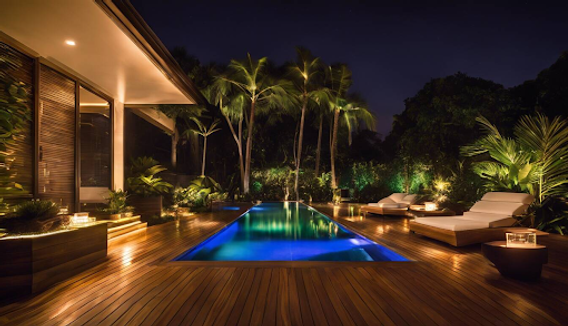
Waterproof deck lights are not a luxury — on a well-used outdoor deck, they are a safety and lifestyle essential. The key decisions come down to four things: choosing fixtures with the right IP rating for your specific exposure conditions, selecting the appropriate fixture types for your deck’s design and use, matching your power system to your DIY comfort level, and using LED technology throughout to keep long-term costs low.
Start with a solid deck lighting kit that includes matched components, add recessed deck lighting or step lights in your highest-traffic zones, and don’t overlook the ambiance that well-placed post cap lights and railing lights can deliver. If you’re ready to plan your project, explore the best types of deck lighting or connect with a lighting specialist for a personalized recommendation.
Color-changing outdoor lights have a reputation problem. Done poorly, they turn a beautiful backyard into something that looks like a
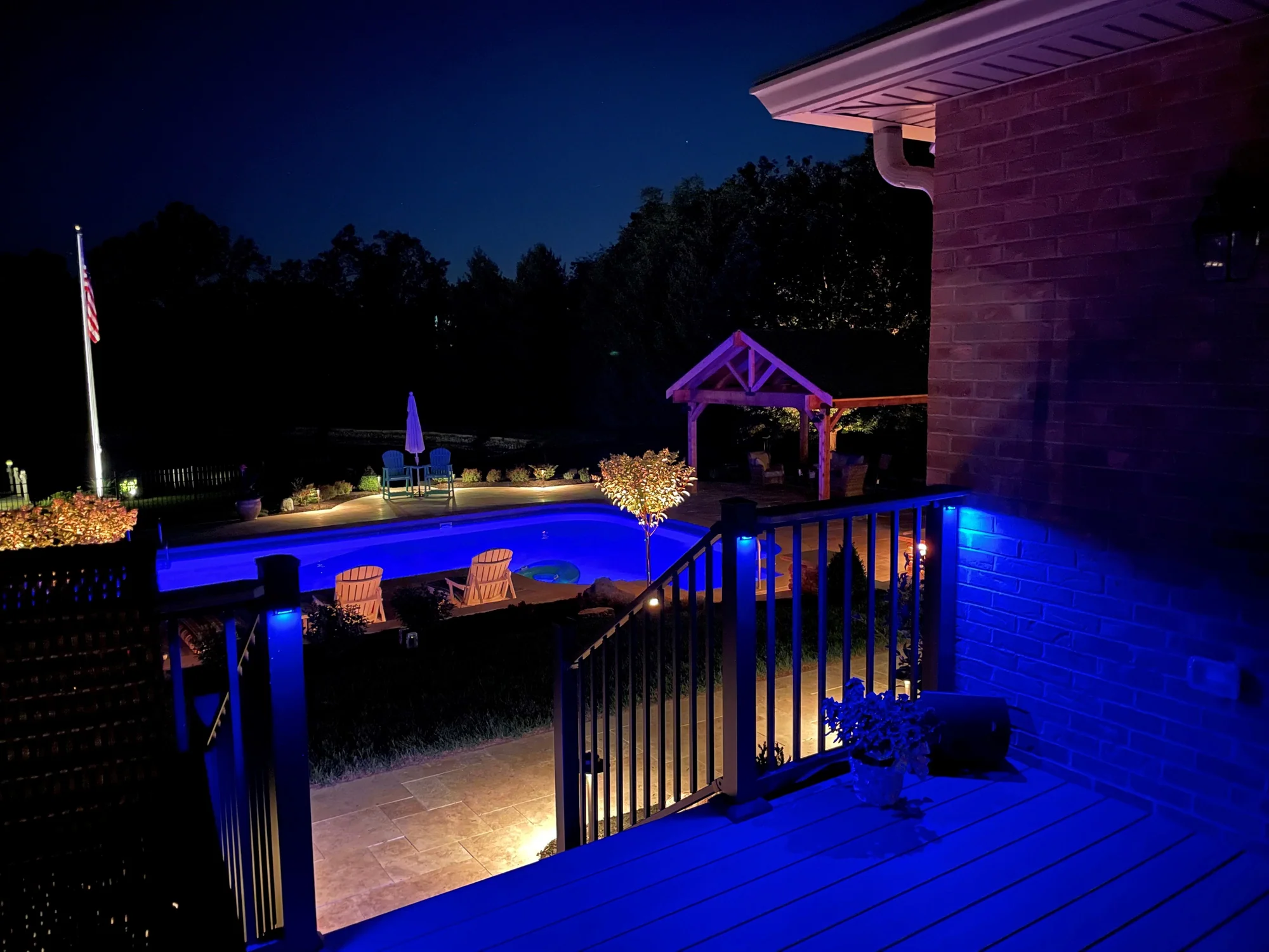
Outdoor spaces have quietly become the heart of the American home, and color-changing deck lights are leading the shift from