- FREE Shipping on all orders! Limited time!
- support@tru-scapes.com

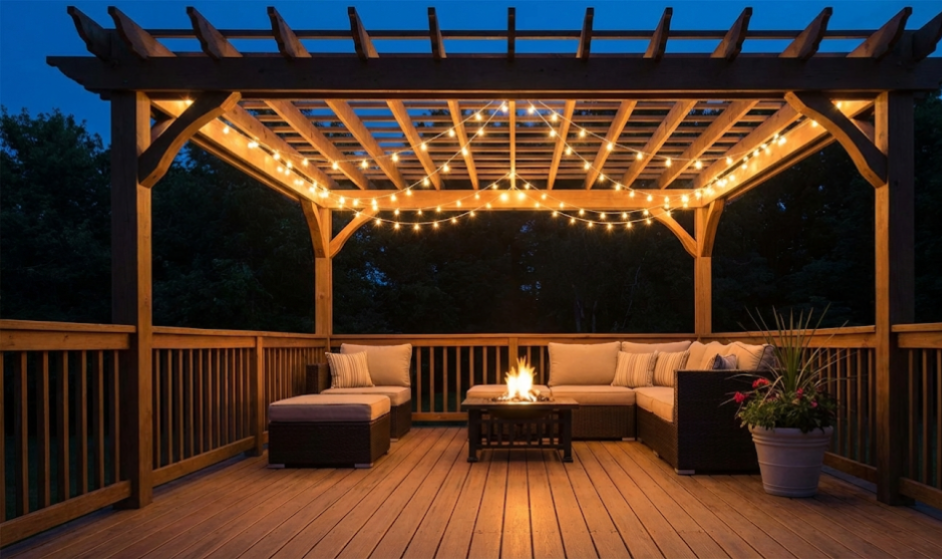
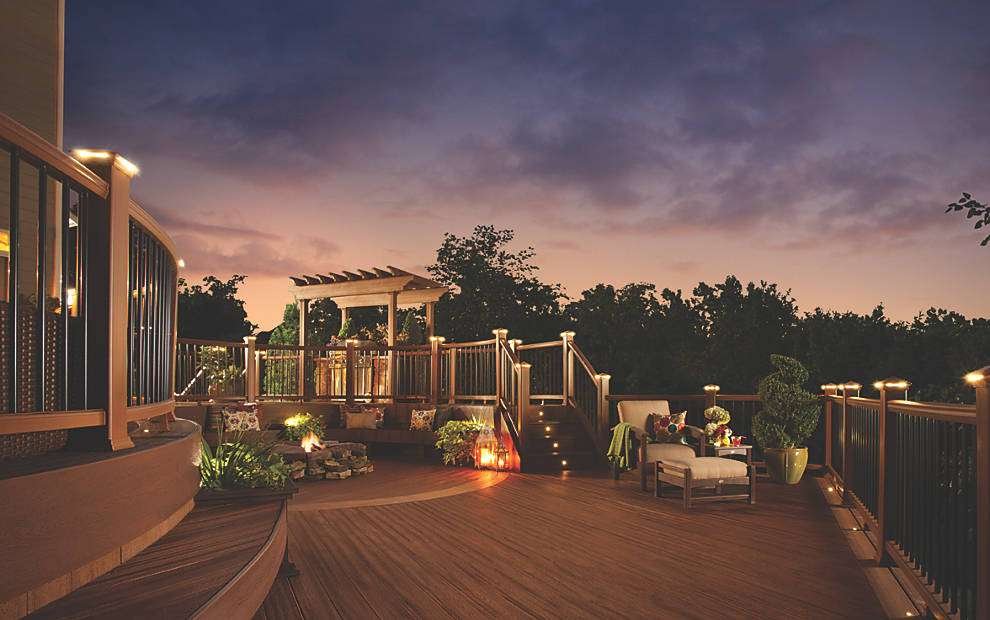
Your deck represents a significant investment in your home’s outdoor living space, yet without proper illumination, its potential diminishes after sunset. The right lighting strategy transforms a simple wooden platform into an enchanting evening destination that extends your living space, increases property value, and provides essential safety features. This comprehensive guide explores fifteen proven lighting approaches that combine functionality with aesthetic appeal, helping you create an outdoor environment that shines long after daylight fades.
Different lighting types serve distinct purposes in deck design. Ambient lighting provides overall illumination, creating a comfortable baseline visibility. Task lighting focuses on specific areas like grilling stations or dining tables. Accent lighting highlights architectural features, plants, or decorative elements.
The voltage system you choose impacts installation complexity and operating costs. Low-voltage systems (12V or 24V) offer safer installation, easier DIY implementation, and lower energy consumption. Line-voltage systems (120V) provide brighter output but require licensed electrician installation and adherence to strict building codes.
Before purchasing fixtures, assess your deck’s layout, electrical access points, and intended usage patterns. Evening entertaining demands different lighting than quiet reading spaces. Consider sun exposure—areas receiving direct afternoon sun may benefit from solar charging, while shaded sections require hardwired solutions.
Budget allocation should balance initial fixture costs against long-term operational expenses. LED technology costs more upfront but delivers substantial savings over traditional incandescent or halogen options through reduced energy consumption and replacement frequency.
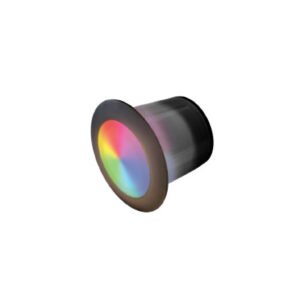
Recessed deck lighting mounts flush within deck boards, creating clean lines without protruding obstacles. These fixtures work exceptionally well along pathways and perimeter edges, providing subtle guidance without visual clutter.
Installation requires drilling precise holes during deck construction or renovation. Most recessed fixtures accommodate standard joist spacing (16 inches on center), though some models offer flexible placement. The National Electrical Manufacturers Association recommends IP65-rated fixtures minimum for ground-level deck applications.
If you prioritize minimalist aesthetics, recessed lighting delivers unobtrusive illumination that disappears during daylight hours while providing essential guidance after dark. For more inspiration, explore our guide to recessed deck lighting for sleek, modern designs.
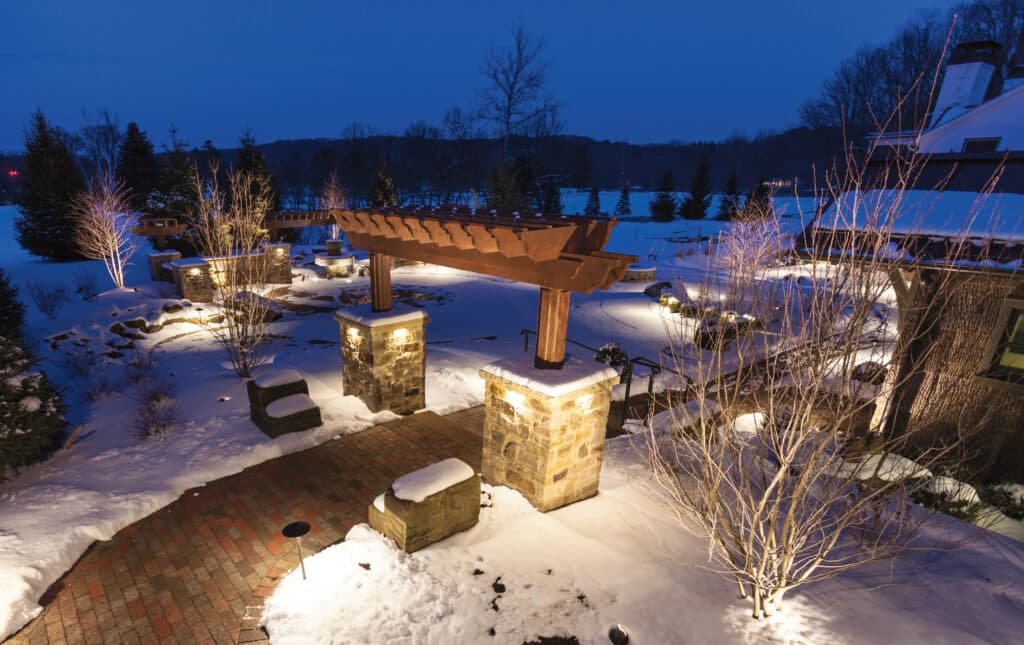
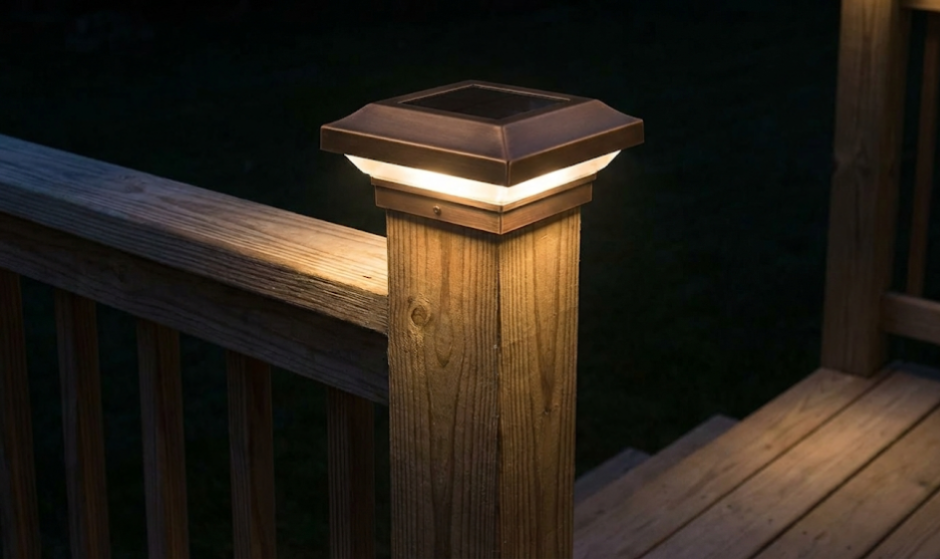
Deck post cap lights replace standard post tops with illuminated versions that define deck boundaries while adding vertical dimension. These fixtures range from simple solar models to sophisticated line-voltage systems with multiple brightness settings.
Popular materials include copper, which develops natural patina over time; stainless steel for contemporary designs; and composite materials matching deck railing systems. Quality post cap lights feature sealed electrical compartments protecting connections from moisture infiltration. Learn more about the functional and stylish benefits of deck post lights.
Under deck lighting creates floating illusions by casting downward light from beneath deck surfaces. This technique particularly enhances multi-level designs and elevated decks with accessible undersides.
Strip lighting systems offer continuous illumination along joists or beams. Individual puck lights provide focused pools of light. The International Dark-Sky Association recommends downward-directed fixtures to minimize light pollution while maximizing ground-level visibility. Discover creative under-deck lighting ideas to transform this often-overlooked space.
Deck railing lights integrate directly into handrail systems, providing continuous guidance along edges where falls present the greatest risk. Modern systems include channel-mounted LED strips that disappear within rail profiles.
Building codes in many jurisdictions now require railing illumination for commercial applications, though residential installations benefit equally from enhanced safety. The Illuminating Engineering Society suggests minimum illumination levels of 1–5 foot-candles for stair and railing areas.
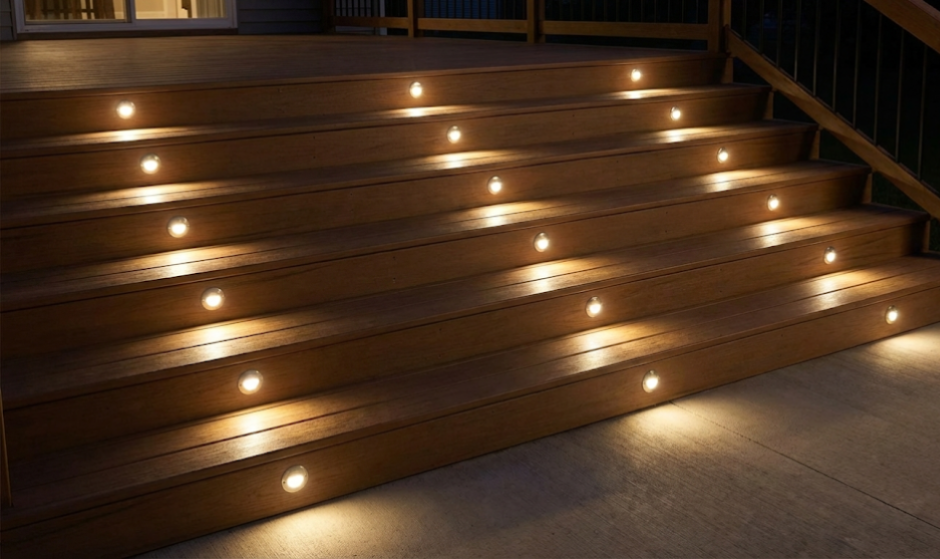
Deck step lighting addresses the primary cause of deck-related injuries—missed or misjudged stair transitions. Install fixtures on riser faces or tread undersides to clearly define each step edge.
Step lighting prevents accidents while adding sophisticated detail to deck entrances. Space fixtures 12–18 inches apart for adequate coverage without excessive brightness that causes glare or discomfort. For safety-focused guidance, see our article on stair lights for decks.
String lights bring casual charm and warmth to deck spaces, perfect for entertaining or creating cafe-style atmospheres. Commercial-grade options withstand weather exposure better than lightweight residential versions.
Suspend string lights using mounting hooks, poles, or overhead structures. For permanent installations, choose shatter-resistant bulbs and UV-stabilized wire insulation. Many homeowners report string lights as their most-used deck feature during warm months.
Solar deck lights eliminate electrical installation requirements while providing maintenance-free operation. Modern photovoltaic technology delivers reliable performance even in partially shaded locations.
Select fixtures with separate solar panels that can be positioned for optimal sun exposure while placing lights in desired locations. Battery capacity determines operating duration—quality systems provide 8–10 hours of illumination after full charging.
Deck lighting kits bundle transformers, fixtures, wire, and connectors in coordinated packages that simplify purchasing and ensure component compatibility. These systems particularly benefit DIY installers undertaking their first lighting project.
Complete kits include installation guides with specific instructions for the included components. Industry leaders like Kichler, Trex, and Deckorators offer comprehensive systems covering various deck sizes and styles.
Smart deck lighting systems integrate with home automation platforms, enabling smartphone control, scheduling, and scene programming. Adjust brightness, change colors, or activate specific zones without leaving your chair.
Compatibility with systems like Amazon Alexa, Google Home, or Apple HomeKit allows voice control integration. If you embrace smart home technology, programmable deck lighting extends automation benefits to outdoor spaces. Dive deeper with our guide to integrating smart deck lighting.
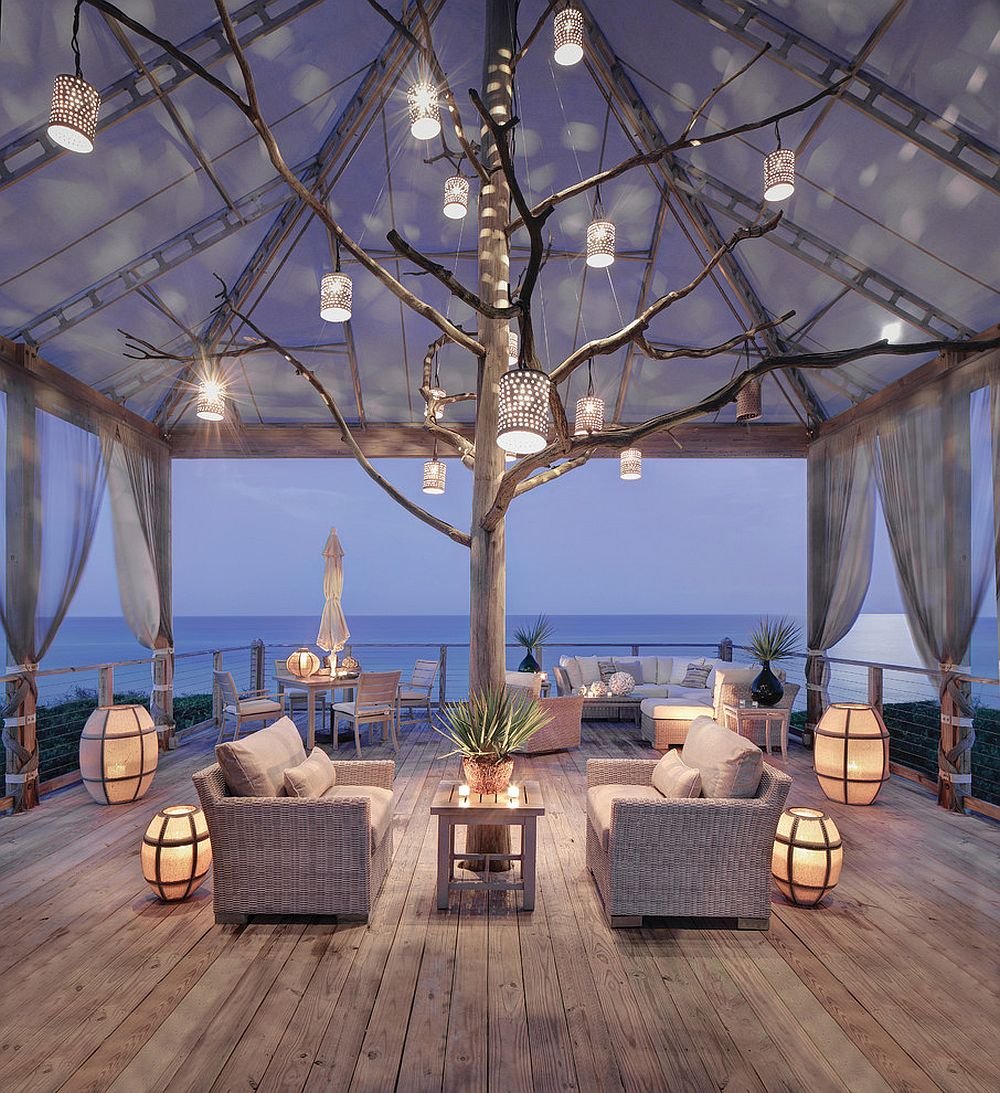
Deck pendant lights suspend from overhead structures, providing concentrated illumination for dining areas, cooking stations, or conversation zones. These fixtures require sturdy mounting to support weight and withstand wind loads.
Weather-resistant pendants feature sealed electrical boxes and corrosion-resistant chains or cables. The American Lighting Association recommends hanging pendant fixtures 30–36 inches above table surfaces for optimal illumination without glare.
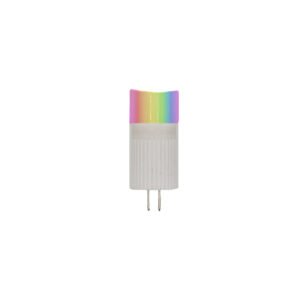
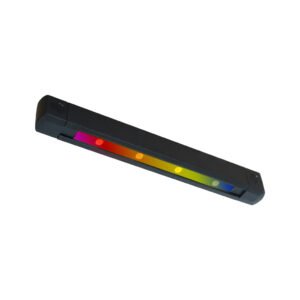
Color-changing LED systems let you customize deck ambiance for different occasions—warm white for intimate dinners, vibrant colors for parties, or subtle blues for relaxation. RGB (red-green-blue) and RGBW (adds white) systems offer varying color palettes.
Quality color-changing systems maintain consistent color across all fixtures and allow saved presets for frequently used scenes. These installations particularly enhance pool surrounds, outdoor kitchens, and entertainment spaces. Learn how to use color-changing lights to set the perfect mood.
Motion-activated fixtures provide automatic illumination when approaching the deck, enhancing security while conserving energy. Adjustable sensitivity settings prevent false triggers from small animals or wind-blown debris.
Position motion sensors to cover primary approach paths without excessive overlap that causes unnecessary activation. The Security Industry Association recommends combining motion activation with low-level constant lighting for balanced security and ambiance.
Deck wash lighting fixtures mount at ground or deck level, directing light upward across adjacent wall surfaces. This technique highlights architectural details, creates depth perception, and provides indirect ambient illumination.
Use narrow beam angles (15–25 degrees) for focused accent effects or wide angles (40–60 degrees) for broader coverage. Wash lighting works exceptionally well with textured surfaces like stone, brick, or cedar siding.
Waterproof deck lights rated IP65 or higher resist water jets from any direction, ensuring reliable performance through rain, snow, and humidity. Marine-grade fixtures exceed standard waterproof ratings, offering ultimate durability in harsh climates.
Stainless steel fixtures resist corrosion better than brass or aluminum options. Silicone gaskets provide superior sealing compared to rubber alternatives that deteriorate over time. Quality manufacturers typically offer 5–10 year warranties on waterproof fixtures. For expert advice on durability, consult our guide to choosing weatherproof deck lights.
Layered lighting combines multiple fixture types at different heights and intensities, creating depth and visual interest impossible with single-source illumination. Professional designers typically incorporate three layers: ambient (overall illumination), task (functional areas), and accent (decorative highlights).
Balance fixture brightness to avoid competing focal points. Dimming capability allows adjustment for different activities and times of evening. Successful layered designs guide attention through the space while maintaining cohesive visual flow. Master this technique with our guide to layered lighting for balanced deck design.
Step 1: Develop a comprehensive lighting plan showing fixture locations, wire runs, and transformer placement. Calculate total wattage to ensure transformer capacity meets system demands with 20% reserve.
Step 2: Install the transformer near a GFCI-protected outlet, mounting it in a weatherproof location per manufacturer specifications. Most transformers include built-in timers and photocell sensors.
Step 3: Run low-voltage cable along deck framing, securing with staples or clips every 18–24 inches. Avoid running wire parallel to line-voltage cables within 12 inches.
Step 4: Install fixtures according to specific product instructions, ensuring proper waterproof connections using silicone-filled wire nuts or heat-shrink connectors.
Step 5: Test the complete system before finalizing wire concealment. Check voltage at the furthest fixture—readings below 10.8V (for 12V systems) indicate undersized wire or excessive distance requiring circuit division.
Step 6: Adjust fixture angles and brightness levels to eliminate glare, dark spots, and excessive light spill into neighboring properties or natural areas.
| Lighting Type | Installation Difficulty | Energy Efficiency | Cost Range | Best Application |
|---|---|---|---|---|
| Recessed | Moderate-High | Excellent (LED) | −$ | Pathways, perimeter |
| Post Cap | Easy | Good-Excellent | −$ | Boundary definition |
| Railing | Moderate | Excellent | −$ | Safety, continuous guidance |
| Solar | Easy | Excellent | −$ | Accents, temporary |
| String | Easy | Fair-Good | −$ | Ambient, entertaining |
| Smart | Moderate | Excellent | $-$$ | Complete system control |
Pros:
Cons:
Do:
Don’t:
LED technology revolutionized outdoor lighting through exceptional efficiency and longevity. Quality LED deck fixtures consume 75–80% less electricity than incandescent equivalents while lasting 25,000–50,000 hours—potentially decades of typical evening use.
If you need maximum efficiency, combine LED fixtures with smart controls, motion sensors, and timers that eliminate unnecessary operation. Solar charging eliminates electrical costs entirely, though fixture placement becomes constrained by sunlight access.
Calculate operational costs by multiplying total wattage by local electricity rates and expected hours of use. A typical 150-watt low-voltage deck lighting system operating four hours nightly costs approximately $15–25 annually in most U.S. markets. For more on efficiency, refer to the U.S. Department of Energy’s guide to LED lighting.
A homeowner in Portland, Oregon transformed their 400-square-foot cedar deck with a comprehensive lighting system combining recessed step lights, post cap fixtures, and under-deck strip lighting. The project utilized a 300-watt transformer powering 18 LED fixtures totaling 180 watts.
Total material costs reached $1,200, with the homeowner completing installation over two weekends following detailed planning. The system included smartphone controls allowing customized scenes for different activities. After implementation, the family reported using their deck five additional months annually compared to pre-lighting conditions, significantly improving their home’s value and enjoyment.
How many lumens do I need for deck lighting?
Most deck lighting applications require 50–200 lumens per fixture depending on purpose—pathway fixtures use 50–100 lumens, while task lighting for cooking areas needs 150–300 lumens.
Can I install deck lighting myself?
Low-voltage deck lighting systems are DIY-friendly for most homeowners with basic electrical knowledge, while line-voltage installations require licensed electrician services in most jurisdictions.
What color temperature is best for deck lighting?
Warm white (2700K–3000K) creates inviting, comfortable ambiance for most residential decks, while cool white (4000K+) suits contemporary designs or task-focused areas. Explore the nuances in our guide to choosing between warm and cool deck lighting.
How long do LED deck lights last?
Quality LED deck fixtures typically last 25,000–50,000 hours, translating to 15–30 years of typical evening use before requiring replacement.
Do solar deck lights work in shaded areas?
Modern solar fixtures function in partial shade but deliver reduced operating duration—locations receiving less than 4–6 hours direct sunlight may require supplemental charging or alternative power sources.
What IP rating do I need for deck lights?
Deck lighting fixtures should carry minimum IP65 ratings for water jet resistance, while IP67 or IP68 ratings provide superior protection for ground-level or submersible applications. See our full guide on choosing weatherproof deck lights for details.
How much does professional deck lighting installation cost?
Professional installations typically range from $2,000–$5,000 for average-sized decks depending on system complexity, fixture quality, and regional labor rates.
Can deck lighting increase home value?
Well-designed outdoor lighting systems add 5–10% to home value according to real estate professionals, with particularly strong returns in markets emphasizing outdoor living spaces.
What’s the difference between 12V and 24V systems?
Both low-voltage options provide safe operation, though 24V systems allow longer wire runs with less voltage drop, making them preferable for larger decks or complex layouts.
How do I prevent glare from deck lights?
Position fixtures below eye level, use shields or louvers to direct light downward, and choose lower-wattage fixtures with wider beam spreads rather than concentrated high-intensity sources.
Lumens: The measure of total visible light output from a fixture, indicating brightness independent of energy consumption—higher lumens equal brighter light.
IP Rating: Ingress Protection rating indicating a fixture’s resistance to solid particles (first digit) and liquids (second digit)—IP65 means complete dust protection and resistance to water jets.
Color Temperature: Measured in Kelvin (K), this describes light appearance from warm (2700K, yellowish) to cool (5000K+, bluish), affecting ambiance and mood.
Voltage Drop: The reduction in electrical potential along wire runs caused by resistance, potentially dimming distant fixtures—proper wire gauge selection minimizes this effect in low-voltage systems.
Strategic outdoor deck lighting transforms underutilized spaces into inviting evening destinations that enhance safety, extend seasonal usability, and significantly increase property value. By combining practical illumination with thoughtful design, you create an outdoor environment that serves functional needs while delivering aesthetic appeal long after sunset.
The fifteen lighting ideas presented offer proven approaches suitable for various budgets, skill levels, and design preferences. Whether you implement a simple solar post cap system or invest in comprehensive smart lighting with layered design, proper planning and quality fixtures deliver years of reliable performance with minimal maintenance.
Ready to illuminate your deck? Start by assessing your space, determining primary usage patterns, and selecting fixture types that align with your functional requirements and aesthetic vision. Consider consulting with lighting professionals for complex installations or when seeking optimal results that maximize your investment.
For authoritative standards and best practices, refer to resources from the Illuminating Engineering Society and the International Dark-Sky Association.
KEY TAKEAWAYS Pittsburgh decks work hard. They sit through snowy winters, spring downpours, and sticky July evenings, often on hillside
Key Takeaways Philadelphia decks work hard. A rooftop in Fishtown, a narrow rear deck behind a South Philly rowhome, or