- FREE Shipping on all orders! Limited time!
- support@tru-scapes.com

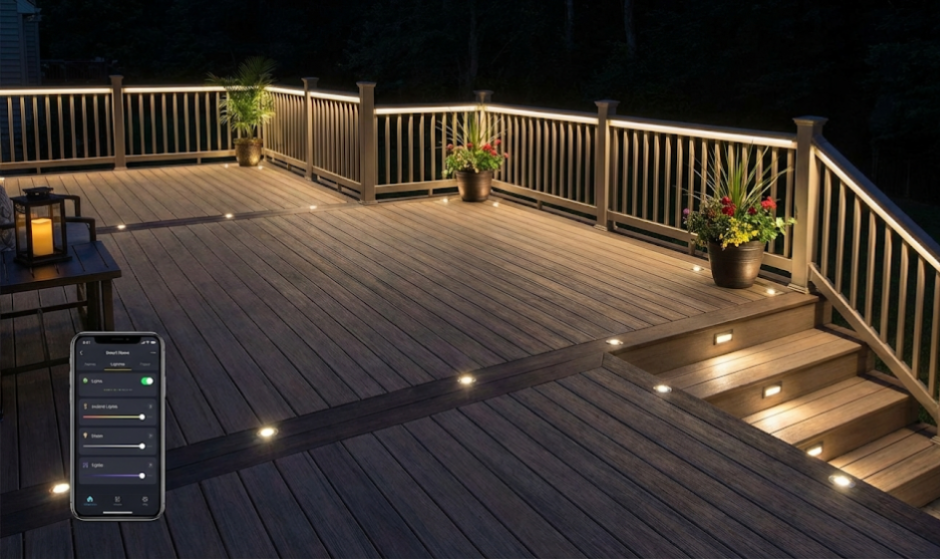
Getting deck lighting transformer sizing right is one of those decisions that sets the tone for your entire outdoor lighting system — before a single bulb ever turns on. Choose a transformer that’s too small and you’ll deal with dim, flickering fixtures and premature component failure. Choose one that’s oversized for a simple setup and you may miss out on the efficiency and performance precision that purpose-built units offer. The good news is that sizing a low voltage transformer for deck lighting is straightforward once you understand a few core principles.
This guide walks through everything you need to know: how to calculate your load, when to move up in transformer capacity, how wire length factors in, and which Tru-Scapes transformer fits each type of project.
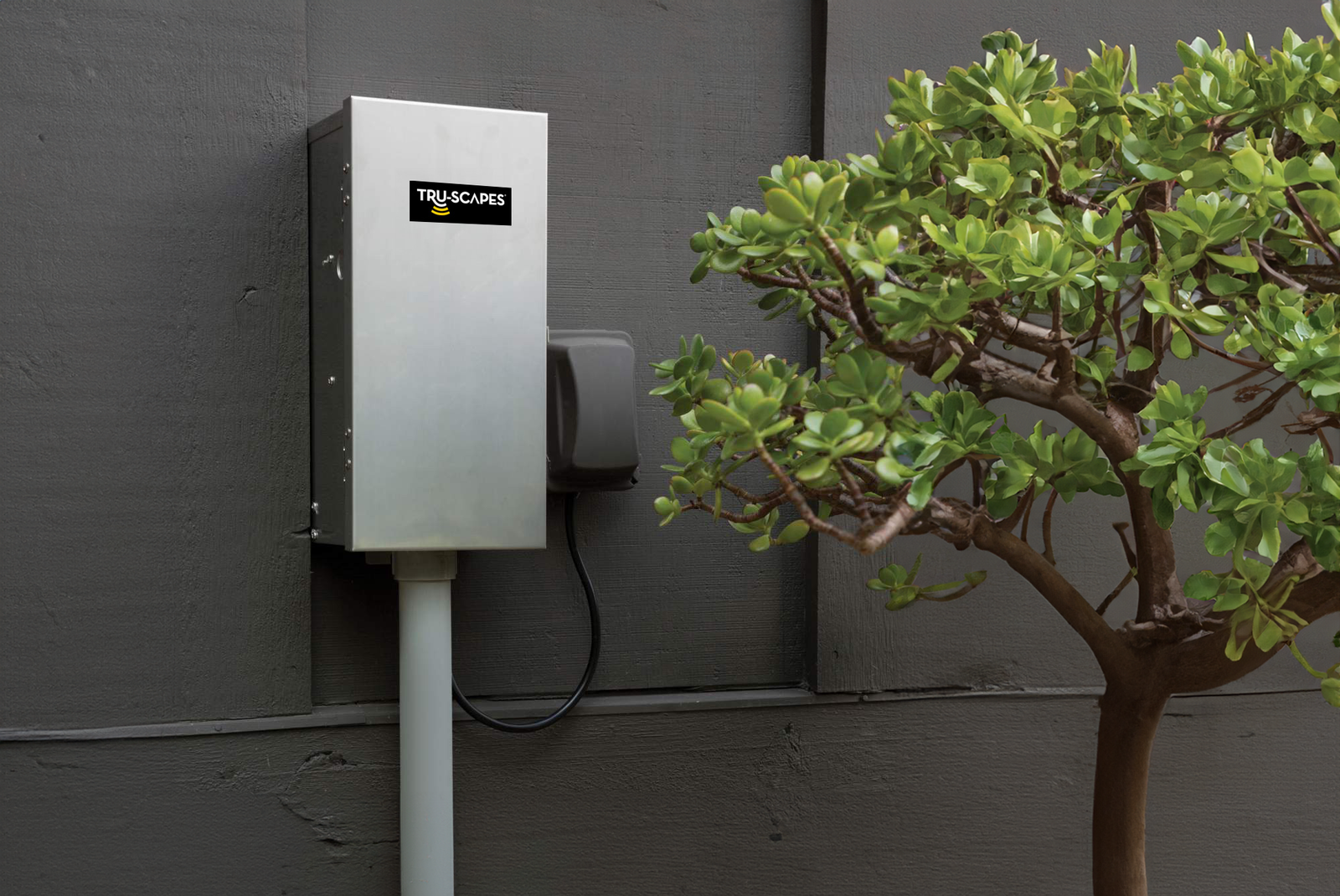
Most residential deck lighting systems operate on low voltage deck lighting circuits, powered by a transformer that steps down standard 120V household current to a safe, efficient 12V output. The transformer is typically mounted near the home’s exterior electrical outlet and connects to one or more wire runs that feed the deck fixtures.
The key variable in any low voltage system is wattage load — the total draw of all fixtures connected to a transformer’s output. Every fixture (post cap light, stair riser light, in-deck well light, railing accent, etc.) carries a rated wattage. The transformer must be capable of handling the combined wattage of everything connected to it, with capacity to spare.
Low voltage systems are favored for deck lighting because they’re safer to handle, easier to install without an electrician, and highly flexible for landscape-integrated designs, according to energy efficiency data from the U.S. Department of Energy. The Tru-Scapes approach to transformer design reflects this — each unit is built for the real-world demands of outdoor deck environments, including temperature variation, moisture exposure, and long wire run distances.
Start by inventorying every light fixture you plan to install. Check the manufacturer’s specified wattage for each. Common deck fixtures and their typical wattage ranges:
Write down the wattage for every individual fixture, even if multiple fixtures share the same type.
Add the wattage of all fixtures together to get your raw load total. For example:
Total raw load: 54W
Never run a transformer at 100% of its rated capacity. Industry best practice — supported by guidance from the American Lighting Association and landscape lighting professionals — is to keep transformer load at or below 75–80% of rated capacity. This buffer prevents overheating, allows for future fixture additions, and extends transformer life.
To find the minimum transformer capacity you need, divide your raw load by 0.75 (or 0.80 for a slightly tighter buffer):
54W ÷ 0.75 = 72W minimum rated capacity
In this example, the Tru-Scapes® 100W Transformer would be the right starting point — providing comfortable overhead for the current load and room to expand.
Voltage drop is a real factor in low voltage systems. The longer the wire run between the transformer and the furthest fixture, the more voltage is lost along the way. A fixture receiving less than 10.8V (10% below the nominal 12V) will appear noticeably dimmer and may experience shortened life.
If your runs exceed 100 feet — or if you’re daisy-chaining many fixtures on a single run — you have two options:
The Tru-Scapes® 200W Transformer is a popular choice when wire runs extend across larger decks or when multiple lighting zones need to originate from a single hub.
Most transformers offer multiple output terminals (zones), allowing you to wire different sections of your deck on separate circuits. Zoning your deck lighting serves two purposes: it lets you control sections independently, and it distributes load more evenly so no single run is overloaded.
If your deck includes distinct areas — main deck, lower patio, stairs, pergola — plan a separate zone for each and calculate zone loads individually before summing to total transformer capacity. For advanced setups, consider integrating smart deck lighting for automated zone control.
| Transformer Size | Ideal For | Typical Fixture Count (LED) | Zones/Outputs |
|---|---|---|---|
| 100W | Small to mid-size decks, single-zone setups | 20–40 LED fixtures | 1–2 zones |
| 200W | Mid-size to large decks, multi-zone systems | 40–80 LED fixtures | 2–4 zones |
| 300W | Large decks, multi-area outdoor living spaces | 80–120 LED fixtures | 4–6 zones |
| 400W (WiFi) | Large or expandable systems with smart-home control | 100+ LED fixtures | Multi-zone + app control |
One of the most common questions homeowners face during deck lighting transformer sizing is whether to start with a 100W or step up to a 200W unit. The answer depends on three factors:
If your total buffered load falls under 80W, the Tru-Scapes® 100W Transformer is a clean, right-sized fit. It handles compact decks, single-level layouts, and systems where the fixture count is unlikely to grow significantly.
If your total buffered load falls between 80W and 160W, or if you’re running wire across a longer deck with multiple zones, the Tru-Scapes® 200W Transformer gives you the headroom to operate confidently and expand without swapping hardware.
The practical rule: when you’re on the fence between two sizes, go up. The additional capacity does not harm a lighter load, but an undersized transformer under constant near-maximum stress will degrade faster and deliver inconsistent light output.
| Size Up | Size Down |
|---|---|
| More capacity for future fixture additions | Risk of overloading under current load |
| Runs cooler, longer lifespan | Shorter transformer life from thermal stress |
| Better voltage regulation over long wire runs | Voltage drop more pronounced on far zones |
| Supports additional zones or dimmer circuits | Limited zone flexibility |
| Smart-home upgrade path available (400W WiFi) | May need to replace transformer when expanding |
| Do | Don’t |
|---|---|
| Calculate load before purchasing any transformer | Guess transformer size based on fixture count alone |
| Add a 20–25% capacity buffer above your raw load | Run a transformer at or above 100% rated capacity |
| Use heavier wire gauge for runs over 100 feet | Mix high-wattage and low-wattage fixtures on the same short run without checking balance |
| Plan zones by physical deck area | Daisy-chain every fixture onto a single run without checking voltage drop |
| Choose a transformer with multi-tap outputs for zone control | Forget to account for future lighting additions when choosing capacity |
A homeowner in the mid-Atlantic region is completing a two-level composite deck — a main upper deck measuring 20×16 feet and a lower patio section of 12×14 feet. The lighting plan includes:
Total raw load: 81W
Buffered load (÷ 0.75): 108W minimum capacity required
The 100W transformer falls short of the buffered requirement. The homeowner chooses the Tru-Scapes® 200W Transformer, wiring the upper deck fixtures on Zone 1 and the lower patio and stair lights on Zone 2. This balanced configuration keeps each zone well within its load limit, eliminates voltage drop issues across both runs, and leaves capacity for the pergola string lighting the homeowner plans to add the following season.
The result: consistent, full-brightness output across all 40 fixtures from day one, with no rewiring needed when the system expands.

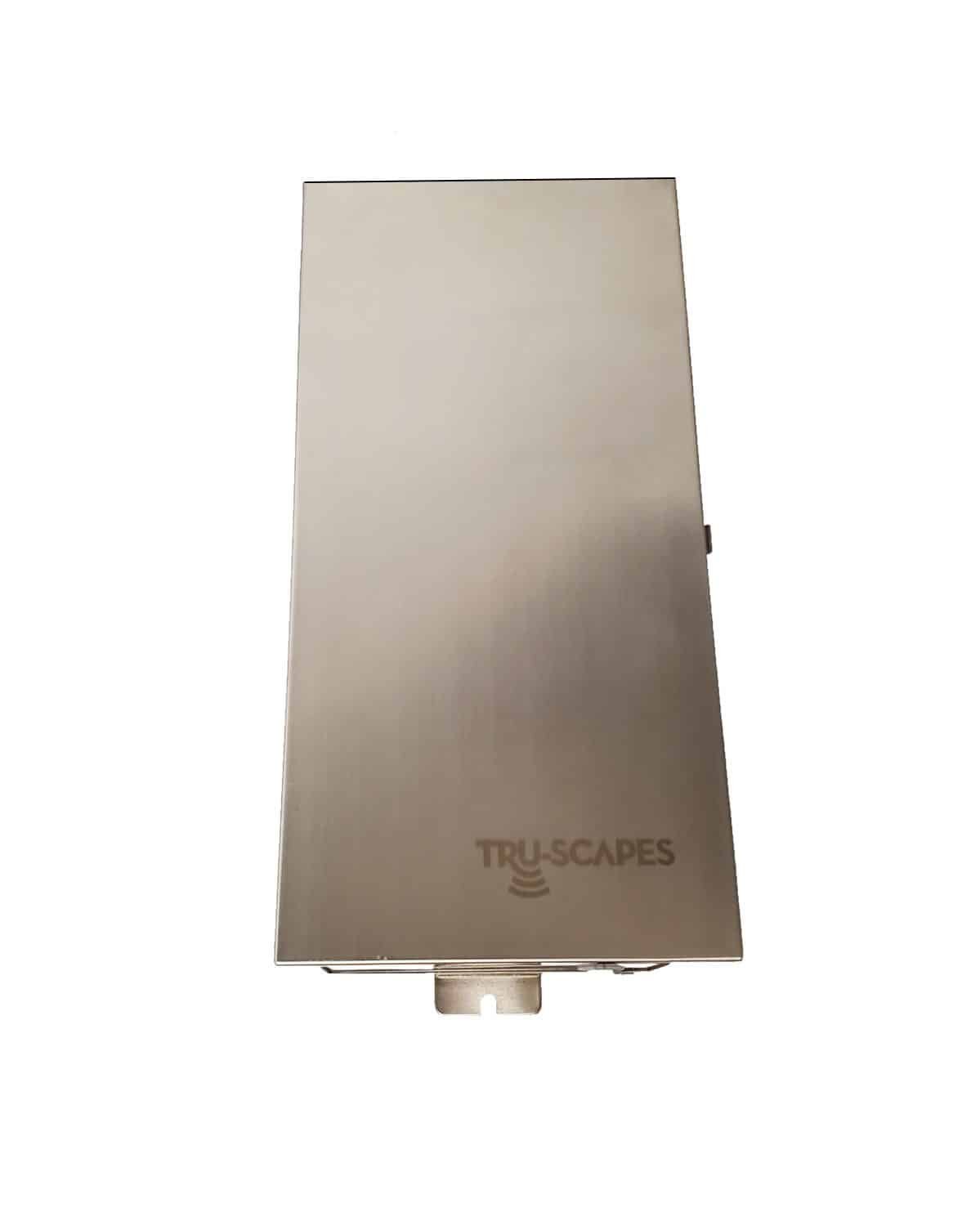
The Tru-Scapes® 100W Transformer is an ideal starting point for smaller deck lighting systems, single-zone layouts, and projects where the total LED fixture load falls comfortably under 80 watts at operating capacity. Tru-Scapes engineers this transformer for outdoor durability, with weatherproof housing and reliable performance across temperature extremes — the kind of build quality that holds up season after season without intervention.
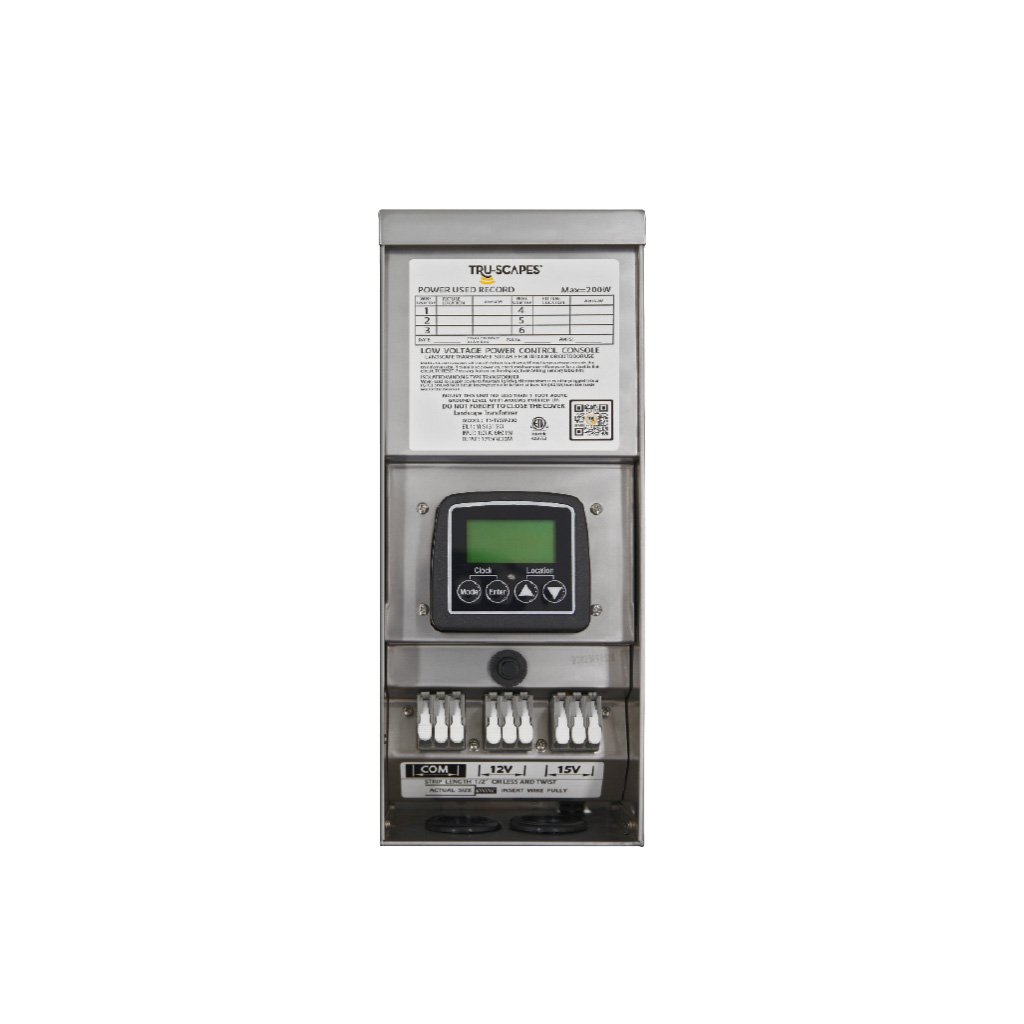
For mid-to-large decks, multi-zone installations, or systems with longer wire runs, the Tru-Scapes® 200W Transformer delivers the headroom and zone flexibility that more complex projects demand. Homeowners who choose the 200W unit get a capable, well-regulated output that holds consistent voltage across multiple circuits — making it the go-to recommendation for two-level decks, larger patios, and installations where future expansion is part of the plan.

The Tru-Scapes® 300W Transformer steps in for larger-scale outdoor living spaces where multiple deck areas, walkways, pergolas, and landscape zones all feed from a single power source. This unit is engineered to manage substantial fixture counts while maintaining the voltage regulation and zone isolation that professional installers and discerning homeowners expect. It’s the right choice when your outdoor lighting system spans the full perimeter of a large property.
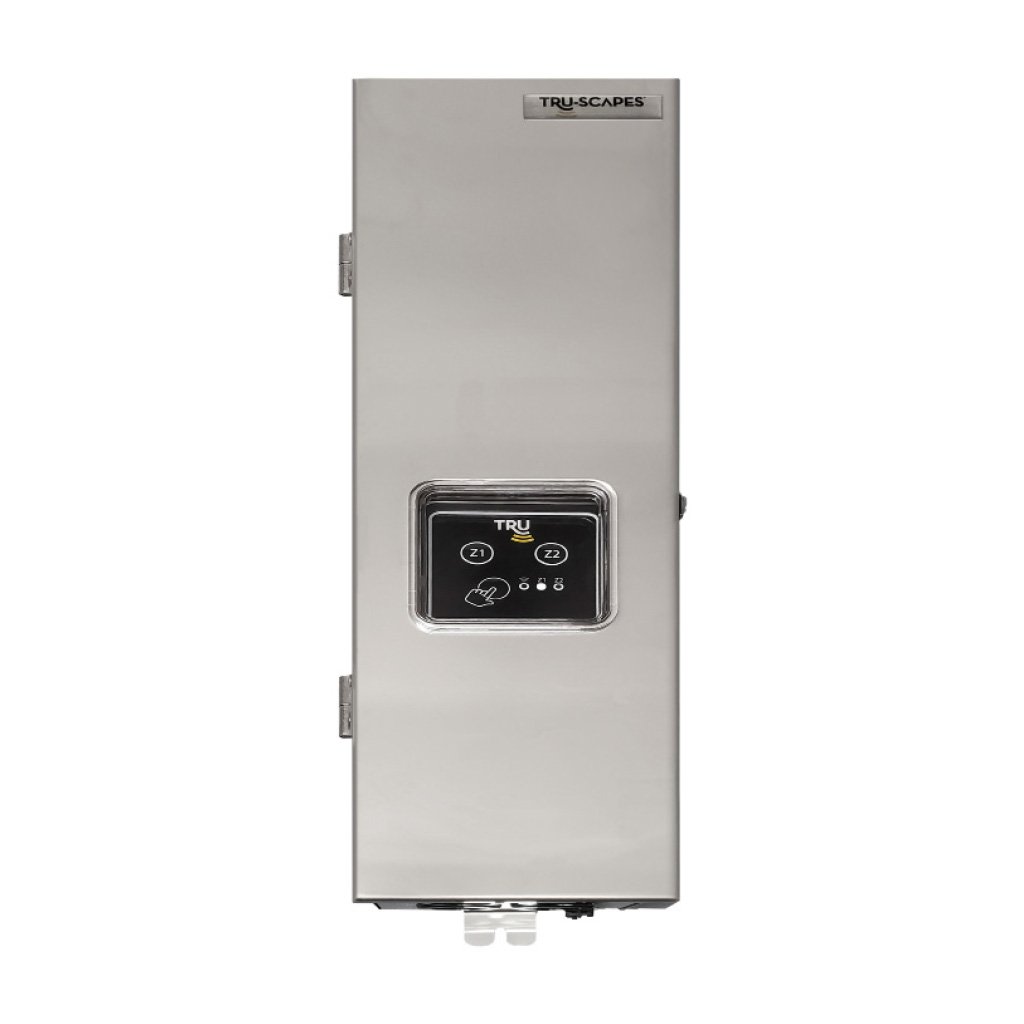
The Tru-Scapes® 400W WiFi Transformer is the flagship option for homeowners who want maximum capacity combined with smart-home integration. At 400 watts, it handles even the most expansive deck and landscape lighting systems with ease. The built-in WiFi control allows scheduling, dimming, and zone management directly from a mobile app — giving homeowners precision control over the entire system without a manual switch. For large properties or anyone building a future-ready outdoor lighting ecosystem, this transformer is the definitive solution.
When it comes to deck lighting transformer sizing, the math is only half the equation. The other half is the quality and reliability of the transformer itself — and that’s where Tru-Scapes separates itself from generic alternatives.
Tru-Scapes engineers their transformers specifically for outdoor deck and landscape environments. That means weatherproof housings designed to handle moisture, UV exposure, and temperature swings without degrading output quality. It means accurate voltage regulation that keeps every fixture on every zone performing at rated brightness — not flickering or dimming as the system ages. And it means multiple output terminals engineered for real multi-zone deck configurations, not afterthought wiring.
The full Tru-Scapes transformer lineup — from the compact Tru-Scapes® 100W Transformer to the app-connected Tru-Scapes® 400W WiFi Transformer — is built around the same core principle: give homeowners a system that works correctly from the first night and keeps working without constant maintenance or troubleshooting. The sizing options exist because deck projects vary, and Tru-Scapes is committed to matching every project with exactly the right capacity.
That’s not generic marketing — it’s the practical outcome of designing products around how outdoor lighting systems are actually used.
A: The most common mistake is underestimating total load by forgetting to include all fixtures in the wattage calculation, then purchasing a transformer with no capacity buffer. Running a transformer at full rated capacity — or above it — causes overheating, shortened lifespan, and inconsistent light output across zones.
A: There’s no universal answer — it depends on the wattage of each individual fixture. A 100W transformer (run at 75–80% capacity) can support around 30W–80W of fixtures total. Using 2W LED fixtures, that could be 15–40 lights. Always calculate your specific load rather than relying on a fixture-count estimate.
A: The Tru-Scapes® 400W WiFi Transformer includes built-in WiFi control for scheduling, dimming, and zone management via a mobile app. For specific smart home platform compatibility, check the product page for the most current integration details.
A: Exceeding a transformer’s rated capacity causes it to run hot, which degrades internal components over time. In some cases, the transformer’s thermal protection circuit will shut the unit off entirely to prevent damage. Persistent overloading shortens the transformer’s useful life significantly and can affect the performance of every fixture on the system.
A: For very large systems — especially when zones are physically separated by significant distance — using two transformers (one per major zone or area) often produces better voltage regulation than running long wire distances from a single unit. The Tru-Scapes® 300W or 400W transformers handle large single-hub systems effectively, but a multi-transformer approach is worth considering for sprawling properties.
A: Wire gauge determines the resistance of the run, which directly affects how much voltage reaches the end fixtures. Heavier gauge wire (lower AWG number, such as 10 or 12 AWG) has less resistance and delivers voltage more accurately over longer distances. Using undersized wire on long runs wastes the transformer’s capacity and produces dim, uneven output at far fixtures. Learn more about how to wire deck lighting to minimize these issues.
A: Aside from raw wattage capacity, the 200W transformer typically supports more output zones, handles longer wire runs with better voltage regulation, and provides significantly more room for future fixture additions. If your current load is close to 80W, the Tru-Scapes® 200W Transformer is the better long-term choice.
A: Yes — if you planned ahead. Any transformer with available output capacity (above current buffered load) can accept additional fixtures. This is exactly why the 20–25% buffer matters: it’s not just safety overhead, it’s expansion capacity built into the system from day one.
Deck lighting transformer sizing is one of the most consequential decisions in any outdoor lighting project — and it’s one of the easiest to get right when you follow a structured approach. Calculate your fixture wattage, apply the 20–25% buffer, account for wire run lengths and zones, and match the result to a transformer with the right capacity for both your current installation and your future plans.
Tru-Scapes makes the selection straightforward with a purpose-built lineup that covers every project size and level of system sophistication. Whether you’re starting with the Tru-Scapes® 100W Transformer for a focused deck installation or stepping up to the Tru-Scapes® 400W WiFi Transformer for a fully integrated smart outdoor lighting system, you’re choosing hardware engineered to deliver consistent, reliable performance from the first night through the seasons ahead.
Get the transformer right, and the rest of your deck lighting system has the foundation it needs to perform exactly as intended.
KEY TAKEAWAYS A deck can pass every structural check and still fail inspection because of a light. Many Pennsylvania homeowners
Key Takeaways Every deck lighting project hits the same fork early on: run your fixtures at 12 volts through a